

Planning a 300-Species Trip in Uganda
Planning a 300-Species Trip in Uganda: Routes and Daily Targets
Planning a 300-species birdwatching trip in Uganda is an exciting challenge for birdwatchers who want to experience the country’s remarkable wildlife diversity. With more than 1,000 recorded bird species, Uganda is one of Africa’s leading birdwatching destinations. Its tropical forests, papyrus wetlands, open savannahs, freshwater lakes and mountain habitats support an extraordinary variety of birds, making it possible for dedicated birders to record hundreds of species during a well-organised safari.
However, reaching 300 species requires careful planning, realistic daily targets and a route that covers several different habitats. Spending an entire holiday in one national park may produce rewarding sightings, but visiting wetlands, grasslands and forests increases the number of different birds you can encounter. Destinations such as Mabamba Wetland, Lake Mburo National Park, Bwindi Impenetrable National Park, Queen Elizabeth National Park and Kibale Forest are particularly useful when designing a comprehensive Uganda birdwatching itinerary.
For experienced birdwatchers, 300 species can be an achievable trip goal, although it is never guaranteed. Beginners may need more time, and some birds require considerable patience to locate.
Is It Possible to See 300 Bird Species in Uganda?
Uganda’s exceptional bird diversity makes a 300-species safari a reasonable ambition for experienced birdwatchers.
The country lies where several African ecological regions meet, supporting birds associated with the Congo Basin, East African savannahs, Albertine Rift mountains and extensive freshwater wetlands.
This variety allows travellers to encounter different bird communities within relatively manageable travelling distances.
A successful trip depends on several factors, including the number of days available, birdwatching experience, seasonal conditions and the knowledge of your local guide.
What You Need for a 300-Species Trip
Approximately 12–16 days of dedicated birdwatching.
A specialist birdwatching guide familiar with Uganda’s habitats.
Visits to several national parks and wetlands.
Early morning birdwatching sessions.
Regular recording of confirmed sightings.
Flexible travel arrangements.
Enough time for forest walks and boat excursions.
A shorter safari may produce an impressive checklist, but reaching 300 species becomes more demanding when travelling days reduce observation time.
How Many Days Should You Allow?
A 14-day itinerary provides a useful balance between travelling, birdwatching and rest.
With two weeks available, you can spend several mornings in important habitats rather than rushing through national parks.
However, the number of species recorded depends more on habitat diversity and observation effort than on the number of days alone.
Suggested Trip Lengths
| Trip duration | Illustrative trip target | Suitable for |
|---|---|---|
| 5–7 days | 100–180 species | Beginners and shorter safaris |
| 8–10 days | 150–240 species | Intermediate birdwatchers |
| 12–14 days | 220–300 species | Experienced birdwatchers |
| 15–18 days | 300 or more species | Dedicated birders covering additional habitats |
These are planning ranges, not predicted results or guaranteed counts. Poor weather, difficult forest conditions and repeated sightings can reduce the final total.
Choosing the Best Uganda Birdwatching Route
A productive route should include wetlands, savannahs, woodlands and tropical forests.
One practical circuit begins in Entebbe, visits Mabamba Wetland and Lake Mburo, continues to Bwindi, then travels through Queen Elizabeth National Park to Kibale before returning to Entebbe.
This route combines several important birdwatching habitats without requiring repeated long-distance journeys between the same locations.
For travellers with additional time, Budongo Forest, Murchison Falls or Semuliki National Park can add further species.
Days 1–2: Entebbe and Mabamba Wetland
Day 1: Begin Birdwatching Around Entebbe
Entebbe provides a convenient introduction to Uganda’s birdlife.
The town lies beside Lake Victoria and contains mature gardens, wooded areas and freshwater habitats.
Begin with a guided walk around Entebbe Botanical Gardens or another suitable birdwatching location.
Possible sightings include Great Blue Turaco, African Fish Eagle, Black-and-white-casqued Hornbill, weavers, sunbirds and several kingfishers.
Suggested first-day target: 25 species.
This relatively modest target allows time for arrival arrangements, equipment preparation and learning local bird calls.
Day 2: Mabamba Wetland and the Shoebill
Mabamba Wetland is one of Uganda’s best-known birdwatching destinations.
Its papyrus channels and shallow freshwater areas support numerous wetland species.
The Shoebill is the main attraction, although sightings cannot be guaranteed.
Other birds to search for include Malachite Kingfisher, African Jacana, Purple Heron, Black Crake and various wetland weavers.
A guided boat excursion offers access to suitable birdwatching areas.
Suggested cumulative target: 55 species.
The aim is to add approximately 30 species that were not recorded on the first day.
Days 3–4: Lake Mburo National Park
Lake Mburo National Park is particularly useful for increasing your bird list because it introduces savannah, acacia woodland and lakeshore habitats.
The park supports species that may be less frequently encountered around Entebbe’s wetlands.
Day 3: Savannah and Woodland Birds
Travel to Lake Mburo and spend the available afternoon searching suitable woodland and grassland habitats.
Birds to look for include Lilac-breasted Roller, African Grey Hornbill, Black-bellied Bustard and several sunbirds.
The Red-faced Barbet is a particularly interesting target for specialist birdwatchers.
Suggested cumulative target: 90 species.
Day 4: Lakeshore and Woodland Birdwatching
Begin early with a guided birdwatching session.
A boat excursion on Lake Mburo may provide opportunities to search for African Finfoot, kingfishers, cormorants and herons.
Spend the afternoon examining woodland habitats for additional species.
Suggested cumulative target: 115 species.
By this stage, your checklist should contain a mixture of wetland, woodland and open-country birds.
Days 5–8: Bwindi Impenetrable National Park
Bwindi is one of Uganda’s most important destinations for specialist forest birdwatching.
Its montane forest supports numerous species associated with the Albertine Rift, including birds that are difficult to observe in open savannah habitats.
Forest birdwatching is often slower because vegetation restricts visibility.
However, Bwindi provides opportunities to add species that may not appear anywhere else on your route.
Day 5: Transfer to Ruhija
Travel towards the Ruhija sector of Bwindi, recording additional birds at suitable stops along the route.
As elevation increases, watch for changes in bird communities.
Suggested cumulative target: 145 species.
Day 6: Mubwindi Swamp Trail
The Mubwindi Swamp trail is an important destination for Albertine Rift bird specialists.
Notable targets include the African Green Broadbill, Rwenzori Batis and other highland forest birds.
The African Green Broadbill is particularly difficult to locate, and its presence should never be assumed.
Suggested cumulative target: 170 species.
Day 7: Ruhija to Buhoma
Travel towards the Buhoma sector, allowing time for birdwatching around the forested Neck area.
Different elevations and forest conditions may produce new species.
Suggested cumulative target: 195 species.
Day 8: Buhoma Forest Birdwatching
Spend a full day searching forest trails with an experienced birdwatching guide.
Possible targets include Black Bee-eater, Bar-tailed Trogon, African Broadbill and various greenbuls.
Suggested cumulative target: 215 species.
Gorilla trekking can be included as an optional experience, but it will reduce the time available for dedicated birdwatching.
Days 9–10: Queen Elizabeth National Park
Queen Elizabeth National Park provides an opportunity to increase your species total by returning to open savannah and freshwater habitats.
Day 9: Ishasha and Savannah Birdwatching
Travel through suitable habitats in the Ishasha sector towards the main Queen Elizabeth birdwatching areas.
Watch for raptors, rollers, hornbills, lapwings and grassland species.
Suggested cumulative target: 238 species.
Day 10: Kasenyi Plains and Kazinga Channel
Begin with morning birdwatching across the Kasenyi plains.
Later, explore the Kazinga Channel during a guided boat safari.
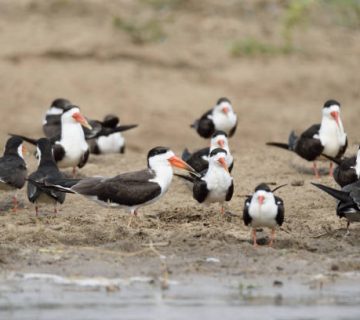
Possible sightings include Pied Kingfisher, African Skimmer, African Fish Eagle, pelicans, herons and various waterbirds.
Suggested cumulative target: 255 species.
Days 11–13: Kibale Forest and Bigodi Wetland
Kibale National Park provides opportunities to encounter additional tropical forest birds.
Day 11: Transfer to Kibale
Travel towards Kibale, stopping at suitable birdwatching locations where time and road conditions permit.
Suggested cumulative target: 273 species.
Day 12: Kibale Forest Birdwatching
Spend the morning exploring suitable forest trails with an experienced guide.
Potential targets include Great Blue Turaco, Black-billed Turaco, forest hornbills and various understorey species.
The Green-breasted Pitta is a particularly rewarding but difficult target.
Suggested cumulative target: 287 species.
Day 13: Bigodi Wetland
Bigodi Wetland provides another opportunity to search for forest-edge and wetland birds.
Its mixture of swamp vegetation, cultivated surroundings and forest-edge habitats can add species that were overlooked earlier.
Suggested cumulative target: 297 species.
Day 14: Final Birdwatching and Return to Entebbe
The final day provides an opportunity to search for remaining target birds where your route and departure arrangements allow.
Your guide can review your checklist and identify relatively common species that have not yet been recorded.
If your cumulative total is approaching 300, a few additional sightings may help you reach your goal.
Final target: 300 unique bird species.
This remains an ambitious planning scenario, not a guaranteed outcome.
Daily Species Targets for a 14-Day Uganda Birdwatching Safari
The following table provides an example of how cumulative species targets could develop throughout the trip.
| Day | Main destination | Cumulative species target |
|---|---|---|
| 1 | Entebbe | 25 |
| 2 | Mabamba Wetland | 55 |
| 3 | Lake Mburo | 90 |
| 4 | Lake Mburo | 115 |
| 5 | Bwindi, Ruhija | 145 |
| 6 | Mubwindi Swamp | 170 |
| 7 | Ruhija to Buhoma | 195 |
| 8 | Buhoma Forest | 215 |
| 9 | Queen Elizabeth, Ishasha | 238 |
| 10 | Kasenyi and Kazinga Channel | 255 |
| 11 | Transfer to Kibale | 273 |
| 12 | Kibale Forest | 287 |
| 13 | Bigodi Wetland | 297 |
| 14 | Return towards Entebbe | 300 |
These figures count new species added to the trip list, rather than all birds seen each day. As your checklist grows, finding additional species generally becomes more difficult.
How to Count 300 Species Correctly
Accurate bird recording is essential when attempting a 300-species challenge.
A species should only be added once to your overall trip total, regardless of how many times you encounter it.
For example, seeing an African Fish Eagle at Mabamba and later at the Kazinga Channel still counts as one species.
Use a notebook or an application such as eBird to maintain your checklist.
Record the date, location and identification details.
For birds that are difficult to identify, ask your guide to confirm the sighting before including it.
Heard-only records should be clearly identified as such, particularly if your goal is to see 300 species rather than record 300 species by sight or sound.
How to Increase Your Daily Bird Count
Reaching 300 species requires consistent observation rather than rushing between destinations.
Begin early. Many birds are particularly active shortly after sunrise.
Explore different habitats. Moving between wetlands, woodland and forests introduces new bird communities.
Listen carefully. Calls can reveal birds hidden among vegetation.
Use a specialist guide. Local experience is especially useful when identifying forest birds.
Review your checklist each evening. Identify missing species and adjust the following day’s priorities.
Allow time for difficult birds. Secretive species may require extended observation.
During dedicated birdwatching days, aim for approximately six to eight hours of observation where conditions allow, with suitable breaks.
Best Time of Year for a 300-Species Uganda Safari
Uganda offers birdwatching opportunities throughout the year.
The relatively dry periods from December to February and June to August often provide convenient conditions for travelling between national parks.
However, rainfall patterns differ between regions, and some forest birds may become more vocal during wetter periods.
Migratory birds can also increase diversity at certain times of year.
For travellers primarily interested in building a large checklist, the period between November and March can be attractive because several Palearctic migrants may be present.
No single month guarantees the highest number of species.
The most effective travel period depends on your target birds, preferred habitats and available time.
Essential Equipment for a 300-Species Trip
Birdwatching becomes easier when you carry suitable equipment.
Recommended items include:
8×42 or 10×42 binoculars.
A current East African bird field guide.
A notebook or smartphone checklist.
Merlin Bird ID and eBird with downloaded regional information.
Comfortable waterproof walking shoes.
Lightweight rain protection.
Neutral-coloured clothing.
A reusable water bottle.
A power bank for electronic devices.
A camera with a telephoto lens, if photography is important.
Forest trails can be muddy, particularly in Bwindi and Kibale, so suitable footwear is essential.
Should You Add Semuliki, Budongo or Murchison Falls?
Travellers with more than 14 days can increase habitat diversity by adding destinations outside the main circuit.
Semuliki National Park provides opportunities to encounter Congo Basin forest species that are uncommon elsewhere in Uganda.
Budongo Forest offers additional forest birdwatching, including Puvel’s Illadopsis and other specialist birds.
Murchison Falls National Park supports savannah, riverine and woodland birds, including Abyssinian Ground-Hornbill and Red-throated Bee-eater.
Adding these destinations can improve opportunities to encounter different species, although longer journeys require more time and a larger travel budget.
Common Mistakes When Planning a 300-Species Safari
One common mistake is planning too many destinations without allowing sufficient time for observation.
Another is spending most of the safari concentrating on rare species while overlooking common birds.
Rare birds are exciting, but a 300-species checklist depends heavily on correctly identifying common woodland, grassland and wetland birds.
Other mistakes include travelling without a specialist guide, ignoring bird calls and failing to review records daily.
A successful itinerary should combine ambitious targets with realistic expectations.
Why a 300-Species Uganda Birdwatching Safari Is Worth Planning
A 300-species birdwatching challenge encourages travellers to explore Uganda’s extraordinary habitat diversity.
The journey may begin with common garden birds around Entebbe and continue through papyrus wetlands, open savannahs and remote tropical forests.
Each destination introduces different birds, landscapes and wildlife experiences.
Although reaching 300 species requires effort, the experience remains rewarding even if your final total is lower.
For dedicated birdwatchers, the most successful safari is one that combines careful planning, reliable identification, responsible wildlife observation and enough time to appreciate the birds encountered.
Uganda’s remarkable bird diversity makes it an excellent destination for this challenge, whether your final checklist contains 250, 300 or even more species.






No comment