
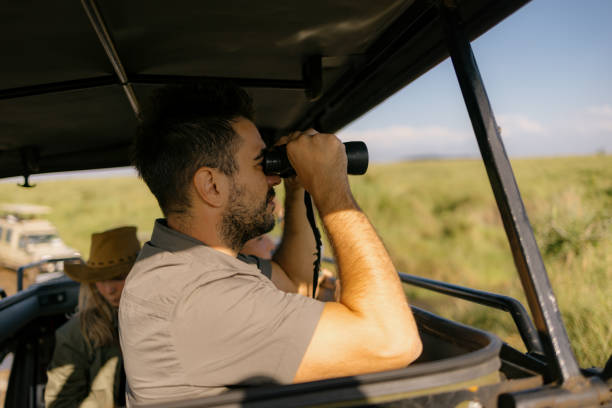
Birdwatching Inside a Safari Vehicle
Birdwatching Inside a Safari Vehicle: How to Spot More Species
Birdwatching inside a safari vehicle is one of the most rewarding ways to discover East Africa’s incredible birdlife. While many travellers join game drives hoping to see lions, elephants, giraffes and other large mammals, the same experience provides opportunities to observe colourful kingfishers, bee-eaters, hornbills, eagles, rollers and numerous smaller birds. With the right techniques, you can identify dozens of bird species without leaving your safari vehicle.
National parks in Uganda, Kenya, Tanzania and Rwanda contain diverse bird habitats, including open savannahs, acacia woodland, wetlands and riverine forests. A well-positioned safari vehicle allows you to explore these environments while minimising disturbance to wildlife. Birds may also tolerate a stationary vehicle better than a person approaching on foot, although their reactions vary by species and location.
Learning where to look, how to use binoculars, when to stop and how to communicate with your safari guide can significantly improve your birdwatching experience. Whether you are a beginner or an experienced birder, a few practical adjustments can help you spot more species during every game drive.
Why Birdwatching From a Safari Vehicle Works
A safari vehicle provides an elevated viewing position, allowing passengers to observe birds perched on branches, moving through grasslands or flying above the landscape.
Many safari vehicles have large windows or pop-up roofs that improve visibility. These features help passengers scan different habitats without leaving designated game-drive tracks.
Vehicles also allow visitors to travel between birdwatching locations while carrying binoculars, cameras and field guides.
Advantages of Vehicle-Based Birdwatching
Access to different habitats during one excursion.
Opportunities to observe birds from a raised position.
Protection from direct sunlight and some weather conditions.
Convenient storage for birdwatching equipment.
Easier observation of distant birds using binoculars.
Opportunities to photograph wildlife without approaching on foot.
Access to experienced safari guides who recognise local birds.
However, a safari vehicle works best when the driver moves slowly and stops regularly. Travelling continuously at high speed makes it difficult to notice smaller birds.
1. Choose the Right Safari Vehicle
The design of your safari vehicle can influence how many birds you observe.
A vehicle with wide windows, comfortable seating and a pop-up roof usually provides better viewing opportunities than one with restricted visibility.
Open-sided safari vehicles can offer excellent photographic access where permitted, although they provide less protection against rain and dust.
Features of a Good Birdwatching Vehicle
| Vehicle feature | Birdwatching benefit |
|---|---|
| Pop-up roof | Wider views of trees and flying birds |
| Large windows | Easier observation of roadside species |
| Comfortable seats | Less fatigue during long game drives |
| Quiet engine | Reduced noise during observation stops |
| Space for equipment | Convenient access to binoculars and cameras |
| Experienced driver-guide | Better bird identification and habitat knowledge |
A dedicated birdwatching safari should ideally have fewer passengers than the maximum vehicle capacity.
For example, a vehicle designed for seven passengers may provide a more comfortable birdwatching experience with four travellers, allowing everyone easier access to viewing positions.
2. Start Birdwatching Early in the Morning
Early morning is one of the most productive periods for observing birds in East Africa.
Many species become active shortly after sunrise, feeding, calling and moving between resting areas.
The morning light also makes identifying feather colours easier.
In Uganda’s Queen Elizabeth National Park, for example, an early game drive through the Kasenyi plains may reveal African Fish Eagles, Lilac-breasted Rollers, Secretarybirds and various grassland species.
In Kenya’s Maasai Mara, visitors may encounter bustards, rollers, hornbills and birds of prey during morning wildlife excursions.
Why Morning Birdwatching Is Effective
Birds often begin feeding after spending the night resting.
Cooler temperatures encourage activity, particularly among species that become less active during the hottest hours.
Morning calls also help birdwatchers locate individuals hidden in trees or vegetation.
Although mornings are generally productive, some raptors become easier to observe later when rising warm air allows them to soar.
3. Ask Your Driver to Move Slowly
Driving slowly is one of the simplest ways to spot more birds.
Small species frequently perch on low branches, roadside shrubs, termite mounds and grass stems.
At high speeds, these birds can easily be missed.
For a dedicated birdwatching drive, speeds of approximately 10–20 kilometres per hour may be useful on appropriate tracks, provided conditions, park rules and other traffic allow.
However, the best approach is to move slowly through promising habitats and stop whenever bird activity becomes noticeable.
When to Ask the Driver to Stop
Request a stop when you notice:
A colourful bird perched on an exposed branch.
Small birds moving repeatedly through roadside bushes.
A raptor sitting on a termite mound.
A flock gathering around a water source.
Birds carrying nesting materials.
Unusual movement in tall grass.
An unfamiliar bird call coming from nearby trees.
Once stopped, spend a few moments scanning the surrounding habitat before continuing.
4. Learn to Scan Different Bird Habitats
One of the most common mistakes beginners make is looking only at large birds or obvious movement.
A productive birdwatching drive requires checking several levels of vegetation.
Scan the Ground First
Grasslands support ground-feeding birds such as francolins, spurfowl, bustards, lapwings and Secretarybirds.
Look carefully along road edges, short grass and termite mounds.
Some birds remain motionless when a vehicle approaches, making them difficult to notice.
Check Shrubs and Low Branches
Shrubs provide hunting perches for bee-eaters, rollers, shrikes and smaller insect-eating birds.
Watch for sudden movements between branches.
A small bird repeatedly returning to the same perch may be catching insects.
Examine the Tree Canopy
Larger birds such as hornbills, turacos, eagles and vultures often occupy higher branches.
Scan the upper canopy slowly, paying particular attention to exposed branches and dead trees.
Watch the Sky
Birds of prey frequently soar above savannah landscapes.
Look for circling silhouettes, wing shapes and distinctive flight patterns.
Vultures may gather above areas containing rising warm air or potential food sources.
5. Use Binoculars Correctly Inside the Vehicle
Binoculars are among the most useful pieces of equipment for birdwatching.
They allow you to examine distant birds without approaching them.
For East African safari birdwatching, 8×42 binoculars are a practical choice because they provide a good balance between magnification, brightness and field of view.
Some experienced birdwatchers prefer 10×42 binoculars for greater magnification, although they can be harder to hold steady.
Tips for Using Binoculars
First, locate the bird with your unaided eyes.
Keep watching its position while raising your binoculars.
Avoid looking through binoculars and searching randomly across the landscape because this can make the bird more difficult to find.
When possible, rest your elbows against your body to reduce shaking.
Clean the lenses regularly, especially after travelling along dusty safari roads.
6. Learn to Identify Birds by Shape and Behaviour
Colour is useful for identification, but it should not be your only clue.
Lighting conditions can change how feathers appear, and some male and female birds look considerably different.
Body shape, bill size, habitat and behaviour often provide more reliable identification clues.
For example, a Pied Kingfisher frequently hovers above water, while a Malachite Kingfisher usually hunts from low perches.
A Secretarybird walks through grassland on long legs, while many eagles hunt from trees or soar overhead.
Useful Identification Questions
When observing an unfamiliar bird, ask yourself:
Is it small, medium-sized or large?
What shape is its bill?
Does it have a crest or unusually long tail?
What are the main feather colours?
Is it feeding on the ground, in trees or above water?
Is it alone, paired or part of a flock?
What type of habitat surrounds it?
These details can help your guide identify the species even if the bird flies away.
7. Listen for Bird Calls During Game Drives
Birdwatching involves listening as much as looking.
Many East African birds produce distinctive calls that reveal their presence before they become visible.
The African Fish Eagle has a powerful ringing cry that carries across lakes and rivers.
The Hadada Ibis produces loud, repeated calls, particularly when flying between feeding and roosting areas.
Pearl-spotted Owlets produce recognisable whistles, while hornbills and turacos have their own characteristic vocalisations.
Ask your driver to switch off the engine during suitable observation stops, where safe and permitted.
This makes it easier to hear birds calling from nearby vegetation.
8. Watch Waterholes, Wetlands and Riverbanks
Water sources attract numerous bird species, particularly in savannah environments.
A single waterhole may provide opportunities to observe herons, storks, lapwings, kingfishers and other birds.
In Uganda, birdwatchers visiting Lake Mburo National Park can search for wetland and woodland species near suitable lake margins.
Queen Elizabeth National Park provides additional opportunities along the Kazinga Channel and surrounding wetlands.
In Tanzania, suitable water sources within Tarangire National Park can attract diverse birdlife.
Birds to Look for Near Water
Pied and Malachite Kingfishers.
African Fish Eagles.
Grey Herons and other herons.
Yellow-billed Storks.
African Jacanas.
Egyptian Geese.
Various lapwings.
Cormorants and darters.
Spending 10–15 minutes watching a productive water source may reveal more species than driving continuously through the area.
9. Use Termite Mounds as Birdwatching Points
Termite mounds provide elevated perches in open grasslands.
Birds use them to watch for prey, rest and survey their surroundings.
Rollers, shrikes and some birds of prey may perch on or near these structures.
Ground-dwelling birds may also feed around termite mounds because insects and other small animals occur nearby.
During a game drive, ask your guide to examine exposed mounds, particularly those located near short grass and scattered shrubs.
10. Give Every Passenger a Different Viewing Area
When several people share a safari vehicle, everyone may concentrate on the same side, especially when large mammals appear.
For birdwatching, you can improve observation by dividing the landscape into viewing areas.
One passenger may examine the left side while another watches the right. Someone seated near the front can scan the road ahead, while another checks taller trees.
This approach increases the chances of noticing birds that would otherwise go undetected.
When someone spots an interesting bird, describe its location clearly. For example, say, “There is a yellow bird on the dead branch to the right, halfway up the tree.”
Clear directions help everyone locate the bird before it moves.
11. Keep a Birdwatching Checklist
Recording your sightings helps you improve your identification skills and remember the birds encountered during each game drive.
You can use a notebook or a birdwatching application to record species names, habitats and interesting behaviour.
If you are uncertain about a bird, record its appearance rather than guessing its identity.
For example, you might write: “Small green bird, yellow throat, black eye stripe, perched on a low branch near the road.”
Your guide can help identify it later using these observations.
Sample Birdwatching Checklist
| Bird species | Habitat to search | Seen |
|---|---|---|
| Lilac-breasted Roller | Savannah woodland | ☐ |
| African Fish Eagle | Lakes and rivers | ☐ |
| Little Bee-eater | Open woodland | ☐ |
| Secretarybird | Open grassland | ☐ |
| African Grey Hornbill | Dry woodland | ☐ |
| Grey Crowned Crane | Grassland and wetlands | ☐ |
| Pied Kingfisher | Freshwater habitats | ☐ |
| Pearl-spotted Owlet | Savannah woodland | ☐ |
The species you encounter will depend on the park, season and habitat.
12. Avoid Common Birdwatching Mistakes
Several habits can reduce the number of birds you observe during a safari.
One common mistake is concentrating entirely on large mammals. While watching elephants or lions, visitors may overlook interesting birds nearby.
Another mistake is making unnecessary noise. Loud conversations and sudden movements can disturb birds, particularly around nesting sites.
Other mistakes include using binoculars before locating a bird, carrying equipment that is difficult to access and rushing through productive habitats.
You should also avoid asking your driver to approach birds too closely. Remaining at a suitable distance often allows you to observe natural behaviour for longer.
13. Choose East African National Parks With Different Bird Habitats
Different national parks support different bird communities.
Visiting a mixture of savannah, woodland, wetland and forest habitats increases the range of species you may encounter.
In Uganda, Queen Elizabeth National Park provides extensive savannah and wetland birdwatching opportunities. Lake Mburo National Park supports woodland and grassland birds, while Murchison Falls National Park contains riverine habitats and extensive open country.
Kenya’s Maasai Mara is particularly rewarding for grassland birds and raptors.
Tanzania’s Serengeti and Tarangire national parks provide opportunities to observe bustards, hornbills, rollers and numerous birds of prey.
Rwanda’s Akagera National Park is another attractive destination for vehicle-based birdwatching because of its varied savannah, woodland and wetland habitats.
Bird sightings cannot be guaranteed, but visiting different environments generally increases the variety of species you can search for.
14. Follow Wildlife Safety Rules
Birdwatching inside a safari vehicle requires the same safety precautions as any other game drive.
Remain inside the vehicle unless your guide confirms that you are at an authorised location where getting out is permitted.
Never leave the vehicle to photograph a bird or retrieve equipment in an area where dangerous wildlife may be present.
Ask your guide before standing through a pop-up roof, and avoid sudden movements when elephants, buffaloes or predators are nearby.
Vehicles must remain on authorised routes, and observation stops should comply with the park’s regulations.
Responsible birdwatching protects visitors, wildlife and sensitive habitats.
15. Plan a Dedicated Birdwatching Game Drive
A general wildlife drive may include bird sightings, but a dedicated birdwatching excursion offers more time to examine small species and visit productive habitats.
Tell your safari operator in advance that birdwatching is a priority.
Request a guide experienced in bird identification, ideally someone familiar with bird calls, seasonal movements and local habitats.
Allow enough time for observation stops rather than planning a route that requires continuous driving.
A three-hour morning birdwatching drive, for example, could include approximately one hour in open savannah, one hour in woodland and another hour visiting suitable wetland edges. Actual timing will depend on distances, access and bird activity.
For serious birdwatchers, spending several mornings in the same park can be more productive than rushing between destinations.
Photography Tips for Birds From a Safari Vehicle
Vehicle-based photography offers several advantages because birds may remain perched while observers photograph them from a distance.
A telephoto lens of approximately 300–500 mm is useful for many savannah bird species.
Resting the camera on a padded support or beanbag can reduce shaking when the vehicle is stationary. Avoid placing equipment against a running engine if vibration affects image sharpness.
For moving birds, a shutter speed around 1/1000–1/2000 second may help freeze action.
Early morning and late afternoon often provide attractive natural light.
Avoid using flash unnecessarily, and never encourage a driver to chase birds for photographs.
Why Vehicle-Based Birdwatching Is Worth Trying
Birdwatching inside a safari vehicle allows you to appreciate wildlife that many travellers overlook.
A single game drive may reveal colourful rollers, hunting eagles, small bee-eaters, impressive hornbills and secretive ground birds.
The most productive approach combines slow driving, careful observation, good binoculars and communication with an experienced guide.
You do not need to identify every species immediately. Learning to notice shapes, colours, calls and feeding behaviour is part of becoming a better birdwatcher.
Whether you are exploring Uganda’s Queen Elizabeth National Park, Kenya’s Maasai Mara, Tanzania’s Serengeti or Rwanda’s Akagera National Park, every game drive provides opportunities to discover something new.
By giving birds the same attention you give larger safari animals, you can enjoy a richer and more varied East African wildlife experience.






No comment