
Flamingo Numbers at Lake Bogoria: Why Counts Change Each Year
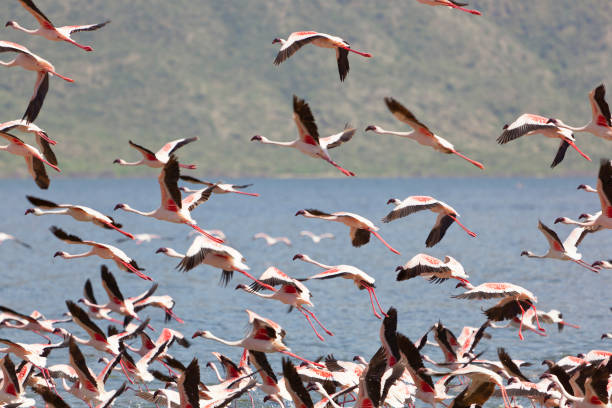
Flamingo numbers at Lake Bogoria can change dramatically between seasons and years, creating one of East Africa’s most fascinating wildlife spectacles. Located in Kenya’s Great Rift Valley, Lake Bogoria is famous for its alkaline waters, geothermal hot springs and enormous gatherings of pink flamingos. During favourable conditions, hundreds of thousands of birds may gather along its shoreline, transforming the lake into one of Africa’s most remarkable birdwatching destinations.
However, visitors returning to Lake Bogoria in different years may notice significant changes in the number of flamingos. A lake that once supported enormous flocks may temporarily hold far fewer birds. These changes are influenced by rainfall, water levels, food availability, breeding cycles and movements between other Rift Valley lakes. Understanding these factors helps explain why flamingo populations fluctuate and why a smaller count at Lake Bogoria does not necessarily mean that every missing bird has died.
For travellers planning a Kenya birdwatching safari, Lake Bogoria remains an important destination for observing flamingos in their natural habitat. Its changing conditions also provide valuable information about the health of East Africa’s freshwater and alkaline lake environments.
Where Is Lake Bogoria?
Lake Bogoria is an alkaline lake situated in Baringo County within Kenya’s Great Rift Valley, approximately 250 kilometres northwest of Nairobi.
The lake lies within Lake Bogoria National Reserve, a protected area known for its geothermal activity, striking scenery and abundant birdlife.
Unlike freshwater lakes, Lake Bogoria contains highly alkaline and saline water that supports specialised microorganisms, including the cyanobacteria consumed by Lesser Flamingos.
The surrounding landscape features rocky escarpments, acacia woodland, grasslands and geothermal springs.
Lake Bogoria also forms part of the Kenya Lake System in the Great Rift Valley, recognised as a UNESCO World Heritage Site alongside Lake Nakuru and Lake Elementaita.
Quick Facts About Lake Bogoria
| Feature | Description |
|---|---|
| Country | Kenya |
| County | Baringo |
| Location | Great Rift Valley |
| Protected area | Lake Bogoria National Reserve |
| Lake type | Saline and alkaline |
| Main flamingo species | Lesser Flamingo |
| Other flamingo species | Greater Flamingo |
| Main flamingo food | Cyanobacteria, particularly Arthrospira |
| Main attractions | Flamingos, hot springs and Rift Valley scenery |
| Conservation importance | Major flamingo feeding habitat |
Why Is Lake Bogoria Famous for Flamingos?
Lake Bogoria is famous because its alkaline waters can support enormous concentrations of microscopic organisms that flamingos consume.
The most abundant flamingo species is the Lesser Flamingo (Phoeniconaias minor), a specialised filter feeder that depends heavily on cyanobacteria.
When suitable feeding conditions develop, large flocks gather along the lake’s shallow shoreline.
Their pink and reddish feathers create a distinctive contrast against the blue-green water, surrounding hills and exposed mineral deposits.
In favourable years, the lake has supported gatherings exceeding one million Lesser Flamingos.
However, these concentrations are not permanent. Flamingos move between feeding locations as environmental conditions change.
Lesser Flamingos vs Greater Flamingos
Two flamingo species may be observed at Lake Bogoria.
Lesser Flamingos are smaller, generally display deeper pink colouring and have darker bills. They feed mainly on microscopic cyanobacteria and other suitable microorganisms.
Greater Flamingos (Phoenicopterus roseus) are larger, with longer necks, paler pink feathers and bills that are mostly pink with black tips. They consume a wider variety of small aquatic organisms.
Lesser Flamingos usually account for the spectacular mass gatherings that attract photographers and birdwatchers to Lake Bogoria.
Why Do Flamingo Numbers at Lake Bogoria Change Each Year?
Flamingo numbers fluctuate because the birds depend on environmental conditions that are constantly changing.
The most important influences include food availability, rainfall, lake chemistry, seasonal movements and breeding activity.
Some changes occur gradually over several years, while others can take place within weeks.
1. Changes in Food Availability
Food availability is one of the strongest influences on Lesser Flamingo distribution.
These birds feed mainly on microscopic cyanobacteria, particularly Arthrospira fusiformis, commonly associated with spirulina.
When suitable cyanobacteria are abundant, Lake Bogoria can attract enormous feeding flocks.
However, changes in nutrients, water chemistry and environmental conditions may reduce the amount of suitable food.
When feeding conditions deteriorate, flamingos may relocate to another lake.
A 2024 scientific study examining 22 important East African soda lakes found that Lesser Flamingo distribution was strongly associated with phytoplankton biomass, an indicator of food availability.
This helps explain why Lake Bogoria’s flamingo numbers may change even when the birds appear to have plenty of water.
2. Rising Water Levels
Increasing water levels are another important factor influencing flamingo numbers.
Lake Bogoria receives water through rainfall, surface runoff and other inflows.
During periods of unusually heavy rainfall, the lake may expand and become less concentrated in the salts and alkaline substances that support its specialised microorganisms.
When water becomes less alkaline or saline, conditions may become less favourable for the cyanobacteria that Lesser Flamingos depend upon.
Research published in 2024 found that rising water levels across several East African soda lakes were associated with declining phytoplankton productivity.
According to a Kenya Wildlife Service assessment published in 2026, Lake Bogoria’s surface area had increased by approximately 28% compared with its 1984–2009 average.
This illustrates how changing water levels can influence a lake that has historically supported large flamingo gatherings.
3. Rainfall and Seasonal Weather Patterns
Rainfall influences Lake Bogoria in several ways.
Heavy rains may increase the lake’s water levels, change its chemistry and affect the concentration of microorganisms.
Dry conditions can encourage evaporation, potentially increasing salinity and alkalinity.
However, very dry conditions do not automatically produce better feeding opportunities. Excessive changes in water chemistry can also affect the organisms flamingos eat.
The relationship between rainfall and flamingo numbers is therefore complex.
For birdwatchers, this means the season alone cannot reliably predict whether the lake will support thousands or hundreds of thousands of birds.
Flamingos Move Between Rift Valley Lakes
One of the most important reasons annual flamingo counts change is that Lesser Flamingos are highly mobile birds.
They regularly travel between alkaline lakes across East Africa in search of suitable feeding conditions.
Lake Bogoria is part of a wider network that includes Lake Nakuru, Lake Elementaita, Lake Magadi, Lake Natron and Lake Logipi.
These lakes do not always provide suitable conditions simultaneously.
When food becomes scarce at one location, birds may move to another where feeding opportunities are better.
Important Flamingo Lakes in East Africa
| Lake | Country | Importance |
|---|---|---|
| Lake Bogoria | Kenya | Major Lesser Flamingo feeding area |
| Lake Nakuru | Kenya | Historic flamingo feeding destination |
| Lake Elementaita | Kenya | Important alkaline lake habitat |
| Lake Magadi | Kenya | Highly alkaline feeding environment |
| Lake Logipi | Kenya | Significant feeding and emerging breeding habitat |
| Lake Natron | Tanzania | Major Lesser Flamingo breeding site |
A reduction in flamingo numbers at Lake Bogoria may coincide with an increase at another Rift Valley lake.
This is why scientists prefer coordinated surveys across several lakes when assessing regional populations.
How Lake Natron Influences Flamingo Numbers at Bogoria
Lake Natron in northern Tanzania is one of the most important breeding locations for Lesser Flamingos in East Africa.
Its remote, highly alkaline environment provides suitable conditions for nesting under favourable circumstances.
During breeding periods, substantial numbers of flamingos may gather at Lake Natron.
After breeding, birds can disperse towards feeding lakes elsewhere in the region.
Lake Bogoria may receive some of these birds when suitable food is available.
However, the timing of breeding and subsequent movements varies between years.
Successful breeding does not guarantee a particular number of flamingos at Bogoria because birds may distribute themselves across several feeding lakes.
How Much Have Flamingo Numbers Changed?
Historical research demonstrates that flamingo counts at Lake Bogoria can vary enormously.
Studies covering 1991–1999 reported Lesser Flamingo counts ranging from approximately 175,000 to 1,074,000 individuals.
The average reported during that period was approximately 522,000 birds.
These figures describe historical observations rather than the present population.
They demonstrate that substantial variation occurred even before the more recent increases in lake water levels.
Historical Flamingo Count Examples
| Period | Recorded observation |
|---|---|
| 1991–1999 | Approximately 175,000 to 1,074,000 Lesser Flamingos at Lake Bogoria |
| 1991–1999 average | Approximately 522,000 individuals |
| December 2024 | Approximately 737,000 Lesser Flamingos counted at Lake Logipi |
| March 2026 | Approximately 50,000 Lesser Flamingos recorded at Lake Logipi |
The Lake Logipi figures demonstrate how dramatically a single lake’s count can change. They should not be interpreted as Lake Bogoria counts.
Importantly, an individual lake’s population count is a snapshot of the birds present during a particular survey.
It does not represent the total number of Lesser Flamingos in East Africa.
How Scientists Count Flamingos at Lake Bogoria
Counting thousands of flamingos gathered along a lake is challenging.
Large flocks may spread across several kilometres of shoreline, while other birds feed in deeper or less accessible sections.
Researchers use different methods to estimate populations, including aerial surveys, shoreline observations and coordinated bird counts.
Aerial Flamingo Surveys
Aircraft and aerial photography help researchers estimate the number of birds occupying extensive lake areas.
This method is particularly useful when flamingos gather in enormous concentrations.
However, aerial counts can be influenced by visibility, weather conditions and the movement of birds during the survey.
Ground-Based Bird Counts
Researchers also observe flamingos from shorelines and elevated viewpoints.
Using binoculars, spotting scopes and photography, they count birds directly or estimate numbers within groups.
Coordinated surveys across several lakes reduce the risk of misinterpreting movements between feeding sites.
In July 2026, Kenyan conservation organisations conducted coordinated counts across several Rift Valley lakes to assess Lesser Flamingo distribution.
These surveys help conservationists distinguish local changes from wider population trends.
Does a Decline at Lake Bogoria Mean Flamingos Are Disappearing?
A smaller number of flamingos at Lake Bogoria does not automatically mean that the regional population has declined by the same amount.
Many birds may have moved to other lakes because feeding conditions changed.
However, long-term reductions in suitable feeding habitats remain a serious conservation concern.
A 2024 scientific assessment found declining phytoplankton productivity across important East African soda lakes between 1999 and 2022.
If suitable feeding locations continue to deteriorate, flamingos may face increasing pressure across their wider range.
The Lesser Flamingo is currently classified as Near Threatened, reflecting concerns about its population and specialised habitat requirements.
Best Time to See Flamingos at Lake Bogoria
Flamingos can occur at Lake Bogoria throughout the year, but their numbers vary considerably.
The period between June and October is often recommended for flamingo watching because birds may gather following breeding movements elsewhere in East Africa.
However, recent changes in lake levels mean that traditional seasonal patterns are becoming less reliable.
Travellers should check recent local observations before planning a journey primarily to see large flamingo flocks.
Best Time of Day
Early morning is particularly rewarding for birdwatching and photography.
Calm conditions and soft sunlight can make it easier to observe flamingos feeding along the shoreline.
Late afternoon also provides attractive lighting, especially when birds are gathered against the surrounding Rift Valley escarpments.
Midday can be hotter, and strong sunlight may make photography more challenging.
Other Wildlife and Attractions at Lake Bogoria
Although flamingos are the main attraction, Lake Bogoria National Reserve offers other interesting experiences.
The lake is surrounded by dramatic Rift Valley scenery, geothermal features and dry woodland habitats.
Visitors can explore designated viewpoints and observe hot springs and steaming geothermal areas.
Other birds found around the reserve include African Fish Eagles, herons, storks and several woodland species.
The surrounding landscape also supports mammals such as Greater Kudu, an antelope recognised by the male’s impressive spiral horns.
Visitors should follow reserve regulations around geothermal areas because hot water, unstable ground and steam can present serious hazards.
Photography Tips for Lake Bogoria Flamingos
Lake Bogoria provides excellent opportunities for wildlife photography when substantial flamingo flocks are present.
A telephoto lens of approximately 200–500 mm can help photograph individual birds and smaller groups.
A wider lens is useful for capturing large flamingo gatherings together with the surrounding Rift Valley scenery.
For birds in flight, a shutter speed of approximately 1/1600 second or faster can help freeze movement.
Photographers should avoid approaching too closely or causing feeding birds to take flight.
Capturing natural behaviour is particularly rewarding, including feeding, resting, walking through shallow water and coordinated flock movements.
Conservation Challenges Facing Lake Bogoria Flamingos
The conservation of Lake Bogoria’s flamingos depends on maintaining suitable lake conditions and protecting the wider network of East African soda lakes.
Major concerns include rising water levels, changing water chemistry, catchment degradation, pollution and disturbance at important feeding sites.
Because flamingos move between lakes, protecting Lake Bogoria alone cannot guarantee their long-term survival.
Conservation efforts must also consider Lake Natron, Lake Nakuru, Lake Elementaita, Lake Logipi and other important habitats.
Kenya’s Lesser Flamingo conservation planning for 2026–2035 places increasing attention on coordinated monitoring and habitat protection.
Responsible tourism can support these efforts by encouraging conservation, creating employment opportunities for local communities and promoting respectful wildlife observation.
Planning a Lake Bogoria Flamingo Safari
Lake Bogoria can be included in a Kenya Rift Valley safari covering Lake Nakuru, Lake Baringo and other nearby attractions.
Travellers interested primarily in flamingos should allow flexibility because bird numbers can change unexpectedly.
A knowledgeable local guide can explain recent sightings, water conditions and suitable viewing locations.
For a more rewarding experience, combine flamingo watching with landscape photography, geothermal sightseeing and observation of other birds.
Visitors should carry binoculars, sun protection, drinking water and comfortable walking shoes.
Why Flamingo Counts at Lake Bogoria Keep Changing
Flamingo numbers at Lake Bogoria change because these remarkable birds respond to shifting environmental conditions across East Africa’s Rift Valley.
Food availability, rainfall, lake chemistry, water levels and breeding movements all influence how many flamingos gather at a particular time.
When conditions are favourable, Lake Bogoria can support spectacular concentrations of Lesser Flamingos. When suitable feeding opportunities decline, birds may move to other lakes.
For travellers, this means the flamingo spectacle cannot be guaranteed for a specific month or year.
Nevertheless, Lake Bogoria remains one of Kenya’s most important birdwatching destinations and an exceptional place to learn about the relationship between wildlife, water and the changing environment.






No comment