
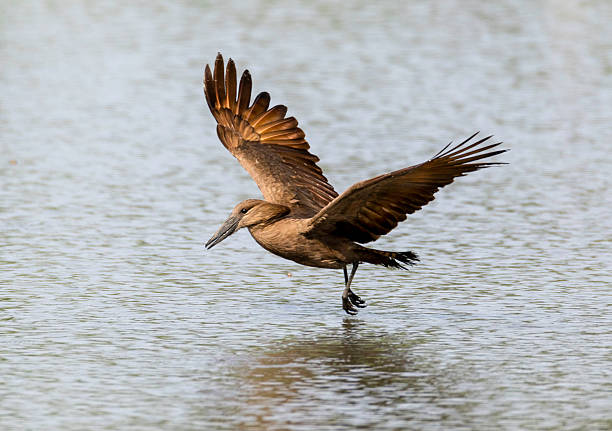
Hamerkop: The Hammer-Headed Bird With the Giant Nest
The Hamerkop (Scopus umbretta) is one of Africa’s most fascinating waterbirds, recognised for its unusual hammer-shaped head and extraordinary ability to construct enormous nests. This distinctive brown bird inhabits rivers, lakes, marshes and wetlands across much of sub-Saharan Africa, including Uganda, Kenya, Tanzania and Rwanda. Although it may appear ordinary at first glance, its remarkable nesting behaviour makes it one of the most interesting birds to observe on an African wildlife safari.
A Hamerkop can build a massive enclosed nest measuring approximately two metres across, using hundreds of sticks, branches and other natural materials. Some structures weigh more than 50 kilograms, making them exceptionally large compared with the bird itself. For birdwatchers visiting East Africa, observing a Hamerkop hunting in shallow water or carrying branches to its nest offers an interesting opportunity to learn about African wildlife.
What Is a Hamerkop?
The Hamerkop is a medium-sized wading bird belonging to the family Scopidae. It is the only living species in this family, making it an unusual member of the African bird community.
Its scientific name, Scopus umbretta, identifies a species that has attracted considerable attention because of its appearance and nesting habits.
The name Hamerkop comes from Afrikaans and means “hammerhead”. This refers to the distinctive shape created by its long bill and backward-pointing feather crest.
Although sometimes called the hammerhead stork, the Hamerkop is not a true stork. It belongs to the order Pelecaniformes, which also includes pelicans, herons and the Shoebill.
Hamerkops inhabit freshwater environments where they can find suitable nesting sites and plentiful aquatic food.
Quick Facts About the Hamerkop
| Feature | Description |
|---|---|
| Common name | Hamerkop |
| Scientific name | Scopus umbretta |
| Family | Scopidae |
| Bird order | Pelecaniformes |
| Height | Approximately 50–56 cm |
| Wingspan | Approximately 90–100 cm |
| Body colour | Brown |
| Main food | Frogs, tadpoles, fish and aquatic invertebrates |
| Habitat | Rivers, wetlands, marshes and lakeshores |
| Nest type | Large enclosed structure made from sticks |
| Typical clutch | 3–6 eggs |
| Conservation status | Least Concern |
| Distribution | Africa, Madagascar and parts of Arabia |
Why Does the Hamerkop Have a Hammer-Shaped Head?
The Hamerkop’s unusual head shape makes it easy to identify among African waterbirds.
Its long, slightly curved bill extends forward, while a prominent crest of feathers points backwards. When viewed from the side, the bill and crest resemble the head of a hammer.
Unlike birds with brightly coloured plumage, the Hamerkop has mostly uniform brown feathers. These colours allow it to blend into muddy riverbanks, shallow pools and surrounding vegetation.
Its relatively long legs help it move through shallow water while searching for food. The bird also has broad wings that support steady flight between feeding grounds and nesting locations.
Male and female Hamerkops look similar, meaning visitors generally cannot distinguish them by appearance alone.
How to Identify a Hamerkop During a Safari
When birdwatching in East Africa, look for these characteristics:
A distinctive hammer-shaped head with a backward-pointing crest.
A long, dark bill with a slight downward curve.
Brown feathers covering most of the body.
Dark legs used for walking through shallow water.
Broad, rounded wings during flight.
Slow and deliberate movements when hunting.
Hamerkops often walk alone along wetland margins, making their unusual head shape particularly noticeable.
The Hamerkop’s Giant Nest: An Extraordinary African Bird Structure
The Hamerkop is best known for constructing one of the largest enclosed nests built by any bird.
These impressive structures can measure approximately 1.5–2 metres across. Some contain substantial quantities of sticks, branches, grass and mud, creating a heavy structure that may weigh 50 kilograms or considerably more.
Unlike the open nests commonly associated with herons and storks, a Hamerkop nest has thick walls, a roof and an enclosed inner chamber.
The entrance usually connects to a short passage leading into the nesting chamber, where eggs and chicks remain protected.
Hamerkops often build their nests in large trees near water, although suitable structures and rocky locations may also be used.
How Hamerkops Build Their Giant Nests
Both male and female Hamerkops participate in nest construction.
The process involves several stages:
Choosing a nesting location: The pair selects a strong tree fork or another stable structure.
Collecting building materials: Both birds gather sticks, branches, grass and other vegetation.
Creating the foundation: Large sticks form the supporting platform.
Constructing the walls: Smaller branches and vegetation create the enclosed structure.
Building the nesting chamber: The birds form an internal space with an entrance passage.
Reinforcing the nest: Additional materials strengthen the walls and roof.
Building a nest often takes several weeks, although construction time varies depending on materials and local conditions.
Interestingly, Hamerkops sometimes construct multiple nests within their territories, even when they use only one for breeding.
Why Are Hamerkop Nests So Large?
Scientists believe the enclosed structure provides several advantages.
The thick walls offer protection against rain, strong winds and some predators. The enclosed chamber also helps shelter eggs and developing chicks.
However, protection alone may not explain why Hamerkops construct such exceptionally large nests.
Researchers have observed pairs building additional nests that are not immediately used for breeding, suggesting that nest construction may also have a social or behavioural function.
These enormous structures can remain standing long after the original birds have left.
Other Animals That Use Abandoned Hamerkop Nests
Hamerkop nests can benefit other wildlife species.
When abandoned, these structures may provide nesting locations or shelter for birds and other animals that cannot easily construct similar structures themselves.
Animals sometimes associated with abandoned Hamerkop nests include:
Owls seeking protected nesting spaces.
Egyptian geese using suitable nest cavities.
Other birds occupying abandoned chambers.
Snakes sheltering among branches.
Monitor lizards exploring nesting structures.
Because abandoned nests can remain useful to other animals, Hamerkop nest construction contributes to the availability of shelter within some wetland habitats.
Visitors should avoid disturbing nests, particularly when other species may be using them.
What Does a Hamerkop Eat?
Hamerkops are carnivorous birds that feed mainly on small aquatic animals.
Their preferred hunting grounds include shallow pools, marshes, river margins, flooded grasslands and muddy lakeshores.
Frogs and tadpoles form an important part of their diet, although they also consume fish and aquatic invertebrates.
Common Foods Eaten by Hamerkops
| Food | Where it is commonly found |
|---|---|
| Frogs | Wetlands, shallow pools and riverbanks |
| Tadpoles | Temporary pools and freshwater marshes |
| Small fish | Shallow lakes and slow-moving rivers |
| Aquatic insects | Marshes and wetland vegetation |
| Crustaceans | Muddy freshwater habitats |
| Worms | Moist soils and shallow water |
How Hamerkops Hunt Their Prey
Hamerkops use several hunting techniques.
They frequently walk slowly through shallow water, watching carefully for movement beneath the surface.
When prey becomes visible, the bird quickly strikes with its bill.
A Hamerkop may also move its feet through the water to disturb hidden animals, making them easier to locate.
Some individuals probe into muddy areas or vegetation in search of food.
These feeding techniques allow Hamerkops to survive in different freshwater habitats, including wetlands close to agricultural land and human settlements.
Hamerkop Breeding and Family Life
Hamerkops generally breed in pairs, with both adults sharing important responsibilities.
The breeding process begins with nest construction or the refurbishment of an existing nest.
The female commonly lays between three and six eggs inside the enclosed chamber.
Both adults participate in incubation, which usually lasts approximately 30 days.
After hatching, the chicks remain dependent on their parents for food and protection.
The adults regularly return with small aquatic animals to feed their young.
Young Hamerkops usually begin leaving the nest after around seven weeks, although development varies.
Breeding seasons differ according to geographical location, rainfall and food availability.
In areas with reliable freshwater resources, breeding activity may occur during several periods of the year.
Where to See Hamerkops in East Africa
East Africa contains numerous habitats suitable for Hamerkops, including major lakes, rivers, seasonal wetlands and protected freshwater ecosystems.
Travellers visiting Uganda, Kenya, Tanzania and Rwanda can encounter these birds during wildlife safaris, birdwatching excursions and boat trips.
Best Places to See Hamerkops
| Country | Destination | Suitable birdwatching habitat |
|---|---|---|
| Uganda | Queen Elizabeth National Park | Kazinga Channel and wetland margins |
| Uganda | Murchison Falls National Park | Nile River banks |
| Uganda | Mabamba Wetland | Marshes and shallow channels |
| Uganda | Lake Mburo National Park | Lakeshores and freshwater wetlands |
| Kenya | Lake Naivasha | Shallow lakeshores and marshes |
| Kenya | Maasai Mara National Reserve | Rivers and seasonal wetlands |
| Tanzania | Serengeti National Park | Riverbanks and shallow pools |
| Tanzania | Lake Manyara National Park | Wetlands and lake-edge habitats |
| Rwanda | Akagera National Park | Lakes, swamps and riverine vegetation |
These destinations provide suitable habitats, although sightings are never guaranteed.
Hamerkop Birdwatching in Uganda
Uganda offers excellent opportunities for observing Hamerkops because of its extensive network of lakes, rivers and wetlands.
Queen Elizabeth National Park is particularly rewarding for waterbird enthusiasts. Visitors exploring the Kazinga Channel may observe Hamerkops along the shoreline while also watching pelicans, herons, African fish eagles and other aquatic birds.
Murchison Falls National Park offers further opportunities along the Nile River, where Hamerkops search for prey in shallow water.
Mabamba Wetland, famous for Shoebill tracking, also supports numerous wetland birds, including Hamerkops.
At Lake Mburo National Park, birdwatchers can explore freshwater habitats where wading birds feed along lake margins.
A guided birdwatching excursion can improve the chances of locating Hamerkops and identifying their distinctive nesting structures.
Best Time to See Hamerkops on Safari
Hamerkops can be observed throughout the year in suitable habitats.
However, feeding behaviour and local water conditions influence where the birds are most easily seen.
Early mornings often provide rewarding birdwatching opportunities because Hamerkops may be actively hunting or transporting nesting materials.
Late afternoons can also be productive, especially near quiet wetlands and shallow pools.
Seasonal Birdwatching Opportunities
| Period | What visitors may observe |
|---|---|
| Early morning | Feeding and nest-building behaviour |
| Late afternoon | Hunting and movement between wetlands |
| Wet season | Birds using temporary pools and flooded areas |
| Dry season | Feeding around permanent freshwater sources |
| Throughout the year | Hamerkops in suitable wetland habitats |
The best period may vary between destinations because rainfall patterns differ across East Africa.
Hamerkop Behaviour and African Cultural Beliefs
The Hamerkop has attracted considerable cultural attention because of its unusual appearance and enormous nests.
In some African communities, traditional beliefs associate the bird with supernatural powers, good fortune or warnings.
These beliefs differ between communities and should not be interpreted as traditions shared across the entire continent.
In certain places, cultural respect for Hamerkops has discouraged people from disturbing their nests.
The birds also demonstrate interesting social behaviour.
Hamerkops sometimes perform displays involving raised crests, wing movements and vocalisations.
Although they often feed individually, several birds may gather in areas where food is abundant.
Their movements and interactions make them interesting subjects for patient wildlife observers.
Hamerkop Conservation and Threats
The Hamerkop is currently classified as Least Concern on the IUCN Red List, reflecting its relatively broad distribution.
However, this does not mean that all local populations are free from environmental pressure.
Wetland drainage, water pollution, habitat destruction and the removal of nesting trees can reduce suitable feeding and breeding areas.
Agricultural development may also change natural water systems and affect populations of frogs, fish and other aquatic animals.
How Travellers Can Help Protect Hamerkops
Responsible birdwatching practices include:
Maintaining a respectful distance from nesting birds.
Avoiding disturbance around eggs and young chicks.
Supporting conservation-focused safari operators.
Keeping wetlands and waterways free from litter.
Following instructions provided by park guides.
Avoiding unnecessary noise around active nesting sites.
Protecting wetland habitats benefits Hamerkops alongside many other African waterbirds and aquatic species.
Photography Tips for Hamerkops on Safari
Hamerkops provide rewarding photography opportunities because of their distinctive silhouette and feeding behaviour.
Photographers should aim to capture the bird from the side, where the unusual head shape becomes most visible.
A telephoto lens with a focal length of approximately 300–500 mm can help photograph birds without approaching too closely.
Early morning and late afternoon often provide favourable lighting conditions.
For photographs of the giant nest, include part of the surrounding tree to demonstrate the extraordinary size of the structure.
Avoid approaching occupied nests or using techniques that disturb breeding birds.
Patient observation usually produces more natural photographs of hunting, feeding and nest-building behaviour.
Why the Hamerkop Is Worth Watching on an African Safari
The Hamerkop is an excellent example of how ordinary-looking wildlife can display extraordinary behaviour.
Its hammer-shaped head makes it instantly recognisable, while its massive enclosed nest demonstrates one of the most elaborate construction behaviours among African birds.
For travellers interested in birdwatching, the species provides opportunities to observe feeding, courtship, nesting and parental care.
Whether you encounter a Hamerkop beside Uganda’s Kazinga Channel, near Kenya’s Lake Naivasha or along a river in Tanzania’s Serengeti, watching this remarkable waterbird can make your safari experience more rewarding.







No comment