

Soft Bags vs Hard Suitcases for Bush Flights and Safari Vehicles
Choosing the right luggage for an African safari can make a noticeable difference to how easily you move between airports, safari vehicles, lodges and remote camps. A suitcase that works perfectly for an international flight may become awkward when you need to load it into a small aircraft or fit it into a crowded safari vehicle. The best luggage choice depends on your itinerary, the type of aircraft you will use, the available storage space and how often you will move between destinations.
Soft-sided bags and hard-shell suitcases each have advantages. Soft bags are often easier to squeeze into limited storage spaces, lighter to handle and more convenient for itineraries involving small aircraft. Hard suitcases provide a firm protective shell that can help protect fragile belongings from impacts, crushing and rough handling. Neither option is automatically right for every safari.
A trip based at one lodge, with transfers in a private vehicle and no small aircraft flights, may work well with a hard suitcase. A multi-destination safari involving light aircraft, remote camps and frequent transfers may be easier with a compact soft-sided duffel. The important thing is to match your luggage to the actual transport arrangements rather than choosing a bag based only on appearance or price.
Understanding the differences before you travel can help you avoid excess baggage charges, difficult transfers and unnecessary stress. It can also help you protect your belongings while keeping essential clothing and equipment accessible throughout the journey.
Why Luggage Choice Matters on an African Safari
A safari often involves more transport changes than a conventional hotel holiday. You might arrive at an international airport, transfer to a domestic terminal, board a small aircraft, meet a driver at a remote airstrip and continue to a lodge in a safari vehicle. Each transfer creates different luggage requirements.
On a conventional international flight, a rigid suitcase can be convenient. Airport baggage systems, standard cargo holds and hotel luggage storage are generally designed to accommodate suitcases of different shapes and sizes. Once you reach a remote safari destination, the situation can change.
Small aircraft have limited baggage compartments, and some have openings that make loading large suitcases difficult. Weight restrictions may apply to the combined weight of passengers and luggage. Certain operators also specify soft-sided bags because they are easier to fit into restricted cargo spaces.
Safari vehicles introduce another consideration. Luggage may need to fit into a rear compartment, a boot, a rooftop storage area or a space shared with other passengers’ bags and equipment. A bulky suitcase with a rigid rectangular shape can occupy more usable space than a flexible bag of similar capacity.
Remote camps may also have uneven paths, steps, sandy ground or short walks between the vehicle and accommodation. A manageable bag is easier to move under these conditions than a large, heavy suitcase.
These practical issues do not mean that hard luggage is unsuitable for all African safaris. They mean that your transport arrangements should influence your decision before you buy or pack a bag.
Understanding Soft-Sided Safari Bags
Soft-sided luggage is made from flexible materials such as nylon, polyester, canvas or other textile blends. Common styles include duffel bags, soft travel bags and some wheeled luggage designs.
Their defining feature is flexibility. The sides can compress slightly when the bag is placed into a limited storage space, provided the bag is not packed too tightly and does not contain rigid objects that prevent it from bending.
Why Soft Bags Work Well on Bush Flights
Bush flights often use smaller aircraft to connect remote camps and national parks. These aircraft may have limited baggage compartments, making luggage size and shape especially important.
A soft-sided duffel can be easier to load because it has no rigid outer shell. Ground staff may be able to position it around other bags or fit it into a narrow compartment more efficiently. Its flexibility can also help when the storage space is irregularly shaped.
However, flexibility does not guarantee acceptance. Some aircraft operators impose specific dimensions, weight limits or luggage requirements. A large duffel that exceeds the permitted measurements may still be rejected even though its sides can compress.
Before choosing a soft bag, confirm the exact requirements for every bush flight on your itinerary. Ask whether the operator requires soft-sided luggage, whether wheels are permitted and whether the published allowance includes hand luggage. These details vary by operator and route.
Easier Storage in Safari Vehicles
Soft bags can be useful when several passengers share a safari vehicle. Their flexible shape allows them to fit around other luggage, equipment and storage compartments more easily than rigid cases.
This is particularly helpful on group safaris, where the driver must accommodate several people’s belongings. A compact duffel can make better use of irregular storage spaces and reduce the chance that one oversized suitcase will prevent other bags from fitting.
Soft bags may also be easier to place in a vehicle when the available opening is narrow. You can often turn or angle the bag without worrying about a rigid shell catching on the edges.
Still, flexibility has limits. A heavily packed soft bag may become bulky, and an oversized duffel can occupy considerable space. Choosing a smaller bag and packing efficiently is more effective than relying on the material alone.
Lightweight Construction
Many soft bags weigh less than hard-shell suitcases of comparable capacity, although the difference depends on the design, frame, wheels and materials used.
A lighter bag gives you more room within a strict baggage allowance. This can be valuable on bush flights, where every kilogram may count towards the operator’s permitted weight.
Look for strong stitching, durable fabric, reliable zips and reinforced handles. Lightweight construction should not come at the expense of quality. Weak straps or poor seams can fail when luggage is lifted repeatedly between vehicles and aircraft.
A practical safari bag should withstand dust, handling and regular transfers without becoming unnecessarily heavy. You do not need the most expensive bag available, but you should avoid choosing one solely because it is lightweight.
Limitations of Soft-Sided Luggage
Soft bags do not provide the same rigid protection as hard-shell suitcases. If you carry fragile equipment, delicate souvenirs or objects that must not be crushed, you need to take additional precautions.
The fabric can also be more vulnerable to punctures, abrasion and damage from sharp objects. Lower-quality zips may fail under pressure, particularly when the bag is overfilled.
Dust and rain can present additional challenges. Some soft bags use water-resistant materials, but water resistance does not necessarily mean waterproofing. If your bag may be exposed to heavy rain or wet ground, use suitable protective covers or waterproof internal pouches.
Soft-sided luggage also offers less structural support. If the bag is packed unevenly, it may become difficult to carry or may slump when placed on the ground. Packing cubes can help organise clothing and distribute items more evenly.
For most clothing-focused safari itineraries, these limitations are manageable. For travellers carrying expensive cameras, laptops or other fragile equipment, a separate protective case may be more appropriate.
Understanding Hard-Shell Suitcases
Hard-shell suitcases have a rigid outer case, commonly made from polycarbonate, polypropylene, ABS plastic or other moulded materials. Some designs use composite materials. They often include a structured interior, compression straps, a zip or frame closure and wheels.
Their main advantage is the protective shell. Unlike a soft duffel, a hard suitcase maintains its shape when packed or placed under other luggage. This can make it useful for travellers who need additional protection for certain belongings.
Better Protection for Fragile Items
A hard-shell suitcase can help shield the contents from everyday knocks, pressure and rough handling. The rigid surface provides a barrier between the contents and objects pressing against the bag.
This can be useful when transporting souvenirs, carefully packed personal items or belongings that benefit from a stable container. Some travellers also prefer hard luggage because it feels more secure when closed.
However, a hard shell does not make every item inside automatically safe. A suitcase can still experience significant impacts during transport, and the shell itself may crack under certain loads. Fragile objects should be wrapped and cushioned, especially if they are valuable.
Electronic equipment, camera bodies and lenses should ideally travel in properly padded protective cases rather than relying on the suitcase shell alone. Important electronics are often better carried in hand luggage, subject to airline restrictions and the operator’s rules.
Maintaining Shape During Packing
Hard suitcases retain their shape regardless of how full they are. This can make packing more organised because the interior remains structured and the case does not collapse around the contents.
Internal compression straps and dividers can keep clothing in place. Separate compartments may help distinguish clean clothes from worn items or keep toiletries away from garments.
The rigid design can also make a suitcase convenient for travellers who prefer a familiar packing system. You can arrange clothing in predictable compartments and use the flat surfaces to support neatly folded garments.
The disadvantage is that the shape cannot adapt to restricted storage spaces. Even when the suitcase contains relatively few items, the shell occupies its full external volume.
Wheels and Airport Convenience
Many hard-shell suitcases have four spinner wheels, which make them easy to move across smooth airport floors. This can be useful when travelling through large terminals or carrying a heavy load over long distances.
However, wheels add weight and create additional parts that may break. They can also make a suitcase harder to position in certain luggage compartments. A hard suitcase with a large wheel assembly may have external dimensions that exceed the limits for a small aircraft.
Wheels are less useful on sandy paths, rough ground and uneven surfaces around remote camps. You may need to carry the suitcase rather than roll it. A heavy hard case can become awkward when moving between a vehicle and accommodation.
If your safari includes several bush flights, consider whether the convenience of wheels during airport transfers outweighs their limitations during remote travel.
Limitations of Hard-Shell Suitcases
The most important limitation is rigidity. A hard case cannot compress to fit into a narrow space, and it may be difficult to load into a small aircraft’s baggage compartment.
Hard suitcases may also weigh more than some soft bags of comparable capacity. This is not true of every model, so compare the actual empty weight rather than assuming all hard cases are heavier.
The outer shell can scratch, dent or crack. A damaged shell may still protect the contents, but a significant crack can affect the suitcase’s structural integrity. Wheels, handles and locking mechanisms are also potential points of failure.
Hard luggage is not necessarily waterproof. Water can enter through zip closures, seams or damaged components. If rain protection is important, check the design rather than relying on the rigid exterior.
Soft Bags vs Hard Suitcases: The Main Differences
The practical differences become clearer when you compare the two types of luggage across the conditions you are likely to encounter.
Flexibility: Soft bags can compress slightly and adapt to irregular storage spaces. Hard suitcases retain their shape and need enough room for their full external dimensions.
Weight: Many soft bags are lightweight, but actual weight depends on construction. Some hard-shell models are also light, so compare specifications before buying.
Protection: Hard shells provide a rigid barrier against pressure and impacts. Soft bags are more flexible but generally offer less protection from crushing.
Storage: Soft bags often work well in safari vehicles and small aircraft with limited space. Hard suitcases are more convenient when the transport system can accommodate their shape.
Weather protection: Neither type is automatically waterproof. Soft bags may need a rain cover or waterproof inner pouches, while hard cases can still allow water through closures and seams.
Mobility: Wheeled suitcases are convenient on smooth airport floors. Duffel bags with handles or shoulder straps may be easier to lift into vehicles and carry over uneven ground.
Organisation: Hard cases offer a stable shape and structured compartments. Soft bags can be organised with packing cubes, compression sacks and separate pouches.
Durability: Quality depends on materials, construction and care. Strong fabric can last for years, while a good hard case can also withstand extensive travel. Poorly made versions of either type may fail.
Neither design wins in every category. The right choice depends on which advantages matter most for your particular journey.
Which Bag Is Best for a Bush Flight?
For many safari itineraries involving small aircraft, a compact soft-sided bag is the most practical main-luggage option. It is flexible, often lightweight and easier to fit into restricted storage compartments.
However, the term “bush flight” covers different aircraft and operating conditions. A small aircraft used for a short transfer may have different requirements from a larger regional aircraft serving several safari destinations. Some operators accept certain wheeled bags, while others specify soft-sided luggage.
Do not buy a bag based on a general recommendation alone. Confirm the requirements with the airline or safari operator before departure. Ask for the maximum permitted dimensions, the total baggage allowance and any restrictions on rigid frames or wheels.
Weight is particularly important. Some bush flights operate under strict limits because aircraft performance depends on the combined weight of passengers, luggage and fuel. An overweight bag may require repacking, additional charges or other arrangements, depending on the operator.
Remember that the stated allowance may include both checked baggage and hand luggage, or it may specify separate limits. Confirm whether camera bags, daypacks and personal items count towards the total.
A compact duffel with strong handles, reliable zips and a manageable weight is a sensible choice when the operator requires or recommends soft-sided luggage. If the operator accepts a small hard suitcase, that option may also work, provided it meets the stated limits.
Which Bag Works Best in Safari Vehicles?
Safari vehicles vary in design. A private four-wheel-drive vehicle may have a dedicated rear luggage compartment, while a shared vehicle may need to accommodate several passengers and their belongings. Some vehicles have limited room behind the seats, particularly when they carry equipment for extended activities.
Soft bags often provide an advantage because they can fit around other luggage. Their flexible shape makes it easier for the driver or guide to arrange several bags without wasting as much space.
This can be especially useful on group safaris. If every traveller brings a large hard suitcase, the combined luggage may exceed the available storage capacity even when each bag individually seems reasonable.
A hard suitcase may work perfectly well for a private safari with generous luggage space. If your driver confirms that the vehicle can accommodate your case, there is no universal requirement to replace it with a duffel.
The number of passengers matters as much as the type of vehicle. A large vehicle carrying two travellers may have more available luggage space per person than a fully occupied vehicle with several passengers.
When booking, tell your safari operator how many people are travelling and what type of luggage you plan to bring. If the itinerary includes multiple transfers, ask whether the luggage space changes between vehicles.
The Best Luggage for Different Safari Itineraries
Different travel styles create different luggage needs. A useful packing decision starts with the transport arrangements rather than the destination name alone.
A Lodge-Based Safari With Road Transfers
If you will travel between destinations in a private vehicle and stay at lodges with road access, either a soft bag or a hard suitcase may work.
A hard-shell suitcase can be convenient if you prefer structured packing, have fragile belongings and know that the vehicle has sufficient storage space. A soft duffel may be easier to handle during transfers and could leave more room for other luggage.
For a short safari with few hotel changes, a medium-sized suitcase may be perfectly reasonable. The key is to avoid bringing a case so large that it occupies unnecessary space.
A Multi-Destination Safari With Bush Flights
If your itinerary includes several small-aircraft transfers, a compact soft-sided bag is often the safer starting point. It is easier to position in limited storage spaces and may help you remain within a strict luggage allowance.
Confirm the rules for every flight, especially if more than one operator is involved. Do not assume that acceptance on the first flight means the bag will be accepted on every later leg.
Choose a bag that can carry your clothing without becoming excessively bulky. Lightweight packing is particularly valuable when the allowance is low.
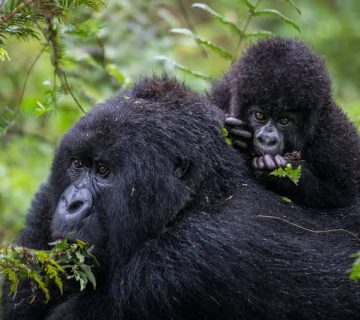
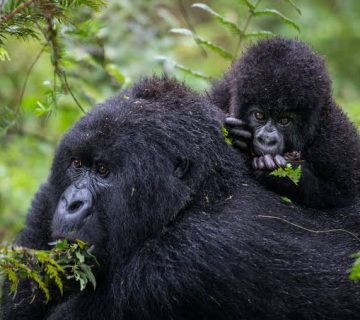
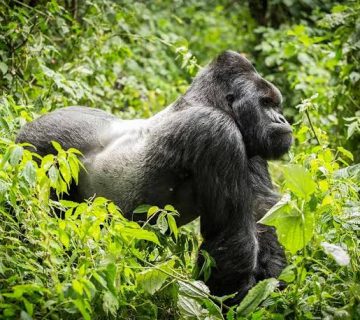
A Gorilla Trekking Safari in Uganda or Rwanda
A gorilla trekking itinerary often combines road transfers with time in forested, mountainous areas. If small aircraft are involved, the operator’s baggage restrictions should guide your choice. If the trip is entirely road-based, you may have more flexibility.
A soft bag can be useful because it is easy to move between vehicles and lodge rooms. However, your main luggage should not be confused with the daypack you carry during the trek.
For trekking, use a small daypack that fits comfortably and can hold water, a rain jacket and any other items recommended by your guide. Keep your main suitcase or duffel at the accommodation or in the vehicle, according to the arrangements provided by your operator.
A Family or Group Safari
Families and groups need to consider total luggage volume rather than the capacity of each individual bag. Several medium-sized bags may be easier to arrange than a collection of oversized suitcases.
Soft-sided luggage can make shared storage more efficient, but every traveller should still respect the baggage allowance. A flexible bag is not a reason to pack more than the vehicle or aircraft can carry.
Coordinate luggage sizes before departure, particularly if the group will use small aircraft. This helps prevent one oversized bag from creating problems for the entire group.
How to Choose a Good Soft-Sided Safari Bag
If you decide to use a soft bag, focus on construction, size and carrying comfort rather than appearance alone.
Choose durable fabric that can withstand repeated handling. Reinforced seams, strong handles and reliable zips are more important than decorative features. The bag should remain comfortable to carry when fully packed, without placing excessive strain on your hands or shoulders.
A wide opening makes packing and unpacking easier. It also helps you find clothing without removing everything from the bag. Internal pockets can be useful for small items, although packing cubes often provide enough organisation.
Consider a shoulder strap only if it is comfortable and securely attached. Some travellers prefer handles because a heavy duffel can be awkward to carry on one shoulder over a long distance.
Wheels may be convenient, but they add weight and can reduce the flexibility of the bag. If you will use several bush flights, check whether wheels and rigid base panels are permitted.
A rain cover or suitable protective liner can help keep your clothing dry. For items that must remain dry, individual waterproof pouches provide an additional layer of protection.
Finally, choose a size that meets the requirements of your itinerary. A very large duffel may be difficult to fit into an aircraft even if it is made from flexible fabric.
How to Choose a Good Hard-Shell Suitcase
If your safari is road-based or the aircraft operator accepts hard luggage, a hard-shell suitcase can be a useful option. Start by checking the empty weight and external dimensions, including wheels and handles.
A lightweight shell can help reduce the overall weight of the bag. Polycarbonate and polypropylene are common choices, although performance varies by design and construction. Do not judge durability by the material name alone.
Inspect the wheels, handles, hinges and closure system. These parts often experience repeated stress during travel. A sturdy telescopic handle should extend and retract smoothly, while the wheels should turn without excessive resistance.
Interior compression straps and compartments can help organise clothing. However, do not overfill the case simply because it has a rigid shape. Excessive pressure can strain zips or closures and may damage the shell.
If the suitcase has a built-in lock, confirm that it suits your travel needs. A lock can deter casual access, but it does not make luggage theft-proof. Keep valuables and essential documents with you rather than placing them in checked baggage.
For a safari involving only road transfers, a medium-sized hard case may be sufficient. For a mixed itinerary with small aircraft, confirm compatibility before choosing it as your main bag.
Packing Fragile Equipment and Valuables
Your choice of main luggage should also reflect what you intend to carry. Clothing, shoes and ordinary toiletries generally do not require a rigid protective shell. Cameras, lenses, computers and other delicate equipment may need specialised protection.
If you are bringing expensive camera equipment, use a padded camera bag or protective insert designed for the equipment. Keep it with you when possible and follow airline and aircraft rules for hand luggage, batteries and restricted items.
Do not assume that a hard suitcase alone will protect a camera lens from a serious impact. The equipment should be secured so it cannot move freely inside the case.
Keep passports, travel documents, essential medication, money and other important items in an accessible personal bag, subject to applicable rules. Avoid placing items that you cannot easily replace in checked luggage.
For toiletries, use leak-resistant containers and place liquids in a separate pouch. This protects clothing from accidental spills, regardless of whether your main bag is soft or hard.
If you plan to bring souvenirs home, leave some spare capacity. Buying a larger suitcase at the start of the trip simply to accommodate possible purchases is often unnecessary.
Keeping Luggage Clean and Protected
Safari luggage can collect dust, mud and moisture during transfers. The best way to protect your belongings is to prepare for these conditions rather than expecting the bag to remain spotless.
A removable rain cover can help protect a soft bag from rain and dirty handling surfaces. Waterproof pouches are useful for spare clothing, electronics and other items that should remain dry.
For hard suitcases, wipe away dust and mud before storing the case indoors. Check the wheels and handles for grit that could interfere with movement. Clean and dry the case before packing it away at home.
A luggage tag with your contact information can help identify the bag if it becomes separated from you. Consider placing a second identification card inside the bag in case the external tag is lost.
Avoid attaching loose accessories that can snag during loading. Keep straps secured and do not leave zips partially open. If your bag has compression straps, adjust them so they do not hang freely.
During transfers, follow the driver’s instructions about where luggage should be placed. Do not overload a bag beyond its intended capacity, and avoid carrying it by a zip pull or another component that is not designed to support its weight.
Common Luggage Mistakes to Avoid
One of the most common mistakes is choosing luggage before checking the bush-flight allowance. Travellers sometimes buy an expensive suitcase only to discover that its dimensions or weight do not meet the operator’s requirements.
Another mistake is assuming that every safari vehicle has a large luggage compartment. Storage space depends on the vehicle, passenger numbers and equipment carried. Confirm the arrangements instead of relying on general expectations.
Packing a large hard suitcase for a multi-flight itinerary can create avoidable problems when aircraft compartments are small. On the other hand, choosing a flimsy duffel simply because it is flexible may leave your belongings poorly protected.
Overpacking is another frequent issue. Extra clothing, multiple pairs of shoes and unnecessary accessories add weight without necessarily improving comfort. A compact, coordinated wardrobe is easier to transport and organise.
Some travellers also forget to account for the weight of the bag itself. A heavy empty case reduces the amount of clothing and equipment you can carry under a strict limit. Compare empty weights before purchasing luggage.
Finally, do not assume that a soft bag is automatically waterproof or that a hard case is indestructible. Both types require sensible packing, suitable protection and careful handling.
A Practical Luggage Strategy for Your Safari
For many travellers, the most efficient arrangement is one main bag for clothing and ordinary personal belongings, plus a small daypack for items needed during activities. The main bag should be large enough for the itinerary but compact enough to meet all transport restrictions.
If your safari includes small aircraft, begin by checking the operator’s baggage policy. Choose a soft-sided bag if required or recommended, and keep the weight within the stated allowance. Pack only the clothing and equipment you expect to use.
If your safari is entirely road-based, choose the bag that best suits your needs and the available vehicle space. A hard-shell suitcase may be convenient for structured packing, while a soft duffel can be easier to lift and fit into restricted storage areas.
Keep fragile equipment in dedicated protective cases and essential items in your personal bag. Use packing cubes to organise clothing and separate clean garments from worn items. Protect belongings from rain and dust when conditions require it.
Before departure, measure the packed bag rather than relying only on its advertised dimensions. Soft bags can expand when full, while external wheels and handles can increase the size of a hard suitcase. Weigh the complete bag, including the items you intend to carry inside it.
Your final decision should be based on the full journey. A bag that works for an international flight may not suit a small aircraft, and a case that fits one safari vehicle may be awkward in another. Confirming these details in advance is the most reliable way to avoid unnecessary complications.
Soft bags are often the practical choice for safaris involving bush flights and frequent transfers because they are flexible, easy to handle and commonly lightweight. Hard-shell suitcases remain useful for road-based trips and journeys where rigid protection and structured packing matter more. Neither is universally superior. The best luggage is the one that meets your operator’s restrictions, fits the available storage space, protects your belongings and allows you to travel without carrying more than you need.




No comment