
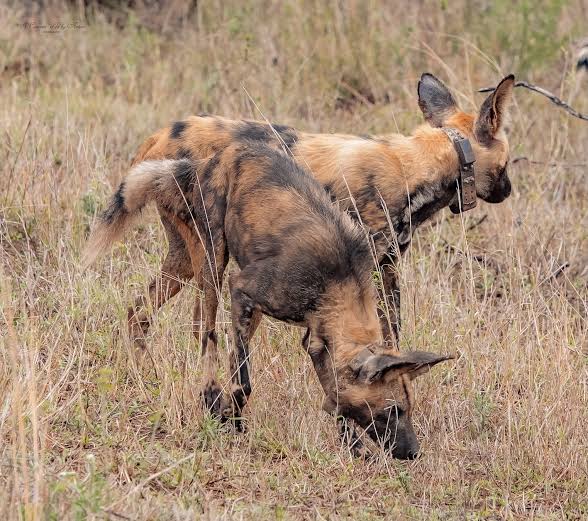
African Wild Dogs Decide When to Hunt by Sneezing
Imagine watching a pack of African wild dogs resting beneath a shady tree in Botswana’s Okavango Delta. Suddenly, one dog stands up and approaches the others. Tails begin wagging, pack members greet one another, and several dogs release short, sharp sneezing sounds. Within moments, the entire group becomes active and heads into the surrounding grassland.
It may look like an ordinary morning ritual, but scientists have discovered something remarkable about these sounds. African wild dogs sneeze before hunting, and the number of sneezes during a social gathering can help determine whether the pack moves off together.
This unusual behaviour has attracted international attention because it suggests that wild dogs use a form of collective decision-making. Rather than following a leader every time, pack members appear able to influence when the group departs.
For safari travellers, understanding this behaviour reveals another fascinating side of one of Africa’s most endangered predators.
1. What Are African Wild Dogs?
The African wild dog, scientifically known as Lycaon pictus, is a highly social carnivore found in parts of sub-Saharan Africa.
It is also called the African painted dog because of its distinctive coat, which contains irregular patches of black, brown, yellow and white.
Every individual has a unique coat pattern, making it possible for researchers to recognise particular animals.
African wild dogs have large rounded ears, long legs and slender bodies adapted for travelling and hunting across extensive landscapes.
Unlike domestic dogs, they are a separate wild species with their own evolutionary history.
They live in packs and depend heavily on cooperation for hunting, raising puppies and surviving in challenging environments.
2. The Discovery: Wild Dogs Use Sneezes During Group Decisions
In 2017, researchers published a study examining how African wild dogs decide when to leave resting areas.
The research was conducted in Botswana’s Okavango Delta.
Scientists observed five wild dog packs and recorded 68 social gatherings, known as rallies.
These energetic gatherings sometimes occurred shortly before the animals departed together.
Researchers noticed that the dogs frequently produced short, audible nasal exhalations resembling sneezes.
The more sneezes recorded during a rally, the greater the likelihood that the pack would leave its resting site.
The findings suggested that sneezing plays a role in coordinating collective movement.
3. Why Do African Wild Dogs Sneeze?
In humans, sneezing usually happens when something irritates the nose.
African wild dogs may sneeze for ordinary physical reasons too.
However, researchers found that sneezing during social rallies was associated with group departure decisions.
These rapid nasal exhalations appear to function as behavioural signals.
A dog producing such a sound may contribute to the group’s readiness to move.
Does Every Sneeze Mean the Pack Will Hunt?
No.
One sneeze does not automatically start a hunt.
Researchers found that successful departures were associated with the total number of sneezes during the rally.
The identity of the dog initiating the gathering also influenced the result.
It is therefore more accurate to say that sneezing helps coordinate group movement than to suggest every sneeze is a command to hunt.
4. What Is a Wild Dog Social Rally?
A social rally is an energetic gathering involving pack members.
It frequently occurs after a resting period and before collective movement.
During a rally, African wild dogs may:
- Approach and greet one another.
- Wag their tails.
- Produce excited vocalisations.
- Touch or lick one another.
- Jump and move around.
- Release short sneezing sounds.
- Prepare to travel together.
These greetings reinforce social relationships while allowing the pack to coordinate its next activity.
However, not every rally results in departure.
Some gatherings end with the dogs returning to rest.
5. How Many Sneezes Does It Take to Start a Hunt?
One of the most interesting findings was that the number of sneezes needed varied according to who initiated the rally.
When dominant individuals were involved, fewer sneezes were needed for the group to depart.
When lower-ranking dogs initiated the gathering, the researchers found that approximately ten sneezes could be needed.
Sneezing and Group Departure
| Situation | Research Finding |
|---|---|
| Dominant dogs initiate a rally | Fewer sneezes needed for departure |
| Lower-ranking dogs initiate a rally | More sneezes needed, approximately ten |
| Many sneezes during a rally | Greater likelihood of collective movement |
| Few sneezes during a rally | The pack may remain resting |
| Successful rally | Dogs leave the resting area together |
The numbers are observations from the Botswana study, not universal rules for every African wild dog pack.
6. Do African Wild Dogs Actually Vote?
Researchers described this behaviour as a form of voting because individual signals appeared to contribute to a collective decision.
However, wild dogs do not vote in the deliberate way humans do during elections.
Instead, their behaviour resembles a process called quorum decision-making.
A quorum occurs when enough signals or participating individuals reach a threshold that triggers group action.
In African wild dogs, sneezing appears to help determine when that threshold has been reached.
The finding is especially interesting because even lower-ranking pack members can influence whether a group departs.
7. Does the Dominant Pair Make Every Decision?
African wild dog packs typically contain a dominant breeding pair.
These animals can have considerable influence over pack activities.
However, the sneezing study showed that the dominant pair does not control every movement decision.
When dominant dogs initiate a rally, the group is more likely to depart with fewer sneezes.
Nevertheless, enough sneezing by other pack members may also lead to departure.
This suggests that pack coordination involves both leadership and group participation.
Such flexibility may help maintain cooperation among animals with different needs.
8. Why Is Group Decision-Making Important for Hunting?
African wild dogs are cooperative hunters.
They frequently pursue medium-sized antelopes and other suitable prey across open or lightly wooded habitats.
Hunting together allows pack members to coordinate pursuit and share access to food.
Before hunting, however, the animals need to begin moving as a group.
If some individuals are ready to leave while others remain resting, collective movement becomes more difficult.
Sneezing during a rally may help communicate readiness for departure.
A coordinated start allows pack members to remain together as they begin travelling.
9. How Do African Wild Dogs Hunt Together?
Wild dogs are recognised for endurance, cooperation and effective pursuit hunting.
Once the pack becomes active, individuals may search for prey while maintaining contact with companions.
When suitable prey is located, several dogs may participate in the chase.
Their hunting behaviour differs from that of leopards, which typically depend on stealth and ambush.
Wild dogs often rely on sustained movement and cooperation.
After a successful hunt, pack members can share food.
They may also regurgitate food for puppies and other individuals unable to participate in the hunt.
These behaviours demonstrate how social cooperation extends beyond the initial decision to move.
10. How Is Sneezing Different From Other Wild Dog Calls?
African wild dogs communicate through several types of sounds and body movements.
Sneezing is only one part of their communication system.
| Signal | Possible Function |
|---|---|
| Sneezing during rallies | Associated with collective departure decisions |
| High-pitched contact calls | Helping pack members locate one another |
| Growling | Expressing tension or warning |
| Excited greeting sounds | Social interaction |
| Tail movements | Communicating excitement or other social information |
| Physical greetings | Maintaining pack relationships |
No single sound should be interpreted without observing the surrounding behaviour.
For example, a sneeze during a resting period may not have the same significance as repeated sneezes during a group rally.
11. Where Can You See African Wild Dogs on Safari?
African wild dogs are rare and occur at low densities across large landscapes.
Visitors have better chances in conservation areas supporting established packs.
| Safari Destination | Country | Viewing Opportunities |
|---|---|---|
| Okavango Delta | Botswana | Wild dog packs and social behaviour |
| Moremi Game Reserve | Botswana | Pack movement and hunting |
| Nyerere National Park | Tanzania | Wild dogs in extensive savannah habitats |
| Ruaha National Park | Tanzania | Wild dog sightings in suitable habitats |
| Laikipia ecosystem | Kenya | Wild dog conservation landscapes |
| Samburu ecosystem | Kenya | Wild dog sightings in northern Kenya |
African wild dogs were historically present in Uganda, but the IUCN’s 2025 assessment lists them as extinct there. Travellers should therefore not plan a Ugandan safari expecting to encounter a resident wild dog pack.
Even in established viewing destinations, sightings are unpredictable because packs travel over large areas.
12. Best Time to Watch Wild Dog Pack Behaviour
African wild dogs are often active during cooler parts of the day.
Early morning and late afternoon game drives may provide opportunities to observe resting packs becoming active.
A group may spend time greeting, stretching and moving around before leaving.
However, wild dogs do not follow a fixed hunting timetable.
Their movements depend on weather, prey availability, pack needs and local conditions.
If you encounter a resting pack, patient observation may reveal interesting interactions even without a hunt.
13. What Should Safari Visitors Look For?
Watching a wild dog pack requires more than looking for fast-moving predators.
Pay attention to the animals while they are resting.
Notice whether individuals begin standing, approaching companions or producing excited sounds.
A sudden increase in greetings and movement may indicate an approaching departure.
If you hear repeated sneezing, you may be observing behaviour similar to that described in the Botswana research.
However, visitors cannot determine whether a pack has reached a particular decision threshold simply by counting a few sounds.
Your guide can help interpret the behaviour.
14. Why Are African Wild Dogs Endangered?
African wild dogs are classified as Endangered on the IUCN Red List.
Their populations face several serious threats.
Habitat fragmentation can restrict movement and separate packs from suitable hunting areas.
Conflict with livestock owners, accidental snaring and road accidents also affect populations.
Infectious diseases transmitted by domestic animals can cause major losses.
African wild dogs require large, connected landscapes because packs may travel considerable distances.
Conservation organisations work to protect habitats, monitor populations and reduce conflict with neighbouring communities.
15. How to Watch African Wild Dogs Responsibly
Wild dog sightings can be exciting because their movements are often unpredictable.
However, visitors should avoid interfering with natural behaviour.
During a safari:
- Keep a suitable distance from the pack.
- Avoid surrounding resting animals with vehicles.
- Never block their direction of travel.
- Do not imitate sneezing sounds to provoke movement.
- Avoid disturbing den sites and young puppies.
- Remain quiet during social rallies.
- Follow your guide’s instructions.
If a pack begins travelling, do not encourage the driver to chase it aggressively.
Responsible wildlife observation allows the dogs to make their own movement decisions.
What Sneezing Reveals About Wild Dogs
The discovery that African wild dogs use sneezing during group decision-making demonstrates how sophisticated animal communication can be.
Researchers in Botswana found that the number of sneezes during social rallies helped predict whether packs would leave their resting places.
The study also showed that dominant individuals influence decisions, but lower-ranking dogs can contribute to collective movement.
For wildlife enthusiasts, this behaviour provides another reason to appreciate African wild dogs beyond their impressive hunting abilities.
The next time you encounter a resting wild dog pack, listen carefully. A few short sneezes may be part of the remarkable process through which these social predators decide when to move together.






No comment