
Night Walks in Kibale and Mabira
Night Walks in Kibale and Mabira: Bush Babies and Pottos
When darkness falls over Uganda’s tropical forests, a different group of animals becomes active. Chimpanzees settle into their sleeping nests, daytime monkeys grow quiet, and nocturnal creatures begin searching for food. Among them are bush babies and pottos, two fascinating primates that most safari travellers rarely encounter.
Night walks in Kibale and Mabira offer an opportunity to learn about Uganda’s nocturnal wildlife. Kibale National Park has an established guided night-walking experience, while visits after dark in Mabira Forest require confirmation of local permissions and authorised guiding arrangements.
Unlike daytime forest walks, nocturnal excursions focus on listening for animal calls, watching for movement and carefully observing wildlife using controlled lighting.
For travellers interested in Uganda’s lesser-known primates, exploring the forest after sunset can be a memorable addition to a wildlife safari.
What Are Nocturnal Forest Walks?
A nocturnal forest walk is a guided nature activity conducted after sunset to observe animals that are mainly active at night.
Visitors accompany an authorised guide along designated or approved forest routes.
Guides use suitable lighting to examine trees, branches and surrounding vegetation while listening for wildlife.
Unlike chimpanzee trekking, night walks generally focus on smaller mammals, birds, insects and amphibians.
The experience requires patience because many nocturnal animals are small, secretive and difficult to locate.
Wildlife sightings are never guaranteed.
1. Bush Babies: Uganda’s Small Night-Time Primates
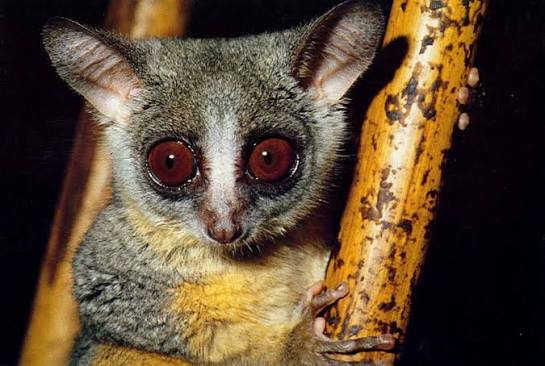
Bush babies, also called galagos, are small nocturnal primates recognised by their large eyes, rounded ears and impressive jumping abilities.
Several species occur in Uganda, including dwarf galagos and larger bush babies.
Their large eyes help them see in low-light conditions, while their sensitive hearing assists with locating insects and detecting danger.
Bush babies often travel rapidly between branches using powerful hind legs.
How to Recognise Bush Babies
During a night walk, your guide may notice reflections from an animal’s eyes before identifying the creature.
Bush babies have soft fur, long tails and relatively small bodies.
Some produce distinctive calls that resemble crying or other high-pitched sounds.
Their diet includes insects, fruits and tree gums, although feeding preferences vary between species.
Observing one jumping between branches can be an exciting wildlife encounter.
2. Pottos: The Slow-Moving Forest Primates
Pottos are nocturnal primates belonging to the loris family.
Unlike bush babies, which are known for their remarkable jumping abilities, pottos move slowly and carefully through branches.
They have rounded heads, large eyes, thick fur and strong gripping hands and feet.
Their deliberate movements help them travel through trees without attracting much attention.
Why Are Pottos Difficult to Find?
Pottos often remain concealed among leaves and branches.
Their brownish-grey fur provides camouflage, especially under forest darkness.
They may spend considerable time feeding on fruits, tree gums and insects.
Because they rarely make the sudden movements associated with bush babies, guides must search carefully to locate them.
Spotting a potto in its natural habitat is a rewarding experience for travellers interested in unusual African primates.
3. Night Walks in Kibale National Park
Kibale National Park is located in western Uganda, near Fort Portal.
The park is internationally known for chimpanzee tracking, but it also supports several nocturnal primate species.
Guided night walks provide an opportunity to explore the forest after ordinary daytime activities have ended.
What Happens During a Kibale Night Walk?
Visitors normally begin with instructions covering forest safety, wildlife observation and appropriate behaviour.
An authorised ranger then leads the group along an approved route.
The guide may stop frequently to listen for animal calls or examine vegetation using a spotlight.
Possible wildlife encounters include bush babies, pottos, tree hyraxes, nocturnal birds and insects.
The experience is generally slower than a daytime chimpanzee trek because the emphasis is on careful observation.
4. What Time Do Kibale Night Walks Begin?
Published Uganda Wildlife Authority visitor information describes Kibale night walks operating between approximately 7:30 pm and 10:00 pm.
However, schedules, activity availability and duration should be confirmed before travelling.
Night walks are separate from ordinary chimpanzee tracking permits.
Visitors should arrange the activity through the appropriate park authority or an authorised safari operator.
Arriving early allows time for a briefing and preparation.
5. Exploring Nocturnal Wildlife in Mabira Forest
Mabira Central Forest Reserve is located along the Kampala–Jinja corridor in central Uganda.
The forest supports monkeys, birds, butterflies and other wildlife.
It is popular for guided nature walks, birdwatching and forest-based tourism activities.
Nocturnal mammals may also inhabit suitable forest areas.
However, visitors should distinguish between the presence of nocturnal wildlife and the availability of organised night walks.
Can You Take a Night Walk in Mabira?
Unlike Kibale, Mabira does not have an equally well-documented, routinely scheduled public night-walking programme.
If you want to visit after dark, contact the relevant forest management authorities or an authorised local guide.
Ask whether night access is permitted, which routes can be used and what safety arrangements are available.
Never enter the forest independently after dark.
A properly authorised experience is essential for visitor safety and wildlife protection.
6. Kibale vs Mabira: Which Is Better for Night Wildlife?
Both forests have interesting natural habitats, but their visitor arrangements differ.
| Feature | Kibale National Park | Mabira Forest |
|---|---|---|
| Location | Western Uganda | Central Uganda |
| Established night walks | Documented guided activity | Confirm availability locally |
| Main nocturnal interest | Bush babies, pottos and other forest wildlife | Nocturnal forest wildlife where authorised |
| Guiding | Uganda Wildlife Authority arrangements | Approved forest management arrangements |
| Nearby destinations | Fort Portal and Bigodi | Kampala, Mukono and Jinja |
| Best for | Dedicated nocturnal primate viewing | Forest nature experiences near Kampala |
For travellers specifically hoping to observe bush babies and pottos, Kibale is the more dependable choice.
Mabira is worth considering for a general forest experience, but after-dark access should never be assumed.
7. How Guides Find Bush Babies and Pottos
Experienced forest guides use several observation techniques.
They listen for unusual calls, examine branches and search for eye reflections using appropriate lighting.
Bush babies may be detected through rapid movements or vocalisations.
Pottos require slower searching because they move quietly through vegetation.
Guides also consider habitat characteristics and previous sightings.
However, detecting reflected eyes does not automatically confirm an animal’s identity.
A bird, small mammal or another nocturnal creature may produce a similar reflection.
8. Other Animals You Might Encounter at Night
Night walks reveal more than nocturnal primates.
Depending on location, visitors may encounter:
- Tree hyraxes.
- Owls and nightjars.
- Frogs and other amphibians.
- Moths and large insects.
- Nocturnal rodents.
- Civets or genets, occasionally.
- Other small forest mammals.
Some animals are more frequently heard than seen.
For example, tree hyraxes can produce surprisingly loud calls that travel through the forest.
Your guide can explain these sounds and help distinguish different species.
9. Best Season for Night Walks in Uganda
Uganda’s forests can be visited throughout the year, but weather conditions influence walking comfort.
Relatively drier months, particularly June to August and December to February, often provide less muddy trails.
During wetter periods, insects and amphibians may become more active.
However, heavy rainfall can make forest paths slippery and affect the availability of guided activities.
There is no single season that guarantees sightings of bush babies or pottos.
Choose your travel dates according to your wider safari itinerary and personal preferences.
10. What Should You Wear on a Night Walk?
Forest temperatures can become cool after sunset, particularly in western Uganda.
Wear comfortable clothing that protects your arms and legs.
Recommended items include:
- Closed hiking shoes with reliable grip.
- Long trousers and long-sleeved clothing.
- Lightweight rain jacket.
- Small backpack.
- Drinking water.
- Insect repellent.
- Personal medication.
- Torch, if your guide recommends bringing one.
Your guide will normally manage wildlife observation lighting.
Avoid carrying unnecessary equipment or using powerful personal lights without permission.
11. Safety Rules for Nocturnal Forest Walks
Night walking requires particular care because visibility is limited.
Always remain with your authorised guide and follow instructions.
Do not approach animals or attempt to touch them.
Avoid flash photography and never shine bright lights directly into an animal’s eyes for extended periods.
Keep conversations quiet and avoid playing recorded animal calls.
Remain on approved routes and do not leave the group to investigate unfamiliar sounds.
If you feel uncomfortable or unwell, inform your guide immediately.
12. Can You Photograph Bush Babies and Pottos?
Photographing nocturnal primates is challenging because light levels are low.
Bush babies may move quickly, while pottos often remain partly hidden among branches.
A camera with suitable low-light performance can help.
However, photography should never interfere with animal welfare.
Ask your guide about permitted lighting and photography practices.
Sometimes observing an animal quietly provides a better experience than attempting to capture a photograph.
13. Combining Night Walks With Other Uganda Activities
A Kibale night walk can complement daytime chimpanzee tracking or nature walks.
Travellers can also explore Bigodi Wetland Sanctuary, visit nearby communities or continue towards Queen Elizabeth National Park.
Mabira Forest is conveniently located for travellers visiting Kampala or Jinja.
Its daytime walking and birdwatching activities can fit into a shorter itinerary.
Avoid scheduling exhausting activities without adequate rest.
If you have completed a demanding chimpanzee trek, consider whether you will still feel comfortable walking after dark.
Final Thoughts: Discover Uganda’s Forests After Sunset
Night walks in Kibale and Mabira introduce travellers to an interesting side of Uganda’s forest wildlife.
Bush babies demonstrate remarkable jumping abilities, while pottos move quietly and carefully through the trees.
Kibale provides the more established opportunity for guided nocturnal primate observation.
For Mabira, confirm authorised night-walking arrangements before planning your visit.
Whether you encounter a bush baby, hear a tree hyrax calling or simply observe the forest after sunset, a responsible night walk can deepen your appreciation of Uganda’s biodiversity.
The best nocturnal forest experience combines patience, an experienced guide and respect for animals that are rarely seen during the day.







No comment