The Quietest Hour of My Life Spent Watching a Stork
Travel can surprise you. Sometimes the best memories are not about adventures or busy cities. They are about moments. The Quietest Hour of My Life Spent Watching a Stork was in Uganda. It was morning and the world was slow. I saw things had not noticed before. went to the Mabamba Wetland to see the shoebill. I wanted to take pictures and see things, found something better. and learned that silence can be a thing when you let yourself enjoy it.
Before Sunrise the Journey Began
We started before the sun came up. The roads were empty and quiet. We went to the landing site where the guides were getting the canoes ready. The air was cool. Smelled, like wet earth. The water was calm. Reflected the sky. Everything was peaceful. There were no crowds or loud noises. It was nice to slow down. We got in the canoe. The guide pushed off from the shore. We glided through the water. Saw tall papyrus reeds swaying in the wind.
The wetlands started to wake up. Fish jumped out of the water. Made ripples. Kingfishers flew by. Herons stood still. African jacanas walked on the floating plants and birds called out in the distance. Every minutes we saw a new bird. They were all interesting. We were looking for the shoebill. The Mabamba Wetland is special because it makes you slow down. You have to be patient and quiet. The canoe moved slowly. We became part of the landscape. The guide told us about the shoebill. How it stands still for hours. We did not know if we would find one. That made it more exciting.
Discovering the Value of Silence
As we went deeper into the wetland something changed. The silence started to feel normal. I stopped thinking about my phone and my schedule. just looked at the world around me, saw dragonflies and waves on the water. Even the sound of the paddle was nice. There were no noises to distract me.
Many people travel to get from stress but they still rush around. They check their messages. Worry about the next thing. The wetlands taught me to slow down. The birds did not appear just because I wanted them to. I had to wait and be patient. It was nice to observe and not expect anything to happen right away. The quiet morning felt free and easy. I liked watching and waiting. The Mabamba Wetland and the shoebill were a surprise. The Quietest Hour of My Life Spent Watching a Stork was a moment.
Our guide would sometimes point to birds that were hidden in the papyrus. He would tell us stories about what these birds do and how the people who live around here have worked to protect this place. You could tell he knew a lot about this place because he had spent a lot of time on these waterways. It became clear that this wetland was not a place for tourists to visit. It was a living place that supported animals, people who fish and people who try to protect it all at the time. Listening to our guide made me appreciate the landscape more. It made looking for the shoebill feel like one part of a much bigger story.
Meeting the Ancient Hunter
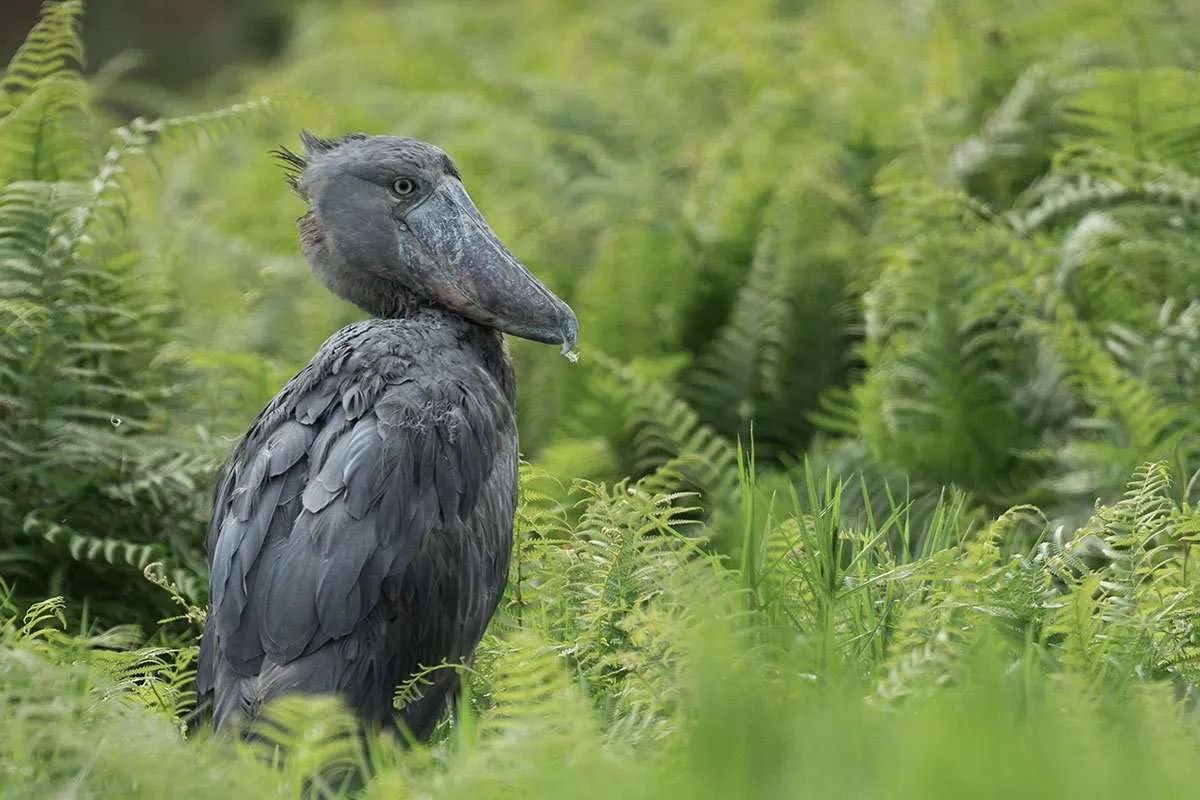
We were in the swamp for an hour when the guide stopped paddling. He raised his hand. Pointed to a spot between the reeds. At first I did not see anything out of the ordinary.. Then my eyes got used to the colors of the wetland. I saw it. There was a shoebill standing still in the water.
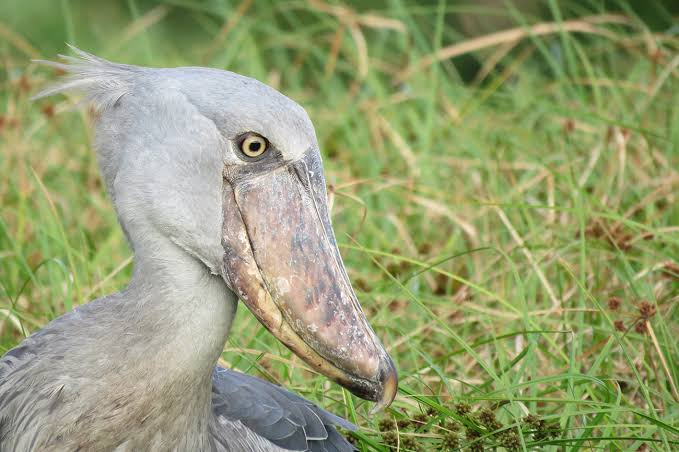
The shoebill was even bigger than I thought it would be. was taller than the plants around it, looked like a bird from a long time ago, had a bill that looked like a shoe and eyes that seemed to be looking right at me. Its gray feathers blended in with the swamp. Even though it was big it did not move all. It just stood there looking at the water. The whole scene felt real. The bird was just doing what it normally does. We were watching from a distance.
Seeing the shoebill in its home made me understand why people who like birds come from around the world to Uganda. Pictures can show what the bird looks like. They cannot show how calm it is. There was something about seeing an animal that is so comfortable in its home. It did not seem to care that we were watching it. It just stood there waiting for the moment to catch its food.
The Quietest Hour of My Life Spent Watching a Stork
As time passed I realized that watching the shoebill was more than seeing an animal. It was an experience that made me slow down. The shoebill did not move much. Every second felt important because I was paying attention to what was happening. saw the papyrus plants moving in the wind tiny bugs flying above the water and small fish swimming in circles before they disappeared. was not waiting for something to happen. was just enjoying all the things that were happening around the bird.
The shoebill finally moved a bit and then it took one slow step forward. That small movement felt important because the bird had been waiting for long. The bird reminded me that nature does not waste energy. It. Then it acts when the time is right. Watching the bird made me think about how people rush through life. We react to everything that happens without taking the time to think.
In that place surrounded by the sounds of birds and the quiet water I started to understand that being patient is not about doing nothing. It is about waiting for the moment to happen instead of trying to make it happen. I remembered that lesson long after we left the shoebill and went back, to our boat. We left the bird in the place where we found it.
Lessons That Reached Far Beyond Birdwatching
Leaving the shoebill behind was really hard for me. I did not want to leave because I wanted another picture or a closer look. I left because being with the shoebill had changed the way I was thinking. For an hour I was completely there not thinking about anything else. There was no rush to do anything no competition to see who could get the view and no need to move on to the next thing. The wetlands reminded me that the best experiences happen when you stop trying to control everything. The shoebill was not doing anything. It was just being itself. That taught me a big lesson.
Modern life is about being fast. We like it when people are busy make decisions and get things done right away. Waiting is seen as a waste of time. We fill up the quiet moments with music, talk or notifications. Being in the wetlands made me think differently. The shoebill showed me that being patient is not a thing it is a good skill. It waits for a time to catch its food because if it rushes it will not get anything. Every move it makes has a reason and every time it stops it is for a reason. That balance between moving and stopping taught me a lesson that goes beyond just watching birds. Whether you are building a career making friends or working towards your goals being patient and thoughtful often works better than being busy.
Learning to See of Simply Looking
Before that day I thought I was someone who noticed nature. I liked going to parks taking pictures and exploring places.. Being in the wetlands made me realize that there is a big difference between looking and really seeing. Looking is quick. Seeing takes time and attention. As I watched the shoebill and everything around it I saw things I would have missed otherwise. I saw the way the light reflected on the water the bugs on the reeds the fish swimming beneath the surface and the birds working together. All these things came together to make a picture.
This experience taught me that the same thing applies to life. We often move fast that we miss the small things like kind acts, quiet achievements or opportunities that are hidden in ordinary moments. Slowing down does not mean you get less done. It means you become more aware of what’s happening around you. Sometimes the answers you are looking for become clear only when you stop rushing.
The Importance of Protecting Places Like Mabamba
The more I thought about my trip the more I appreciated the people who work to protect the wetlands in Uganda. Places like Mabamba are not just for tourists. They are home to bird species provide food for local families help keep the water clean and preserve the natural balance that benefits future generations. Without wetlands birds like the shoebill would struggle to survive.
People often talk about conservation in terms of rules and science. When I was there it felt more personal. The local guides were proud of the wildlife they protected because their lives depend on the health of the wetland. When tourists visit responsibly it helps the community and gives people a reason to care about these fragile ecosystems. Every visitor who respects the place and follows the rules helps to protect it. Experiences like this show that conservation works best when local people and visitors work together to protect nature.
As our boat went back to the landing site I felt grateful for the experience. The wetlands had given me more than a chance to see a rare bird. They had reminded me that preserving places is not just about protecting animals but also about protecting the experiences and memories that only those places can give.
The Quietest Hour of My Life Spent Watching a Stork Became a Lasting Memory
Looking my time watching the shoebill was not just, about seeing another bird. It was an experience that changed the way I see the world. The shoebill did not put on a show. Move around a lot. It just invited me into its world of patience and quiet observation. That invitation was more meaningful than I could have imagined.
Since I got home I often think about that peaceful morning when life gets too busy. It reminds me to slow down before making decisions to listen before talking and to appreciate the progress that happens slowly. These are lessons to forget in a world with many distractions but nature has a way of reminding me of what is important.
Bringing the Wetlands Into Life
You do not need to go to Uganda every time you want to feel the benefits of slowing down. The feeling of a morning can be part of daily life through simple decisions. Spend a few minutes outside without looking at a phone. Watch the birds in a garden or park instead of walking right by them. Sit quietly by a lake, a river or even under a tree letting yourself hear sounds that usually go unnoticed. These moments might seem small. They create space for thinking that is often missing from daily tasks.
The shoebill made me realize that peace is not something we find by chance. Usually it is something we decide to take by allowing ourselves to stop. Nature is always waiting for us to see what it has always given. The problem is not finding places. It is learning to pay attention when we get there.
A Quiet Ending That Continues to Speak
after the canoe landed on the shore and the trip ended the silence of the wetlands stayed with me. I cannot recall every word from that morning. Every bird we saw along the way but I remember exactly how I felt while watching the shoebill stand still in the reeds. That feeling is much clearer than any picture could ever show.
The Quietest Hour of My Life Spent Watching a Stork taught me that travel is not always about going or doing more. Sometimes its best gift is helping you be completely present where you are. The wetlands of Uganda gave that gift without asking for anything and the shoebill became a lasting teacher just by moving at its own pace. Now when life feels fast or stressful I go back to that memory. The Quietest Hour of My Life Spent Watching a Stork keeps reminding me that some of the important times in life come without noise without speed and, without warning. They wait for you to slow down enough to see them.