Guides, Canoes, and Community Fees: Mabamba Explained
Mabamba Swamp is a special place in Uganda. It is located on the shores of Lake Victoria. This place is famous around the world for having a lot of birds, especially the shoebill. The shoebill is a rare bird that people want to see. Every year, a lot of people go to Mabamba Swamp to see the shoebill. They get there early in the morning, hoping to see this amazing bird.
When people plan to visit Mabamba Swamp, they often have a lot of questions. They want to know who will show them around. They want to know why they need to pay money to the community. They also want to know how they will get around the swamp. Knowing these things makes the trip more fun.
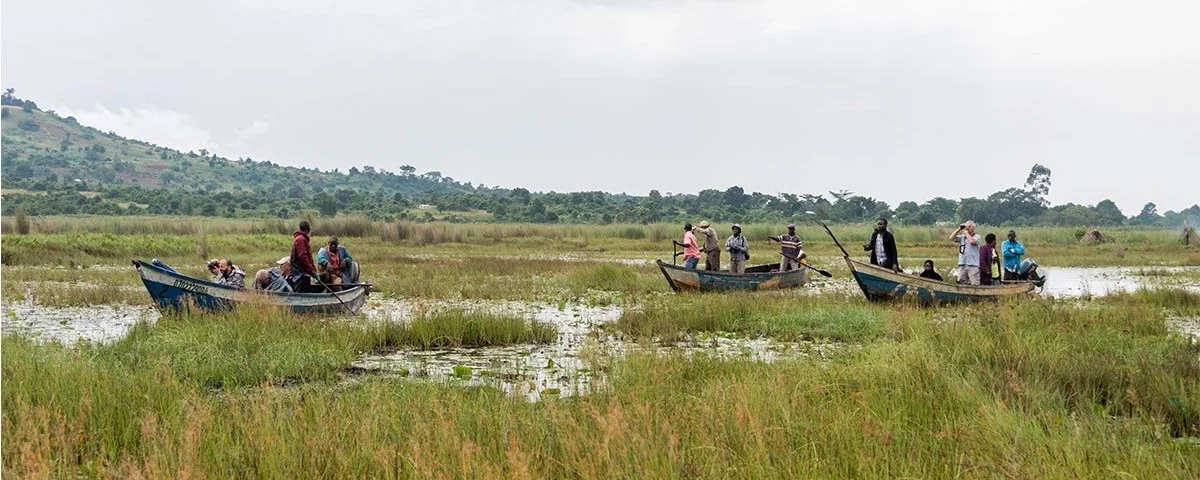
Mabamba Swamp is different from places where you can see animals. In those places, you usually see big cars driving around. In Mabamba Swamp, you get to go on a quiet boat ride. The swamp is very big. Has a lot of water and plants. You can only get to some parts of the swamp by boat.
the mabamba swamp
This is a place for birds. There are over 300 types of birds that live here. Some of these birds are the African jacana, the swamp flycatcher and the shoebill. The shoebill is the famous bird in the swamp. When you visit Mabamba Swamp you need to be patient and quiet. You need to respect the birds and the place they live.
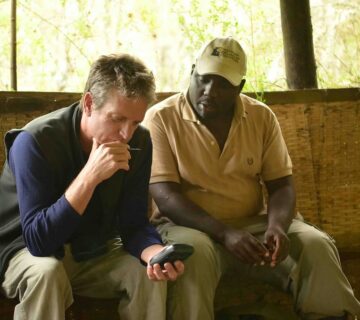
Local guides are very important when you visit Mabamba Swamp. They know the swamp well. They know where the birds are and how to get to them. They also know how to approach the birds without scaring them
The guides have been. Working in the swamp for a long time. They know how the swamp changes with the seasons. They know where the birds like to eat and live. Without a guide it would be very hard to find the shoebill.
The guides also know how to take care of the birds. They will position the boat so that you can see the birds without disturbing them. This makes the trip very educational and fun.
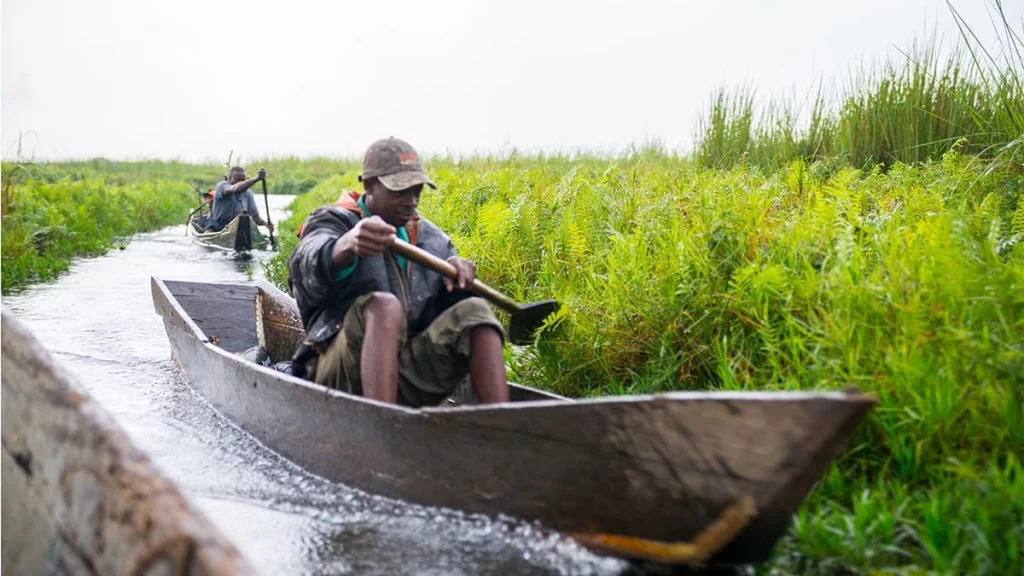
canoeing at mabamba swamp
The canoe is an important part of the trip to Mabamba Swamp. It is not a way to get around. It is a way to experience the swamp. The local people have been using canoes for a time. They use them to fish and to take tourists around.
The canoe is quiet. Does not disturb the birds. This is very important because it allows the birds to stay calm and act naturally. It also allows you to hear the birds singing and to take pictures.
Sometimes motorboats are used to get to the swamp.. When you get to the part of the swamp where the birds are you switch to a smaller boat. This helps to keep the swamp quiet and peaceful.
Visiting Mabamba Swamp is a special experience. You get to see a lot of birds and learn about the swamp. You also get to help the community by paying them to take care of the swamp. This is a way to have fun and help the environment at the same time.
How Community Fees Help Conservation
A lot of people who visit wonder why they have to pay community fees when they go on tours.
The reason is simple.
Wetlands need to be healthy. So do the communities that live near them.
When people in the community benefit from tourism they start to see the value in protecting the area instead of hurting it.
The money that comes from community tourism helps the community and also helps to protect the wetlands.
This money can be used for things like teaching people about the environment watching over the wetlands, training guides making improvements and helping the community.
As tourism grows in a way local families start to see that it is a good idea to preserve the swamp for a long time.
So when you visit you are helping with something bigger than just looking at the sights.
Where Your Money Goes
The price of a tour can vary depending on who’s running the tour and how many people are in the group.
Generally the money is split between different services.
Part of the fee is for renting a canoe.
Some of it is for the guides who’re from the local area and have been trained.
Some of it goes to community groups that’re in charge of tourism.
The money also covers things like taking care of the boats and buying safety equipment.
Of thinking of these costs as extra fees a lot of visitors see them as a way to support tourism that is good for the environment.
This way, everyone involved in tourism benefits from conservation.
Meeting the Shoebill in a Way
It can be very exciting to see a Shoebill and people may want to get close to take pictures.
Guides who are responsible will not let them do that.
They know that if people bother the birds much it can affect how they eat and have babies.
If people keep a distance the birds can still behave naturally and visitors can have a real experience with the wildlife.
Good pictures of animals do not have to be taken from close up.
Sometimes waiting quietly can get you pictures than trying to get too close.
A lot of photographers have found that if they wait quietly the bird will relax, hunt stretch its wings or even fly away.
Those are moments that you will always remember.
The Community Behind Every Tour
The success of Mabamba is not about the animals.
It is about the people too.
A lot of people who live there have turned their knowledge of fishing into careers as guides.
Others take care of the canoes book the tours cook meals, run guesthouses or sell things they have made.
More and more women are getting involved in tourism. Earning extra money for their families.
Young people are also getting jobs in tourism and conservation.
Of leaving their homes to find work somewhere else a lot of them are finding good jobs in the tourism industry.
This helps the economy and also helps to protect the environment.
Why Sustainable Tourism Matters
Wetlands are, in trouble because of growing cities, pollution, illegal activities and climate change.
Tourism that is responsible cannot fix all the problems. It can give people a reason to want to conserve the area.
When communities make money from protecting animals they start to see that it is an idea to preserve the wetlands.
So when you visit you are helping to conserve the area by choosing a responsible tour operator and following the local rules.
Small actions can make a difference.
Following what the guides say.
Not littering.
Being quiet.
Respecting the animals.
Supporting businesses.
Each of these choices helps to protect Mabamba for the people who will come after us.
What to Expect During Your Visit
Most trips start early in the morning.
Sunrise brings temperatures, calmer waters, softer light and the best chance of seeing the shoebill actively feeding.
People usually meet their guide before getting into a canoe or boat.
Safety instructions are given before going into the wetland.
As the trip continues every turn in the channel shows things.
Small kingfishers sit above the water.
African jacanas seem to walk on floating plants.
Egrets wait for fish.
Fish eagles shout from trees.
The quiet pace makes visitors slow down and notice details that are often missed during safaris.
Even if the shoebill is not seen the variety of birds makes the trip worth it.
Preparing for an Experience
Simple steps make the visit better.
Wear clothes that are good for warm weather.
Pick colors that match the environment.
Bring sunscreen, insect spray, sunglasses, water and a hat with a brim.
A camera with a zoom helps take pictures while binoculars let you see birds that are far away.
Comfortable shoes are usually enough because most of the time is spent on the water.
Carrying less makes getting into the canoe easier.
Respecting Local Culture
People often focus on the animals but the local communities are just as important.
Say hello politely ask before taking pictures of people and show interest in their lives to have cultural experiences.
Many guides like to tell stories about how people fish, how the wetlands change and how they protect the area.
These talks help visitors understand Mabamba more than birdwatching.
Tourism becomes better when people connect with both nature and culture.
A Journey That Leaves a Positive Impact
Every move through Mabamba tells a story of working
Guides share knowledge that has been passed down for generations.
Boat drivers help people move safely through the channels.
Organizations in the community help manage tourism properly.
Visitors add to this by being part of it.
All these efforts help protect one of Ugandas wetlands and give families a way to make a living.
Guides, Canoes and Community Fees: Mabamba Explained tells travelers that every fee paid every trip booked and every respectful moment with wildlife helps the future of this place.
The time you move quietly through the papyrus looking for a shoebill remember that you are doing more than just birdwatching. You are part of a story about conservation.
After the pictures are. The canoe goes back to the shore the lessons stay. Nature does well when the people who live there benefit from protecting it. Travelers take home memories local families get ways to live and future generations get a wetland that keeps inspiring the world.
That is the meaning of Guides, Canoes and Community Fees: Mabamba Explained. It is a reminder that good conservation happens through working showing respect and traveling carefully. Every visitor can help by choosing trips that care about wildlife and the people who look after it. When tourism helps conservation this way every trip, through Mabamba becomes part of a lasting story.