Weaverbirds: Master Architects of the Savanna
Across the African savanna, where golden grasses move with the wind and scattered trees rise above the open plains, some of the most remarkable stories of survival are written in nests. High among acacia branches, woven structures swing gently in the breeze, each one carefully constructed from strips of grass and plant fibers. These are the homes of weaverbirds, birds with extraordinary patience, skill, and determination. Their nests may look delicate from a distance. They represent some of the most impressive examples of natural engineering in the bird world. Watching a weaverbird work is a reminder that great achievements can come from repeated effort, careful attention and an instinct to build something that will protect the next generation.
The Remarkable World of Weaverbirds
Weaverbirds belong to a family of African birds known for their distinctive nesting behavior. Many species live across savannas, grasslands, wetlands, woodlands and cultivated landscapes, making them familiar sights in parts of East Africa. Their yellow, black, brown and olive plumage can make them easy to notice, but their nests often steal the attention. Hanging beneath branches clustered together in colonies or suspended above water, these structures give landscapes a unique character.
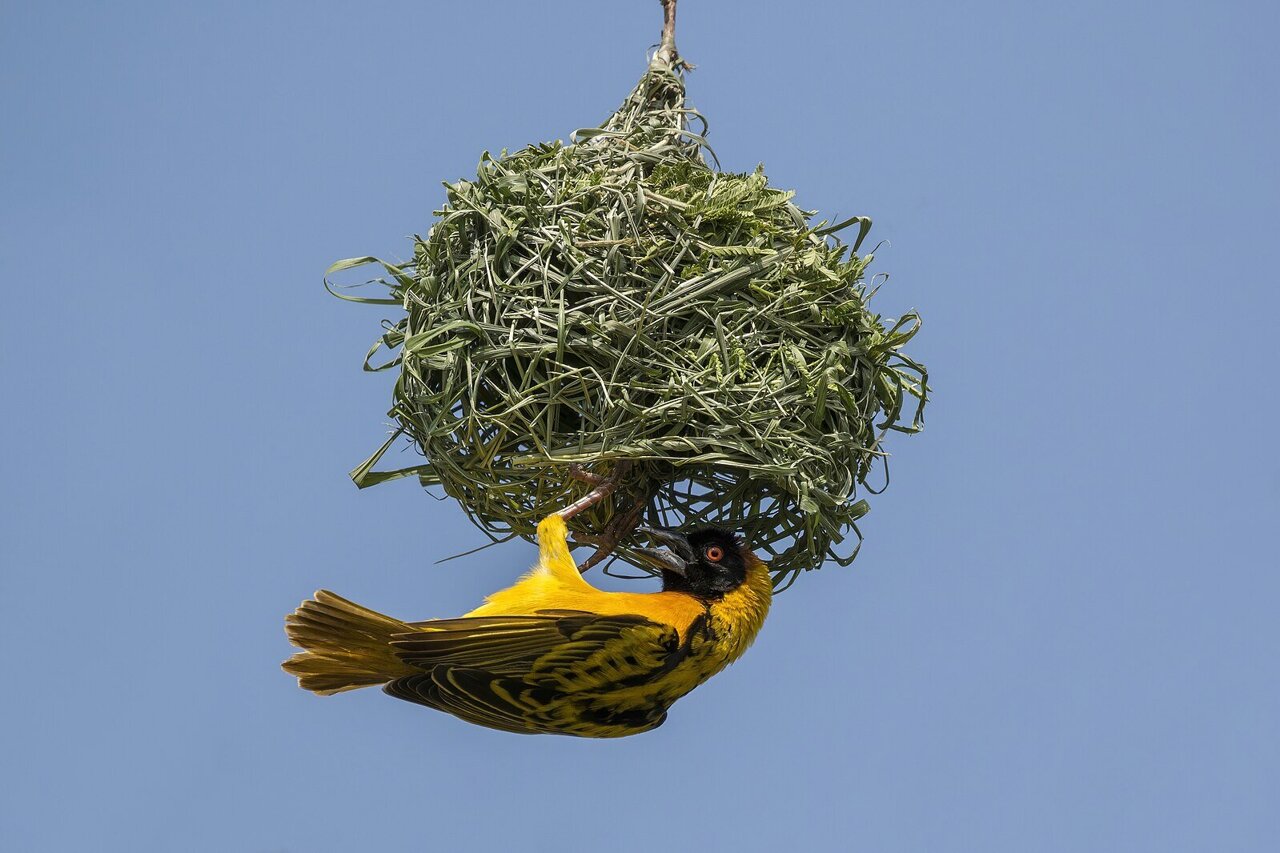
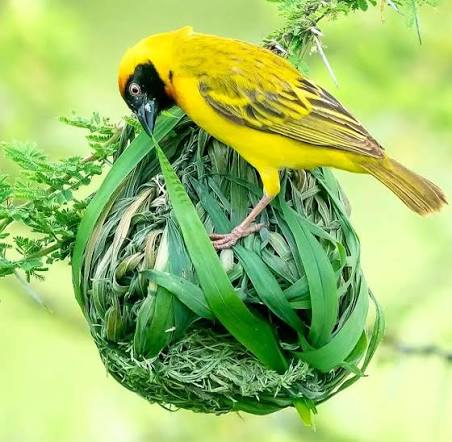
The name “weaverbird” comes from the way these birds construct their nests. Instead of simply gathering loose material and placing it together they actively weave long strands of grass around branches and other plant supports. A bird may select a blade carry it to the chosen location and begin attaching it with its bill. It bends, loops, pulls and tightens the material until a strong framework begins to emerge. The process requires coordination and a successful nest can contain many carefully positioned strands.
Building With Patience and Precision
Nest construction is one of the defining behaviors of weaverbird species. The male often takes responsibility for building the structure in species where females inspect potential nests before choosing a mate. His work becomes part of his courtship display. A constructed nest may attract attention while an unfinished or poorly built structure may be rejected.
This creates a scene, in breeding colonies. Several males may work on their nests at the time moving repeatedly between grasses and branches. Each bird follows its rhythm yet the colony becomes filled with activity. Some nests are beginning to take shape others are nearly complete. A few may be abandoned and rebuilt.
The Architecture of a Weaverbird Nest
A weaverbird nest is really something when it is finished. Many weaverbirds make nests that’re round with small entrances while others make nests with long entrances or they hang them from trees to keep predators away. The shape of the nest is different depending on the type of weaverbird where they live, what plants are around and what the weaverbirds need.
One of the things about weaverbird nests is the entrance. Some weaverbirds put the entrance under the part of the nest. This makes it harder for predators to get to the eggs or babies. The nest might also be hanging from branches that bigger animals cannot sit on. The weaverbird is basically choosing what to use and where to put its nest to keep it safe.
A Home Built for Survival
Weaverbird nests are not just for shelter. They give the birds a place to lay their eggs and raise their babies. A good nest keeps the babies safe from wind, rain, heat and predators. The nest is also in a spot that gives the babies shade when it’s really hot outside.
This is really important in the savanna, where the weather can change a lot. It can get very hot during the day. Then there can be big storms. A made nest gives the babies a safer place to grow when they are most vulnerable.
The group of weaverbirds can also help keep them safe. When many weaverbirds live in the area they can all watch out for predators. A predator might have a time sneaking up on the nest when there are many weaverbirds watching and flying around.
Weaverbirds and the African Landscape
Weaverbirds are a part of the landscapes they live in. Whether or not they are there depends on if there is food, material to build nests, water and the right plants. Weaverbirds eat seeds, grains, insects and nectar depending on the type of weaverbird and the time of year. They are connected to the grasses, trees and flowers. They are a part of the bigger food chain.
In East Africa you can really see the weaverbirds during breeding season. Trees that look normal from away might have many nests hanging from them when you look closer. The branches are busy with weaverbirds flying around calling and showing off their feathers.
For people who live near the savannas and farms weaverbirds can be neighbors. Some weaverbirds do well in areas that people have changed. They use crops and planted trees along with the natural plants. Others need habitats. This shows how important it is to have different types of habitats, in Africa like grasslands, woodlands and lakes.
Weaverbirds Are Really Something Special
Weaverbirds can teach us a lot about how animals and their homesre connected. Their nests need plants to grow their food needs environments and their babies need safe places to grow up. So to help these birds we need to protect the places where they live.
People often talk about protecting animals like elephants, lions, gorillas and rhinos.. That is important.. Smaller birds like weaverbirds are also very important for keeping the environment healthy. Weaverbirds help spread seeds eat bugs and move nutrients around. They make a difference in the world around them.
Weaverbirds also make the places they live more beautiful. Imagine an open field with no birds singing. It is not very interesting.. When you hear birds singing in a field it feels alive. You can see the birds moving around in the trees and grass. It makes you feel like the whole place is working together.
The Social Life of Weaverbirds
Weaverbirds are social birds. They live in groups with many nests close together. It can look like chaos. Each bird has its own space and nest.
The birds talk to each other using calls. They call to find friends to protect their homes to warn others of danger and to stay in touch. When it is time to have babies the noise from the group can be really loud. Is a big part of the landscape.
Living in groups also helps the birds learn from each other. The baby birds grow up watching the adults find food build nests and protect their homes. They learn how to survive in their world.
If you watch the birds from a distance you can see how they live without bothering them. If you are patient and have binoculars you can see them build nests find food and take care of their babies.
Finding Weaverbirds on an African Safari
You do not have to go deep into the wilderness to see weaverbirds. They live in places in East Africa like fields, wetlands and forests. National parks are places to see them.
The best time to see them is early in the morning when it is cooler. The light is also softer which makes it easier to see their colors. Look for trees or grass with nests hanging from them. If you see nests in one place there is probably a group of weaverbirds nearby.
Of just looking for big animals take your time to look at the small things around you. A tree full of nests can be really interesting. You might see a bird building a nest another bird protecting its home and another bird feeding its baby at the same time.
A Lesson from the Birds
The story of weaverbirds is not about their cool nests. It is also about how they keep trying. Each piece of grass is small. When the birds use many pieces they can build a strong home.
It is really inspiring to watch them build. They do not give up even when it is hard. They keep working until their nest’s strong and safe.
You can see this determination in the natural world. The environment in Africa is healthy because of small actions that happen over and over. Grass grows after rain trees get leaves birds build nests and babies take their first steps. Life keeps going because of these actions.
Weaverbirds show us how important these small actions are.
Protecting the Birds That Build Homes
The future of weaverbirds depends on the health of their homes. They need fields, wetlands, forests and big trees to survive. If their homes are destroyed they might not have food or places to live.
We do not have to do things to help the birds. We can help by keeping plants around our homes protecting wetlands planting trees and not hurting the birds or their nests. If we are careful when we visit wildlife areas we can help the birds too.
When you visit a wildlife area in Africa take time to notice the animals. They can tell you a lot about the health of the environment. If you see a group of weaverbirds it means the environment is healthy and has food and homes for them.
Seeing Africa from a Different Perspective
If you start paying attention to birds your trip to Africa can be very different. You will notice details like birds singing, nests in trees and birds moving through the grass. You will start to understand that there is life in the landscape.
Weaverbirds are an example of this. They are colorful, social and very good at building nests. They might be easy to overlook when you are looking at animals but once you watch them you will see the world in a different way.
Weaverbirds are birds. Their nests are not bunches of grass. They are examples of how the birds work to survive and take care of their families. Every piece of grass in their nest shows how work they do to build a safe home.
Time you see a tree with many nests hanging from it stop and look
Watch the birds moving around listen to their calls. You might learn something new about the world around you.
Weaverbirds remind us that Africas beauty is not about the big animals but also about the small things in life. The lions might be the kings of the fields the elephants might shape the forests and the giraffes might be the animals but the weaverbirds build their own special homes in the landscape. They work hard. Carefully and they give us another reason to appreciate the beauty of Africa.
The story of weaverbirds is really a story about life. How it keeps going because of hard work and determination. From one piece of grass to a nest every effort counts. Their nests remind us that even small animals can make a difference, in the world around them