
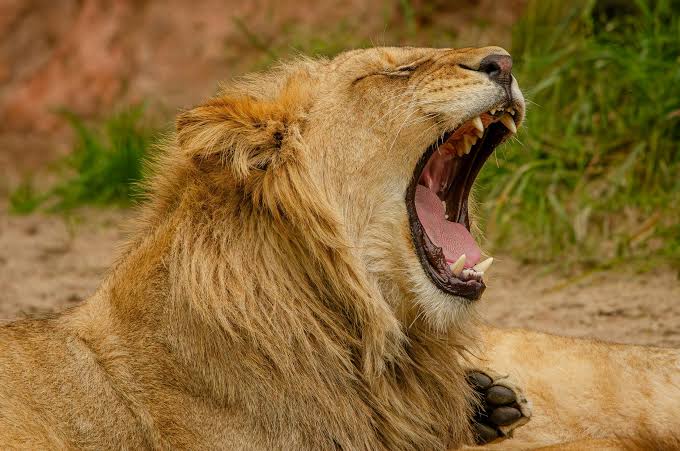
Male Lion Manes: What Colour and Size Reveal
A large male lion resting beneath an acacia tree is one of the most memorable sights on an African safari. His golden eyes scan the grassland while a thick mane frames his face and extends across his shoulders. Nearby, another male may have a shorter, lighter mane, even though both appear fully grown.
Understanding male lion mane colour and size reveals fascinating details about age, physical condition, competition and life in the African savannah. A lion’s mane is more than an attractive feature. It can communicate information to rivals and potential mates.
However, a dark mane does not automatically mean a lion is older, stronger or more dominant. Scientists have discovered that mane development is influenced by several factors, including hormones, nutrition, genetics and environmental conditions.
This guide explains what different manes may reveal and how safari visitors can interpret them responsibly.
1. Why Do Male Lions Have Manes?
The mane is one of the most recognisable features of an adult male lion.
Unlike lionesses, most adult males develop long hair around their heads, necks and shoulders as they mature.
Scientists believe manes evolved largely through sexual selection.
This means their appearance can influence mating opportunities and interactions between competing males.
A prominent mane can make a lion appear larger and more intimidating.
It may also provide some protection around the neck during fights, although researchers continue discussing how important this protective function is.
Mane characteristics vary considerably between individual lions and populations.
2. What Does Mane Colour Tell Us?
Male lion manes range from pale golden and sandy brown to dark brown and almost black.
Some individuals have several colours within the same mane.
For example, the hair around a lion’s face may be golden while the hair covering its chest appears dark.
Dark Manes and Physical Condition
A landmark study published in 2002 by researchers Peyton West and Craig Packer examined lions in Tanzania’s Serengeti National Park.
The researchers found that darker manes were associated with higher testosterone levels and better nutritional condition.
They also discovered that mane darkness influenced the behaviour of lionesses and competing males.
However, colour alone cannot provide a reliable diagnosis of a particular lion’s health.
Lighting, age, individual variation and environmental conditions can also affect appearance.
3. Do Lionesses Prefer Dark-Maned Males?
One of the most interesting findings from Serengeti research concerns female mate choice.
Researchers used life-sized lion models with different mane colours and lengths to investigate how wild lions responded.
Lionesses showed a stronger preference for dark-maned models than lighter-maned alternatives.
The results suggested that mane darkness provides information potentially useful when choosing a mate.
Dark-maned males in the study were also associated with longer reproductive lifespans and improved offspring survival.
However, lionesses do not select mates based entirely on mane colour.
Territorial control, male coalitions, social interactions and reproductive opportunities also influence mating.
4. Does a Bigger Mane Mean a Stronger Lion?
A large mane can create an impressive appearance.
However, the connection between mane size and strength is more complicated than many safari visitors realise.
Research from the Serengeti found that mane length was associated with fighting success.
Male lions also responded differently to models displaying longer and shorter manes.
This suggests that mane length can communicate information about competitive ability.
Nevertheless, a lion with a shorter mane is not necessarily weak.
A mature male may have a relatively small mane because of local temperatures, genetics or individual development.
Body condition, experience and coalition support also influence fighting outcomes.
5. How Lion Manes Change With Age
Young male lions do not begin life with the impressive manes seen on mature adults.
Cubs of both sexes initially have relatively short coats.
As males approach sexual maturity, longer hair gradually develops around the head and neck.
Typical Mane Development
| Life Stage | Common Mane Appearance |
|---|---|
| Young cub | No developed mane |
| Juvenile male | Early hair growth may become visible |
| Subadult male | Short or developing mane |
| Mature adult male | More developed mane, varying in length and colour |
| Older male | May have a full or dark mane, but appearance varies |
Age is only one influence.
Not all males develop large, black manes, even when fully mature.
For safari photography, a developing mane may help distinguish a young male from an adult lioness.
6. Why Are Some Lion Manes Almost Black?
Very dark manes attract attention because they create a strong contrast with the lion’s golden-brown body.
Dark hair may extend around the face, down the chest and across the shoulders.
Researchers have associated darker manes with hormonal and nutritional factors.
However, a black mane is not a separate lion species or subspecies.
A dark-maned lion belongs to the same species, Panthera leo, as a pale-maned male.
Mane appearance varies naturally.
Some lions also develop darker sections as they mature, but colour is not a precise age indicator.
7. Why Do Lions in Hotter Areas Often Have Shorter Manes?
Temperature can influence mane development.
Researchers have observed that male lions in hotter environments often have shorter or lighter manes than those living in cooler conditions.
Long, dark hair may influence heat exchange around the body.
This can affect the environmental conditions under which a particular mane develops.
Does a Dark Mane Make Lions Overheat?
The answer is not straightforward.
Early research found higher surface temperatures associated with dark manes and suggested possible reproductive costs during hot periods.
However, a later study monitoring the internal body temperatures of wild lions found no evidence that longer or darker manes increased core body temperature.
These findings indicate that the relationship between manes and heat regulation is complex.
It would therefore be inaccurate to assume a dark-maned lion is constantly overheating.
8. Why Do Some Adult Male Lions Have Very Small Manes?
Not every adult male lion develops a large mane.
Some have relatively short hair around the neck, while others appear nearly maneless.
Several factors may contribute, including genetics, local climate, hormones and individual development.
Male lions in certain African populations are known for their relatively reduced manes.
However, visitors should avoid assuming that every short-maned lion is young, unhealthy or subordinate.
A fully grown male can remain physically strong and reproductively successful without having an exceptionally large mane.
9. Can Mane Colour Reveal Dominance?
Mane colour may provide information about a male’s physical condition and competitive potential.
However, lion dominance is not determined by fur colour alone.
A male’s ability to control a territory depends on several factors.
These include fighting ability, age, experience and the support of coalition partners.
What Happens During a Territorial Challenge?
A resident male may encounter rivals attempting to take over his territory.
The lions may roar, display threatening behaviour or approach one another.
Sometimes one group retreats without fighting.
In other situations, serious physical conflict occurs.
A dark or impressive mane may influence how rivals assess an opponent, but it cannot guarantee victory.
10. What Can Safari Visitors Learn From a Lion’s Mane?
A lion’s mane can provide useful clues when combined with other observations.
| Mane Feature | What It May Suggest |
|---|---|
| Short, developing mane | Possibly a young or subadult male |
| Long, full mane | A mature male with well-developed mane growth |
| Dark mane | May reflect hormonal and nutritional condition |
| Light mane | Could reflect age, climate or individual variation |
| Uneven mane | Natural variation, shedding or physical damage |
| Little visible mane | May reflect climate, genetics or development |
These clues should never be treated as absolute rules.
A knowledgeable safari guide can help interpret a lion’s age and behaviour using several characteristics.
11. Where Can You See Impressive Male Lions in East Africa?
East Africa provides excellent opportunities to observe male lions with different mane colours and sizes.
| Destination | Country | Lion Viewing Experience |
|---|---|---|
| Serengeti National Park | Tanzania | Dark-maned males and large prides |
| Maasai Mara National Reserve | Kenya | Resident males and coalitions |
| Ngorongoro Crater | Tanzania | Lions in open grassland |
| Queen Elizabeth National Park | Uganda | Savannah and Ishasha lions |
| Murchison Falls National Park | Uganda | Male lions in woodland and grassland |
| Kidepo Valley National Park | Uganda | Lions in remote savannah habitats |
No park guarantees sightings of particularly dark-maned lions.
Appearance differs between individuals, and wildlife movements are unpredictable.
12. How to Photograph Male Lion Manes
A male lion’s mane can create beautiful wildlife photographs, particularly during early morning and late afternoon.
Soft natural light helps reveal individual hair colours and textures.
For better photographs:
- Use optical zoom rather than approaching closely.
- Photograph the lion from different permitted angles.
- Look for side lighting that reveals mane texture.
- Avoid blocking the animal’s movement.
- Keep camera settings ready for sudden activity.
- Never make noises to wake or attract a resting lion.
A photograph showing both the face and chest can help document mane length and colour.
13. Why Lion Mane Research Matters
Studying manes helps scientists understand lion reproduction, competition and adaptation to different environments.
Mane variation also provides useful evidence about how physical characteristics are shaped by sexual selection.
Research in Tanzania has contributed significantly to this understanding.
By studying lions over many years, scientists can investigate relationships between appearance, reproductive success and environmental conditions.
These findings demonstrate why protecting wild populations and maintaining long-term ecological research are important.
Reading the Story Behind a Lion’s Mane
Male lion mane colour and size reveal more than age or appearance.
Darkness can provide clues about hormonal and nutritional condition, while mane length may influence how rival males assess one another.
Environmental conditions, genetics and individual development also affect the final appearance.
A lion with a huge black mane is not automatically the oldest or strongest animal in the pride, just as a short-maned male is not necessarily weak.
The next time you encounter a male lion on safari, look closely at his mane. It may offer clues about his life, but his behaviour and surroundings help complete the story.







No comment