
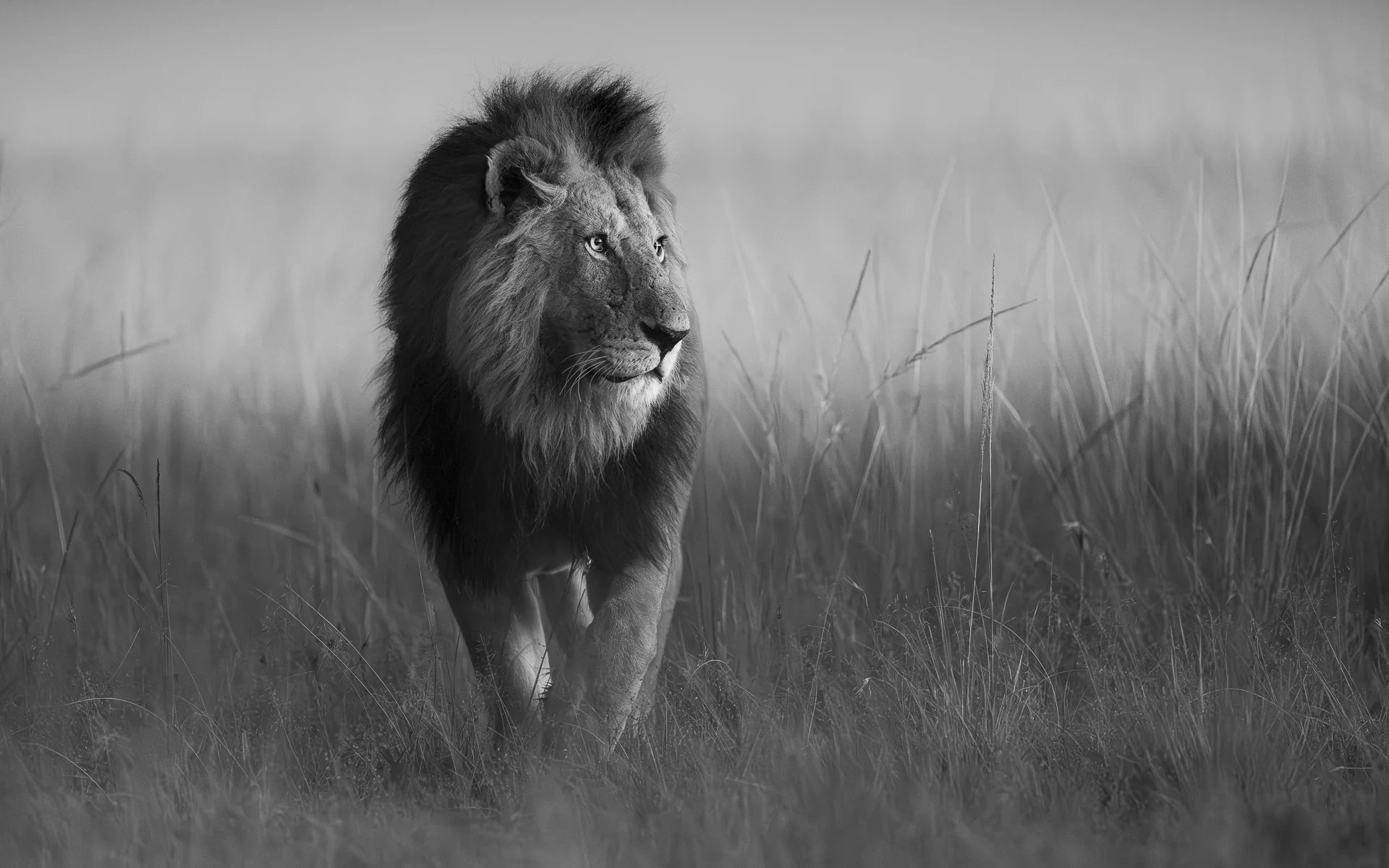
Black and White Safari Photography: Subjects That Work Best
Black and white safari photography offers a different way to capture Africa’s wildlife. Instead of relying on the bright colours of the savannah, photographers use light, shadows, shapes and textures to create memorable pictures. A photograph of an elephant walking through dusty grassland, for example, can become particularly striking when its rough skin and powerful outline are shown in black and white.
During safaris in Uganda, Kenya and Tanzania, photographers encounter many subjects that work beautifully without colour. Lions resting beneath trees, zebras standing together and giraffes moving across open plains can all produce impressive monochrome photographs.
However, not every wildlife photograph looks better in black and white. Understanding which subjects work best, how to use natural light and when to convert an image can help you create a stronger collection of safari photographs.
Why Choose Black and White Safari Photography?
Colour photography captures the familiar appearance of African landscapes. Black and white photography draws attention to different details.
Without colour, viewers notice the direction of light, patterns in an animal’s coat and the relationship between the subject and its surroundings.
For example, a zebra photographed against dark vegetation may appear ordinary in colour. Converting the image to black and white can make its stripes stand out more clearly.
Black and white photography is particularly effective when photographing:
Animals with distinctive patterns or textured skin.
Wildlife creating clear silhouettes.
Dramatic skies over open landscapes.
Animals photographed in strong directional light.
Wildlife interactions that express movement or emotion.
Dusty scenes with visible layers and shadows.
The best results usually come from photographs that already have strong composition and clear differences between light and dark areas.
1. Elephants: Excellent Subjects for Black and White Photography
Elephants are among the strongest subjects for monochrome wildlife photography.
Their large bodies, wrinkled skin, curved tusks and expressive trunks provide plenty of visual detail. Their grey colouring also makes them suitable for conversion.
Photographing Elephant Skin and Texture
Close photographs can reveal the deep folds and cracks in an elephant’s skin.
Side lighting is particularly useful because it creates small shadows across these surfaces.
In places such as Amboseli National Park in Kenya and Tarangire National Park in Tanzania, photographers may find opportunities to capture elephants against open landscapes.
Try photographing an elephant walking towards your vehicle at a safe distance. Focus on the eyes and allow the skin texture to remain visible.
A photograph showing only the head, trunk and tusks can be just as effective as a full-body image.
Elephants Walking Through Dust
Dust can make elephant photographs especially dramatic.
When elephants cross dry ground, their footsteps sometimes create clouds of dust. Backlighting can illuminate these particles while keeping the animals relatively dark.
This combination creates depth and atmosphere.
Avoid removing every shadow during editing. Dark areas can help communicate the scale and strength of the animal.
2. Zebras: Natural Patterns That Stand Out
Zebras are excellent subjects because their coats already contain strong black and white patterns.
Their stripes create lines, shapes and contrasts that attract attention without additional colour.
Zebra Portraits
A close photograph of a zebra’s head can reveal intricate stripe patterns around its eyes, ears and muzzle.
Positioning the animal against a simple background helps prevent unnecessary distractions.
If possible, photograph the zebra when its head is turned slightly towards the light.
This makes its facial structure more visible.
Photographing Groups of Zebras
Groups create interesting opportunities for abstract compositions.
When several zebras stand close together, their overlapping stripes form complex patterns.
You can photograph sections of their bodies without showing every animal completely.
This approach works particularly well in Kenya’s Maasai Mara and Tanzania’s Serengeti.
Look for natural arrangements rather than attempting to influence animal movements.
3. Lions: Capturing Expressions and Shadows
Lions are popular safari photography subjects, especially when photographed in dramatic lighting.
A male lion’s mane provides texture, while its eyes and facial expressions can create engaging portraits.
Male Lions in Side Lighting
Early morning and late afternoon sunlight can reveal details in a lion’s mane.
Positioning the light slightly to one side creates shadows between the strands of hair.
For a stronger portrait, focus carefully on the nearest eye.
A shallow depth of field can soften distracting vegetation behind the animal.
However, keep enough of the face sharp to preserve its expression.
Lion Silhouettes
A lion standing on a raised area can produce an effective silhouette when photographed against a bright sky.
Expose for the sky rather than the animal.
This keeps the lion dark while preserving the outline of its head, body and tail.
Silhouettes work best when the animal’s shape remains recognisable.
4. Giraffes: Strong Shapes Against Open Skies
Giraffes have one of the most recognisable outlines of any African animal.
Their long necks, slender legs and unusual proportions make them particularly suitable for minimalist black and white photography.
A giraffe walking across an open plain can create a balanced image with very few elements.
Try leaving space in the direction the animal is moving.
This gives the photograph a natural sense of movement.
Giraffes also work well when photographed beneath dramatic clouds or beside isolated acacia trees.
Avoid placing their heads against busy branches whenever possible.
A clean background makes their distinctive shape easier to appreciate.
5. Buffaloes and Rhinos: Powerful Wildlife Portraits
African buffaloes and rhinoceroses have strong physical features that suit monochrome photography.
Buffaloes have heavy horns, broad heads and dark coats. Rhinos have distinctive horns and thick, folded skin.
Photographing Buffaloes
A buffalo looking directly towards the camera can produce a striking portrait.
The curved horns naturally frame its face.
Photographing in soft morning light can preserve details in the dark coat.
Avoid excessive contrast during editing because important features may disappear into black areas.
Photographing Rhinoceroses
Rhinos work particularly well in side-profile compositions.
Their horns, ears and body shape create a recognisable outline.
Where conditions permit, capture the texture of their skin using directional light.
Always maintain the viewing distance required by your guide or park authorities.
6. Leopards and Cheetahs: Patterns and Movement
Leopards and cheetahs can create beautiful black and white photographs, although their spotted coats require careful editing.
Leopard rosettes and cheetah spots provide natural patterns.
However, an unsuitable background can make these markings difficult to distinguish.
Choose photographs where the animal is clearly separated from the surrounding vegetation.
For cheetahs, side-profile photographs can emphasise their slender bodies and athletic posture.
Leopards resting on branches can create appealing compositions when the tree forms strong diagonal lines.
The photograph should remain easy to understand even after removing colour.
Best Lighting for Black and White Safari Photography
Lighting has a major influence on the success of a monochrome photograph.
Different lighting conditions produce different results.
| Lighting condition | Best subjects | Photography effect |
|---|---|---|
| Early morning | Lions, elephants, giraffes | Soft shadows and visible textures |
| Late afternoon | Zebras, buffaloes, cheetahs | Warm directional light converted into tonal contrast |
| Backlighting | Elephants, giraffes, antelopes | Silhouettes and illuminated dust |
| Cloudy weather | Animal portraits | Gentle contrast and detailed skin |
| Strong midday sunlight | Graphic patterns and landscapes | Deep shadows and bold shapes |
Midday sunlight can be difficult for traditional wildlife portraits because it creates harsh shadows.
Nevertheless, it can produce interesting black and white images when the photographer deliberately uses those shadows as part of the composition.
Camera Settings for Black and White Safari Photography
You do not need a specialised camera to capture monochrome wildlife photographs.
Most modern digital cameras allow you to preview images in black and white.
If your camera supports RAW photography, use it whenever possible. RAW files generally preserve more editing flexibility than JPEG files.
Recommended Starting Settings
| Subject | Shutter speed | Aperture | ISO |
|---|---|---|---|
| Resting lion | 1/500 second | f/4–f/5.6 | Auto ISO |
| Walking elephant | 1/1000 second | f/5.6 | Auto ISO |
| Running cheetah | 1/2000 second or faster | f/4–f/5.6 | Auto ISO |
| Zebra portrait | 1/800 second | f/4–f/8 | Auto ISO |
| Giraffe silhouette | 1/500 second | f/8 | As required |
These are starting points rather than fixed rules.
Adjust your settings according to the available light, lens and movement of the animal.
Continuous autofocus is helpful when photographing moving wildlife.
How to Compose Strong Monochrome Safari Photographs
Good composition becomes especially important when colour is removed.
Look for Simple Backgrounds
Busy grass, branches and vegetation can distract attention from the subject.
Whenever possible, photograph animals against open skies, distant plains or softly blurred backgrounds.
Use Leading Lines
Animal tracks, tree branches and landscape features can direct the viewer’s attention towards the main subject.
These lines often become more noticeable in black and white.
Leave Negative Space
Negative space refers to areas surrounding the main subject.
A lone giraffe standing beneath a large sky can produce a powerful photograph because the surrounding space emphasises its shape.
Capture Behaviour
Black and white photographs become more interesting when animals are doing something.
Look for elephants interacting, lions grooming each other, zebras running or giraffes feeding.
Behaviour gives the photograph a story beyond the animal’s appearance.
Editing Black and White Safari Photographs
Editing helps control contrast, brightness and texture.
Begin by converting the photograph to black and white using your preferred editing software.
Then adjust the image carefully.
Contrast: Increase contrast when necessary, but avoid losing important details.
Highlights: Reduce excessive brightness in skies, dust and pale animal fur.
Shadows: Recover details where needed without making the photograph appear flat.
Texture: Apply moderate texture adjustments to emphasise elephant skin, lion manes or rhino features.
Black and white colour mix: Adjust the brightness of colours in the original photograph to separate animals from their backgrounds.
Avoid excessive sharpening or artificial grain.
The objective is to improve the photograph while keeping the wildlife’s appearance natural.
Common Mistakes to Avoid
Several mistakes can weaken black and white safari photographs.
Converting photographs that depend heavily on colour.
Using excessive contrast until animal details disappear.
Photographing patterned animals against equally busy backgrounds.
Ignoring the direction of natural light.
Cropping too tightly around moving wildlife.
Overediting textures and shadows.
Review your photographs carefully before converting them.
Some images will work better in colour, and that is perfectly acceptable.
Responsible Wildlife Photography
Ethical photography remains important regardless of whether you shoot in colour or black and white.
Never ask a guide to chase animals, block their movement or approach dangerously close for a photograph.
Avoid flash photography where it may disturb wildlife, and follow all park regulations.
Remain inside your safari vehicle unless your guide confirms that leaving it is permitted and safe.
Patient observation often produces better photographs than attempting to force an animal into a particular position.
Black and white safari photography works best when the subject has distinctive shapes, textures, patterns or expressions.
Elephants, zebras, lions, giraffes, buffaloes and rhinos are particularly rewarding subjects. Leopards and cheetahs can also produce memorable monochrome photographs when lighting and backgrounds are carefully considered.
The most important skills are recognising good light, keeping compositions simple and editing with restraint.
With practice, you can create black and white safari photographs that communicate the character of African wildlife while preserving the natural beauty of the moment.


No comment