
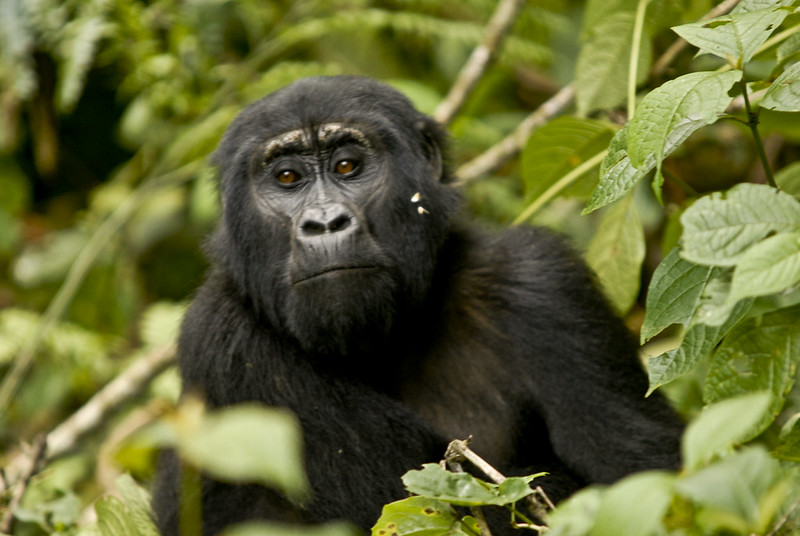
Are gorillas really dangerous? Understand gorilla behavior. Gorillas are apes that share about 90% of their DNA with humans. Gorillas share human senses and habits, but they are also extraordinarily strong and powerful animals that may be violent if they perceive or are threatened. The male silverbacks, in particular, are reported to be stronger than 20 men, and their large canine fangs may cause severe damage.
Gorillas are normally considered peaceful creatures, although they can charge under specific conditions. It is usually best to avoid conflict when dealing with these gentle giants; while they share DNA with humans, they are still wild animals that should be treated with caution and respect.
In most situations, males become quite violent when they believe their group members or their group is under threat. Although humans take threats lightly, gorillas take any threat seriously, even if it is only perceived.
That is why habituation of these animals is usually carried out; gorillas are gradually accustomed to humans before tourists are allowed to contact them. If not, the silverback, who is also the group leader, may get surprised and launch an assault. Overall, while dealing with gorillas, it’s important to be cautious and take things slowly.
Can habituated gorillas become dangerous?
Whether lowland or mountain gorillas, gorillas are widely misunderstood natural creatures. Although gorillas are commonly portrayed as ferocious and aggressive apes, the truth is that they are gentle giants. Gorillas are naturally quiet and retiring, but when threatened, they typically turn violent. The fact is that wild gorillas are not as deadly as commonly depicted. Uganda, Rwanda, and the Congo are three African nations with high gorilla populations that offer travelers gorilla-habituated experiences.
How can I avoid gorilla attacks?
Although gorillas are regarded as gentle giants, they remain deadly natural creatures. To avoid the gorilla charging at you, avoid making direct eye contact. Direct eye contact is a threat to the head of the family, the silverback mountain gorilla, since it makes them believe you are an adversary of their family. It is also critical to avoid using flash displays when shooting photographs. It’s vital to back off if the gorilla begins thumping its chest.
Understanding the Chest-Beating Display
Chest-beating is one of the most recognizable gorilla behaviors, and it’s easy to misread as pure aggression, but researchers who study wild gorillas describe it more accurately as a form of long-distance communication. A silverback beats his chest with cupped hands to announce his location and status to rival males, assert dominance within his own group, or simply release excitement or tension, and it’s frequently followed by other display behaviors like standing bipedally, running sideways, or tearing at vegetation rather than an actual charge. Guides trained in reading gorilla behavior can usually tell within seconds whether a display is purely communicative or building toward genuine agitation, which is part of why every trek is led by experienced rangers rather than left to visitor judgment alone.
Mock Charges vs. Real Aggression
The vast majority of charges gorillas direct at humans are what primatologists call mock charges: a fast, dramatic rush that stops well short of contact, intended to test or intimidate rather than to actually attack. The correct response, which guides brief every trekking group on before the encounter, is to crouch down, avoid direct eye contact, and remain calm and quiet rather than running, since sudden movement or flight is far more likely to trigger a genuine chase response than standing your ground. Genuine attacks on habituated gorilla-trekking groups are extremely rare precisely because guides understand this distinction and manage encounters accordingly.
How Rangers Manage an Encounter
Every gorilla trek is accompanied by armed rangers and experienced trackers whose primary job, alongside locating the family, is reading gorilla body language throughout the visit and adjusting the group’s position and distance accordingly. Rangers maintain the standard seven-meter minimum distance not just for the gorillas’ health but to keep enough buffer that a mock charge or defensive display never needs to escalate. If a guide signals to back away or crouch down, following instructions immediately, without hesitation or attempting a better photo, is the single most important thing a trekker can do.
How Rare Are Real Incidents?
Given the tens of thousands of gorilla treks conducted across Uganda, Rwanda, and the DRC each year, confirmed serious injuries to tourists from gorilla encounters are exceptionally rare, far rarer than incidents involving many other wild animals travelers might encounter on a broader safari. This safety record reflects decades of refined habituation protocols, strict guide training, and the behavioral reality that habituated gorillas, while still wild animals fully capable of aggression, have learned that calm, predictable human visitors pose no threat.
Why Habituation Reduces Risk Over Time
Habituation is a gradual process, often taking two to three years of consistent, careful exposure, during which a gorilla family learns to tolerate a quiet human presence without treating it as a threat requiring a defensive response. This is precisely why only fully habituated families are opened to regular tourist trekking, and why Uganda’s habituation experience, which involves less-habituated groups, comes with additional guide oversight and a smaller visitor allowance. The process fundamentally changes how a family responds to human presence, which is the real reason trekking has such a strong safety record rather than any inherent gentleness the species lacks in the wild.
Planning a gorilla trek and want more on what to expect? All in Africa Safaris can walk you through the safety briefing, rules, and what a real encounter looks like before you book.
Signs a Gorilla Is Relaxed vs. Agitated
Relaxed gorillas typically feed, rest, or groom with slow, unhurried movement, occasionally glancing toward visitors without sustained staring, and young gorillas may play openly nearby, a strong sign the group feels secure. Agitated behavior looks quite different: a stiffened posture, sustained direct staring, repeated vocalizations, or the group bunching closer together around the silverback are all cues guides watch for, and any of these signals typically prompts the guide to quietly increase distance before anything escalates further. Learning to read these differences, even at a basic level, helps trekkers understand why guides sometimes ask the group to shift position mid-visit.
The Role of the Silverback During a Trek
The silverback’s primary role during any encounter, human or otherwise, is protecting his family, which means he’s typically the individual most attentive to a trekking group’s presence, positioning himself between visitors and vulnerable group members like infants when he judges it necessary. This protective instinct, rather than random aggression, is behind the vast majority of any tension trekkers might sense during a visit, and it’s precisely why guides brief every group extensively on quiet, non-threatening behavior before the encounter even begins.
What Happens If Rules Aren’t Followed
Trekkers who ignore guide instructions, move too close for a photo, make sudden noise, or maintain prolonged eye contact risk provoking exactly the kind of defensive response the rules are designed to prevent, which is why guides are firm about immediate compliance rather than treating the seven-meter distance as a loose suggestion. In the rare event a gorilla does mock charge, standing still, crouching low, and avoiding eye contact, as instructed in the pre-trek briefing, resolves the situation in the overwhelming majority of cases without further incident.
Why This Matters for Your Own Trek
Understanding gorilla behavior isn’t just reassurance, it genuinely changes how you experience the hour you spend with a family, turning what might otherwise feel like a tense wildlife encounter into a fascinating window into complex social behavior, hierarchy, and communication. Trekkers who arrive with a basic understanding of what chest-beating, mock charges, and silverback protectiveness actually mean tend to describe their trek as calmer and more absorbing than those expecting pure danger from the outset.
Comparing Gorilla Behavior to Other Great Apes
Gorillas are, if anything, calmer and more predictable in their responses than chimpanzees, whose social hierarchies involve more frequent internal conflict and occasional aggression between individuals within the same community. A gorilla family’s stability, centered on one clear dominant silverback rather than shifting coalitions, actually makes gorilla behavior easier for guides to read and anticipate than the more fluid social dynamics chimp trackers sometimes navigate in Kibale or Nyungwe.
The Bigger Picture: Respecting a Wild Animal
None of this, the training, the habituation, the strong safety record, means treating a gorilla trek casually or ignoring guide instructions; gorillas remain fully wild animals capable of real strength and, in the right circumstances, real aggression. The safety of gorilla trekking comes from decades of careful protocol development, not from any inherent tameness the species has acquired, and respecting that distinction, following every rule, keeping your distance, staying calm, is what keeps both trekkers and the gorillas themselves safe on every single trek, and it’s exactly why experienced guides remain the single most important part of any gorilla trekking experience.
Frequently Asked Questions
Has anyone ever been seriously hurt on a gorilla trek? Serious incidents are extremely rare given the tens of thousands of treks conducted annually, a track record built on strict guide training and habituation protocols developed over decades.
What should I do if a gorilla approaches me directly? Stay still, avoid direct eye contact, and follow your guide’s instructions exactly, sudden movement or attempting to move away quickly is far more likely to provoke a reaction than remaining calm.
Are silverbacks more dangerous than other gorillas? Silverbacks are the most physically powerful members of any group and the most protective, but their behavior is also the most consistent and predictable to trained guides, since their priority is always defending the family rather than seeking conflict.
Is gorilla trekking safe for children? Uganda, Rwanda, and Congo all set a minimum age of 15 for gorilla trekking permits, a rule grounded partly in the physical demands of the trek and partly in the maturity needed to follow safety instructions calmly.



No comment