
African Wedding Customs in Uganda: The Introduction Ceremony
African wedding customs in Uganda reflect the country’s strong family relationships, cultural traditions and respect for elders. Marriage is considered an important occasion that brings two families together, and traditional ceremonies often take place before a religious or civil wedding.
One of Uganda’s best-known marriage traditions is the introduction ceremony, commonly called kwanjula among the Baganda people of central Uganda.
During this ceremony, the bride formally introduces her future husband to her family. Relatives gather to welcome the visitors, exchange gifts, offer advice and recognise the couple’s intention to marry.
For travellers interested in Ugandan culture, understanding the introduction ceremony provides an interesting perspective on family life, traditional clothing, food and community celebrations.
Although introduction ceremonies occur in many Ugandan communities, their names, procedures and expectations differ between ethnic groups.
Understanding African Wedding Customs in Uganda
Uganda has many ethnic communities, each with its own marriage traditions.
The Baganda, Banyankole, Basoga, Bagisu, Acholi, Iteso and other communities practise different forms of traditional marriage ceremonies.
These occasions generally involve communication between families, discussions about marriage arrangements and the exchange of culturally appropriate gifts.
Traditional ceremonies remain important in many communities, although modern couples may adapt certain practices.
Some families organise elaborate celebrations with hundreds of guests. Others prefer smaller gatherings involving close relatives.
Religious beliefs, family preferences and financial circumstances also influence how ceremonies are conducted.
What Is the Introduction Ceremony in Uganda?
An introduction ceremony is a traditional gathering during which a couple’s families formally recognise their intended marriage.
Among the Baganda, the ceremony is known as kwanjula, a Luganda term associated with introducing someone.
The occasion traditionally takes place at the bride’s family home or another location selected by her relatives.
The groom arrives with family members, friends and representatives who speak on his behalf.
The bride’s family receives the visitors according to agreed customs.
The ceremony may include speeches, formal introductions, gift presentations, traditional entertainment and a shared meal.
Its exact structure depends on the families involved.
1. Kwanjula: The Baganda Introduction Ceremony
Kwanjula is particularly associated with the Baganda people, whose traditional homeland is Buganda in central Uganda.
It is widely recognised as an important stage in customary marriage arrangements.
Families often spend considerable time preparing for the celebration.
They may discuss the date, guest numbers, clothing, food, gifts and ceremonial procedures.
The Bride’s Family Prepares for Visitors
The bride’s family traditionally hosts the ceremony.
Preparations may involve decorating the venue, arranging seating and organising refreshments.
Relatives often help with cooking, welcoming guests and coordinating the programme.
Depending on the family’s preferences, the celebration may take place at home, in a garden or at an event venue.
The atmosphere is usually festive, but respect for the ceremony’s cultural procedures remains important.
The Groom Arrives With His Family
The groom normally arrives accompanied by relatives and friends.
His delegation may carry gifts prepared according to the expectations discussed between the families.
The visitors are formally welcomed, often through an exchange of words between representatives.
In some ceremonies, the proceedings include playful questions and carefully prepared responses.
These exchanges entertain guests while maintaining the traditional structure of the introduction.
2. The Role of Family Spokespersons
One of the most recognisable features of a Baganda introduction ceremony is the role of the spokesperson, often called an omwogezi.
Spokespersons represent the families during formal exchanges.
They help guide the proceedings, introduce visitors and explain ceremonial requests.
An experienced spokesperson understands customary language, respectful expressions and the expected order of activities.
Traditional Humour and Conversation
Kwanjula ceremonies often include humour.
The spokesperson representing the visiting family may use carefully chosen words to explain why the delegation has arrived.
The receiving family’s spokesperson responds according to the agreed programme.
Guests may laugh at the exchanges, particularly when the speakers use playful language or proverbs.
However, the conversation has a serious purpose.
It helps maintain respectful communication between the two families during an important occasion.
3. Traditional Gifts at a Ugandan Introduction Ceremony
Gift presentations form an important part of many traditional marriage ceremonies in Uganda.
Among the Baganda, the visiting family commonly brings gifts to the bride’s relatives.
The contents depend on family agreements, customary expectations and personal circumstances.
Common Introduction Gifts
Gifts may include:
Baskets of fruit.
Food items.
Drinks.
Clothing materials.
Gifts for parents or guardians.
Items selected for important relatives.
Other presents agreed upon by the families.
The presentation may follow a particular order.
In some cases, representatives explain the purpose of individual gifts as they are presented.
The bride’s family may also give gifts to the groom or his relatives.
Are Introduction Gifts the Same as Bride Price?
Marriage gifts and bridewealth arrangements vary between Ugandan communities.
Some traditions involve negotiated bridewealth, while others place greater emphasis on symbolic presents and family recognition.
The terms used and the items expected are not identical throughout Uganda.
Travellers should avoid assuming that every introduction ceremony involves the same financial arrangements.
Modern families also differ in how they interpret and practise these traditions.
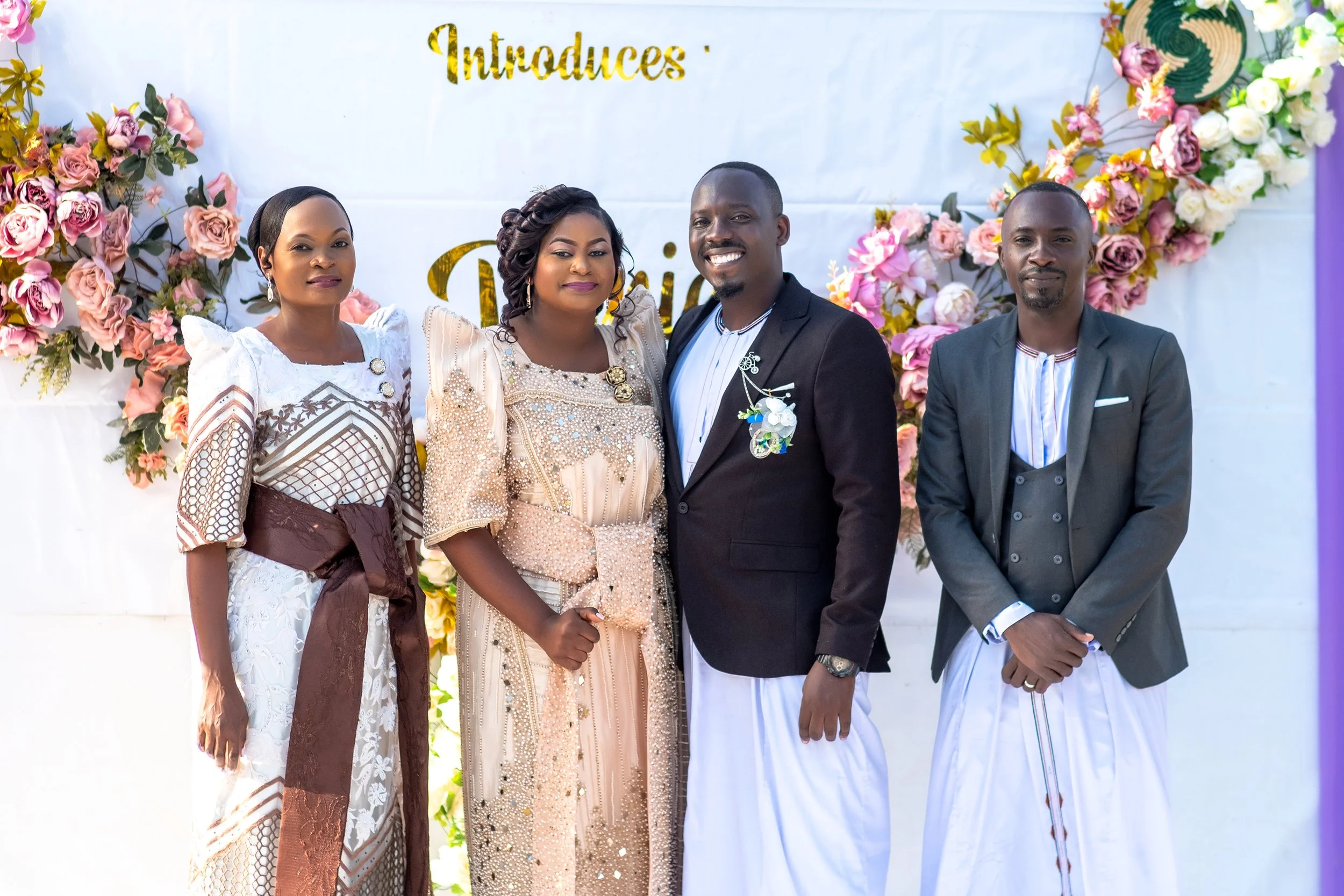
4. Traditional Clothing at the Introduction Ceremony
Clothing is one of the most noticeable features of a Ugandan introduction ceremony.
Guests often wear carefully selected traditional outfits to respect the occasion.
The Gomesi
Among the Baganda, women frequently wear the gomesi, a traditional dress recognised for its distinctive sleeves and sash.
Gomesi outfits are produced in different colours and fabrics.
The bride may change outfits during the celebration, depending on the programme and family preferences.
Female relatives and guests may also wear gomesi.
The Kanzu
Men often wear the kanzu, a long traditional tunic.
For formal occasions, it may be worn with a jacket.
The kanzu is especially associated with ceremonial dress among the Baganda, although it is also worn in other communities.
What Should Visitors Wear?
If you are invited to an introduction ceremony, ask your host about the dress code.
Formal clothing is generally appropriate.
A traditional outfit can also be suitable when worn respectfully.
Avoid assuming that every ceremony requires the same clothing.
5. Food Served at Ugandan Introduction Ceremonies
Food is an important part of Ugandan celebrations.
Introduction ceremonies often bring together many relatives and friends, so families prepare meals for invited guests.
The menu depends on the region, household preferences and available resources.
Common Foods at Introduction Ceremonies
| Food | Description | Common Serving Style |
|---|---|---|
| Matoke | Steamed green cooking bananas | Served with sauces or stews |
| Rice | Cooked rice | Served with vegetables or meat dishes |
| Groundnut sauce | Sauce prepared using groundnuts | Served with matoke or other staples |
| Beans | Cooked beans | Served with rice, matoke or posho |
| Sweet potatoes | Boiled or steamed sweet potatoes | Served alongside other dishes |
| Chicken | Chicken prepared in different ways | Served during festive meals |
| Beef | Beef stew or other preparations | Served with staple foods |
Vegetarian options may be available, but travellers with dietary requirements should ask beforehand.
The Importance of Sharing Meals
A shared meal gives guests time to interact after formal proceedings.
Relatives may meet for the first time, exchange greetings and discuss family matters.
Food also reflects the effort made by the hosting family to welcome visitors.
6. The Role of the Ssenga in Buganda Marriage Traditions
In Buganda culture, the ssenga traditionally refers to a paternal aunt who may have an important advisory role in a young woman’s life.
In some marriage arrangements, a ssenga helps with communication, guidance and preparations.
Her responsibilities vary according to family circumstances and modern practices.
Not every bride follows the same traditional arrangements.
Some families rely on parents, guardians or other respected relatives to perform advisory roles.
For visitors, this is a reminder that marriage ceremonies involve relationships extending beyond the couple.
7. Introduction Ceremonies in Other Ugandan Communities
Although kwanjula is widely recognised, it is important to understand that Uganda has many distinct cultural traditions.
Kuhingira in Western Uganda
Among some western Ugandan communities, particularly the Banyankole, kuhingira is associated with marriage celebrations and the bride’s transition to her new household.
Traditional gifts, family participation and customary procedures may form part of the occasion.
However, kuhingira should not be treated as an exact equivalent of every stage of Baganda kwanjula.
Marriage Traditions in Eastern Uganda
Communities in eastern Uganda, including the Basoga and Bagisu, have their own traditional marriage practices.
Family introductions, negotiations and gift exchanges may be involved.
The language used, ceremonial roles and expected gifts vary.
Marriage Traditions in Northern Uganda
Communities in northern Uganda also maintain distinctive marriage customs.
Family discussions and customary marriage arrangements may involve elders and other representatives.
Procedures differ between communities and households.
| Community or Region | Commonly Recognised Tradition | Important Characteristics |
|---|---|---|
| Baganda, central Uganda | Kwanjula | Formal introduction and family gift presentations |
| Banyankole, western Uganda | Kuhingira and related marriage ceremonies | Family celebrations and traditional marriage arrangements |
| Basoga, eastern Uganda | Community-specific introduction customs | Family recognition and customary exchanges |
| Bagisu, eastern Uganda | Community-specific marriage customs | Family discussions and traditional procedures |
| Northern Ugandan communities | Various customary marriage traditions | Elders, relatives and family agreements |
These descriptions are general. Individual families may follow different arrangements.
8. Can Tourists Attend a Ugandan Introduction Ceremony?
Travellers may sometimes attend an introduction ceremony when invited by a family.
However, these are personal celebrations rather than public tourist attractions.
You should never arrive without an invitation or assume that a ceremony is open to visitors.
If a Ugandan friend, guide or host invites you, ask about expectations before attending.
Etiquette for Visitors
A few simple practices can help you participate respectfully.
Arrive at the agreed time.
Wear suitable formal clothing.
Follow instructions from your host.
Avoid interrupting ceremonial speeches.
Ask permission before photographing people.
Respect seating arrangements.
Avoid making jokes about customary gifts.
Follow local guidance about greetings.
Some moments may be considered private or unsuitable for photography.
If you do not understand a procedure, ask your host quietly rather than interrupting the ceremony.
9. Modern Changes in Ugandan Introduction Ceremonies
Ugandan marriage ceremonies continue to change as families adapt traditions to modern lifestyles.
Some couples organise celebrations in hotels or commercial event venues.
Professional decorators, photographers, caterers and event coordinators may assist with preparations.
Couples may also combine traditional clothing with contemporary fashion.
Although modern arrangements can make ceremonies larger or more elaborate, many families continue to value the traditional introduction of relatives.
The size of the event does not determine its cultural importance.
A modest family gathering can carry the same personal significance as a large celebration.
Frequently Asked Questions About Ugandan Introduction Ceremonies
What is kwanjula in Uganda?
Kwanjula is a traditional introduction ceremony associated with the Baganda people. It formally introduces the prospective groom to the bride’s family.
Is kwanjula the same as a wedding?
Kwanjula is a customary marriage ceremony or stage of marriage arrangements. Whether it establishes a legally recognised customary marriage depends on the applicable legal requirements and circumstances. A couple may also hold a religious or civil wedding.
Who pays for the introduction ceremony?
Financial arrangements vary between families. The hosting family often organises the event, while the visiting family may provide agreed gifts and meet other expenses.
What do women wear to kwanjula?
Women commonly wear gomesi, particularly in Buganda. Other formal clothing may also be appropriate, depending on the dress code.
Can foreigners attend introduction ceremonies?
Yes, if they receive an invitation from the family. Visitors should respect the occasion and follow the guidance of their hosts.
Are introduction ceremonies the same throughout Uganda?
No. Uganda has many ethnic communities with different marriage traditions, languages and customary procedures.
African wedding customs in Uganda reflect the importance of family, cultural identity and respect for traditional relationships.
The introduction ceremony is particularly significant among the Baganda, where kwanjula provides an opportunity for families to recognise a couple’s intended marriage.
Traditional clothing, family spokespersons, gifts, food and formal greetings contribute to the occasion.
Other Ugandan communities maintain their own marriage customs, each with distinctive practices.
For travellers interested in understanding Ugandan culture, learning about these ceremonies offers a valuable perspective on family and community life.
If you are fortunate enough to receive an invitation, attending respectfully can be a memorable cultural experience.




No comment