
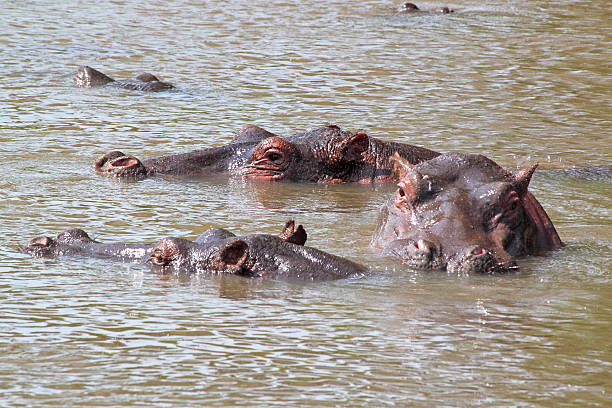
Walking in Camp at Night: Hippo Rules and Escort Procedures
Walking in camp at night is an important safety consideration for travellers staying in African safari lodges, tented camps and wilderness accommodation. In Uganda, Kenya, Tanzania and Rwanda, many safari properties are located inside or near wildlife habitats where animals can move freely after sunset.
Hippos, elephants, buffaloes and other wild animals may occasionally pass through accommodation grounds, particularly around rivers, lakes and unfenced safari camps.
Although staying in a wilderness camp offers memorable experiences, guests must understand that wildlife can be dangerous when approached unexpectedly. Hippos are especially important to consider because they often leave the water at night to graze.
Professional safari camps usually establish safety rules, walking restrictions and escort procedures to protect visitors.
This guide explains how to move safely around safari camps after dark, why hippos require special caution and how lodge escorts help guests travel between their rooms and shared facilities.
Why Walking at Night Requires Extra Care
Safari camps are often surrounded by natural habitats rather than conventional residential neighbourhoods.
Animals may move through pathways, gardens and open spaces without warning.
At night, limited visibility makes it difficult to recognise wildlife or judge distances.
Common Night-Time Hazards
| Hazard | Main concern |
|---|---|
| Hippos | Unexpected encounters on grazing routes |
| Elephants | Defensive reactions when surprised |
| Buffaloes | Dangerous close encounters |
| Lions | Predators moving through wildlife areas |
| Uneven pathways | Trips and falls |
| Poor lighting | Reduced visibility |
| Water edges | Hidden animals and slipping hazards |
The safest approach is to follow the camp’s specific instructions rather than assuming every property operates the same way.
Why Hippos Leave the Water at Night
Hippopotamuses spend much of the day in rivers, lakes and pools.
They commonly emerge during the evening and night to feed on grass.
A hippo may travel away from its resting water source in search of suitable grazing areas.
Understanding Hippo Behaviour
| Behaviour | Safety implication |
|---|---|
| Resting in water | Animals may be difficult to see |
| Night grazing | Hippos may cross camp grounds |
| Returning to water | Routes may intersect footpaths |
| Protecting young | Mothers can react defensively |
| Surprised on land | Dangerous unpredictable response |
| Moving through vegetation | Reduced visibility |
Hippos are wild animals and should never be approached for photographs.
Are Hippos Dangerous on Land?
Yes. Hippos can move surprisingly quickly over short distances despite their heavy appearance.
They have powerful jaws and can cause severe injuries.
An encounter becomes especially dangerous when a person approaches too closely or blocks an animal’s movement.
Important Hippo Safety Rules
Never approach a grazing hippo.
Do not walk between a hippo and the water.
Avoid getting between a mother and her calf.
Do not attempt to feed or attract hippos.
Never surround a hippo for photographs.
Follow directions from trained camp staff.
Distance and avoidance are the most reliable precautions.
Safari Camps Where Hippos May Be Encountered
Hippos occur in several East African wildlife destinations, particularly near permanent water sources.
Common Hippo Habitats
| Destination | Country | Relevant habitat |
|---|---|---|
| Queen Elizabeth National Park | Uganda | Kazinga Channel |
| Murchison Falls National Park | Uganda | Nile River |
| Lake Mburo National Park | Uganda | Lakes and wetlands |
| Maasai Mara | Kenya | Mara River |
| Lake Naivasha | Kenya | Lakeshore areas |
| Serengeti National Park | Tanzania | Rivers and hippo pools |
| Akagera National Park | Rwanda | Lakes and wetlands |
The presence of hippos in a national park does not mean they regularly enter every lodge. Risk depends on the property’s location and surroundings.
What Are Safari Camp Escort Procedures?
An escort procedure is a safety system where designated camp staff accompany guests between accommodation and shared facilities after dark.
Escorts may be required when travelling to restaurants, lounges, reception areas or vehicles.
Typical Camp Escort Arrangements
| Procedure | Purpose |
|---|---|
| Scheduled escort | Accompanies guests after dinner |
| Radio communication | Coordinates staff movements |
| Pathway checks | Identifies possible hazards |
| Guest collection | Prevents unescorted walking |
| Emergency assistance | Supports response to incidents |
| Room-to-restaurant escort | Reduces unnecessary wildlife encounters |
Procedures vary between camps. Some use trained security personnel, while others employ specialist wildlife staff.
Why You Should Never Ignore Escort Rules
Guests sometimes underestimate the risks because the restaurant or reception appears close to their accommodation.
However, a short pathway can cross an animal’s natural movement route.
Risks of Walking Without an Escort
You may encounter wildlife unexpectedly.
Poor lighting can conceal animals.
An unfamiliar path may lead towards water.
You may not know the safest response to an encounter.
Communication with camp staff may be delayed.
When a camp requires an escort, the instruction should always be followed.
How to Request a Night Escort
Most professionally managed wilderness camps explain escort arrangements during check-in.
Guests may receive a room telephone, radio or instructions for contacting reception.
Typical Escort Process
Contact reception or the designated escort team.
State your accommodation number or location.
Remain inside your room or tent.
Follow staff instructions when the escort arrives.
Walk together along the approved route.
Remain with the escort until reaching the destination.
Do not leave your accommodation simply because an escort appears delayed.
What Happens During an Escort Walk?
The escort’s responsibility is to help guests move safely through the camp.
Staff may carry torches and communication equipment.
They should understand local wildlife movement patterns and the property’s emergency procedures.
Guest Responsibilities
Remain close to the escort.
Follow instructions immediately.
Avoid unnecessary noise.
Keep children beside you.
Do not stop to photograph animals.
Never walk ahead of the escort.
If wildlife blocks the route, allow staff to decide whether to stop, retreat or use another path.
What If You See a Hippo Outside Your Tent?
Seeing a hippo near accommodation can be exciting, but it should be treated as a serious wildlife encounter.
Recommended Response
Remain inside your tent or room.
Do not step onto the veranda for a closer photograph.
Keep children indoors.
Inform reception using the available communication system.
Wait for trained staff to assess the situation.
Do not attempt to frighten the animal away.
A tent is not a secure barrier against a determined large animal, so avoid approaching its entrance when wildlife is nearby.
What If You Encounter a Hippo While Walking?
The safest response is to avoid close encounters entirely.
If a hippo appears unexpectedly, do not approach it or block its route.
Emergency Encounter Advice
Stop and assess the situation without moving towards the animal.
Avoid sudden attempts to pass close by.
Follow your guide’s instructions if accompanied.
Move away carefully when a safe route is available.
Do not run towards water or between the hippo and its likely escape route.
If the animal is already very close or behaving aggressively, circumstances become unpredictable. There is no guaranteed manoeuvre that makes such an encounter safe.
Why Camp Pathways Should Remain Clear
Vegetation, poorly maintained paths and unnecessary obstacles can make night walking more difficult.
Professional camps should establish suitable guest routes and manage known hazards.
Pathway Safety Features
| Feature | Benefit |
|---|---|
| Defined walkways | Easier navigation |
| Appropriate lighting | Better visibility |
| Clear signs | Reduced confusion |
| Staff patrols | Additional observation |
| Communication systems | Faster assistance |
| Escort arrangements | Safer guest movement |
Lighting alone cannot prevent encounters with wildlife.
Walking Near Rivers and Lakes
Waterfront camps often offer beautiful scenery but require particular attention after dark.
Hippos may leave the water to feed, while crocodiles can occur along suitable shorelines.
Waterfront Safety Precautions
Avoid unnecessary night walks near water.
Never approach animals resting at the shoreline.
Do not use unapproved shortcuts.
Stay away from steep or slippery banks.
Follow posted restrictions.
Do not swim in natural water unless a qualified local authority has confirmed the activity is permitted and appropriately managed.
Night Safety Around Elephants and Buffaloes
Hippos are not the only large animals that may enter camp grounds.
Elephants sometimes move through unfenced properties while feeding or travelling.
Buffaloes may also graze near accommodation.
Large Animal Precautions
Keep a safe distance.
Never feed wildlife.
Avoid blocking movement routes.
Do not walk towards animals for photographs.
Remain indoors when staff advise it.
Follow escort instructions without delay.
Large wildlife should always be treated with respect, regardless of how calm it appears.
What About Lions and Other Predators?
Predators may occasionally move through camps located inside wildlife habitats.
Although encounters with guests are unusual at professionally managed properties, the consequences can be serious.
Guests should never walk alone through an unfenced camp at night.
Food should not be left outside accommodation, and wildlife should never be attracted towards guest areas.
Safety Rules for Families With Children
Children may become excited when hearing wildlife near their accommodation.
Parents should explain camp safety rules before sunset.
Family Night Safety Checklist
| Rule | Reason |
|---|---|
| Children remain supervised | Prevents wandering |
| Escort required | Reduces wildlife encounters |
| No feeding animals | Prevents attraction |
| Doors and zips secured | Limits access |
| No independent night walks | Supports safety |
| Emergency contacts available | Faster assistance |
Parents should never allow children to travel independently between tents and dining areas after dark where escorts are required.
What Should You Pack for Camp Safety?
A small selection of practical items can make moving around safari accommodation more comfortable.
Recommended Items
| Item | Purpose |
|---|---|
| Torch or headlamp | Visibility |
| Closed walking shoes | Foot protection |
| Lightweight jacket | Evening comfort |
| Mobile phone | Communication |
| Power bank | Backup charging |
| Emergency contact details | Assistance |
| Personal medication | Health needs |
A torch is useful, but it does not make walking alone among dangerous wildlife safe.
Are Fenced Safari Lodges Safer?
Fenced accommodation may reduce some wildlife encounters, depending on the fence design, maintenance and surrounding environment.
However, fences do not guarantee that wildlife cannot enter.
Fenced vs Unfenced Accommodation
| Feature | Fenced lodge | Unfenced camp |
|---|---|---|
| Wildlife movement | May be restricted | Often unrestricted |
| Escort policy | Property-dependent | Frequently required |
| Night walking | Follow lodge instructions | Usually restricted |
| Wildlife atmosphere | Varies | Strong wilderness experience |
| Safety requirements | Still important | Particularly important |
Ask each property about its specific arrangements rather than assuming that fencing removes every risk.
What If You Need Help During the Night?
Guests should know how to contact staff without leaving their accommodation.
Emergency Communication
Save the reception number.
Understand the camp’s emergency signalling procedure.
Keep your phone charged.
Tell staff about serious medical needs.
Stay inside if dangerous wildlife is outside.
Request assistance rather than attempting an unsafe journey.
Professional camps should explain these procedures during arrival orientation.
Common Mistakes Safari Guests Make
Some visitors assume that animals remain inside national parks and do not approach accommodation.
Others leave tents after dark because shared facilities appear nearby.
Mistakes to Avoid
Walking alone after dinner.
Approaching grazing hippos.
Using shortcuts near water.
Feeding wild animals.
Ignoring escort instructions.
Leaving children unsupervised.
Trying to photograph wildlife from unsafe distances.
Avoiding these behaviours substantially reduces unnecessary exposure.
Frequently Asked Questions
Do Hippos Enter Safari Camps at Night?
They can, particularly at unfenced properties near water and grazing areas. The frequency varies by location.
Can I Walk From My Tent to the Restaurant Alone?
Only when camp management confirms it is permitted. Many wilderness camps require escorts after dark.
Are Hippos More Dangerous at Night?
Night-time grazing increases the possibility of unexpected encounters on land, especially near water.
Should I Run if I See a Hippo?
Do not approach or provoke the animal. Follow trained guide instructions and move away safely when possible. There is no universally safe escape technique.
Walking Safely in Safari Camps
Walking in camp at night requires awareness, discipline and respect for wildlife.
Hippos, elephants, buffaloes and other animals may move through natural safari environments after sunset.
Visitors staying near rivers and lakes should take particular care because hippos frequently leave the water to graze.
Professional escort procedures help reduce unnecessary encounters and allow guests to enjoy wilderness accommodation more safely.
The most important rule is simple: never walk alone after dark when your safari camp requires an escort, and never approach a hippo or other large wild animal.
By following lodge instructions, travellers can enjoy unforgettable nights in East Africa’s wilderness with greater confidence.




No comment