
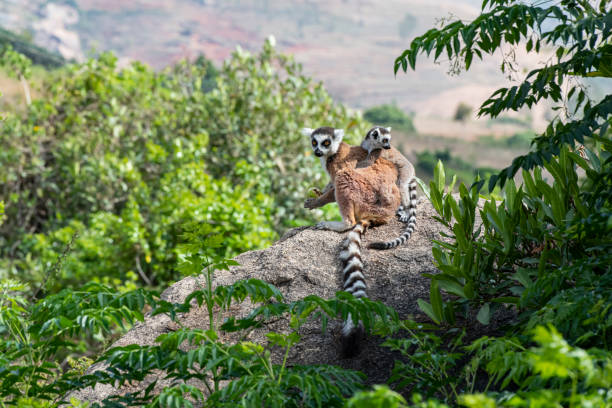
Madagascar Lemurs: Where to See Ring-Tailed Lemurs and Indri
Madagascar lemurs are among the world’s most fascinating primates, famous for their unusual appearance, remarkable behaviour and extraordinary diversity. Found naturally only in Madagascar, these animals have evolved into numerous species that inhabit the island’s rainforests, dry woodlands and rocky landscapes.
Two of the most memorable species are the ring-tailed lemur, recognised by its black-and-white striped tail, and the indri, the largest living lemur, famous for its powerful, haunting calls.
Unlike mainland Africa’s monkeys and great apes, lemurs evolved in isolation on Madagascar, developing distinctive characteristics and ecological adaptations.
For wildlife enthusiasts, photographers and travellers seeking unusual African wildlife experiences, Madagascar provides exceptional opportunities to observe these remarkable animals in their natural habitats.
Why Is Madagascar Famous for Lemurs?
Madagascar is the world’s most important destination for lemur conservation.
The island separated from other landmasses millions of years ago, allowing its wildlife to evolve independently.
Today, more than 100 recognised lemur species and subspecies inhabit different parts of Madagascar.
Many are threatened by habitat destruction, hunting and environmental changes.
Quick Facts About Madagascar Lemurs
| Feature | Description |
|---|---|
| Country | Madagascar |
| Main attraction | Endemic lemurs |
| Famous species | Ring-tailed lemur |
| Largest living lemur | Indri |
| Ring-tailed habitat | Southern Madagascar |
| Indri habitat | Eastern rainforests |
| Main activities | Guided forest walks |
| Best viewing time | Early morning |
| Conservation concern | Habitat loss and hunting |
| Recommended safari | 7–10 days |
Ring-Tailed Lemurs: Madagascar’s Famous Primates
The ring-tailed lemur, scientifically known as Lemur catta, is one of Madagascar’s most recognisable animals.
Its long tail contains alternating black and white rings.
Unlike many other lemurs, ring-tailed lemurs spend considerable time on the ground.
What Makes Ring-Tailed Lemurs Special?
They live in social groups and communicate through sounds, scents and body movements.
Their long tails help with balance and visual communication.
Ring-tailed lemurs are also famous for sitting upright with their bodies facing the morning sunshine.
This behaviour helps them warm themselves after cooler nights.
Where to See Ring-Tailed Lemurs
Ring-tailed lemurs occur naturally in southern and southwestern Madagascar.
Several protected areas offer rewarding opportunities for observing them.
Best Ring-Tailed Lemur Destinations
| Destination | Main attraction |
|---|---|
| Anja Community Reserve | Accessible lemur encounters |
| Isalo National Park | Lemurs and sandstone scenery |
| Berenty Reserve | Established wildlife observation |
| Andringitra National Park | Mountain landscapes |
| Andohahela National Park | Diverse natural habitats |
| Zombitse-Vohibasia | Dry forest wildlife |
Wildlife encounters depend on animal movements and local conditions.
Anja Community Reserve
Anja Community Reserve is among the best locations for observing wild ring-tailed lemurs.
Situated near Ambalavao in southern Madagascar, the reserve protects a beautiful landscape of granite rocks, woodland and vegetation.
What Makes Anja Special?
Ring-tailed lemurs often move through relatively accessible areas.
Visitors may observe them resting on rocks, travelling between trees or feeding.
The reserve is managed through a community conservation initiative.
Guided visits help generate local employment while supporting wildlife protection.
Isalo National Park
Isalo National Park combines dramatic sandstone landscapes with remarkable wildlife.
Located in southwestern Madagascar, the park contains rocky canyons, grasslands and patches of woodland.
Watching Lemurs in Isalo
Ring-tailed lemurs inhabit suitable woodland and rocky habitats.
Visitors may observe them during guided walks.
The park also supports Verreaux’s sifakas and other wildlife.
Its combination of scenery and primates makes it particularly attractive for photographers.
Berenty Reserve
Berenty Reserve lies in southern Madagascar near the Tolagnaro region.
It is well known for its population of ring-tailed lemurs.
Why Visit Berenty?
The reserve contains gallery forest and other natural habitats.
Some lemur groups are accustomed to visitors walking along established paths.
This can create excellent opportunities for observing social behaviour.
However, visitors should maintain respectful distances and avoid feeding the animals.
Indri: Madagascar’s Largest Living Lemur
The indri, scientifically known as Indri indri, is the largest living lemur.
It inhabits the humid eastern rainforests of Madagascar.
Unlike ring-tailed lemurs, indris spend most of their lives in trees.
How to Identify an Indri
| Feature | Description |
|---|---|
| Scientific name | Indri indri |
| Size | Largest living lemur |
| Coat | Black-and-white markings |
| Tail | Very short |
| Habitat | Eastern rainforest |
| Diet | Mainly leaves and other plant material |
| Famous behaviour | Powerful territorial calls |
| Conservation status | Critically Endangered |
Indris are remarkable climbers capable of making impressive leaps between trees.
Why Are Indri Calls So Famous?
One of Madagascar’s most unforgettable wildlife experiences is hearing indris calling through the rainforest.
Their loud vocalisations travel considerable distances.
Understanding Indri Communication
Indris use powerful calls to communicate with other groups.
Their vocalisations help maintain territorial boundaries.
Groups may produce coordinated calling sequences that echo through the forest.
Early morning is often a rewarding time to hear these extraordinary sounds.
Where to See Indri Lemurs
The best-known destination for indri watching is Andasibe-Mantadia National Park in eastern Madagascar.
The surrounding rainforest contains important populations of this endangered primate.
Best Indri Watching Areas
| Location | Main attraction |
|---|---|
| Analamazaotra Special Reserve | Accessible indri observation |
| Mantadia National Park | Larger rainforest environment |
| Mitsinjo Reserve | Community-supported conservation |
| Anjozorobe forests | Additional indri habitat |
Andasibe is generally the most practical destination for first-time visitors.
Analamazaotra Special Reserve
Analamazaotra is particularly famous for indri encounters.
The reserve lies near the village of Andasibe, east of Antananarivo.
What Happens During a Visit?
Guides lead visitors along established forest trails.
They listen for indri calls and search the canopy for movement.
Visitors may encounter indris feeding, resting or travelling between trees.
Other lemurs and forest birds may also be observed.
Mantadia National Park
Mantadia protects extensive rainforest habitats.
Its trails can be more demanding than those in Analamazaotra.
Why Visit Mantadia?
The forest supports several lemur species and remarkable biodiversity.
Visitors can search for indris, sifakas, birds and reptiles.
Dense vegetation makes sightings more challenging, but the experience is rewarding for dedicated nature enthusiasts.
Ring-Tailed Lemurs Versus Indri
These two species offer very different wildlife encounters.
Main Differences
| Feature | Ring-tailed lemur | Indri |
|---|---|---|
| Habitat | Southern dry habitats | Eastern rainforest |
| Appearance | Grey body, striped tail | Black-and-white body |
| Tail | Long and ringed | Very short |
| Movement | Ground and trees | Mainly trees |
| Social behaviour | Larger groups | Small family groups |
| Famous activity | Sunbathing | Loud calls |
| Best destination | Anja Reserve | Andasibe |
Travellers hoping to see both species should plan a route covering eastern and southern Madagascar.
Best Time to See Lemurs
Lemurs can be observed throughout the year.
However, rainfall, temperature and breeding seasons influence wildlife activity.
Seasonal Viewing Guide
| Period | General experience |
|---|---|
| January–March | Rainy conditions in many regions |
| April–May | Greener landscapes |
| June–August | Cooler weather |
| September–November | Excellent wildlife activity |
| December | Warm, increasing rainfall |
September to November is often particularly rewarding for observing young ring-tailed lemurs.
How Close Can Visitors Get?
Some lemur populations are accustomed to people using established forest trails.
However, these animals remain wild.
Responsible Lemur Watching
Never touch lemurs.
Do not feed them.
Avoid loud noises.
Stay on designated trails.
Follow guide instructions.
Do not approach infants.
Maintaining appropriate distances reduces stress and disease-transmission risks.
Other Lemurs Worth Seeing
Madagascar supports numerous other remarkable lemur species.
Additional Lemur Species
| Lemur | Popular viewing area |
|---|---|
| Golden bamboo lemur | Ranomafana |
| Diademed sifaka | Eastern rainforests |
| Verreaux’s sifaka | Southern and western Madagascar |
| Red ruffed lemur | Masoala |
| Mouse lemurs | Various forests |
| Brown lemurs | Several protected areas |
Some species are nocturnal and require authorised evening wildlife walks.
How to Reach Madagascar’s Lemur Parks
Antananarivo is the main international arrival point.
Andasibe is accessible by road from the capital.
Southern reserves require longer journeys or carefully arranged domestic transport.
Travel Planning
| Destination | Main gateway |
|---|---|
| Andasibe | Antananarivo |
| Anja Reserve | Fianarantsoa or Ambalavao |
| Isalo | Ranohira |
| Berenty | Tolagnaro |
| Ranomafana | Fianarantsoa |
Road conditions can significantly affect travel times.
Suggested Madagascar Lemur Safari
A well-planned itinerary can include both ring-tailed lemurs and indris.
Seven-Day Example
| Day | Activity |
|---|---|
| One | Arrive in Antananarivo |
| Two | Travel to Andasibe |
| Three | Indri watching |
| Four | Return towards the capital |
| Five | Continue towards southern Madagascar |
| Six | Visit Anja Community Reserve |
| Seven | Continue the journey or depart |
Because distances are considerable, a longer itinerary is preferable when travelling entirely by road.
Conservation Challenges
Madagascar’s lemurs face serious conservation threats.
Forest clearance reduces available habitat.
Hunting and illegal wildlife capture threaten some populations.
Climate change adds pressure to fragile ecosystems.
How Tourism Helps
Responsible tourism generates employment for guides and local communities.
Park admission fees can support habitat protection.
Conservation programmes also help educate visitors and residents about protecting endangered wildlife.
Why Madagascar Lemurs Are Worth Seeing
Madagascar offers wildlife encounters unlike those found anywhere else.
Ring-tailed lemurs provide fascinating opportunities to observe social groups among southern forests and rocky landscapes.
Indris introduce visitors to the extraordinary sounds and biodiversity of Madagascar’s eastern rainforests.
Together, these primates reveal the remarkable evolutionary history of the island.
For travellers interested in nature, photography and conservation, observing Madagascar’s lemurs in protected natural habitats is an unforgettable African wildlife experience.


No comment