
Lilac-Breasted Roller: Why Photographers Chase It
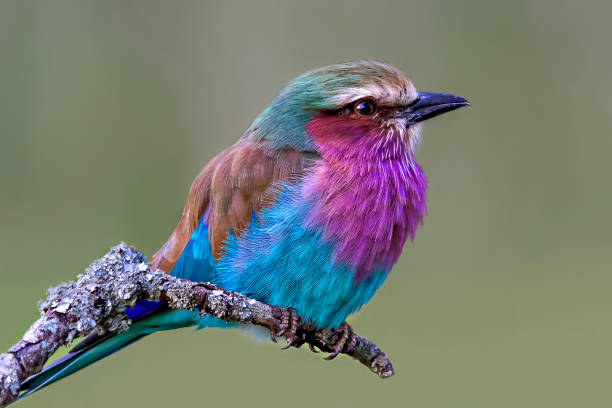
The morning sun rises over Kenya’s Maasai Mara National Reserve. A small bird sits on a dry acacia branch beside a game-drive track. Its head is pale green, its breast shines purple, and its brilliant turquoise wings contrast beautifully with the golden grasslands.
Your safari guide slows the vehicle, and everyone reaches for a camera.
The bird turns its head, studies the ground and suddenly launches into the air. For a brief moment, its wings open to reveal dazzling shades of electric blue. Within seconds, it drops towards an insect and returns to its perch.
This is the lilac-breasted roller, one of Africa’s most colourful and photographed birds.
Lilac-breasted roller photography in East Africa has become a favourite activity among birdwatchers and wildlife photographers. Despite its relatively small size, the bird attracts attention because of its extraordinary plumage, impressive hunting behaviour and dramatic aerial displays.
Unlike many shy forest birds, lilac-breasted rollers often perch in open positions where they can be observed from safari vehicles.
However, obtaining the perfect photograph, especially with the bird’s wings fully spread, requires patience and careful timing.
This guide explains why photographers love the lilac-breasted roller, where to find it and how to capture its remarkable colours and behaviour.
1. What Is a Lilac-Breasted Roller?
The lilac-breasted roller is a medium-sized African bird belonging to the roller family, Coraciidae.
Its scientific name is Coracias caudatus.
It is widespread across suitable savannah and open woodland habitats in eastern and southern Africa.
The bird is especially famous for its colourful feathers, long tail streamers and habit of sitting on exposed branches while searching for prey.
Lilac-Breasted Roller Quick Facts
| Feature | Description |
|---|---|
| Common name | Lilac-breasted roller |
| Scientific name | Coracias caudatus |
| Bird family | Coraciidae |
| Length | Approximately 36–38 cm, including tail streamers |
| Main habitat | Open savannah and woodland |
| Diet | Insects and small vertebrates |
| Activity | Daytime |
| Hunting method | Watching from perches and swooping onto prey |
| Notable behaviour | Rolling aerial displays |
| Conservation status | Least Concern |
| Main safari regions | Eastern and southern Africa |
Its combination of beauty, visibility and behaviour makes it an excellent introduction to African bird photography.
2. Why Is the Lilac-Breasted Roller So Colourful?
The lilac-breasted roller is famous for the contrasting colours of its plumage.
Its breast is lilac or purple, while the underparts contain bright turquoise tones. The upper wings combine warm brown, blue and violet-blue feathers.
The head has greenish and pale buff colouring, while the long outer tail feathers provide another striking feature.
Lilac-Breasted Roller Colour Guide
| Body Part | Typical Colour |
|---|---|
| Crown | Greenish-blue |
| Forehead | Pale buff or whitish |
| Breast | Lilac or violet |
| Belly | Turquoise-blue |
| Upper back | Brown |
| Wing feathers | Blue, violet and turquoise |
| Tail | Blue-green with elongated outer feathers |
| Bill | Dark, strong and slightly hooked |
Photographers often describe the species as a rainbow bird.
However, there is no need to claim it has an exact number of colours. The appearance changes with lighting, feather position and viewing angle.
3. Why Do Wildlife Photographers Love This Bird?
Several features make the lilac-breasted roller unusually attractive to photographers.
First, the bird has exceptional colour contrast.
Its blue and purple plumage stands out against the yellow grasses, reddish soil and green vegetation of East African savannahs.
Second, rollers often select exposed perches.
This provides opportunities to photograph the bird without dense leaves blocking the view.
Third, they hunt actively and may return to the same branch after catching prey.
Finally, their spectacular flight displays create opportunities for dramatic action photographs.
Why Rollers Make Excellent Photography Subjects
| Feature | Photography Advantage |
|---|---|
| Bright feathers | Strong natural colour |
| Exposed perches | Clear portraits |
| Long tail streamers | Attractive silhouettes |
| Sudden hunting flights | Action photography |
| Rolling aerial displays | Dramatic flight images |
| Savannah habitat | Uncluttered backgrounds |
| Daytime activity | Accessible natural light |
These qualities explain why some photographers spend considerable time waiting beside a single roller’s perch.
4. Why Is It Called a Roller?
The name comes from the bird’s impressive aerial displays.
During certain territorial and courtship activities, rollers perform rapid dives, twists and rolling movements in flight.
A displaying bird may rise above its territory before descending with dramatic changes in direction.
These movements can be accompanied by harsh calls.
The displays are particularly associated with breeding behaviour and territorial defence.
However, not every flight is a rolling display.
When hunting, a roller may simply drop quickly from a perch towards prey on the ground.
For photographers, learning the difference helps anticipate the most interesting movements.
5. How Does a Lilac-Breasted Roller Hunt?
Lilac-breasted rollers are watch-and-wait predators.
They select branches, fence posts or other elevated positions that provide a clear view of the ground.
From these perches, they look for insects and small animals.
Once prey is detected, the bird launches into a quick downward flight.
It may catch the animal on the ground before returning to a perch.
Larger prey may be struck against the branch before being swallowed.
Common Roller Prey
| Food | Hunting Opportunity |
|---|---|
| Grasshoppers | Captured in open grassland |
| Beetles | Found on the ground or vegetation |
| Crickets | Taken from suitable habitat |
| Termites | Available during insect activity |
| Small lizards | Captured opportunistically |
| Frogs | Taken when encountered |
| Small snakes | Occasionally consumed |
This hunting strategy gives photographers repeated opportunities to capture a bird leaving or returning to its perch.
6. The Secret to Photographing a Roller in Flight
A perched roller is relatively easy to photograph when conditions are suitable.
A sharp image of the bird launching into flight is much more challenging.
The bird may leave its perch suddenly, giving little warning.
Photographers therefore watch its posture closely.
A bird that becomes especially alert and focuses on the ground may be preparing to hunt.
However, posture alone cannot reliably predict the exact moment of take-off.
Suggested Camera Settings
| Photography Situation | Starting Settings |
|---|---|
| Perched portrait | 1/500–1/1000 sec |
| Hunting take-off | 1/2000 sec or faster |
| Fast flight | 1/2500–1/3200 sec |
| Aperture | Around f/5.6–f/8 |
| Focus | Continuous autofocus |
| Shooting mode | High-speed burst |
| ISO | Auto ISO with suitable limits |
These settings are starting points rather than universal requirements.
Light levels, lens performance and camera technology determine the best choices.
7. Why Is the Perfect Wing Photograph Difficult?
The most spectacular roller photographs often show the bird flying with both wings fully extended.
From below, the feathers reveal brilliant shades of blue and turquoise that are less obvious when the bird is perched.
However, rollers are quick and unpredictable.
The bird may launch towards the camera, away from it or directly behind a branch.
The wings may also block the face during the most dramatic moments.
Photographers often need several attempts before obtaining the desired combination of sharp eyes, attractive wing position and clear background.
Patience matters more than trying to force the bird to fly.
8. Why Are Backgrounds So Important?
The lilac-breasted roller has exceptionally bright feathers.
A complicated background can distract from the colours.
Branches, leaves and high-contrast objects may compete with the bird.
A softly blurred background allows the plumage to stand out.
Background Choices
| Background | Visual Effect |
|---|---|
| Golden savannah | Warm contrast with blue feathers |
| Soft green vegetation | Natural colour harmony |
| Clear blue sky | Clean flight photograph |
| Distant brown grassland | Strong subject separation |
| Dense branches | May create distractions |
| Dark woodland | Can produce dramatic portraits |
The best background depends on the photographic style and direction of light.
Try changing the camera angle slightly without disturbing the bird.
9. What Is the Best Light for Roller Photography?
Early morning and late afternoon often provide attractive conditions.
Low-angle sunlight can reveal feather texture and give the bird a warm appearance.
Soft light is especially useful for perched portraits.
However, direct midday light can sometimes make the blue wing feathers appear brilliant during flight.
The challenge is balancing the bright plumage with darker areas of the bird.
Lighting Guide
| Conditions | Photography Advantage |
|---|---|
| Early morning | Soft light and warm backgrounds |
| Late afternoon | Attractive side lighting |
| Light cloud | Even exposure across feathers |
| Clear midday | Bright colours but harsh shadows |
| Backlighting | Potential silhouettes and feather-edge light |
Avoid excessive saturation when editing, as the roller’s natural colours are already remarkable.
10. Where Can You Find Lilac-Breasted Rollers in Kenya?
Kenya offers excellent opportunities to photograph lilac-breasted rollers.
They are associated with open savannah and lightly wooded landscapes where suitable perches are available.
Kenya Safari Destinations
| Destination | Photography Opportunities |
|---|---|
| Maasai Mara National Reserve | Perched rollers and open savannah backgrounds |
| Amboseli National Park | Rollers in suitable grassland and woodland |
| Tsavo East National Park | Birds against dry savannah landscapes |
| Tsavo West National Park | Open woodland and bushland |
| Samburu region | Rollers in suitable semi-arid woodland |
| Lewa Wildlife Conservancy | Savannah bird photography |
The Maasai Mara is particularly familiar to wildlife photographers because the birds can sometimes be observed beside established game-drive routes.
11. Where Can You Photograph Them in Uganda?
Lilac-breasted rollers also occur in Uganda’s savannah landscapes.
They are especially associated with open woodland, grasslands and scattered trees.
Uganda Viewing Locations
| Destination | What to Look For |
|---|---|
| Murchison Falls National Park | Rollers perched along savannah tracks |
| Queen Elizabeth National Park | Open woodland and grassland edges |
| Lake Mburo National Park | Scattered trees and open savannah |
| Kidepo Valley National Park | Semi-arid savannah and exposed perches |
Bird sightings depend on the habitat, weather and local conditions.
A roller may appear beside a safari road, but that does not guarantee it will remain long enough for a photograph.
12. Where Can You See Rollers in Tanzania and Rwanda?
Tanzania’s savannah national parks are also excellent birdwatching destinations.
The Serengeti, Tarangire and suitable areas of the Ngorongoro Conservation Area support lilac-breasted rollers.
In Rwanda, the species may be encountered in suitable open habitats, including parts of Akagera National Park.
Tanzania and Rwanda Viewing Guide
| Destination | Country | Habitat |
|---|---|---|
| Serengeti National Park | Tanzania | Savannah and scattered woodland |
| Tarangire National Park | Tanzania | Open woodland |
| Ngorongoro Conservation Area | Tanzania | Suitable savannah habitats |
| Akagera National Park | Rwanda | Savannah and open woodland |
These areas provide opportunities to combine roller photography with broader wildlife experiences.
13. Do Male and Female Rollers Look Different?
Male and female lilac-breasted rollers look very similar.
Both display colourful plumage.
This means visitors usually cannot identify a bird’s sex confidently from ordinary photographs.
Their behaviour may sometimes provide clues during breeding, but appearance alone is not sufficient.
Young birds are generally duller than adults and may lack fully developed tail streamers.
This distinction is useful when observing family groups.
14. How Do Lilac-Breasted Rollers Breed?
Lilac-breasted rollers usually nest in cavities, often in trees.
They may use existing holes rather than excavating a new cavity.
Breeding pairs defend their nesting area and may perform aerial displays.
The female typically lays a small clutch of eggs.
Both parents participate in caring for the developing young.
The timing of breeding varies geographically and may be influenced by seasonal conditions.
Photographers should never approach active nest cavities closely or remain nearby if their presence changes the birds’ behaviour.
15. Are Lilac-Breasted Rollers Endangered?
No. The lilac-breasted roller is classified as Least Concern on the IUCN Red List.
BirdLife International’s 2024 assessment describes the overall population trend as stable.
The species occupies an extensive range across eastern and southern Africa.
However, Least Concern does not mean that habitat protection is unnecessary.
The birds still depend on suitable woodland, open savannah and natural prey populations.
Changes in land use, removal of mature trees and heavy pesticide use can affect local habitat quality.
Protecting savannah ecosystems benefits these birds alongside many other species.
16. Can Rollers Be Found in the Same Place Every Day?
Lilac-breasted rollers may repeatedly use favourable perches within an area.
A branch with clear views of the ground can provide an excellent hunting position.
However, birds move according to food availability, disturbance and territorial behaviour.
A perch occupied one morning may be empty the next.
Photographers should therefore observe natural movement patterns rather than assume an individual will always return to exactly the same location.
Working with a knowledgeable bird guide can improve the chances of finding suitable subjects.
17. Common Roller Photography Mistakes
Even experienced photographers can struggle with these fast-moving birds.
Mistakes to Avoid
| Mistake | Better Approach |
|---|---|
| Slow shutter speed during flight | Increase shutter speed |
| Focusing on the branch | Track the bird’s eye or head |
| Overexposing pale head feathers | Monitor highlights |
| Excessive colour saturation | Keep realistic feather colours |
| Cropping too tightly | Leave room for wing movement |
| Approaching too closely | Maintain a respectful distance |
| Ignoring the background | Check composition before shooting |
Photographing the bird’s natural behaviour is more rewarding than trying to produce every image in one encounter.
18. How to Plan a Lilac-Breasted Roller Photography Safari
A successful bird photography safari combines suitable destinations, good light and patience.
Travellers should allow enough time for birdwatching rather than concentrating entirely on large mammals.
Ask your guide to watch for colourful birds perched along savannah tracks.
Carry binoculars and a telephoto lens.
A vehicle with an opening roof or suitable photography windows can provide useful viewing angles.
Recommended Equipment
- Camera with reliable continuous autofocus.
- Telephoto lens, approximately 300–600 mm depending on camera format.
- Spare batteries and memory cards.
- Binoculars.
- Lens-cleaning equipment.
- Beanbag or other secure camera support.
- Weather protection for dust and rain.
A specialised camera is helpful, but sharp and attractive perched portraits are also possible with less expensive equipment.
Frequently Asked Questions
Why Is the Lilac-Breasted Roller So Popular With Photographers?
Its extraordinary colours, exposed perches and dramatic flight behaviour make it one of East Africa’s most attractive bird photography subjects.
Where Is the Best Place to Photograph Lilac-Breasted Rollers?
The Maasai Mara, Serengeti, Tarangire, Murchison Falls and other suitable savannah habitats provide excellent opportunities.
Why Is It Called a Roller?
The name refers to rolling and diving aerial displays associated with courtship and territorial behaviour.
What Does a Lilac-Breasted Roller Eat?
It feeds mainly on insects and other small animals, including occasional lizards and frogs.
Are Lilac-Breasted Rollers Endangered?
No. The species is currently classified as Least Concern.
Can You Photograph a Roller in Flight?
Yes. Fast shutter speeds, continuous autofocus and patience can help capture its colourful wings during take-off or flight.
A Small Bird Worth Stopping For
The lilac-breasted roller proves that some of Africa’s most memorable wildlife experiences involve animals much smaller than the Big Five.
Its purple breast, turquoise body, blue wings and graceful tail streamers make it one of the continent’s most beautiful birds.
For photographers, the real attraction is the combination of colour and action.
A perched roller offers an attractive portrait, while a sudden hunting flight or dramatic aerial display can produce an unforgettable photograph.
The challenge is predicting movement, finding good light and waiting patiently for the right moment.
Whether you are visiting Uganda, Kenya, Tanzania or Rwanda, the lilac-breasted roller deserves a place on your wildlife photography checklist.







No comment