
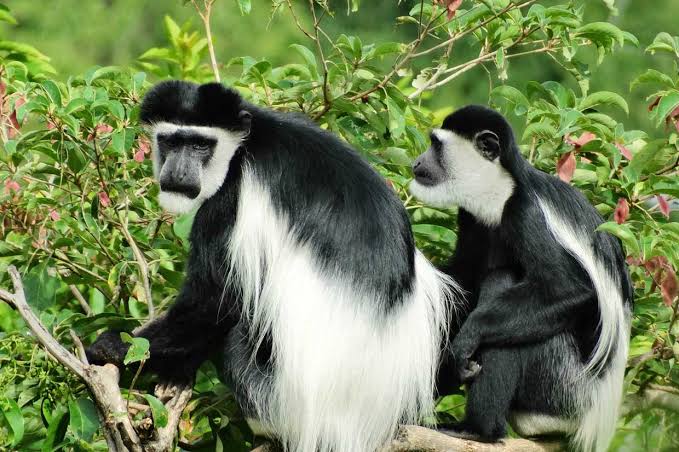
L’Hoest’s Monkeys in Bwindi: Where and When to Look
Walking through Bwindi Impenetrable National Park in southwestern Uganda offers more than an opportunity to see mountain gorillas. Beneath the tall forest trees, smaller primates search for food, travel in groups and disappear into thick vegetation. Among these fascinating animals is L’Hoest’s monkey, a distinctive forest species recognised by its dark coat and striking white beard.
L’Hoest’s monkeys in Bwindi are often overlooked by visitors concentrating on gorilla trekking. However, they are among the interesting primates you may encounter during guided forest walks, particularly around Buhoma and Ruhija.
Knowing where to look, when to visit and how these monkeys behave can improve your chances of observing them. This guide explains their preferred habitats, identification features, feeding habits and practical tips for finding them during your Uganda primate safari.
What Are L’Hoest’s Monkeys?
L’Hoest’s monkey, scientifically known as Allochrocebus lhoesti, is an African forest monkey associated with the Albertine Rift region.
It has a dark brown to blackish coat, a prominent white beard, relatively long limbs and a long tail.
Unlike many monkeys that spend most of their time high in trees, L’Hoest’s monkeys frequently forage on the forest floor.
They are skilled climbers and can retreat quickly into vegetation when disturbed.
These monkeys usually live in social groups containing several females, their young and one or more males.
Their secretive behaviour and preference for dense forest can make sightings challenging.
1. Buhoma: A Good Starting Point for Monkey Watching
Buhoma lies in the northern section of Bwindi Impenetrable National Park and is one of the park’s established tourism areas.
Although best known for gorilla trekking, Buhoma also offers guided nature walks through forest habitats.
L’Hoest’s monkeys may be encountered around forest edges, lower vegetation and suitable trails.
Where Should You Look?
Ask your guide about forest walks around the Buhoma area, including the Waterfall Trail and nearby forest-edge routes.
Watch for movement beneath shrubs and among low branches.
Unlike black-and-white colobus monkeys, which are frequently seen high in trees, L’Hoest’s monkeys often spend considerable time closer to the ground.
Morning walks are particularly worthwhile because forest wildlife may be actively feeding and travelling.
However, no particular trail guarantees a sighting.
2. Ruhija: Looking for Monkeys in Montane Forest
Ruhija is located in eastern Bwindi and is known for its high-altitude forest habitats.
The area attracts birdwatchers interested in Albertine Rift species, but it also provides opportunities to observe primates.
L’Hoest’s monkeys have been recorded in the Ruhija section of the park.
Why Consider Ruhija?
Ruhija contains montane forest, thick undergrowth and established nature trails.
Guided walks around suitable forest habitats may reveal L’Hoest’s monkeys moving through the vegetation.
The Mubwindi Swamp Trail is primarily known for birdwatching, but visitors may also encounter monkeys along forest sections.
The trail includes steep terrain, so prepare for potentially challenging walking conditions.
Ask your guide about recent observations before selecting a route.
3. Can You See L’Hoest’s Monkeys in Rushaga and Nkuringo?
Rushaga and Nkuringo are popular gorilla trekking areas in southern Bwindi.
Both contain forest habitats that support various primates, including L’Hoest’s monkeys.
However, these sectors are not as frequently promoted specifically for monkey watching as Buhoma and Ruhija.
You may encounter L’Hoest’s monkeys while travelling towards gorilla trekking areas or during authorised nature walks.
Because sightings are unpredictable, discuss your interests with your safari operator in advance.
If seeing smaller forest primates is a major priority, consider adding a dedicated guided forest walk rather than relying entirely on incidental sightings during gorilla trekking.
Best Places to See L’Hoest’s Monkeys in Bwindi
| Bwindi Sector | Where to Look | Suggested Activity |
|---|---|---|
| Buhoma | Forest edges and lower vegetation | Guided forest nature walk |
| Ruhija | Montane forest and trail vegetation | Guided forest or birdwatching walk |
| Rushaga | Suitable forest habitats | Authorised nature walk |
| Nkuringo | Forested slopes and lower vegetation | Guided forest walk |
Buhoma and Ruhija have documented sightings, but the best location on any particular day depends on the monkeys’ movements.
4. What Time of Day Is Best?
L’Hoest’s monkeys are diurnal, meaning they are active during daylight hours.
Early morning is a practical time to look for them because groups may be moving between resting and feeding areas.
A guided walk beginning around 7:00 or 8:00 am can provide good opportunities for forest wildlife observation.
However, the monkeys may also be active later in the morning and afternoon.
Their movements depend on food availability, temperature, social behaviour and other natural factors.
There is no guaranteed viewing time.
If you are staying near Buhoma, ask your guide whether a morning nature walk can be arranged before or after your other safari activities.
5. Best Season for Finding L’Hoest’s Monkeys
Bwindi can be visited throughout the year, and L’Hoest’s monkeys remain present during both wet and dry seasons.
Uganda’s relatively drier periods generally occur around June to August and December to February.
These months often provide more comfortable walking conditions, although rain remains possible.
During wetter periods, forest trails may become slippery and muddy.
Vegetation can also become particularly dense, making animals harder to see in some locations.
However, rainfall does not mean monkeys disappear.
Choose your travel season according to walking comfort and your wider Uganda safari itinerary.
6. How to Identify L’Hoest’s Monkeys
The most recognisable feature of L’Hoest’s monkey is its prominent white beard contrasting with a dark face and coat.
Its body is generally dark brown, greyish or blackish, with lighter colouring around the lower body.
The long tail helps with balance when climbing.
| Identification Feature | Description |
|---|---|
| Scientific name | Allochrocebus lhoesti |
| Face | Dark with prominent white beard |
| Body | Dark brown to blackish fur |
| Tail | Long and slender |
| Main habitat | Montane and tropical forest |
| Typical movement | Ground foraging and tree climbing |
| Activity | Primarily daytime |
The white beard is particularly useful for distinguishing this species from red-tailed monkeys and other forest primates.
7. Watch the Forest Floor, Not Only the Trees
Many travellers expect monkeys to spend all their time swinging through branches.
L’Hoest’s monkeys behave differently.
They frequently search for food along the forest floor and among lower vegetation.
During a guided walk, examine shaded areas beneath trees and quiet sections of the trail.
Your guide may notice small movements among leaves before you recognise an animal.
If a group detects people approaching, individuals may quickly retreat into thicker vegetation or climb nearby trees.
Remain quiet and avoid walking towards them.
8. Listen for Movement and Communication
Forest primates communicate using different sounds and body movements.
L’Hoest’s monkeys produce vocalisations associated with social interactions and responses to disturbances.
However, identifying their calls requires experience.
You may hear leaves moving, branches shaking or quiet vocalisations before seeing the monkeys.
Your guide can help distinguish these sounds from those produced by birds, squirrels and other monkey species.
Avoid imitating calls or playing recorded sounds to attract wildlife.
Allow the animals to continue their natural activities without interference.
9. What Do L’Hoest’s Monkeys Eat?
L’Hoest’s monkeys have a varied diet.
They consume fruits, leaves, shoots, fungi and small invertebrates, depending on seasonal availability.
Their feeding habits explain why they frequently search the forest floor.
They may investigate fallen fruits or forage among vegetation for insects and other food.
Food distribution influences where groups travel during the day.
If you encounter feeding monkeys, observe how they select and handle different foods.
Do not offer food to wild primates.
10. L’Hoest’s Monkeys Compared With Other Bwindi Monkeys
Bwindi supports several monkey species, and beginners may find identification challenging.
| Monkey | Main Identification Feature |
|---|---|
| L’Hoest’s monkey | Dark coat and prominent white beard |
| Black-and-white colobus | Black-and-white mantle and tufted tail |
| Red-tailed monkey | Reddish tail and distinctive facial markings |
| Blue monkey | Greyish coat and dark facial appearance |
A knowledgeable guide can help you compare body markings, behaviour and habitat preferences.
Remember that poor lighting beneath the forest canopy may make colours difficult to judge.
11. Are L’Hoest’s Monkeys Endangered?
L’Hoest’s monkey is classified as Vulnerable on the IUCN Red List.
Its forest habitats face pressures from agricultural expansion, habitat fragmentation and hunting in parts of its range.
Because the species depends on suitable forest environments, protecting habitat connectivity is important.
Bwindi Impenetrable National Park provides valuable protection for this and other forest primates.
Responsible tourism can contribute to conservation through protected-area fees and local employment.
12. Photography Tips for L’Hoest’s Monkeys
Photographing these monkeys requires patience because they often remain beneath dense vegetation.
Use a camera with optical zoom and avoid approaching too closely.
Wait for individuals to move into natural openings where their faces and white beards become visible.
Forest light can be limited, so keeping your camera steady helps reduce blurred photographs.
Avoid flash photography and never disturb monkeys to obtain a clearer image.
Sometimes observing quietly is more rewarding than concentrating entirely on photographs.
What Should You Carry on a Forest Walk?
Prepare for uneven ground, vegetation and possible rainfall.
Useful items include:
- Comfortable hiking boots.
- Long trousers.
- Lightweight rain jacket.
- Drinking water.
- Binoculars.
- Camera with optical zoom.
- Insect repellent.
- Small backpack.
Walk with an authorised guide, follow park regulations and maintain an appropriate distance from wildlife.
Can You Combine Monkey Watching With Gorilla Trekking?
Yes. Bwindi’s smaller primates make an interesting addition to a gorilla trekking safari.
If your schedule allows, consider booking a separate forest nature walk.
You can also combine Bwindi with Kibale National Park for chimpanzee tracking or other primate experiences.
A multi-day Uganda safari provides opportunities to observe different primate species across several habitats.
Finding L’Hoest’s Monkeys in Bwindi
L’Hoest’s monkeys in Bwindi offer an interesting wildlife experience beyond mountain gorilla trekking.
Their dark coats, white beards and preference for lower forest vegetation make them distinctive but sometimes difficult to find.
Buhoma and Ruhija are worthwhile places to begin searching, particularly during guided morning walks.
Whether you encounter a group feeding near the forest floor or climbing into surrounding trees, take time to observe their natural behaviour.
The best way to find L’Hoest’s monkeys is to explore Bwindi patiently, listen to your guide and pay attention to the quieter parts of the forest.


No comment