
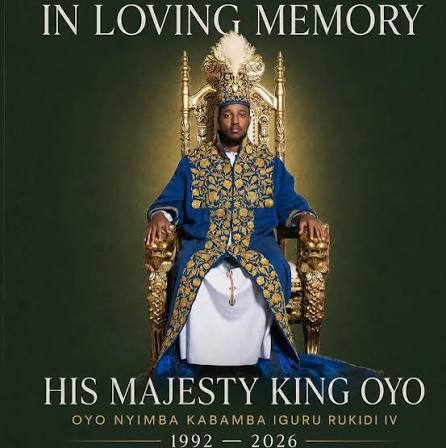
The Life and Legacy of Omukama Oyo Nyimba Kabamba Iguru Rukidi IV: The King Who Grew Up With His Kingdom
The story of Omukama Oyo Nyimba Kabamba Iguru Rukidi IV is one of the most remarkable royal stories in Uganda and modern African history. Born into the royal family of Tooro in 1992, Oyo was not expected to become one of the world’s most famous young monarchs so early in life. Yet only three years after his birth, tragedy changed the direction of his life forever. Following the death of his father, Omukama Patrick David Matthew Kaboyo Olimi III, the young prince inherited the throne of Tooro at just three years old. From that moment, his childhood, education, adulthood and public life became closely connected to the history and identity of the Tooro Kingdom.
Oyo’s life cannot be understood without first understanding the history of the Tooro Kingdom itself. Tooro is one of Uganda’s historic traditional kingdoms and is centred in the beautiful western part of the country, particularly around Fort Portal and the wider Rwenzori region. The kingdom’s history is connected to the ancient Babiito royal tradition and to the neighbouring Kingdom of Bunyoro. The modern Tooro Kingdom emerged in the nineteenth century under Omukama Kaboyo Olimi I, who established Tooro as an independent kingdom. The history of the kingdom, however, reaches much further back through the traditions and royal lineages of the Great Lakes region.
The Tooro Kingdom experienced major political changes during the colonial and post-independence periods. Like Uganda’s other traditional kingdoms, its political status was abolished in 1967. The monarchy remained absent from official public life for decades until traditional kingdoms were restored in 1993. The restored kingdoms did not return as political governments but as cultural institutions. This meant that when Oyo eventually became king, he inherited a monarchy whose primary role was to preserve culture, heritage, identity and unity among the Batooro.
The Birth of Prince Oyo
Oyo Nyimba Kabamba Iguru Rukidi IV was born on 16 April 1992 to Omukama Patrick David Matthew Kaboyo Olimi III and Queen Mother Best Kemigisa. He was born into a family that already carried enormous cultural significance within Tooro. His father was the reigning Omukama, while his mother would later become one of the most important figures in the life of the young king.
As a young prince, Oyo initially had the opportunity to grow up within the royal family without carrying the immediate responsibilities of the throne. His father was still alive and leading the kingdom, and Oyo’s childhood appeared likely to follow the normal path of a royal heir who would grow up gradually and eventually assume responsibility much later in life. However, history had something very different in store for him.
The Death of His Father
On 26 August 1995, tragedy struck the Tooro royal family when Oyo’s father, Omukama Olimi III, died. His death came at a particularly important period in the history of the kingdom because the Tooro monarchy had only recently been restored following decades during which Uganda’s traditional kingdoms had been abolished.
The death of Olimi III created an immediate question about the future of the throne. The royal family had an heir, but that heir was only three years old. Oyo was still a very young child who had barely begun to understand the world around him. Yet the traditions of the kingdom meant that the throne could not simply remain vacant. The young prince would become the next Omukama.
A Three-Year-Old Becomes King
On 12 September 1995, Oyo was enthroned as Omukama of Tooro. He was only three years old. His accession immediately attracted attention both inside Uganda and around the world because of his extraordinary age. He became internationally recognized as the world’s youngest reigning monarch at the time.
[8/28/2026 2:26 PM] Jonathan Mtn: The story of a three-year-old boy becoming king captured the imagination of international media. Photographs of the young monarch in royal ceremonies travelled around the world, and people who knew little about Tooro suddenly became interested in the small kingdom in western Uganda. Oyo was no longer simply Prince Oyo. He was now Omukama Oyo.
Yet behind the international fascination was a young child who still needed to be raised, educated and protected. He could not perform all the responsibilities of an adult monarch. He needed adults to guide him while he grew. His mother, Queen Mother Best Kemigisa, became particularly important during this period, helping to protect the young king and maintain continuity within the royal institution.
Growing Up as a King
Oyo’s childhood was unlike that of an ordinary Ugandan child. While other children were growing up away from public attention, Oyo had an entire kingdom associated with his name. He had to attend school and experience childhood, but he also had to learn about the history of Tooro and understand that he represented millions of people who regarded the monarchy as an important part of their cultural identity.
Growing up as king also meant that Oyo was constantly surrounded by adults who understood the importance of his position. His childhood was therefore a mixture of ordinary experiences and extraordinary responsibilities. He had to learn about the world while simultaneously learning about himself as a monarch.
The people of Tooro watched him grow from a small child into a teenager. The international attention that had surrounded his enthronement gradually changed as he became older. He was no longer simply the famous three-year-old king. He was becoming a young man who would eventually have to take greater responsibility for the kingdom.
Queen Mother Best Kemigisa
Queen Mother Best Kemigisa played an important role in Oyo’s development. As his mother and a senior member of the royal family, she was closely involved in his upbringing and the protection of the crown during his childhood.
Her position was especially important because Oyo’s accession happened so early in his life. She became part of the support system that allowed the young king to continue his education and development while the affairs of the kingdom were managed by adults.
For many years, people saw Queen Mother Best Kemigisa and the young king together at important cultural events. Their relationship became an important part of the public image of the Tooro royal family.
The Education of a Young King
Education was a major part of Oyo’s transformation from a child monarch into an adult leader. He received his early education in Uganda and later continued his studies abroad. His education exposed him to different cultures, ideas and ways of thinking.
This international exposure helped prepare him for a world that was very different from the one experienced by previous generations of Tooro monarchs. Oyo grew up during a period of rapid technological development, globalization and increasing international communication.
His education therefore went beyond academic subjects. He also had to learn how to represent his kingdom in a modern environment while remaining connected to the traditions of his ancestors.
From Child King to Adult Monarch
As Oyo approached adulthood, the nature of his role began to change. The young boy who had once needed adults to guide him was gradually becoming capable of taking greater responsibility for himself and the kingdom.
This transition was one of the most important periods of his life. For years, people had known him as the young king. Now they were beginning to see the adult monarch he was becoming.
The transformation was not instantaneous. It happened gradually through education, public appearances, cultural activities and increased participation in the affairs of the kingdom. With every passing year, Oyo became more comfortable in his role.
The 2010 Coronation
When Oyo reached the age of 18 in 2010, he entered another major stage of his reign. His adulthood marked the transition from the period of childhood kingship to greater personal responsibility as an adult monarch.
This period was symbolically important because the world had watched Oyo grow up. The three-year-old boy who had become king in 1995 was now an adult.
His adulthood brought new expectations. The people of Tooro wanted their king to be more actively involved in the cultural and developmental affairs of the kingdom. Oyo increasingly became a public representative of Tooro and a recognizable figure in Uganda.
A Modern Monarch in a Traditional Kingdom
One of the most interesting aspects of Oyo’s reign was the way he represented both tradition and modernity. He inherited a monarchy with centuries of history, but he belonged to a generation shaped by modern technology, international education and global communication.
This made Oyo different from many of the monarchs who came before him. He understood the world in which young people were growing up. At the same time, he carried the responsibility of preserving the culture and traditions of the Batooro.
His position allowed him to become a bridge between generations. Older people could see him as the continuation of the traditional monarchy, while younger people could see a king who belonged to their generation and understood the changing world around them.
Oyo and the Young People of Tooro
Young people became an important part of Oyo’s public identity. His own life had demonstrated how quickly a child could be placed in a position of enormous responsibility, and he understood the importance of preparing the younger generation for the future.
During his reign, he supported initiatives connected with education, youth development and technology. His interest in modern opportunities reflected the changing needs of the people of Tooro.
For the kingdom to remain relevant, its traditions had to be passed from one generation to another. Oyo’s generation therefore had an important responsibility to ensure that Tooro culture did not disappear in the face of modernization.
Protecting Tooro Culture
The preservation of culture was central to Oyo’s role as Omukama. The Batooro have a rich cultural heritage expressed through language, music, dance, ceremonies, clan traditions, family customs and royal practices.
The king serves as one of the most visible symbols of that heritage. His presence at cultural events helped keep the traditions of Tooro visible in a rapidly changing society.
Oyo’s reign therefore represented more than the continuation of a royal family. It represented the continuation of an identity.
The Importance of Fort Portal and the Tooro Region
Fort Portal and the surrounding Tooro region are among the most beautiful parts of Uganda. The area is known for its green hills, crater lakes, tea plantations, forests and views toward the Rwenzori Mountains.
The region is also closely associated with tourism. Kibale National Park, famous for chimpanzee trekking and other primates, lies within the wider region. The Rwenzori Mountains attract hikers and mountaineers, while the crater lakes and cultural attractions bring visitors from Uganda and abroad.
The Tooro Kingdom adds an important cultural dimension to this landscape. The history of the royal family is part of the story that makes the region unique.
Oyo therefore became closely associated with the cultural identity of western Uganda and helped maintain the visibility of Tooro’s heritage.
Oyo and the Modern Role of the Monarchy
Oyo’s reign took place within Uganda’s constitutional system, where traditional monarchs serve cultural rather than political roles. This required the king to balance the preservation of tradition with the realities of modern governance.
He worked within a system in which the national government remained responsible for political administration while the kingdom concentrated on culture, heritage and social development.
This distinction allowed Oyo to serve as a cultural leader without competing with Uganda’s political institutions.
His role was therefore one of representation, cultural preservation and community leadership.
Thirty Years as Omukama
In September 2025, Oyo reached an extraordinary milestone when he marked 30 years since his enthronement.
Thirty years earlier, he had been a three-year-old child.
By 2025, he was an adult man who had spent almost his entire life as king.
The anniversary provided an opportunity to reflect on the extraordinary journey. The boy king had become a mature monarch, and the child who had once been a curiosity to international media had become an established figure in Uganda’s cultural landscape.
For many Batooro, there had never been another king in their lifetime.
Oyo was simply the Omukama they had always known.
The Final Chapter of His Life
In 2026, concern began to grow about Oyo’s health. He eventually travelled to the United States for medical treatment.
As information about his condition circulated, people across Tooro became increasingly concerned. Because Oyo had been king for almost his entire life, the possibility of his death was particularly painful for many people.
On 27 August 2026, the Tooro Kingdom confirmed that his condition had become critical. The kingdom leadership appealed for calm and prayers while the royal family dealt with the situation.
Later that night, the devastating news came.
Omukama Oyo Nyimba Kabamba Iguru Rukidi IV had died.
He was only 34 years old.
The Death of Omukama Oyo
The death of Oyo brought an extraordinary reign to an unexpected end. He had spent almost 31 years as Omukama.
He had become king when he was three years old and died when he was 34. Few monarchs in modern history can say that they spent almost their entire lives on the throne.
The announcement was met with deep sorrow across Tooro and Uganda. For many people, Oyo was not simply a traditional leader they had heard about. He was the king they had grown up knowing.
The Tooro Kingdom entered a period of mourning as the royal family, kingdom leadership and the people began preparing to say farewell to their monarch.
A King Who Belonged to a Generation
Oyo’s death is particularly painful because of the generation that grew up with him.
A person who was three years old when Oyo became king would have been in their thirties when he died. A person who watched the young king’s coronation would have grown into adulthood while Oyo remained on the throne.
This made Oyo’s reign deeply personal for many people.
He was part of their memories.
He was part of their childhood.
He was part of their understanding of what it meant to be Batooro.
His death therefore represents the end of an era for an entire generation.
The Future of the Tooro Kingdom
The death of a king does not mean the death of the kingdom.
Tooro existed before Oyo, and it will continue after him.
The cultural institution remains, the royal family remains, the people remain and the traditions remain.
The Tooro Kingdom has indicated that the continuity of the crown will be maintained and that succession will follow the traditions and customs of the kingdom.
The next Omukama will inherit a kingdom deeply shaped by Oyo’s long reign.
The new king will also inherit the responsibility of leading the institution into a new era while preserving the cultural identity that Oyo represented for so many years.
The Legacy of King Oyo
Oyo’s legacy will be remembered in many different ways.
Some people will remember him as the three-year-old king who became famous around the world. Others will remember the teenager who grew up under the crown. Others will remember the adult monarch who represented Tooro at national and international events.
The most important part of his legacy, however, may be the way he helped connect Tooro’s ancient traditions with a modern generation.
He demonstrated that a traditional monarchy could continue to have cultural relevance in the twenty-first century.
He grew up in a world of computers, smartphones, social media and international travel, yet he remained deeply connected to the traditions of his people.
A King Who Grew Up Before His People
Oyo’s life was unique because the people of Tooro watched him grow.
They saw him as a small child.
They saw him become a schoolboy.
They saw him become a teenager.
They saw him become a young adult.
They saw him take greater responsibility.
They saw him celebrate decades of his reign.
And now they will remember him as the king who served Tooro for almost 31 years.
His life and the history of modern Tooro became closely connected.
Remembering His Mother and Family
Behind Oyo’s public life was his family.
Queen Mother Best Kemigisa played a particularly important role during his childhood and throughout his reign. She was there when he inherited the throne as a child and remained one of the most important members of the royal family.
His sister, Princess Royal Ruth Nsemere Komuntale, also remained an important figure within the royal institution.
The royal family now faces the difficult responsibility of mourning Oyo while also helping the kingdom move forward.
The End of One Chapter
The death of Oyo marks the end of one of the most remarkable chapters in the history of the Tooro Kingdom.
His reign began in 1995, only a few years after the restoration of traditional kingdoms in Uganda.
He inherited the throne as a three-year-old.
He grew up under the crown.
He became an adult monarch.
He reached 30 years on the throne.
And he died in 2026 at only 34 years old.
The length of his reign is remarkable, but the circumstances surrounding it are what make his story truly extraordinary.
The Boy King Who Became a Historic Monarch
When Oyo became king, much of the world focused on his age.
He was three.
He was a child.
He was a king.
But history will remember that he did not remain a child.
He grew.
He learned.
He studied.
He matured.
He became a man.
He carried the responsibilities of the Tooro crown for decades.
His story therefore goes far beyond the phrase “the world’s youngest king.”
He became a historical figure in his own right.
The Story of Oyo Will Continue
The death of Omukama Oyo does not end his story.
His life will continue to be discussed by historians, the people of Tooro, Ugandans and future generations who will look back at the extraordinary circumstances of his reign.
His story will be told in schools, cultural institutions, royal ceremonies and family conversations.
Children who were not yet born when he died will one day learn about the king who became a monarch at three years old.
They will hear how he grew up under the crown.
They will learn how he represented Tooro during a period of rapid change.
And they will learn how his reign became one of the longest and most unusual chapters in the history of the kingdom.
Farewell to Omukama Oyo Nyimba Kabamba Iguru Rukidi IV
Omukama Oyo Nyimba Kabamba Iguru Rukidi IV was born on 16 April 1992.
He became Omukama of Tooro on 12 September 1995 at only three years old.
For almost 31 years, he carried the crown of Tooro.
He grew up with the kingdom and became an adult while serving as its cultural leader.
He represented a bridge between the ancient traditions of the Batooro and the modern world.
He became a symbol of Tooro for an entire generation.
On 27 August 2026, his remarkable life came to an end at the age of 34.
His death leaves behind a grieving royal family, a mourning kingdom and generations of people who knew him as their king.
But the culture he represented will continue. The people he served will continue. The kingdom he inherited will continue.
The crown will pass to another generation, but the memory of Oyo will remain part of the history of Tooro forever.
He will be remembered not only as the child who became a king, but as the king who grew up before the eyes of his people and carried the Tooro crown for almost







No comment