Kori Bustard: The Flying Bird in Africa
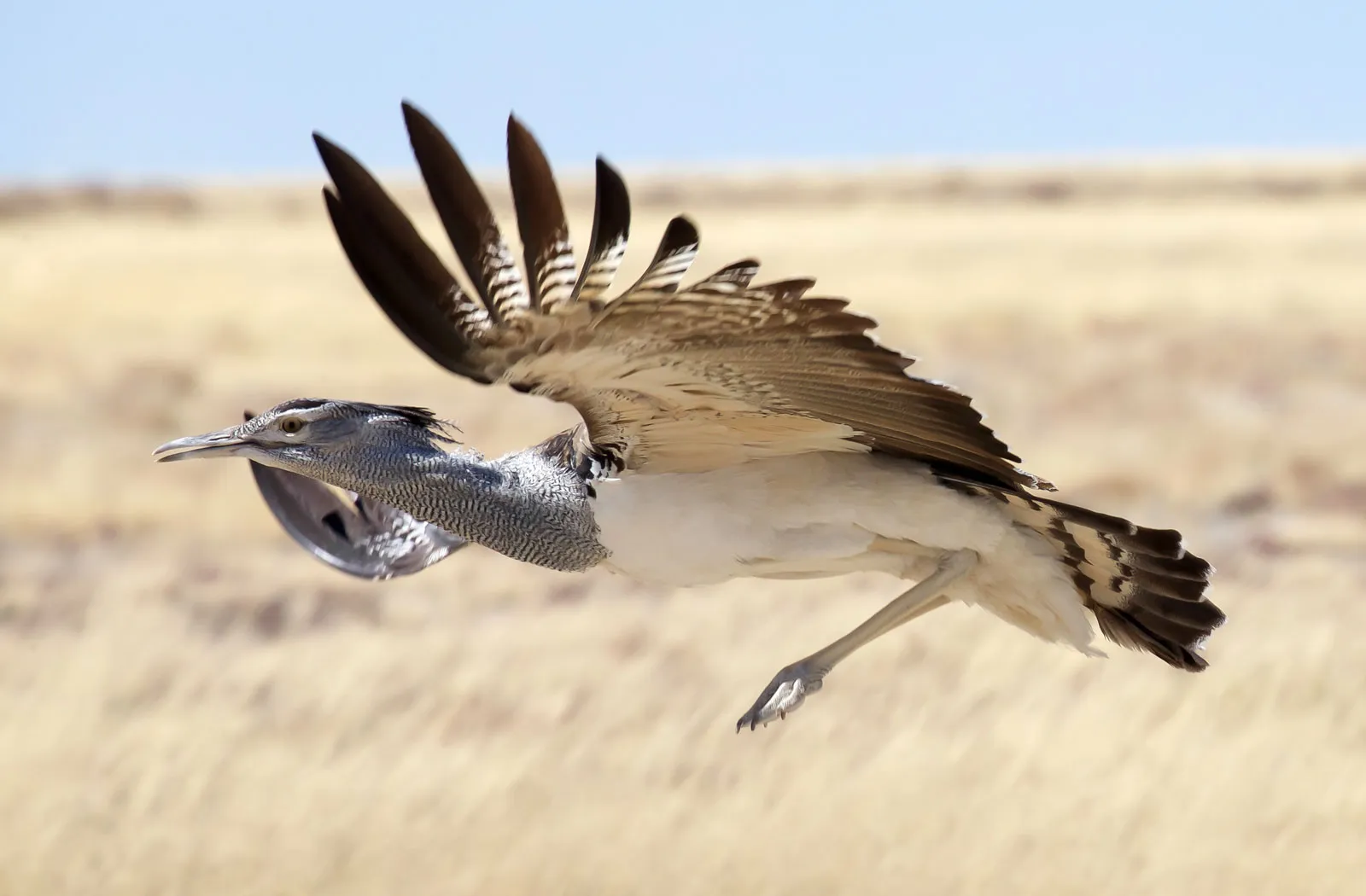
Across the open grasslands of Africa, few birds command attention quite like the kori bustard. Tall, powerful, and remarkably elegant, it walks through the savanna with the confidence of an animal built for horizons. When it finally takes to the sky, its enormous wings reveal a truth: one of Africa’s heaviest birds is also capable of sustained flight. The sight is unforgettable, especially when the bird rises above grass and disappears toward the distant plains.
The Kori Bustard: The Heaviest Flying Bird in Africa is an example of how wildlife can challenge our expectations. Its size suggests a bird that should remain firmly on the ground. It can fly when necessary. This combination of strength, grace, and adaptability makes the species one of the most fascinating birds to encounter in African landscapes.
Meeting Africa’s Giant Bustard
The kori bustard is native to much of southern Africa, where it favors open habitats such as savannas, grasslands, lightly wooded plains and dry regions with scattered vegetation. It belongs to the bustard family, a group known for terrestrial birds that spend much of their time walking rather than flying.
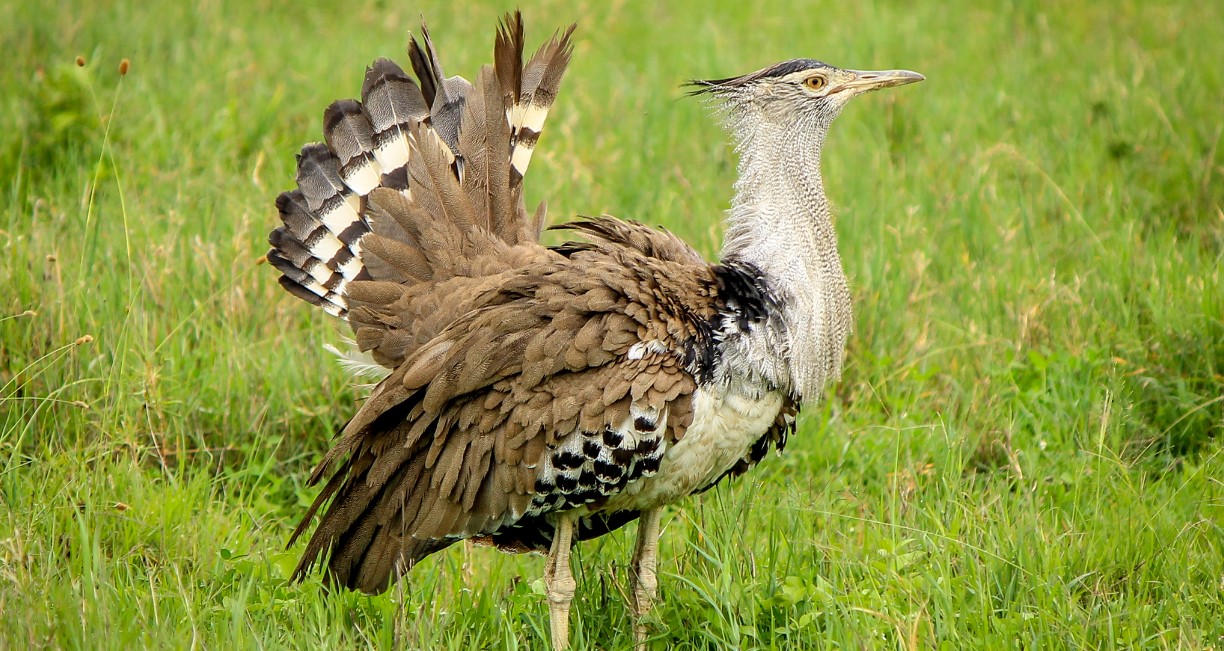
Adult males are particularly impressive. They can stand more than a metre tall. May weigh well over 10 kilograms with some males reaching exceptional weights. Females are considerably smaller. They share the species’ distinctive upright posture, patterned plumage and long legs. Their coloring blends with dry grass creating natural camouflage across the plains.
The bird’s appearance reflects its life on the ground. Its long legs allow it to walk steadily through grasslands while its strong body helps it search for food over areas. Its neck and head are marked with striking patterns while the upper body carries shades of brown, grey, black and white. During displays the male can appear even more impressive as he raises his feathers and presents himself to nearby females.
A Bird Built for the Open Plains
Life on grassland rewards birds that can see danger from a distance. The kori bustard has vision and spends much of its time scanning the surroundings while moving slowly through vegetation. Of constantly taking flight it often relies on its size, awareness, camouflage and ability to walk away, from potential danger.
Its diet is wonderfully varied. Kori bustards feed on insects, reptiles, small mammals, seeds, berries and other available foods. Grasshoppers, beetles, lizards and small snakes can all become part of the menu. They may also consume plant material when conditions provide animal foods.
This flexible diet allows the bird to survive in environments where food availability changes with the seasons. After rainfall grasslands may fill with insects providing a source of protein. During periods the bird can search for seeds and other foods scattered across the ground.
When a Giant Takes to the Sky
Seeing a kori bustard walking across a savanna is really something. Watching one fly is a different thing. The kori bustard needs a lot of effort to get airborne because of its body. Once it gets moving and starts flapping its wings it is a powerful reminder of what nature can do.
Kori bustards usually prefer walking. Will fly when they need to get away from danger move to a better spot or deal with changing weather. At first their flight can look a bit clumsy. Once they are in the air they can cover a lot of ground. Their big wings give them the lift they need to carry their body.
The kori bustard is a bird that can balance its weight with flight. It has found a way to live where it can fly when it needs to. It does not have to fly all the time. This balance has allowed the kori bustard to thrive in open spaces where food, water and weather can change quickly.
If you are lucky enough to see a kori bustard take off from the ground you will remember it for a time. The wings beat slowly and strongly the long legs stretch out behind the body. The bird slowly rises above the ground. For a moment everything else seems to stop.
Surviving Where the Seasons Change
African grasslands are always changing. When it rains the dry plains turn into fields filled with insects and fresh plants. When it does not rain the ground gets dry and dusty and water is hard to find. The kori bustard has to adapt to these changes to survive.
Water is very important for the kori bustard. It can get some water from the food it eats. It also needs to find water to drink. The kori bustard is good at finding types of food which helps it survive when things get tough.
The kori bustards brown feathers are also very helpful. They make it hard to spot when it is standing still in the grass. This is important because the kori bustards eggs and babies are targets for predators.
Female kori bustards usually lay a few eggs on the ground without making a nest. This means they have to be very careful to hide their eggs and babies from predators. The mother kori bustard has to be very alert and use her feathers to blend in with the surroundings.
Courtship on the Savanna
When it is time to breed the male kori bustard puts on a show to attract females. It will puff out its chest spread its wings and change its posture to look bigger and more impressive.
This is one of the amazing things about the kori bustard. It is usually an calm bird but when it is trying to attract a mate it can be very dramatic.
The kori bustard is not a big bird that walks around in the grass. It is a part of the ecological life of the savanna. Its behavior changes with the seasons. It plays a big role in shaping the landscape.
The kori bustard also reminds us that just because an animal is big it does not mean it cannot move around easily. The kori bustard can spend hours walking and looking for food. Then suddenly take to the sky. Its life is about the ground and the air.
A Symbol of Wild African Landscapes
There is something about seeing a kori bustard in the wild. It does not have to be flashy or loud to get attention. It just stands there tall and proud against the horizon.
For people who visit the savannas seeing a kori bustard is a big deal. It is not just about seeing the animals like lions and elephants. The kori bustard shows us that there is a lot of diversity in the wild and that every species has its story.
If you are driving through the savanna early in the morning you might be lucky enough to see a kori bustard walking beside the road. At first you might just see some movement in the grass. Then you will see the tall shape of the bird walking steadily through the landscape. If you wait quietly you might see it eating or putting on a courtship display or even taking flight.
Seeing the kori bustard and other animals in the wild makes us appreciate how amazing nature is. Every species is unique. Has its own place, in the world.
Protecting the Future of the Kori Bustard
The kori bustard is still found in parts of Africa but it needs healthy open spaces to survive. If people change the land build farms or disturb the birds it can hurt the kori bustard population in some areas.
So taking care of the grasslands is good for animals not just the kori bustard. When the savannas are healthy they support birds, mammals, reptiles, insects and plants that live together. If we keep the areas safe the animals will have space to eat have babies move around and stay alive.
When people visit these areas they can help too. If they respect the animals do not disturb the birds when they are nesting and support the protected areas they can help the kori bustard and other animals thrive. If many people do these things it can make a big difference.
A Giant Worth Remembering
The kori bustard is special because it is the flying bird in Africa.. It is more than just a big bird. It shows us that animals can be strong and still adapt to their surroundings.
The kori bustard lives in the plains where the grass moves in the wind and animals roam free. It is a bird that can fly even though it is very big.
Time you are in the African savanna look down at the ground not just at the trees and sky. You might see a kori bustard moving slowly through the grass. If you wait enough it might spread its big wings and fly away.
The kori bustard is a bird that reminds us of the wild plains. It shows us that animals can be strong and beautiful, at the time. It also reminds us to take care of the spaces so that the kori bustard and other animals can live freely.
In a world where many natural places are changing, seeing the kori bustard in the wild reminds us to value these areas. The kori bustard belongs in the open spaces of Africa and if we protect these spaces our children and grandchildren can still see the kori bustard flying in the sky.