Bee-Eaters of East Africa: A Rainbow in Flight
When you are in East Africa, you will see that bee-eaters are really birds. They are so colorful and full of energy. Their bodies are thin. Their wings are pointed. They have bills and beautiful feathers. It looks like they were made to fly and catch insects in the big African sky. You can see them suddenly appear above a path in the woods or rise up from a riverbank or sit on a tree branch before flying off to catch an insect. The way they move is quick and nice to watch. It is really fun to see them flying around. If you are visiting Uganda, Kenya, Tanzania, Rwanda, or the Great Lakes area, seeing these little birds can make your trip more special.
The Colorful World of East African Bee-Eaters
Bee-eaters are part of a family of birds called Meropidae. These birds eat insects. Can be found in Africa, Europe, Asia and Australia. East Africa is a place to see bee-eaters because there are many different kinds of them living in different types of habitats. Depending on where you go you might see bee-eaters in the woods and grasslands or white-fronted bee-eaters near rivers and open fields. You might also see cheeked bee-eaters in wet areas or the northern carmine bee-eater when it is migrating.
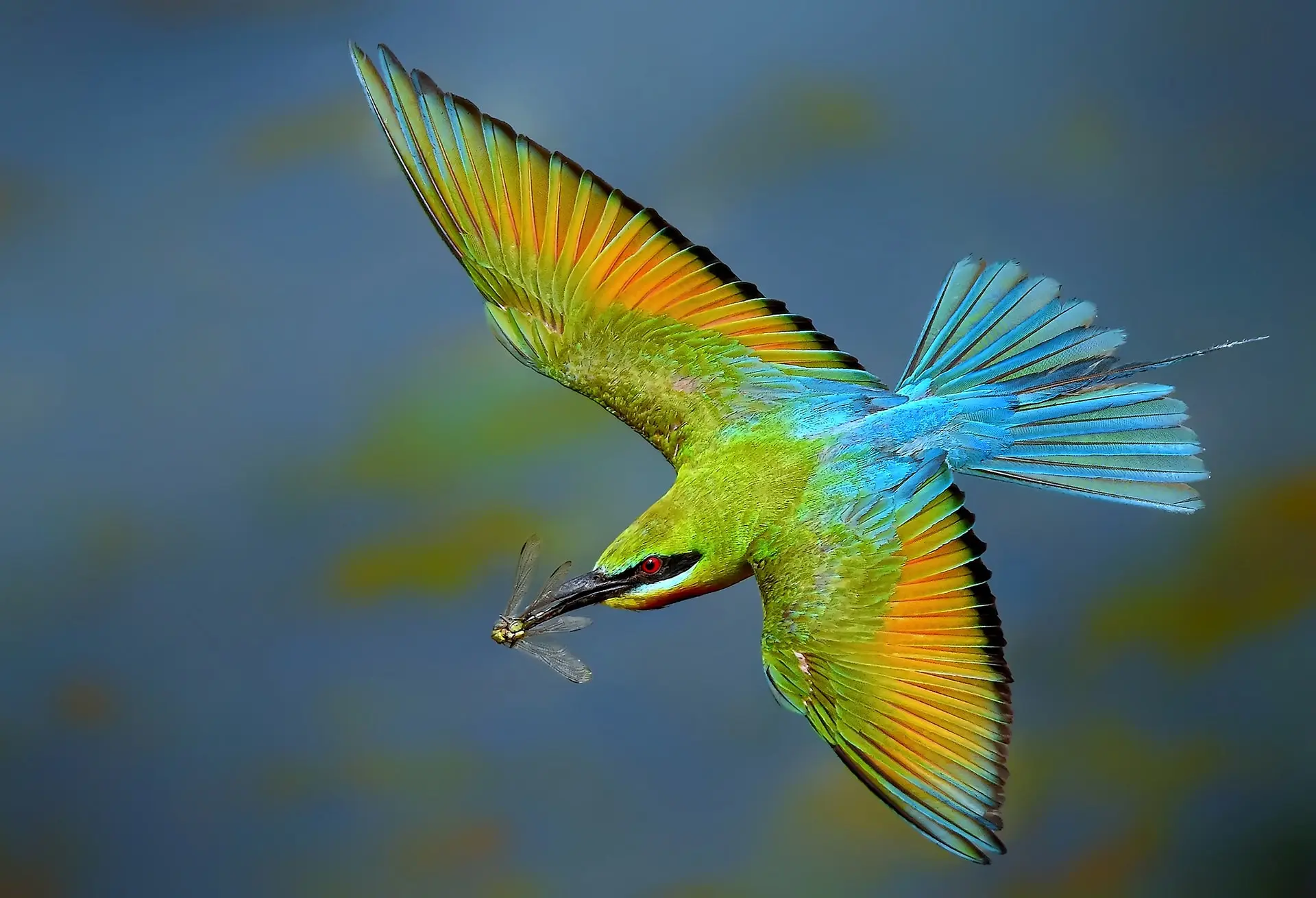
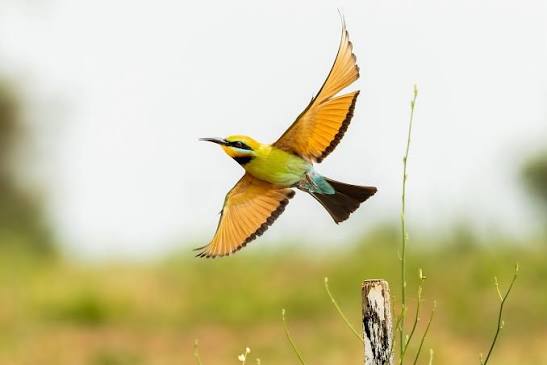
All these bee-eaters have bright colors like green, yellow, blue, red, orange, and brown. Some of them have markings on their faces or really colorful throats and heads. When you see them flying around, it is easy to remember what they look like even if you only see them for a second.
The phrase Bee-Eaters of East Africa: A Rainbow in Flight is really perfect for these birds. They are not just beautiful when they are standing still. They are really amazing when they are flying around and the sun is shining on them. When a bee-eater is just sitting on a branch it looks nice.. When it starts flying it looks even more amazing.
Small Birds With Remarkable Hunting Skills
Bee-eaters might look delicate. They are actually really good at catching insects in the air. They mostly eat flying insects like bees, wasps, dragonflies, butterflies and other bugs. They like to sit on a branch where they can see everything around them. When they spot an insect they fly out fast catch it and come back, to their branch.
If you watch them closely you can see how skill they have. They have to judge how away the insect is, how fast it is moving and when to catch it. It is not easy to catch a dragonfly. Bee-eaters can do it.
Their name comes from the fact that they eat bees and other insects that can sting. They have a way of dealing with these insects. When they catch a bee or wasp they hit it against their branch to get rid of the sting before they swallow it. This shows how well they are adapted to eating insects that could hurt birds.
Where to Find Them Across East Africa
One of the rewarding parts of watching bee-eaters is that you do not always have to go into remote areas to find them. Their favorite places to live include savannas, open woodlands, edges of forests, riverbanks, wetlands, cliffs and places with places to sit and lots of insects.
In Uganda bee-eaters can be seen in good places where birds live, especially near wetlands, rivers, woodlands and protected areas. Places like Murchison Falls, Queen Elizabeth, Kidepo Valley and other areas full of wildlife offer chances to see types of bee-eaters. The wide range of places means that a short drive can sometimes lead to special bird experiences.
Kenya also has chances, especially in the areas with open grasslands and along rivers. Tanzania has good places with bee-eaters showing up in national parks and other natural areas where there are many insects and good places to hunt. Rwanda has kinds of land including wetlands, woodlands and the edges of forests which can reward people who take the time to look.
The experience changes in each place. One morning you may see one bird sitting above a stream. Later you may see birds together along a riverbank. In another spot you may see them flying across the road after insects. These small moments can become some of the memories from a trip through East Africa.
Rivers, Woodlands and Open Skies
Rivers are interesting places to look for bee-eaters because they can offer food places to make nests and high places to sit. Sandy areas and places where the soil is visible may also be good for species that make nests in holes.
Open woodlands are another place. Trees give places to rest while open areas allow the birds to chase insects. In the grasslands you may see bee-eaters using branches, dead trees, fences or other high places as places to hunt.
Their presence can also tell you something about the land. A strong group of flying insects supports birds that eat insects and good places to rest and make nests allow them to finish their breeding. Watching these birds therefore gives more than a moment. It shows a look at the connections between insects, plants, water, soil and animals.
A Bird That Teaches You to Look Up
Wildlife experiences often become better when you take your time. Bee-eaters are a reason to do just that. Their small size means they can be missed if you only look for animals. While elephants, lions, giraffes and buffalo naturally get attention the branches above you might hold a story just as interesting.
A quiet afternoon in the bush can change when a flash of green moves across the sky. You may hear a sound before you see the bird. It appears, circles for a moment catches an insect and goes back to its perch. If you are patient this might happen times.
This is where Bee-Eaters of East Africa: A Rainbow in Flight becomes more than a description of birds. It is an invitation to pay attention to details. Nature rewards those who look beyond what’s obvious. A landscape can have moments that last only a few seconds and these birds are some of the best examples.
The Beauty of Seasonal Movements
Some bee-eater species move during times of the year following changes in food and breeding conditions. This adds another part to their story because the birds are not always in the numbers all year long.
During times certain areas can be very productive. Large groups may come together making for views as the birds move between places to sit and places to eat. Watching a group of bee-eaters fly up together can be unforgettable. Their wings catch the light as they move quickly through the space making a constantly changing show of colors.
Seasonal movements also remind us that wildlife connects across borders. Birds do not know about country lines. Their survival depends on having places to live across the areas they use during different times of their lives.
Photographing These Brilliant Birds
Bee-eaters can be hard to photograph because they move fast. A bird that is not moving is much easier to take a picture of than one that is chasing insects in the air. If you want pictures a fast shutter speed is good especially when taking pictures of them flying.
Patience is also important. Of running after the bird watch where it comes back after eating. Many birds use the favorite spots giving you a better chance to get ready before the next flight.
You should also not bother nests. Keep going near birds. Taking care when watching helps protect the experience for both the animals and other people. The best time is when the bird continues its behavior while you watch quietly.
Without a camera the experience is still good. Sometimes the best memory is just seeing a bright bird move, across an African sky.
Protecting the Habitats They Need
The future of bee-eaters depends on ecosystems. Their lives are closely connected to insect populations, vegetation, water and suitable nesting areas. Changes in land use, habitat destruction, pollution and the loss of riverbanks can affect the conditions these birds need.
Protecting wetlands, woodlands, grasslands, rivers and nesting sites benefits many species at once. It also protects the ecological processes that keep landscapes productive.
For visitors conservation begins with choices. Stay on designated routes avoid disturbing sites, respect protected areas and support responsible tourism operators and conservation programs. These actions may seem small. They contribute to maintaining the landscapes where wildlife can continue to flourish.
Carrying the Memory Home
The appeal of bee-eaters reaches beyond their feathers. They represent movement, adaptability, patience and the extraordinary variety found within East Africas ecosystems. They remind you that a safari is not defined by the largest animals you encounter. Sometimes the beautiful moment arrives unexpectedly from a nearby branch.
Bee-Eaters of East Africa: A Rainbow in Flight is a celebration of those moments. It captures the sight of colorful birds moving through landscapes filled with sunlight, rivers, woodland and open skies. Their presence encourages you to slow down listen and look upward.
When your journey through East Africa comes to an end you may remember a wildlife encounter, a peaceful sunset or a remarkable landscape. You may also remember a small bird rising from a branch catching an insect in midair and returning quickly as it came.
That brief flash of color can stay with you for years. It is a reminder that wonder does not always arrive with noise or size. Sometimes it has feathers, a bill and a few seconds of brilliant flight across the African sky.
The Lasting Magic of Bee-Eaters
The charm of these birds lies in how naturally they belong to their surroundings. Their colors complement the earth, green vegetation, blue skies and golden light of East Africa. Their hunting behavior brings movement to landscapes while their seasonal journeys connect distant habitats.
For anyone who loves wildlife taking time to notice them can make every journey richer. The time you travel through a national park cross a river or pause beside woodland look carefully at the branches and open sky. A small colorful hunter may be waiting there.
Bee-Eaters of East Africa: A Rainbow, in Flight celebrates a part of the continents wildlife that deserves attention. Their beauty is accessible their behavior is fascinating and their presence adds color to some of the worlds remarkable landscapes. Seeing one may take a moment but appreciating that moment can change the way you experience the African wilderness.