The Shoebill’s Secret Diet: Lungfish, Eels, and Baby Crocodiles
The wetlands of East and Central Africa hold countless mysteries, but few are as fascinating as the feeding habits of the remarkable shoebill. Standing motionless for long periods before launching a lightning-fast strike, this prehistoric-looking bird has earned admiration from birdwatchers, photographers, and nature enthusiasts around the world. While many people focus on its enormous shoe-shaped bill, its diet tells an even more compelling story about survival, patience, and perfect timing.
The Shoebill’s Secret Diet: Lungfish, Eels, and Baby Crocodiles reveals how this extraordinary bird has adapted to thrive in some of Africa’s most challenging wetlands. Every successful hunt is a reminder that success often comes through careful observation, quiet persistence, and decisive action rather than constant movement.
Whether you dream of seeing a shoebill in Uganda’s Mabamba Swamp or simply appreciate the lessons nature offers, understanding what this magnificent bird eats opens a window into one of Africa’s greatest wildlife spectacles.
Understanding the Shoebill’s Hunting Lifestyle
Before exploring its menu, it helps to understand where the shoebill lives. These birds inhabit freshwater marshes, papyrus swamps, floodplains, and shallow wetlands where aquatic life flourishes. Such habitats provide excellent cover for prey while giving the shoebill countless opportunities to hunt.
Unlike birds that chase food across open water, the shoebill relies on patience. It often remains completely still for many minutes or even hours. During this time, it studies subtle movements beneath the water’s surface.
Its large bill is not simply an unusual feature. It functions as a powerful hunting tool capable of grabbing slippery prey with surprising force. The sharp hook at the tip helps secure struggling animals before they can escape.
A Master of Silent Observation
Watching a shoebill hunt feels almost unreal. There is little movement, no wasted energy, and no sign of impatience. Then, within a fraction of a second, the bird lunges forward with astonishing speed.
This behaviour demonstrates that preparation often matters more than constant activity. Nature rewards those who know when to wait and when to act.
Lungfish: The Favourite Meal
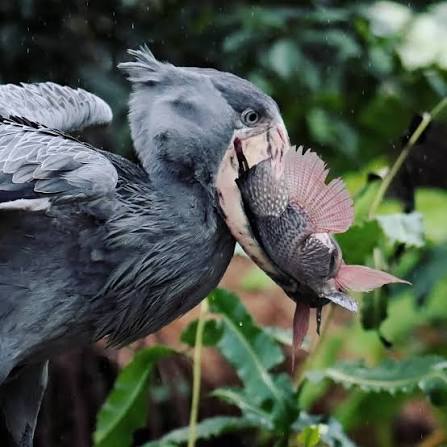
Among all its prey, lungfish rank among the shoebill’s favourite meals. These ancient fish are perfectly suited to swamp environments because they can survive in oxygen-poor waters by breathing air.
Lungfish are large, muscular, and highly nutritious, making them an excellent food source for a bird that can grow to nearly five feet tall. Their slow movements through muddy waters make them ideal targets for an experienced hunter.
Shoebills often position themselves near floating vegetation or shallow channels where lungfish frequently surface for air. The bird patiently watches until the perfect opportunity appears before striking with remarkable precision.
This hunting strategy reminds us that understanding opportunities is often more valuable than chasing every possibility that appears.
Eels: Slippery but Worth the Effort
Eels are a challenge for birds to catch. They have bodies and slippery skin, which helps them hide quickly in the mud or in thick plants.
Shoebills do not give up. They eat eels regularly because they are a source of food. The shoebills strong bills help them hold onto the eels. They shake them hard to get rid of extra water and plants before they swallow them.
Eels are very good for the shoebills. They give them the energy and protein they need to survive during the hard hunting seasons. The shoebills really need the eels.
Why Variety Matters
In nature it is not an idea to rely on just one type of food. The water levels in the wetlands change all the time. Sometimes the water is high. Sometimes it is low. The fish swim in places and the floods change the whole area.
So the shoebills hunt types of animals. This way they can always find something to eat no matter what is happening in the wetlands.
This is a lesson for us. If we can do things and adapt to new situations we will be better prepared for the ups and downs of life. We will be stronger.
Baby Crocodiles: An Unexpected Prey
One of the surprising things that shoebills eat is baby crocodiles. The big crocodiles are too dangerous. The little ones are sometimes caught.
This is surprising because most birds cannot catch baby crocodiles.. The shoebills are successful because they are careful and only catch the ones that are vulnerable.
The shoebills use their bills to catch and control the baby crocodiles. Then they swallow them whole. In small pieces. The shoebills are very patient and precise. They time their attacks just right.
Other Creatures on the Menu
The shoebills do not just eat lungfish, eels and baby crocodiles. They eat other animals depending on what is available.
Some of the things they eat are:
Catfish, Tilapia, Water snakes, Frogs, Turtles, Small water birds,Monitor lizards, rodents
The shoebills eat all these different things because they live in a healthy ecosystem. All the animals in the wetlands work together to keep everything balanced.
How the Shoebill Captures Its Prey
The shoebills have a way of hunting. They follow a plan.
First they wait. They stand still in a spot and do not move.
Then they watch. They look carefully at the water for any signs of movement.
Next they strike. They move quickly. Catch their prey.
After that they grasp. They use their bills to hold onto their prey and the water around it.
Then they drain. They lift their heads. Let the extra water and plants drain out while keeping the prey safe inside their bills.
Finally they swallow. They eat their prey headfirst.
The shoebills are very accurate and careful when they hunt. They do not just rely on speed.
Lessons Hidden Within Nature
People often think that they need to be constantly active to succeed.. The shoebills show us that this is not true.
They are successful because they are calm and patient. They wait for the moment to act and this helps them catch their prey.
Being patient is not the same as doing nothing. It means being ready and prepared.
The shoebills teach us that it is better to wait and observe than to rush into things. This helps us make decisions and be more successful.
These lessons can be applied to areas of life such, as education, careers and relationships.
Built for Survival
The shoebills have special features that help them survive.
Their long legs help them walk in the water without scaring their prey.
Their big feet spread out their weight so they do not sink into the mud.
Their broad wings help them fly efficiently from one place to another.
Their strong necks help them catch their prey quickly.
Their famous bills are very powerful and precise.
All these special features did not develop overnight. They evolved over generations as the shoebills adapted to their environment.
Nature often rewards steady progress rather than quick changes.
The Importance of Healthy Wetlands
Without wetlands shoebills would have a hard time surviving.
Swamps give food places to build nests, protection and places to have babies for different kinds of animals.. Many wetlands are in trouble because of farming, pollution draining water and more people building homes.
Keeping wetlands safe helps not the shoebills but also fish, frogs, snakes, bugs and people who rely on these places to live.
Every time someone works to protect these areas it helps the future of one of Africas amazing birds.
A Photographers Reward
Wildlife photographers soon learn that taking pictures of a shoebill needs the qualities that the bird uses when it is hunting.
Patience is very important.
Many hours can go by before something happens.
Light changes all the time.
The birds move in ways.
The weather can change quickly.
When the perfect moment finally happens all the waiting is worth it.
Many great wildlife pictures exist because photographers learned to slow down of trying to force things.
The shoebill quietly shows that some rewards can’t be rushed.
Why Visitors Travel Across the World
Uganda has become one of the places in the world for seeing shoebills in their natural home. Places like Mabamba Swamp give chances to watch these amazing birds hunting through thick areas of papyrus.
Visitors usually come hoping to take pictures of a bird.
They leave feeling inspired by something deeper.
Watching a shoebill stay still and focused creates a respect for patience that few things can match.
Its actions show that strength doesn’t always need to be loud. Confidence doesn’t always need to move. Success often belongs to those who plan carefully before they do anything.
Living the Shoebill Way
The Shoebills Secret Diet: Lungfish, Eels and Baby Crocodiles gives more than facts about wildlife. It teaches a way to handle daily life.
When problems feel too big remember how the shoebill hunts.
It does not waste energy chasing every chance.
It looks around carefully.
It waits with purpose.
It acts when the chance is right.
These ways encourage making choices instead of reacting quickly.
Whether you are trying to build a job study something grow a business or work toward a goal steady focus often brings good results.
Small regular actions add up over time like many successful hunts keep the shoebill alive all its life.
The Shoebills Secret Diet: Lungfish, Eels and Baby Crocodiles reminds us that one of Africas special birds lives because of amazing changes, careful looking around and great patience. From lungfish to hidden eels and even young crocodiles every meal shows millions of years of special changes in rich wetland places.
Beyond its hunting skills the shoebill gives lessons that last a long time. Success does not always belong to the fastest or the busiest. Often it belongs to those who stay focused plan well change when needed and know when to act.
As people keep working to protect Africas wetlands future people will have the chance to see this bird in action. The Shoebills Secret Diet: Lungfish, Eels and Baby Crocodiles is a reminder that the best lessons, from nature often come from the quietest teachers.