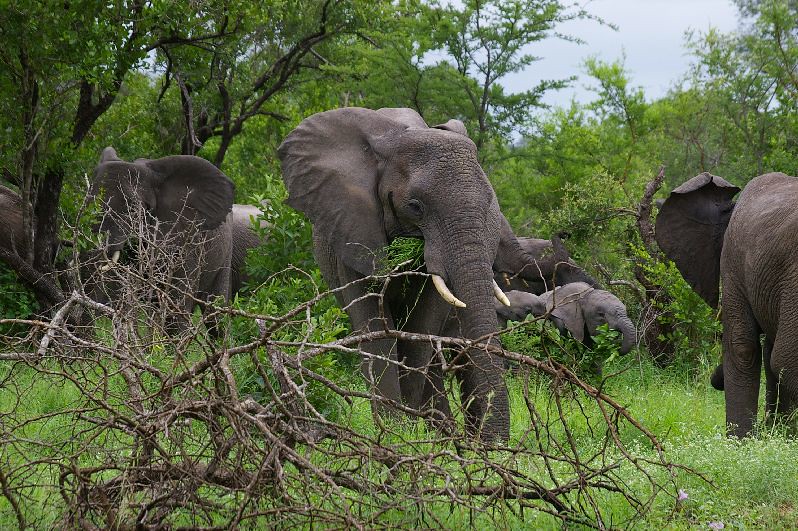
African Elephants in Uganda: Best Parks and Viewing Spots
The first time I saw a wild elephant, I cried.I’m not embarrassed to admit it.
We’d been driving through Queen Elizabeth National Park for about two hours. Saw some antelope. A few warthogs. Beautiful scenery, sure, but nothing that made my heart race.Then the guide stopped the car.Pointed to the left.
“There.”I didn’t see anything at first. Just bushes and tall grass. Then the bushes moved. A shape emerged — gray, massive, impossibly quiet for something that size.A female elephant. Maybe thirty years old. Walking straight toward the road like she had somewhere important to be.
She crossed maybe twenty meters in front of us. Didn’t look at the car. Didn’t speed up. Didn’t slow down. Just walked.My guide whispered, “First time?”I nodded. Didn’t trust my voice.She disappeared into the bushes on the other side. Gone. Like a ghost.That was years ago. I’ve seen hundreds of elephants since. And I still stop breathing every single time.
Why Uganda’s Elephants Are Different
Most people go to Kenya or Tanzania for elephants.And sure, you’ll see them there. Big herds. Open plains. Classic safari postcards.But Uganda is different.
Here, elephants aren’t just crossing grasslands. They’re crashing through forests. Wading through swamps. Climbing hillsides in national parks that look more like jungles than savannas.You see them in places you wouldn’t expect.
And because Uganda is smaller and less crowded than its neighbors, you often get moments alone with them. No convoy of safari vehicles. No tour buses. Just you, a guide, and a hundred elephants going about their day.That silence?That’s what I keep coming back for.
Queen Elizabeth National Park: The Elephant Heartland
If you only visit one park for elephants, make it Queen Elizabeth.Seriously.
The park has over 2,500 elephants. And because the habitat is so varied — savanna, forest, wetlands, volcanic craters — you see them doing completely different things depending on where you are.
Kasenyi Plains: This is the classic savanna experience. Herds of fifty or more, crossing the golden grass. Elephants with babies. Bulls sparring. Matriarchs leading their families to water. Go early morning or late afternoon.
Kazinga Channel: This is where it gets weird — in the best way. Elephants come down to the water’s edge to drink and bathe. You watch from a boat. There’s something surreal about seeing an elephant swim. Their trunks become snorkels. Their bodies disappear under the muddy water. Then a giant head pops up, snorts, and goes back under.
Mweya Peninsula: The area around Mweya Safari Lodge is elephant central at dusk. We sat on the lodge deck one evening — gin and tonic in hand — watching a herd of maybe forty elephants grazing on the lawn. Not exaggerating. The lawn. The staff just waited patiently for them to move on.
Ishasha Sector: Fewer elephants here than Kasenyi, but the setting is stunning. The Ishasha River draws them in during dry season. We watched a young bull spray himself with water for a solid ten minutes. Just playing. Like a dog with a hose.
Murchison Falls National Park: The Quiet Giant
Murchison doesn’t get as much attention as Queen Elizabeth.I don’t understand why.The elephant population here is healthy — over 1,500 and growing. But the real difference is the landscape.The Nile River cuts straight through the park. And elephants are everywhere along its banks.
Delta Point: Where the Victoria Nile empties into Lake Albert. The elephant herds here are huge — sometimes over a hundred individuals. We sat on a hill overlooking the delta and watched them for hours. Mothers teaching babies to use their trunks. Teenage males mock-charging each other. The old matriarch standing perfectly still, watching everything.
Buligi Circuit: The classic game drive loop on the northern bank of the Nile. Open savanna, acacia trees, and elephants everywhere. The roads are better here than in most Ugandan parks. You can cover a lot of ground. But don’t rush. Pick a spot and just watch.
The Nile Boat Cruise: Most people do the boat cruise for the waterfalls. And yes, the falls are incredible. But the stretch before the falls — calm water, forested banks — is elephant central. We saw a herd swimming across the river. Their heads bobbing like weird gray buoys. The guide said they were crossing to better grazing on the other side. “They do this every few days,” he said casually, like it was no big deal.It was a very big deal.
Kidepo Valley National Park: The Wild Card
Kidepo is remote.I mean remote. It’s in northeastern Uganda, near the South Sudan and Kenya borders. Most visitors never make it there. The drive from Kampala is brutal — two days if you’re taking it easy.
But here’s the thing.The elephants in Kidepo are different. Warier. Because poaching was a serious problem here until relatively recently. The survivors remember humans. They keep their distance.
That makes them harder to see.But when you do find them — usually in the Narus Valley, where water is more reliable — the experience is electric. These aren’t park elephants that have grown comfortable with vehicles. These are wild elephants that have learned to be careful.
We tracked a small herd for maybe an hour. Stayed downwind. Kept our voices to whispers. When we finally spotted them — a matriarch, three females, two calves — the guide didn’t even speak. Just pointed.We watched for ten minutes. Then the matriarch caught our scent. She turned, ears flaring, trunk raised. We backed away slowly.My heart was pounding.That’s not a feeling you get in Queen Elizabeth. And it’s worth the terrible drive.
Kibale Forest: The Surprise Entry
Kibale is famous for chimpanzees.Almost nobody goes there for elephants.
But here’s something most guides won’t tell you until you ask. Forest elephants live in Kibale. They’re smaller than savanna elephants. Darker. Shyer. And incredibly hard to spot because the forest is so thick.I’ve been to Kibale three times. Seen forest elephants exactly once.It was late afternoon. We’d finished chimp trekking and were driving out when the guide suddenly stopped. “Listen,” he whispered.
Silence. Then a branch cracked. Then another.A shape emerged from the trees — smaller than I expected, almost reddish in the fading light. A forest bull. He stood at the edge of the trail, watching us. His tusks were thin and straight, not thick and curved like savanna elephants.He stared at us for maybe thirty seconds. Then melted back into the forest. Gone.The guide grinned. “Lucky,” he said.He wasn’t wrong.
How to Actually See Elephants (Tips From Someone Who’s Missed Them More Than Once)
Go early. Elephants are most active at dawn and dusk. Midday is for sleeping and standing in shade looking bored. You want to be on the road by 6:30 AM at the latest.
Stay late. The hour before sunset is magic. The light is golden. The elephants are moving to water. And most tourists have already gone back to their lodges. You’ll have the park mostly to yourself.
Look for signs. Fresh dung. Broken branches. Tracks in the road. If you see these, elephants were here recently. Tell your guide. A good one will stop and listen.
Patience. I cannot stress this enough. You might drive for two hours without seeing a single elephant. Then suddenly a herd appears from nowhere. Don’t give up. Don’t rush. Just keep watching.
Trust your guide. This is the most important one. A guide who knows the park knows where elephants feed, drink, and sleep. Ask questions. “Where did you see them yesterday?” “Are they near water right now?” “Should we wait here or keep moving?”
A Quick Word on Behavior (So You Don’t Do Anything Stupid)
Elephants are not gentle giants.They’re not mean, either. They’re just… elephants. Wild animals that weigh as much as a small truck.Here’s what I’ve learned.If an elephant flaps its ears and shakes its head, back away slowly. It’s stressed.
If it trumpets and kicks dust, you’re too close.If it charges — even a fake charge — stay in the vehicle. Do not run. The vehicle is your protection. Elephants have terrible eyesight but excellent memory. They won’t forget a person who acted stupidly.The guides know this. Listen to them.
When to Go
Dry season. June to September, December to February.Why? Because elephants need water. In dry season, they congregate around rivers, lakes, and waterholes. Easy to find. In wet season, they spread out across the park. You drive for hours and see nothing but mud.I went to Murchison in April once — peak wet season. Saw three elephants in two days. Three.Never again.
Where to Stay for the Best Elephant Viewing
Queen Elizabeth: Mweya Safari Lodge (elephants on the lawn at dusk), Buffalo Safari Lodge (watering hole viewing), or Pumba Safari Cottages (budget but close to good areas).
Murchison Falls: Paraa Safari Lodge (overlooks the Nile, elephants often across the river), Murchison River Lodge (tented camp right on the bank), or Red Chilli Rest Camp (budget camping, great location).
Kidepo: Apoka Safari Lodge (splurge, but the elephants come to the waterhole in front of the lodge), or Kidepo Savanna Lodge (mid-range, amazing views of Narus Valley).
Kibale: Not many options for elephants specifically. But Crater Safari Lodge is beautiful and close to the forest edge.
The Honest One
I’ve watched elephants in a dozen parks across Africa.And I still cry sometimes.
Not every time. But when a baby elephant walks under its mother’s belly. Or when an old bull stands perfectly still, watching the sunset. Or when a whole herd crosses the road in front of you, so close you could reach out and touch them (you shouldn’t).
Those moments get me.Uganda isn’t the easiest place to see elephants. The parks are rougher than Kenya’s. The roads are worse. The infrastructure is patchy.
But the elephants are here. Wild. Uncrowded. Living their lives mostly without the circus of tourist vehicles following them everywhere.And when you find them — really find them, on a quiet morning with no one else around — you’ll understand why I keep coming back.They’re not performing for you.They’re just existing.And that’s enough.