The Oxygen Math: How Many Trees Does One Person Need?
You Probably Haven’t Thought About Your Next Breath
Breathing feels automatic because it is. You do it every few seconds without effort, without planning, without stopping to think where that oxygen actually came from.
Most people never do.
Life moves fast. Bills, traffic, work, deadlines, phones, conversations. Oxygen sits quietly in the background until something disrupts it. A smoky day. A steep hike. A crowded city with heavy air. Then suddenly you notice how much your body depends on something you normally ignore completely.
Trees are part of the reason you can breathe comfortably at all.
People often repeat the phrase “forests are the lungs of the Earth.” It sounds dramatic, maybe even cliché at this point, but there is real truth inside it. Trees constantly absorb carbon dioxide and release oxygen back into the atmosphere. They have been doing it long before humans existed.
Which leads to a question that sounds simple but opens up a much bigger conversation:
How many trees does one person actually need?
The honest answer is that nobody can give you one exact number. Nature does not work neatly. A giant rainforest tree behaves differently from a small tree planted outside a house. Climate changes things. Rainfall changes things. Age changes things.
But scientists do have estimates, and those estimates reveal something important. Human life depends far more on healthy forests than many people realize.
Trees Are Quietly Running a Massive Chemical Process
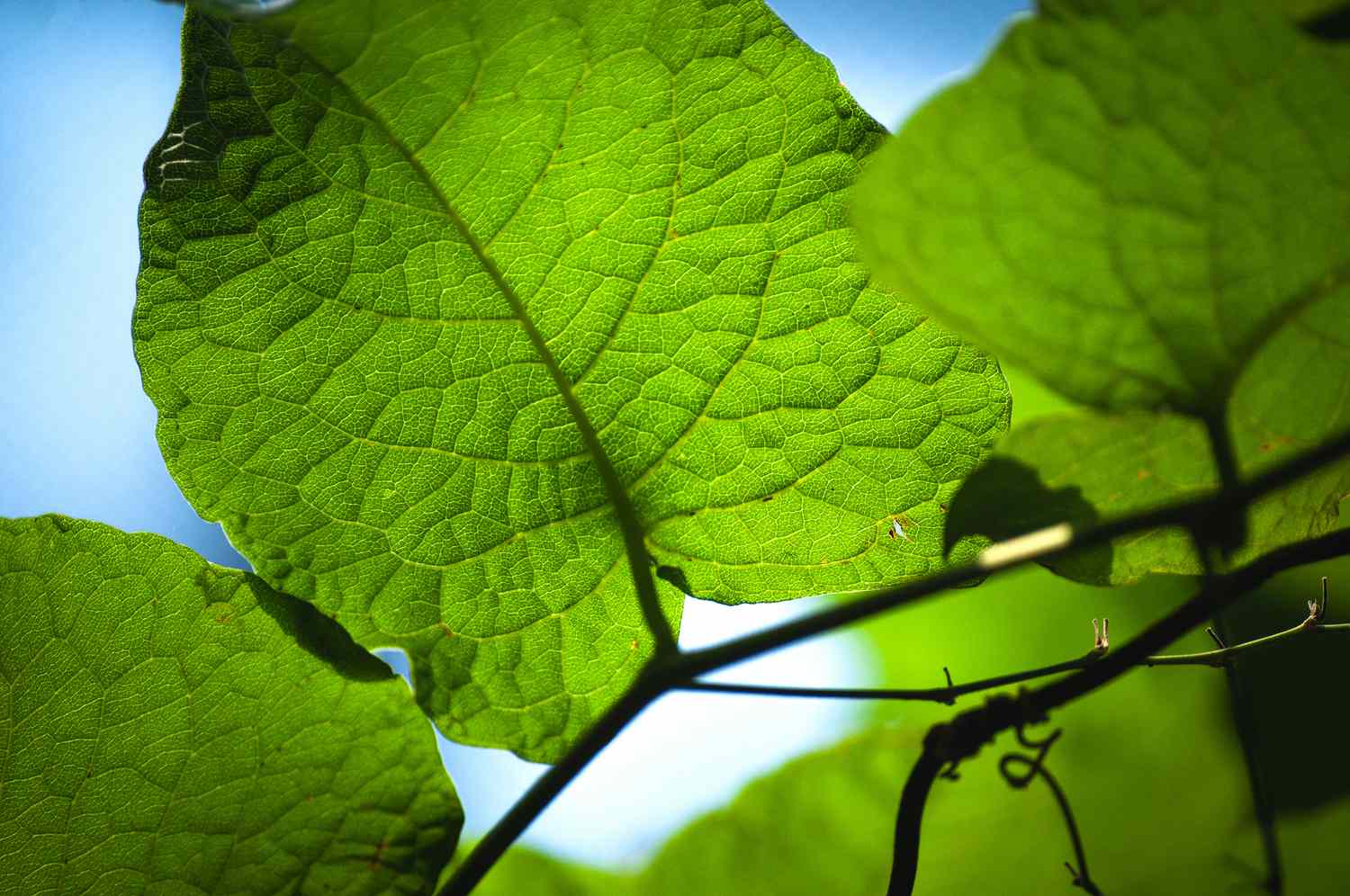
A tree can look completely still. No visible movement. No noise. Yet inside every leaf, chemistry is happening nonstop whenever sunlight appears.
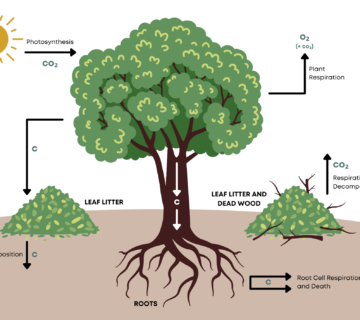
Trees absorb carbon dioxide from the air and pull water from the soil through their roots. Using sunlight, they turn those materials into energy and release oxygen during the process.
The science behind it looks like this:
6CO2+6H2O+sunlight→C6H12O6+6O26CO_2 + 6H_2O + sunlight \rightarrow C_6H_{12}O_6 + 6O_26CO2+6H2O+sunlight→C6H12O6+6O2
Most people memorized that formula in school, wrote it in an exam, then forgot it immediately afterward. But forests never stopped doing it.
Right now, somewhere in Africa, millions of trees are cycling gases through the atmosphere while people sleep, drive, cook dinner, or scroll through their phones without thinking about any of it.
That process helps keep the atmosphere stable enough for human life.
Humans Use More Oxygen Than Most People Realize
An average adult uses around 550 liters of oxygen every day.
That number increases quickly when you exercise or do physical work. Your muscles demand more oxygen. Your breathing speeds up automatically because the body reacts instantly when oxygen demand rises.
Your brain needs oxygen continuously too. So does your heart. Every organ depends on it.
The strange thing is how invisible this relationship feels most of the time.
People worry about losing internet for an hour faster than they think about losing healthy forests, even though forests help support the systems keeping the atmosphere stable in the first place.
So How Many Trees Do You Need?
This is usually the point where people expect a clean answer.
Two trees? Ten? One hundred?
The estimate repeated most often says two mature trees can provide enough oxygen annually for one person. It is a useful estimate because it helps people visualize the connection between forests and human life.
But reality is more complicated than assigning a personal tree quota to every human being.
A huge mature tropical tree can produce significantly more oxygen than several small young trees. Dense rainforests function differently from dry landscapes with scattered vegetation. Seasons change production too.
And forests are not just giant oxygen factories. They are living systems full of fungi, insects, microorganisms, roots, animals, and decomposing plant material all interacting together.
So the real answer is not about counting individual trees.
The real answer is healthy forests.
The Air You Breathe Might Come From Another Continent
This part surprises many people.
The atmosphere is connected globally. Air moves constantly around the planet.
Some of the oxygen you breathe today may contain molecules released months ago by forests in the Congo Basin or by microscopic ocean organisms thousands of kilometers away.
Nature does not recognize national borders the way humans do.
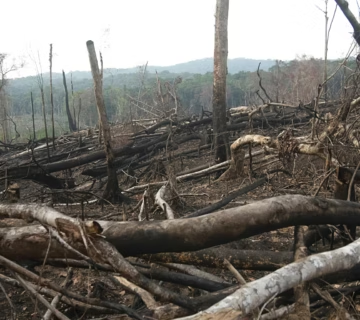
That is why deforestation matters even when it happens far away from where you live. The effects spread outward. Rainfall patterns shift. Heat increases. Rivers become less reliable. Drought conditions worsen.
The damage rarely stays local.
A Young Tree Cannot Replace an Ancient Forest Overnight
Tree planting campaigns have become popular globally, and many are genuinely valuable. But there is something people sometimes misunderstand.
Planting seedlings is important. Protecting mature forests is even more important.
A forest that has existed for centuries does far more than produce oxygen. It regulates rainfall, stabilizes temperatures, protects wildlife habitats, stores carbon, supports rivers, and maintains soil systems built slowly over generations.
A young tree contributes something valuable. But an old forest carries environmental weight that cannot be replaced quickly.
Once mature forests disappear, recovery takes decades.
Sometimes longer.
Forests Quietly Support Everyday Life
Most people think of trees mainly as shade or scenery. In reality, forests help hold environmental systems together.
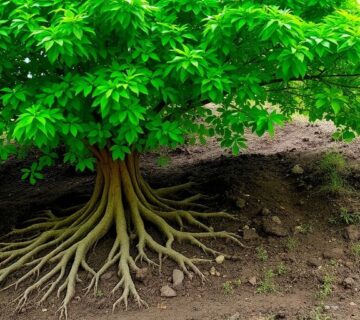
Trees cool landscapes naturally. Their roots reduce soil erosion and help the ground retain water longer. Forests influence rainfall patterns by releasing moisture into the atmosphere.
In many African countries, farming still depends heavily on seasonal rainfall. When forests disappear, rainfall often becomes less predictable too.
At first the changes can seem small. Slightly hotter temperatures. Longer dry seasons. Rivers shrinking faster than usual.
Then over time the effects become impossible to ignore.
Africa’s Forests Matter More Than Many People Realize
The Congo Basin remains one of the most important rainforest systems on Earth.
It stores massive amounts of carbon, supports biodiversity on an enormous scale, and helps regulate rainfall across Central Africa.
Millions of people depend directly or indirectly on the environmental stability these forests help maintain.
Yet pressure from logging, land clearing, and deforestation continues growing in several areas.
Protecting forests is no longer only about wildlife conservation. It is connected directly to food security, water systems, agriculture, and climate stability.
The Bigger Truth Behind the Question
The question “How many trees does one person need?” is really asking something deeper.
How dependent are humans on nature?
Modern life creates the illusion that people operate separately from the natural world. Water comes from taps. Food appears in supermarkets. Electricity arrives through cables hidden underground.
But underneath all that infrastructure, natural systems are still doing the heavy work.
Forests regulate rainfall. Wetlands filter water. Soils grow crops. Trees help stabilize the atmosphere itself.
Human civilization still depends entirely on healthy natural systems whether people notice it or not.
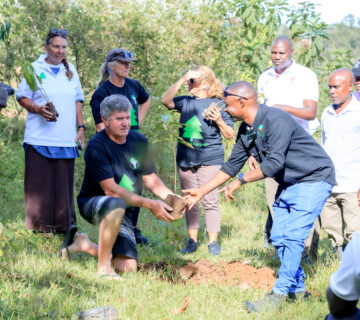
All In Africa Safaris’ Recognition Towards Tree Planting
At All In Africa Safaris, environmental conservation is recognized as an important part of protecting Africa’s forests, wildlife habitats, and natural landscapes for future generations.
Healthy forests support rainfall systems, biodiversity, water security, and climate stability across the continent. They also help sustain the environments that support Africa’s wildlife and many of its safari destinations.
Through responsible tourism, conservation awareness, and support for environmental restoration initiatives, greater attention can continue being directed toward tree planting, forest conservation, and sustainable environmental practices across Africa.
Supporting reforestation programs and community conservation efforts contributes toward protecting Africa’s forests and strengthening long-term environmental resilience for future generations.