Why Forests Are Africa’s Best Natural Flood Defence
Floods Don’t Begin When Rain Starts Falling
Flooding rarely begins with the storm itself. It starts with the ground.
You can get the same rainfall in two places. One place handles it. The other floods within hours. The difference is how the land absorbs and slows water.
When land is bare or damaged, water cannot sink in properly. It moves across the surface, gathers speed, and ends up overwhelming rivers.
Forests change that behavior completely.
Forest Ground Holds Water Instead of Letting It Run
After rain, a forest floor usually does not show fast-moving water. It feels wet, not washed out.
That is because forest ground absorbs water in stages.
Leaves and branches reduce the force of rainfall before it hits the soil. The impact is softened. Water reaches the ground more gently.
Then the soil takes over. Instead of pushing water away, it allows it to sink in.
Tree roots make this easier by opening small spaces underground. Water moves downward instead of rushing across the surface.
That slows everything down before it becomes a flood.
Roots Decide How Water Moves Underground
Tree roots shape the path water takes once it enters the soil.
In forested land:
rain slows before hitting the ground
water spreads through soil instead of running across it
more water is stored underground
less water reaches rivers at once
In cleared land, that system breaks. Water hits hard, moves fast, and carries soil with it.
That fast movement is what pushes rivers into overflow.
Rivers Flood When Water Arrives in Large Bursts
Rivers can carry a lot of water. The issue is timing.
Forests spread rainfall into smaller amounts over a longer period. That keeps river levels steady.
Without forests, rainwater reaches rivers in sudden bursts. Levels rise quickly and spill over the banks.
Flooding is not only about how much rain falls. It is about how fast that water arrives.
Forest Soil Works Like a Natural Buffer
A forest floor is built from layers of leaves, roots, and organic matter.
These layers act like a buffer for water.
Rain falls, and instead of rushing away, part of it is absorbed into the soil. Some moves deeper underground. Only a smaller portion reaches rivers quickly.
This spreads water movement over time.
Without forests, that buffer disappears. Water moves straight across the surface.
Soil Loss Leads to Bigger Floods Later
When soil is washed into rivers, it does not vanish. It builds up inside the river channels.
Over time, rivers become shallower. They cannot hold as much water. That makes flooding more likely during heavy rain.
Forests stop this at the source.
Roots keep soil in place. Vegetation reduces the force of rainfall. Less soil reaches rivers, and water channels stay open and deeper.
That reduces flood risk over time.
Sloped Land Becomes Dangerous Without Trees
Hills and slopes react quickly to rainfall.
Without trees, water flows downhill fast. It picks up soil along the way and creates sudden surges in lower areas.
Trees slow that movement.
Roots hold soil in place. Water has time to soak into the ground instead of sliding downhill. Even during strong storms, forested slopes stay more stable.
Forests Store Water Below the Surface
A large part of flood control happens underground.
Forested soil allows rainwater to seep deeper into the ground. That water becomes groundwater storage.
Instead of rushing into rivers immediately, it is held underground and released slowly over time.
Without forests, water stays on the surface and moves too quickly. That creates sudden spikes in river levels.
When Forests Are Removed, Water Becomes Unpredictable
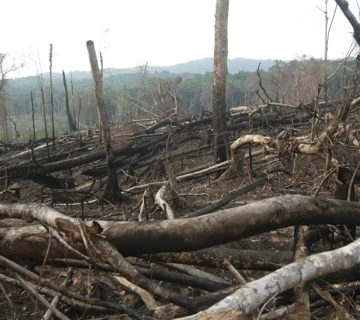
Once forests are cleared, the land changes quickly.
Rain runs off faster. Soil loosens. Rivers receive large volumes of water in short periods.
At first, the changes may not seem serious. Over time, patterns shift:
rivers rise faster after storms
flooding becomes more frequent
soil erosion increases
water flow becomes harder to predict
The land loses its natural control system.
Forests Protect More Than Waterways
Flood control affects everything around it.
Forests help protect:
farmland by reducing soil loss
roads by reducing washouts
homes by slowing floodwater movement
water sources by reducing contamination
This is why forests matter across entire landscapes, not just near rivers.
Heavy Rain Makes Forest Protection More Important
Rainfall is becoming more intense in many regions.
Short, heavy storms drop large amounts of water in a short time. That puts pressure on land and rivers.
Forests reduce that pressure by slowing how quickly water moves and spreading absorption across the ground.
Without forests, heavy rain turns into fast surface flooding.
Forest Protection Works Gradually
The impact of forests builds over time.
Young trees take time to grow strong root systems. Soil also takes time to recover structure.
But as forests mature, their effect becomes clear.
Areas with strong tree cover consistently show less severe flooding than cleared land.
Forests Keep Water Under Control
Forests do not stop rain. They control what happens after it falls.
They slow water movement, protect soil, and spread flow evenly across the land.
Without forests, water moves too fast and causes damage. With forests, water moves in a controlled way that the land can handle.
That difference is what reduces flooding.
All In Africa Safaris’ Recognition Towards Tree Planting
At All In Africa Safaris, environmental conservation is recognized as an important part of protecting Africa’s landscapes, wildlife habitats, water systems, and surrounding communities.
Forests reduce flooding by improving soil stability, increasing water absorption, and slowing runoff across large areas. These systems also support farming, ecosystem balance, and long-term land resilience.
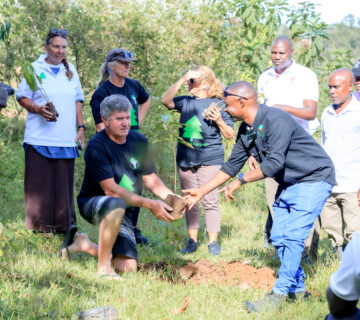
Through responsible tourism, conservation awareness, and support for environmental restoration efforts, continued focus can go toward tree planting, forest protection, and land recovery across Africa.
Protecting forests helps keep land stable during heavy rain and reduces flood damage over time.
Why This Matters for Travelers Too
Understanding forests’ role in flood prevention adds a layer of appreciation to visiting places like Bwindi, Nyungwe or the Congo Basin forests, since these ecosystems are doing more than sheltering wildlife, they’re actively regulating water systems that support millions of people downstream. This is part of the broader conservation story many parks now share with visitors as context for why forest protection matters beyond tourism revenue alone.