
Why Gorilla Groups Are Capped at 8 Visitors a Day
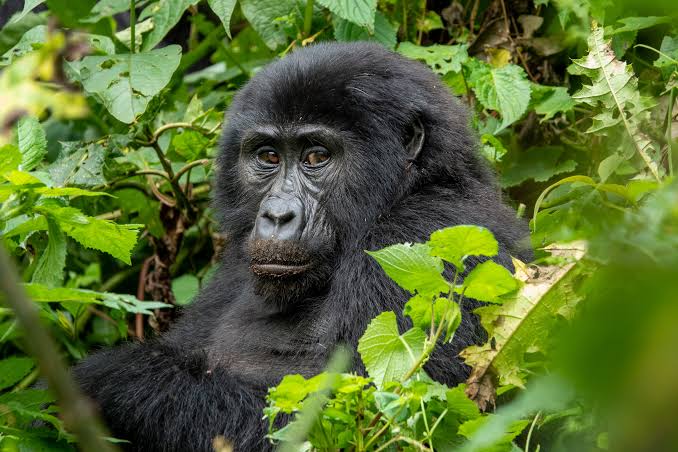
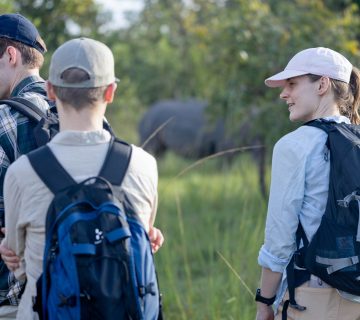
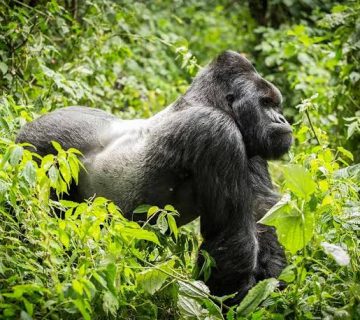
Deep inside Uganda’s Bwindi Impenetrable National Park, a mountain gorilla family rests among thick vegetation. A silverback watches over the group while young gorillas play nearby. A short distance away, eight visitors stand quietly with their ranger guide, observing these remarkable primates in their natural habitat.
For many travellers, spending an hour with mountain gorillas is a lifetime experience. However, only eight tourists are allowed to visit one habituated gorilla family per day during a standard gorilla trek.
This restriction is one of the most important conservation rules governing mountain gorilla tourism in Uganda and Rwanda.
The limit is designed to reduce disease transmission, minimise disturbance, protect natural behaviour and prevent excessive pressure on vulnerable gorilla populations.
Understanding why gorilla groups are capped at eight visitors helps travellers appreciate the conservation work behind every trekking permit.
1. What Does the Eight-Visitor Rule Mean?
The eight-visitor rule means that a habituated mountain gorilla family can receive a maximum of eight tourists during its standard daily trekking visit.
The limit applies to each gorilla family, not to the entire national park.
For example, if a park has ten gorilla families available for standard tourism, the theoretical daily visitor capacity is eighty tourists.
However, actual permit availability depends on the number of families authorised for tourism and operational decisions by park authorities.
Gorilla Trekking Limits at a Glance
| Rule | Standard Requirement |
|---|---|
| Maximum tourists | 8 per gorilla family |
| Visits per family | One standard tourism visit daily |
| Gorilla viewing time | Maximum 1 hour |
| Minimum trekking age | 15 years |
| Visitor health | Sick visitors must not trek |
| Viewing distance | Follow park-specific rules, never less than 7 metres |
Rangers, trackers and other authorised personnel are managed separately from the eight-tourist allocation.
Their presence must also be considered when assessing disturbance and disease exposure.
2. Protecting Gorillas From Human Diseases
One of the strongest reasons for limiting visitors is the risk of transmitting human diseases to gorillas.
Mountain gorillas are closely related to humans and can become infected with some of the same pathogens.
Respiratory infections are a particular concern.
A minor illness in a human visitor may pose a serious threat to a wild gorilla.
Diseases of Concern
Infections that conservation specialists monitor include:
- Influenza and other respiratory viruses.
- Respiratory syncytial virus.
- Human metapneumovirus.
- Measles.
- Tuberculosis.
- Other transmissible respiratory infections.
Limiting the number of visitors helps reduce the number of possible sources of infection.
However, eight visitors do not guarantee that disease transmission cannot occur.
Keeping an appropriate distance, wearing required face masks and excluding sick visitors remain essential.
3. Why One Sick Visitor Can Be Dangerous
Gorillas live in close social groups.
They rest, groom, travel and feed near one another.
If an infectious disease enters a family, close contact between group members may allow it to spread.
Young gorillas, older individuals and animals with existing health problems may be particularly vulnerable.
This explains why authorities do not allow tourists with signs of contagious illness to participate in gorilla trekking.
Visitors should report symptoms honestly before the activity.
Losing an opportunity to trek is disappointing, but protecting an entire gorilla family is more important.
4. Reducing Stress and Disturbance
Mountain gorillas spend much of their day feeding, travelling, resting and maintaining social relationships.
Tourism introduces people into their natural environment.
Even habituated gorillas may experience disturbance when visitors approach too closely, speak loudly or move suddenly.
Large tourist groups create more opportunities for noise, crowding and accidental interference.
Limiting the group to eight helps make encounters easier to manage.
How Smaller Groups Help
A limited number of visitors can:
- Reduce crowding around the animals.
- Make ranger instructions easier to follow.
- Help maintain suitable viewing distances.
- Lower the risk of sudden movements.
- Reduce interference with feeding and resting.
- Make it easier to leave when gorillas appear uncomfortable.
The aim is to allow gorillas to continue behaving naturally.
5. Why Gorilla Viewing Lasts Only One Hour
The eight-person limit works together with another important rule: visitors may spend a maximum of one hour observing the gorilla family during a standard trek.
The hour begins when the assigned family is located and viewing commences, as directed by the ranger.
The hike through the forest is separate from this viewing period.
Why Is the Hour Restricted?
Longer encounters would increase the total time gorillas spend near people.
This could increase opportunities for disease exposure and behavioural disturbance.
A shorter visit allows tourists to observe the animals while limiting daily contact.
It is important to understand that a longer trek does not provide extra viewing time.
Whether the family is found after a short walk or several hours of hiking, the standard viewing limit remains one hour.
6. Why Gorillas Are Habituated Before Tourism
Wild gorillas naturally respond cautiously to unfamiliar people.
Before a family becomes available for tourism, trained conservation personnel undertake a gradual habituation process.
This involves repeated, carefully managed encounters over an extended period.
The objective is to allow the gorillas to tolerate a limited human presence without causing unnecessary fear.
However, habituation does not make gorillas tame.
They remain powerful wild animals with natural behaviours and protective instincts.
This is why tourists must follow ranger instructions even when the gorillas appear relaxed.
7. Does the Eight-Person Rule Apply in Both Uganda and Rwanda?
Yes. Both Uganda and Rwanda use the eight-tourist limit for standard mountain gorilla trekking.
Uganda offers trekking in Bwindi Impenetrable National Park and Mgahinga Gorilla National Park.
Rwanda offers mountain gorilla trekking in Volcanoes National Park.
Uganda vs Rwanda Gorilla Trekking Rules
| Feature | Uganda | Rwanda |
|---|---|---|
| Main parks | Bwindi and Mgahinga | Volcanoes National Park |
| Maximum tourists per family | 8 | 8 |
| Standard viewing time | 1 hour | 1 hour |
| Minimum age | 15 years | 15 years |
| Gorilla permit | Required | Required |
| Ranger supervision | Required | Required |
Rules concerning masks, viewing distances and health screening must be checked with the relevant park authority before travelling.
8. Why Not Allow 10 or 15 Visitors?
Increasing visitor numbers might appear to generate more tourism revenue.
However, more visitors also mean more people potentially exposing gorillas to respiratory infections and disturbance.
A larger group is also harder to supervise on narrow forest trails.
Gorilla families may occupy steep slopes or areas with limited viewing space.
Keeping numbers low helps rangers position visitors appropriately and respond quickly when the gorillas move.
The figure of eight is an established conservation management limit, not a scientifically proven threshold below which all risk disappears.
It represents an attempt to balance visitor access with wildlife protection.
9. What Scientific Research Says About Following the Rules
Research in Uganda’s Bwindi Impenetrable National Park has demonstrated why careful management matters.
A study published in 2020 examined gorilla tourism encounters and compliance with visitor rules.
Researchers observed 53 treks.
They found that the minimum seven-metre viewing-distance rule was breached during 52 of those treks.
The findings highlighted the difficulty of maintaining separation when gorillas and people share confined forest spaces.
They also showed why conservation depends on effective enforcement, not merely announcing visitor limits.
The study supports better ranger training, health precautions and tourist education.
10. What Happens When Gorillas Approach Visitors?
Occasionally, a curious young gorilla or another family member may move towards tourists.
Visitors must never encourage this behaviour.
If a gorilla approaches, remain calm and follow the ranger’s instructions.
Do not attempt to touch, feed or photograph the animal at extremely close range.
Your ranger may direct you to move away slowly if this can be done safely.
Never run or make sudden movements.
The fact that a gorilla approaches voluntarily does not remove the risk of disease transmission.
11. Why Permits Are Limited
The number of gorilla trekking permits available each day depends largely on the number of habituated families authorised for tourism.
Each standard family allocation generally provides no more than eight tourist places.
This means permit availability is naturally restricted.
Example of Daily Permit Capacity
| Habituated Families Available | Maximum Standard Tourist Permits |
|---|---|
| 5 families | 40 |
| 10 families | 80 |
| 15 families | 120 |
| 20 families | 160 |
These are illustrative calculations rather than actual current park allocations.
The number of available families may change, and authorities can restrict access for conservation or operational reasons.
Travellers should therefore reserve permits well in advance, especially during busy travel periods.
12. Can Private Groups Book All Eight Places?
Yes. Travellers may arrange to reserve all eight available permits for a particular gorilla trekking group, subject to availability and the park authority’s allocation procedures.
This can appeal to families, friends or private safari groups seeking to trek together.
However, purchasing all eight permits does not create permission for additional visitors.
Nor does it entitle the group to remain with gorillas longer than the permitted hour.
Private arrangements must follow exactly the same conservation requirements.
13. What About Gorilla Habituation Experiences?
Uganda also offers a separate gorilla habituation experience in designated circumstances.
This activity is different from standard gorilla trekking.
It involves visiting a family undergoing habituation, accompanied by authorised personnel.
The usual tourist allocation is smaller, commonly four visitors, and the permitted observation period can extend to four hours.
These rules are specific to the approved habituation programme.
A longer experience is not an exemption from conservation controls; it operates under a different, closely managed system.
Visitors should confirm current availability and requirements with the Uganda Wildlife Authority.
14. How Gorilla Tourism Supports Conservation
Well-managed gorilla tourism generates revenue that can contribute to protecting mountain gorillas and their habitats.
Permit income helps support conservation management, including ranger operations and protected-area activities.
Tourism also provides opportunities for employment and businesses in neighbouring communities.
Community benefits can strengthen support for wildlife conservation.
However, tourism must remain carefully regulated.
Increasing visitor numbers without considering health and ecological risks could undermine the conservation benefits.
15. How Visitors Can Help Protect Gorilla Families
Every traveller has a responsibility to respect gorilla trekking rules.
Before trekking:
- Report any illness or contagious symptoms.
- Follow current health-screening requirements.
- Bring and wear a suitable face mask when required.
- Attend the ranger briefing.
- Carry only necessary equipment.
During the encounter:
- Maintain the distance instructed by your ranger.
- Keep your voice low.
- Avoid sudden movements.
- Never touch or feed gorillas.
- Do not use flash photography.
- Remain with your assigned group.
- Leave promptly when viewing time ends.
Following these instructions helps protect the animals and other visitors.
Why Eight Visitors Matter
The rule limiting gorilla groups to eight tourists per day is an important safeguard for mountain gorilla conservation.
It reduces opportunities for disease transmission, helps prevent overcrowding and makes visitor behaviour easier to supervise.
Together with the one-hour viewing limit, health screening, face masks and appropriate distance requirements, it helps manage the risks of bringing people into close contact with endangered primates.
For travellers, the restriction also creates a quieter and more personal wildlife experience.


No comment