Trees and Rainfall: The Hidden Connection Explained
The Powerful Relationship Between Forests and Rainfall
Rainfall is one of nature’s most vital processes, keeping life on Earth thriving. Every river, lake, forest, grassland, farm, wetland, and ecosystem relies on it. And let’s not forget about us humans! We depend on consistent rainfall for agriculture, drinking water, energy production, livestock, sanitation, and economic growth.
For a long time, we thought oceans, winds, and atmospheric temperatures were the main players in controlling rainfall. While those factors are indeed significant, recent scientific research has revealed that forests and trees are also key players in generating and regulating rainfall.
Trees aren’t just passive fixtures in our environment; they’re dynamic biological systems that actively engage with the atmosphere, water cycles, soils, sunlight, and climate processes. Forests influence humidity, cloud formation, atmospheric pressure, groundwater recharge, and precipitation patterns on local, regional, and even continental scales.
This relationship is especially crucial in Africa, where much of the continent relies on rain-fed agriculture and ecosystems sensitive to climate changes. Deforestation, land degradation, and the destruction of forests are increasingly disrupting rainfall stability, leading to droughts, declining agricultural productivity, water shortages, and environmental degradation.
Understanding how trees influence rainfall highlights why conserving forests and planting trees should be top priorities—not just for Africa, but for the entire planet.
Understanding Earth’s Water Cycle
To grasp how trees impact rainfall, we first need to understand the water cycle. It’s the ongoing movement of water through Earth’s ecosystems and atmosphere, constantly shifting between:
– Oceans
– Rivers
– Lakes
– Wetlands
– Groundwater
– Soils
– Plants
– Atmosphere
The main processes involved in this cycle include evaporation, transpiration, condensation, cloud formation, precipitation, runoff, and infiltration.
Traditionally, we’ve viewed oceans as the primary source of atmospheric moisture, thanks to the sun’s heat causing seawater to evaporate. But forests also play a significant role in contributing to atmospheric moisture through a process called transpiration. Without forests, the global water cycle would look very different.
What Is Transpiration?
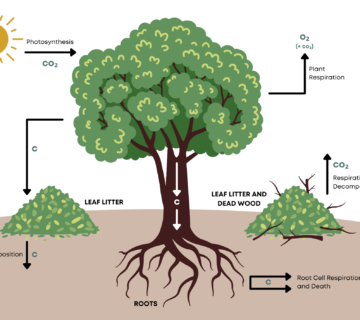
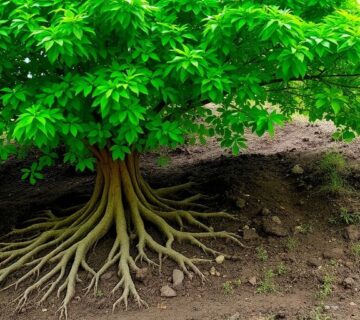
Transpiration is a vital biological process that connects trees to rainfall. Trees absorb water from the soil through their roots, which then travels up through the trunk and branches to the leaves. Tiny openings on leaves, called stomata, release water vapor into the atmosphere. This release is what we call transpiration.
Transpiration serves several essential functions:
– Regulates plant temperature
– Supports nutrient movement within trees
– Maintains moisture cycles
– Contributes to atmospheric humidity
A single mature tree can release hundreds of liters of water vapor into the atmosphere each day, depending on factors like tree species, climate conditions, temperature, and soil moisture availability. When millions or even billions of trees work together in a forest ecosystem, the volume of water entering the atmosphere is staggering.
Evapotranspiration: Forests as Giant Moisture Pumps
Scientists often refer to the combined processes of evaporation from soils and surfaces and transpiration from vegetation and trees as evapotranspiration. Essentially, forests act like giant biological pumps, transferring water from the ground into the atmosphere.
Here’s how it works:
- Rain falls onto the land.
- Water seeps into the soil.
- Trees absorb this water through their roots.
- Water moves through the tree system.
- Leaves release water vapor into the atmosphere.
- Atmospheric moisture builds up.
- Clouds form.
- Rain falls again.
This creates a self-sustaining moisture cycle. In tropical rainforests, forests can recycle vast amounts of rainfall through evapotranspiration. Scientists estimate that large rainforests can recycle significant portions of their own rainfall through these moisture processes.
Forests Increase Atmospheric Humidity
Humidity is simply the amount of water vapor in the air, and forests significantly boost atmospheric humidity because trees are constantly releasing water vapor through transpiration. Higher humidity levels contribute to:
– Cloud formation
– Condensation processes
– Rainfall development
In heavily forested areas, you’ll often find cooler, more humid air with stable cloud cover, leading to more frequent and predictable rainfall. On the flip side, deforested areas tend to become hotter, drier, and more vulnerable to drought. This clearly shows how closely vegetation cover is tied to atmospheric moisture conditions.
How Trees Help Form Clouds
Cloud formation hinges on the presence of atmospheric moisture. The water vapor released by forests rises into the cooler atmosphere, where it condenses into tiny droplets, leading to cloud formation. As more moisture accumulates, rainfall eventually develops. Without enough atmospheric moisture, cloud formation weakens, illustrating how forests play a crucial role in keeping the clouds coming.
In tropical regions, forests can generate massive cloud systems that influence weather patterns over large areas.
Forests and Rainfall Recycling
One of the most fascinating discoveries about forests is their ability to help recycle rainfall. In forest ecosystems:
- Rainwater enters the soil.
- Trees absorb the water.
- Water vapor returns to the atmosphere through transpiration.
- Clouds form again.
- Rain falls repeatedly in the region.
This means forests help maintain their own rainfall systems. In places like the Amazon rainforest and the Congo Basin, researchers have found that a significant portion of rainfall comes from moisture recycled by the forests themselves. Without forests, this recycling system weakens dramatically.
The Congo Basin and Africa’s Rainfall Systems
Africa’s Congo Basin rainforest is one of the world’s most crucial climate-regulating ecosystems. As the second-largest tropical rainforest on Earth, it plays a vital role in:
– Carbon storage
– Atmospheric moisture circulation
– Regional rainfall generation
– Climate stabilization
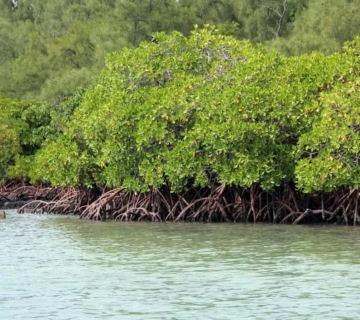
Every day, the Congo Basin releases vast amounts of water vapor into the atmosphere, contributing to rainfall across Central Africa and influencing weather systems beyond the forest itself. Protecting the Congo Basin is essential not just for biodiversity but also for maintaining rainfall stability and water security throughout Africa.
Trees Cool the Environment and Support Rainfall
Forests also influence rainfall by cooling the environment. Trees provide shade, and through evapotranspiration, they absorb heat from the surrounding air. This cooling effect helps:
– Lower surface temperatures
– Increase humidity
– Support condensation processes
– Create stable atmospheric conditions for rainfall
Hot surfaces lead to rapid evaporation and unstable air conditions, while forested areas maintain more balanced temperatures. This is why heavily forested regions often experience more stable rainfall than barren or deforested landscapes.
Forests Influence Atmospheric Pressure and Wind Patterns
Large forests can impact atmospheric circulation systems. When they release significant amounts of water vapor, air pressure patterns shift, moisture movement increases, and wind systems change. Scientists refer to some of these moisture movements as “flying rivers”—invisible streams carrying water vapor across vast distances. This means that moisture generated by forests can travel hundreds or even thousands of kilometers before eventually falling as rain, allowing forests in one area to influence rainfall in entirely different regions.
Deforestation Disrupts Rainfall Systems
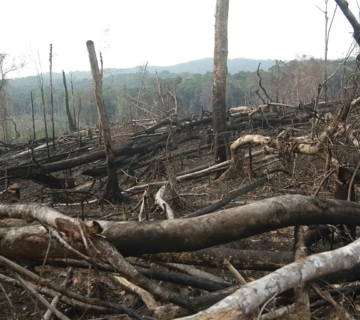
When forests are cut down, rainfall systems become weaker and less stable. Deforestation leads to:
– Reduced transpiration
– Lower atmospheric humidity
– Weaker cloud formation
– Disrupted moisture recycling
The result? Declining rainfall, more frequent droughts, rising temperatures, and faster soil drying. Deforestation can trigger dangerous feedback loops:
– Fewer trees lead to less rainfall.
– Less rainfall causes vegetation decline.
– Loss of vegetation worsens drought conditions.
– Environmental degradation accelerates.
This cycle can eventually transform fertile ecosystems into barren landscapes.
Trees Protect Watersheds and Groundwater
Rainfall alone isn’t enough to keep ecosystems healthy; water needs to be properly stored and distributed. Trees help protect watersheds by:
– Reducing runoff
– Increasing groundwater infiltration
– Stabilizing riverbanks
– Protecting wetlands
– Reducing erosion
Without trees, heavy rainfall quickly rushes across bare land, leading to severe flooding, rapid soil erosion, and polluted water systems. Forested catchments regulate water movement more effectively, maintaining healthier river systems.
Agroforestry and Sustainable Agriculture
Agroforestry is the practice of integrating trees into farming systems, which can improve:
– Soil moisture retention
– Rainfall stability
– Crop resilience
– Environmental sustainability
Trees on farms help protect crops from wind, reduce evaporation, improve soil fertility, support pollinators, and boost local humidity. Many African farmers are increasingly adopting agroforestry techniques to enhance climate resilience and agricultural productivity.
Urban Trees and Local Rainfall Effects
Often experience hotter and drier conditions because buildings, roads, and concrete absorb significant heat. Urban trees play a vital role by:
– Cooling cities
– Increasing humidity
– Reducing stormwater runoff
– Improving local climate conditions
While urban forests may not influence rainfall on a continental scale like tropical rainforests, they still contribute to healthier local water cycles and environmental conditions.
Climate Change and Forest-Rainfall Feedback Loops
Climate change is putting additional pressure on forest systems. Rising temperatures and prolonged droughts lead to:
– Increased tree mortality
– Higher wildfire risks
– Forest degradation
At the same time, losing forests reduces rainfall stability and heightens climate vulnerability, creating a feedback loop where:
– Climate change damages forests.
– Damaged forests weaken rainfall systems.
– Reduced rainfall worsens drought conditions.
– Environmental degradation intensifies.
Protecting forests is critical for climate resilience.
Scientific Evidence Supporting the Forest-Rainfall Connection
Modern scientific research strongly supports the link between forests and rainfall. Satellite data, atmospheric modeling, ecological studies, and climate observations consistently show that:
– Forests increase atmospheric moisture.
– Deforestation alters rainfall patterns.
– Tree cover stabilizes climate systems.
– Healthy ecosystems support precipitation cycles.
Scientists now recognize forests as active climate regulators rather than passive landscape features.
Why Tree Planting Matters for Africa’s Future
Africa faces growing challenges related to:
– Climate change
– Water shortages
– Food insecurity
– Land degradation
– Deforestation
Tree planting and forest restoration can help tackle these issues by:
– Restoring moisture cycles
– Improving rainfall stability
– Protecting watersheds
– Reducing drought vulnerability
– Supporting biodiversity
Large-scale environmental restoration efforts are becoming increasingly crucial for ensuring Africa’s future environmental stability and economic resilience.
Forests Are Essential for Rainfall and Climate Stability
The connection between trees and rainfall is one of the most important ecological relationships on Earth. Through transpiration and evapotranspiration, forests release vast amounts of moisture into the atmosphere, support cloud formation, regulate humidity, influence atmospheric circulation, and stabilize rainfall systems. Without forests, climates become hotter, drier, and more unstable. Deforestation weakens rainfall systems, increases drought risks, disrupts agriculture, and threatens water security. Protecting forests and planting trees are essential—not just for environmental conservation, but also for food production, climate resilience, biodiversity protection, and human survival. The science is clear: forests are natural rainfall engines that help sustain life across Africa and the entire planet.
All In Africa Safaris’ Recognition Toward Tree Planting
At All In Africa Safaris, we understand that forests are among the most crucial natural systems supporting Africa’s climate, wildlife, water resources, and communities. The connection between trees and rainfall illustrates how deeply ecosystems are intertwined with environmental stability, biodiversity conservation, and human survival. Healthy forests regulate atmospheric moisture, stabilize rainfall patterns, protect watersheds, reduce erosion, and support the ecosystems that sustain Africa’s incredible wildlife and landscapes.
Through responsible tourism, conservation awareness, and support for environmental restoration initiatives, we encourage communities and travelers to recognize the importance of protecting forests and restoring degraded ecosystems across the continent. Forest conservation is vital not only for safeguarding wildlife habitats and tourism destinations but also for maintaining climate resilience, agricultural productivity, and water security for future generations.
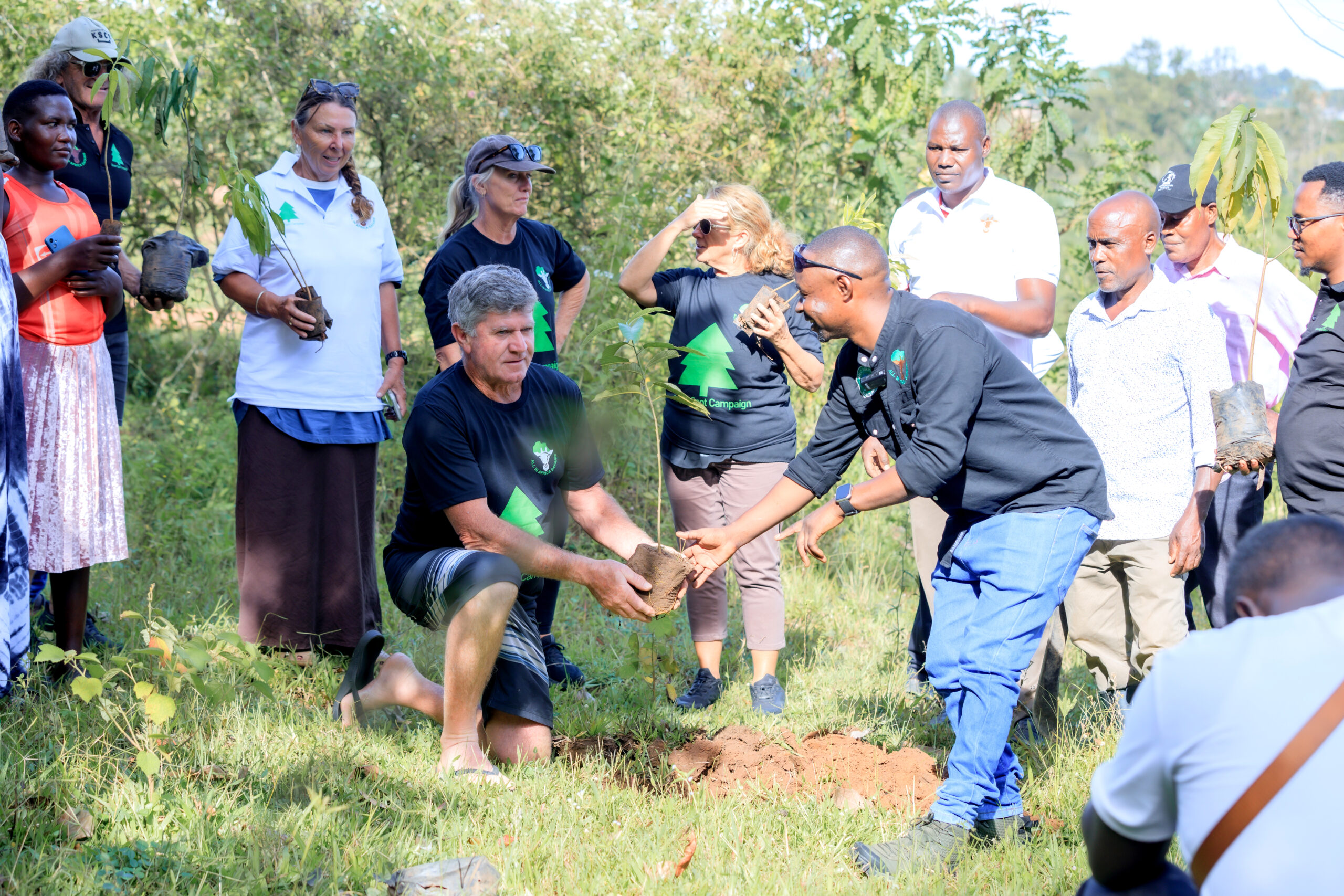
We believe that sustainable tourism should actively contribute to environmental stewardship and long-term ecosystem protection. By supporting reforestation programs, conservation education, and community environmental initiatives, individuals and organizations can be part of a broader effort to preserve Africa’s forests and strengthen the natural systems that sustain rainfall, biodiversity, and ecological balance across the continent.