Ross’s Turaco: A Rainforest Jewel of the Albertine Rift
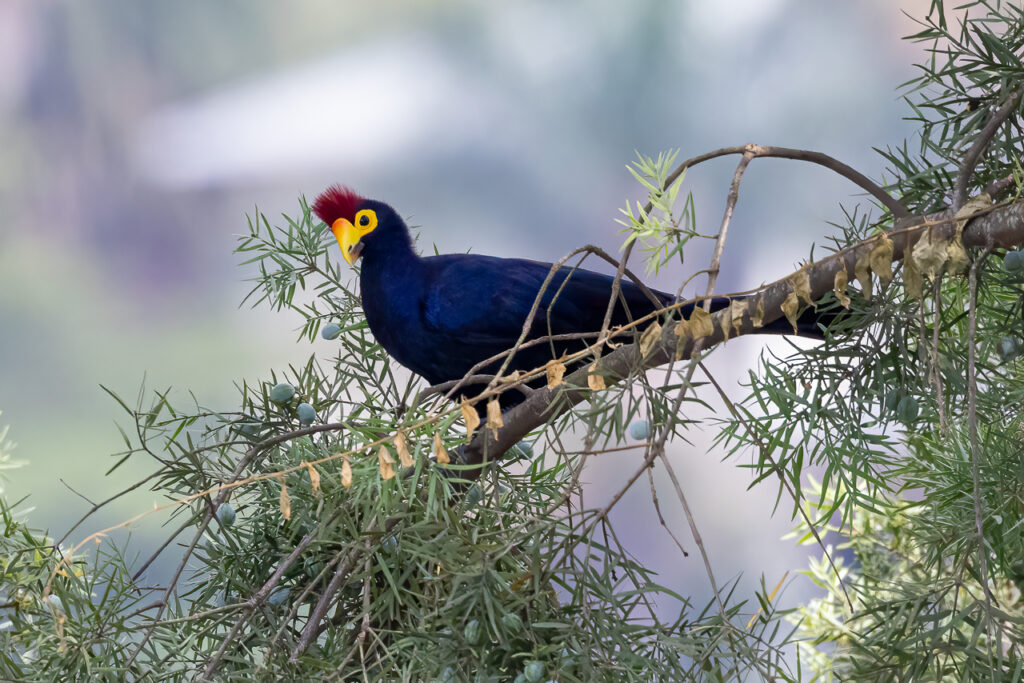
Rosss Turaco is a beautiful bird that lives in the old forests of East Africa. It has a lot of colors like red, green, black, and violet on its body. This bird looks like it belongs in the forest because of its feathers. It is important for more reasons than just its looks. Ross’s Turaco shows us how many different kinds of plants and animals live in the Albertine Rift, which’s a very important place for the environment.
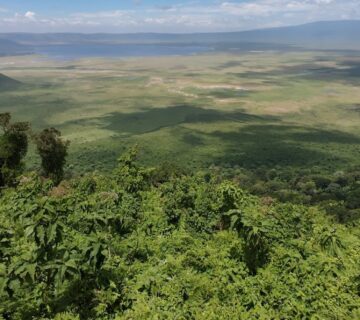
The Albertine Rift goes through countries, including Uganda Tanzania, Rwanda, Burundi, the Democratic Republic of Congo, and Tanzania. This area has mountains, valleys, lakes, and forests that are home to animals that do not live anywhere else. The turacos are birds that add color and movement to the forest. Ross’s Turaco is a bird because it is big and has very bright feathers.
Ross’s Turaco is easy to recognize because of the way it looks. Its body is mostly dark. Its wings are a bright red color. When it flies, you can see these feathers, which are very pretty. It also has a crest on its head, which makes it look very unique. The bird’s big red bill is another thing that makes it stand out.
When the Ross’s Turaco flies, its red wings are very noticeable as it moves through the trees. When it is sitting still, it can be hard to see. Sometimes you have to be quiet and wait for it to move or make a sound.
These birds live in the forest
Depend on the trees for food and shelter. They eat fruits and other plants, which helps the forest stay healthy. As they eat, they also help spread seeds to parts of the forest, which is important for new plants to grow.
This shows that taking care of the birds is not about the birds it is about taking care of the whole forest. The birds need forests to survive, and the forests need the birds and other animals to stay healthy too. Rosss Turaco is an important part of the forest ecosystem.
The forest is a special place and we need to protect it. We can do this by being quiet and listening to the birds and, by taking care of the trees and the animals that live there. Rosss Turaco is an example of why we need to protect the forest and all the animals that live there.
The Albertine Rifts Living Treasure
The Albertine Rift is known for high levels of biological diversity. Its mountains create weather conditions and places where life can grow close to each other allowing many special kinds of plants and animals to live. The forests here have been growing for a time creating complicated systems where every part can support life.
Rosss Turaco: A Rainforest Jewel of the Albertine Rift belongs to this natural story. Its existence connects the bird to a bigger area of forests and wildlife. When you imagine its red wings moving between trees it becomes easier to see why saving the Albertine Rift is important.
Ugandas forests are very important in this place. Places like Bwindi Impenetrable National Park and Kibale National Park are known for monkeys. Their forests also have many kinds of birds. Even though Rosss Turaco is not found in one protected forest the bigger group of wooded areas across the region gives the conditions that many forest birds need.
Forest protection therefore helps more than one kind of animal. Keeping trees alive protects places to eat places to build nests, natural paths and the links between different parts of the forest that help wildlife live.
A Forest Bird Worth Listening For
One of the parts of looking for turacos is learning to listen. Thick forests can make it hard to see birds especially when they stay high up in the trees. Their sounds can move through the leaves giving hints about where they’re moving.
This makes you experience nature in a way. Of rushing from one thing to another you start to notice the sounds of the forest. Leaves move in the top of the trees. Insects make noise in the branches. Distant birds call from around. Then somewhere above you a turaco answers.
That moment can change how you see a forest. What first looked like a wall of green suddenly becomes a living community full of movement.
For people visiting East Africa, bird watching in the forests is an addition to usual wildlife trips. A safari does not have to focus on big animals. Looking up can show species whose colors, habits and roles in the environment’re just as interesting.
Protecting a Forest Future
The future of forest birds relies a lot on the future of their homes. Cutting down trees expanding farms breaking up forests and other pressures can reduce the areas of trees that animals need. When forests become pieces animals may not have access to places to eat or build nests or may be separated from other groups.
Keeping the forests we have is therefore one of the important steps for protecting species like Rosss Turaco. Fixing forests also plays a big part. Planting trees that are connecting broken forest areas can slowly rebuild homes and help animals move around better.
Conservation works best when local people are involved. People who live near forests use resources for their lives so good protection must think about both animals and people. Eco-tourism, teaching about the environment growing food in a way that does not harm nature and helping local groups protect forests can all help make a future where forestsre important for both people and animals.
Rosss Turaco: A Rainforest Jewel of the Albertine Rift reminds us that conservation can start with something simple as paying attention. When people see the beauty of a bird they are more likely to care about the place that helps it live. A special bird experience can then start a love, for an entire environment.
Discovering Beauty in the Canopy
I really love searching for birds in a rainforest. You go in thinking you will see one kind of bird. You end up remembering lots of things that you did not plan to see. The smell of the earth the huge trees, the sunlight in the morning the sounds of birds far away and the quick flashes of color all become part of what you experience.
Seeing a Rosss Turaco is one of those moments that you will never forget. The bird might show up for a second. Then go back into the trees. You might only see its wings when it flies across a hole in the trees. You might hear it call before you can find where it is. Even if you only see it for a bit it can still make a big impression on you.
This kind of thing makes you want to be patient. Animals in the forest like it when you take your time to look at them of expecting to see them right away. It also teaches you something about taking care of the earth: a lot of the good things in nature are quiet even when we do not see them.
A Symbol of East Africas Wild Forests
Rosss Turacos are really beautiful. They are also important because of the forest they live in. Every part of the bird is connected to the trees, the fruit, the seeds, the rain, the bugs and all the other animals that live there.
If you are traveling in Uganda and the rest of the Albertine Rift looking for Rosss Turacos can be a way to see East Africa in a new way. People usually think of this area as a place to see animals, like gorillas, chimpanzees, elephants, lions and so on but there are also lots of smaller animals that are worth looking at.
Rosss Turaco is a special bird that lives in the rainforest of the Albertine Rift. It makes you want to look beyond the things and see all the amazing life that is living in the trees.
What we do today will affect the future of these forests
If we protect the places where animals live support tourism that does not hurt the environment fix damaged landscapes and help local people benefit from taking care of the earth we can help make sure that these ecosystems keep thriving.
When a Rosss Turaco flies through the trees it is not just beautiful. It is also a reminder of how rich and amazing African forestsre how important it is to protect them. Time you walk under the trees of the Albertine Rift remember to look up. You might see a flash of red. Find one of the forests most beautiful treasures, a Rosss Turaco.