Mountain Climbing in Uganda
Uganda rises in dramatic layers — from rolling savannah to volcanic highlands, from crater lakes to jagged alpine peaks. Often celebrated for its wildlife safaris and gorilla trekking, the country also offers some of East Africa’s most rewarding mountain climbing experiences. For those willing to lace up their boots and climb above the clouds, Uganda reveals a wilder, quieter, and more intimate side of its landscape.
Mountain climbing in Uganda is not only about altitude. It is about immersion — walking through bamboo forests dripping with mist, crossing moss-covered bogs, and emerging into Afro-alpine zones where giant lobelias stand like sentinels against the sky.
The Rwenzori Mountains: The Mountains of the Moon
The most iconic climbing destination in Uganda is the legendary Rwenzori Mountains, often called the “Mountains of the Moon.” Straddling the border between Uganda and the Democratic Republic of Congo, this range is home to Africa’s third-highest peak.
At the heart of the range lies Rwenzori Mountains National Park, a UNESCO World Heritage Site renowned for its biodiversity and surreal alpine scenery. The crown jewel is Margherita Peak on Mount Stanley, rising to 5,109 meters above sea level.
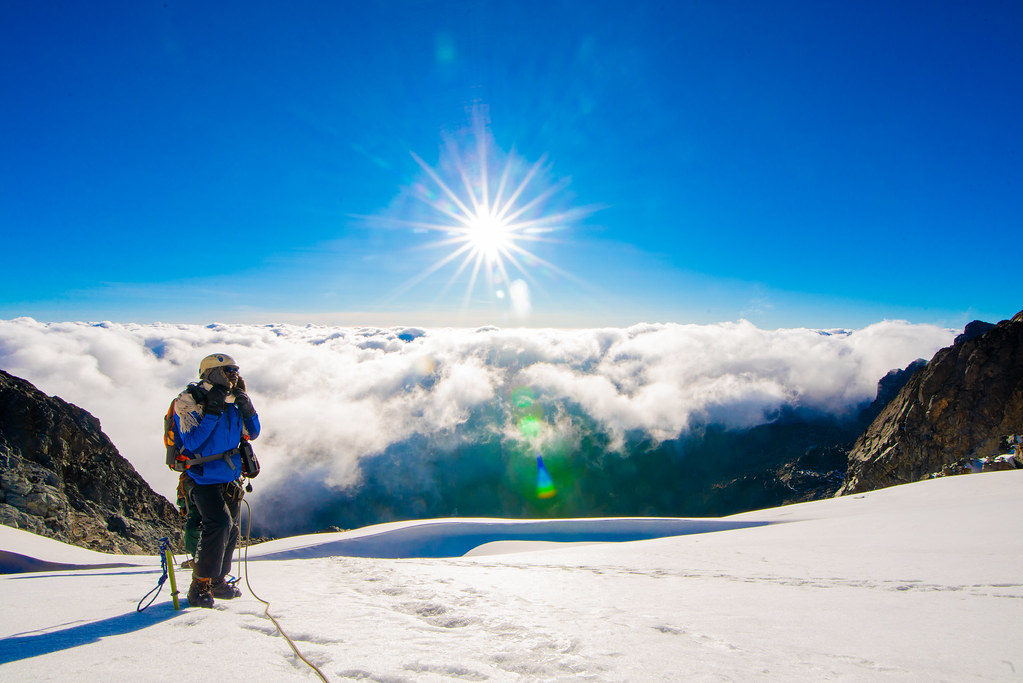
Climbing the Rwenzoris is not a casual hike. It is a multi-day expedition that can take between seven to ten days depending on the chosen route. The journey passes through distinct ecological zones: tropical rainforest, bamboo forest, heather moorland, and finally glacial alpine terrain. Trekkers navigate muddy trails, wooden boardwalks, and rocky ascents. At higher altitudes, snow and ice demand careful footing and, in some cases, basic mountaineering skills.
The reward is profound. Standing atop Margherita Peak, surrounded by glaciers and sweeping valleys, feels otherworldly. Few places in Africa offer such a dramatic combination of equatorial location and alpine environment.
Mount Elgon: The Gentle Giant
On Uganda’s eastern border with Kenya rises Mount Elgon, an extinct volcano with one of the largest calderas in the world. Unlike the rugged, glacial terrain of the Rwenzoris, Mount Elgon offers a more gradual and accessible climb.
Protected within Mount Elgon National Park, the mountain’s highest point, Wagagai Peak, stands at 4,321 meters. The ascent typically takes four to five days, making it ideal for climbers seeking high-altitude experience without technical challenges.
The trails wind through lush forest inhabited by monkeys and birds before opening into moorland dotted with giant groundsels and lobelias. Waterfalls cascade along certain routes, and caves carved by ancient lava flows provide unique points of interest.
Mount Elgon’s gentler gradients allow trekkers to acclimatize comfortably, and the panoramic views from the summit stretch across Uganda and into Kenya. It is often described as a mountain for those who want endurance and beauty rather than extreme mountaineering.
The Virunga Volcanoes: Dramatic and Wild
In southwestern Uganda, near the border with Rwanda and the Democratic Republic of Congo, rise the dramatic Virunga volcanoes. Within Mgahinga Gorilla National Park stand three of these extinct volcanoes: Mount Muhabura, Mount Gahinga, and Mount Sabinyo.
Mount Muhabura, at 4,127 meters, presents a steep and challenging day climb. The ascent is demanding, but reaching the crater lake at the summit offers a spectacular reward. On clear days, climbers can see across three countries.
Mount Sabinyo is particularly unique because its jagged ridges mark the meeting point of Uganda, Rwanda, and the Democratic Republic of Congo. Climbing Sabinyo involves ladders and steep sections, adding an adventurous edge to the hike.
These volcanoes combine mountain climbing with the possibility of spotting golden monkeys and other wildlife within the park. The volcanic soil supports rich vegetation, and the scenery feels raw and dramatic.
The Best Time to Climb
Uganda’s equatorial climate means climbing is possible year-round, but the dry seasons — typically from June to September and December to February — offer more favorable conditions. Trails are less muddy, and visibility is often clearer at higher altitudes.
However, mountain weather is unpredictable. In the Rwenzoris especially, rain can fall at any time, and temperatures drop significantly at higher elevations. Proper preparation and experienced guides are essential.
Preparation and Fitness
Mountain climbing in Uganda demands physical readiness. Multi-day hikes require stamina, strength, and mental resilience. Training beforehand with regular hikes, cardio workouts, and strength exercises significantly improves the experience.
Packing appropriately is equally important. Waterproof gear, sturdy hiking boots, layered clothing for cold temperatures, and proper hydration systems are essential. For Rwenzori summit attempts, specialized equipment for glacier travel may be required.
Guided climbs are mandatory in most national parks. Local guides and porters not only enhance safety but also provide valuable insights into the region’s ecology and culture.
More Than a Summit
Climbing a mountain in Uganda is not solely about reaching the top. It is about the journey — the quiet mornings in mountain huts, the sound of boots on forest trails, the camaraderie formed with fellow climbers, and the stories shared at day’s end.
Each mountain offers a distinct personality. The Rwenzoris challenge with their rugged remoteness. Mount Elgon welcomes with sweeping calderas and waterfalls. The Virunga volcanoes thrill with steep ridges and cross-border views.
Beyond the physical challenge lies something deeper: perspective. From high above the plains, the world feels vast yet interconnected. Problems shrink. Gratitude grows.
Why Choose Uganda for Mountain Climbing?
Uganda’s mountains remain less crowded than some of Africa’s more famous peaks. This allows for a more intimate experience with nature. Trails are quieter. Landscapes feel untouched. Wildlife sightings along the way add a unique dimension absent in many climbing destinations.
Moreover, combining mountain climbing with other Ugandan adventures — gorilla trekking, safari drives, cultural tours, or river rafting — creates a richly diverse itinerary.
Uganda is often called the “Pearl of Africa.” From its snow-capped peaks to its volcanic ridges, mountain climbing here reveals one of its brightest facets.
For those seeking altitude, adventure, and authenticity, Uganda’s mountains are waiting.