
Kenya’s Independence Sites: Uhuru Gardens and Nairobi National Museum
Kenya’s independence sites offer travellers an opportunity to understand the country’s journey from British colonial rule to self-government. Two important places to explore are Uhuru Gardens and Nairobi National Museum. Both are located in Nairobi, but each presents a different part of Kenya’s history. Uhuru Gardens commemorates the country’s independence on 12 December 1963, while Nairobi National Museum explains the communities, events and struggles that shaped modern Kenya.
Visiting these historical attractions adds cultural understanding to your Kenyan safari. You can learn about independence leaders, colonial history, traditional communities and the national symbols that represent Kenya today.
Understanding Kenya’s Journey to Independence
Kenya became independent from Britain on 12 December 1963, following decades of political organisation, resistance and demands for African self-rule.
Before independence, British colonial policies affected land ownership, political representation and employment. Many African communities experienced restrictions on their rights, particularly in areas occupied by European settlers.
The struggle involved political leaders, organised movements, community activists and resistance groups.
Among the important figures were Jomo Kenyatta, Dedan Kimathi, Tom Mboya, Oginga Odinga and numerous women whose contributions are sometimes overlooked.
Important Dates in Kenya’s Independence History
| Year | Historical event | Significance |
|---|---|---|
| 1895 | British East Africa Protectorate established | Britain expanded colonial administration |
| 1920 | Kenya became a British colony | Colonial authority was formally reorganised |
| 1952 | State of Emergency declared | Colonial authorities intensified action against the Mau Mau rebellion |
| 1960 | Lancaster House constitutional negotiations | Discussions advanced Kenya’s political transition |
| 1 June 1963 | Kenya achieved internal self-government | Jomo Kenyatta became Prime Minister |
| 12 December 1963 | Kenya gained independence | British colonial rule formally ended |
| 12 December 1964 | Kenya became a republic | Jomo Kenyatta became the first President |
These milestones provide useful background before visiting Nairobi’s historical attractions.
Uhuru Gardens: Where Kenya Celebrated Independence
Uhuru Gardens is among Kenya’s most important national monuments. Located along Lang’ata Road in Nairobi, the site commemorates the country’s independence celebrations.
The Swahili word Uhuru means freedom or independence.
On the night of 11 December leading into 12 December 1963, thousands of Kenyans gathered to celebrate the end of British colonial rule.
At midnight, the British Union Jack was lowered and the Kenyan national flag was raised.
For many people, the ceremony represented the beginning of a new political era.
The Independence Monument
One of the main attractions at Uhuru Gardens is the independence monument.
Its design commemorates the historical transition to national freedom.
Visitors can explore the memorial grounds, observe the monument and learn about the events associated with independence.
A visit allows you to understand how public monuments preserve national history.
The Historic Mugumo Tree
Another important feature is the commemorative Mugumo, or fig tree.
The tree marks the location associated with the independence flag-raising ceremony.
Mugumo trees also hold cultural importance among several Kenyan communities, particularly the Kikuyu.
The tree connects Kenya’s independence commemorations with older cultural traditions involving land, community and leadership.
Uhuru Gardens National Monument and Museum
The historical site has developed into a national monument and museum complex.
Its exhibitions honour people who contributed to Kenya’s political development and liberation struggle.
Areas associated with the museum include displays about independence leaders and individuals who challenged colonial authority.
Before travelling, confirm which galleries are open because official ceremonies, maintenance or special events can affect access.
Nairobi National Museum: Understanding Kenya’s History
Nairobi National Museum is another excellent destination for travellers interested in Kenyan independence.
Situated at Museum Hill, close to Nairobi’s central business district, the museum presents the country’s cultural, historical and natural heritage.
Its origins date to 1910, when a museum was established through the work of the East Africa and Uganda Natural History Society.
Following independence, the institution was renamed to reflect Kenya’s new national identity.
Today, Nairobi National Museum helps visitors understand the country’s development through exhibitions and historical collections.
The History of Kenya Gallery
The History of Kenya Gallery is particularly relevant for travellers exploring independence.
It introduces Kenya’s different communities, their origins and their relationships before colonial rule.
Visitors can also learn about British administration, political resistance and the struggle for independence.
Understanding these developments helps explain how modern Kenya emerged.
The exhibitions provide context for historical events beyond the flag-raising ceremony at Uhuru Gardens.
Kenya’s Cultural Heritage
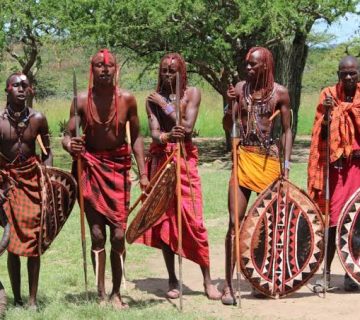
Kenya has many ethnic and linguistic communities, including the Kikuyu, Luo, Kalenjin, Luhya, Maasai, Kamba and Mijikenda.
Each has contributed to the country’s cultural and political development.
Museum collections introduce traditional lifestyles, ceremonies, clothing and objects used by different communities.
These displays help visitors appreciate that Kenya’s national identity developed through many distinct histories.
Natural History and Human Origins
The museum also contains important exhibitions on human evolution, mammals and birds.
These collections make the museum suitable for families combining cultural learning with a wildlife safari.
Children can study fossils, discover how animals adapt to different environments and learn about the country’s natural heritage.
Comparing Uhuru Gardens and Nairobi National Museum
Although both attractions explain Kenyan history, they provide different visitor experiences.
| Feature | Uhuru Gardens | Nairobi National Museum |
|---|---|---|
| Location | Lang’ata Road | Museum Hill |
| Main focus | Independence and national remembrance | History, culture and natural heritage |
| Main attraction | Independence monument and memorial grounds | Historical and cultural exhibitions |
| Experience | Outdoor monuments and museum displays | Mainly indoor galleries |
| Suggested visit | 1–2 hours | 2–3 hours |
| Suitable for children | Yes, with supervision | Yes, particularly educational visits |
| Best for | Independence history | Wider understanding of Kenya |
The suggested times are planning estimates. Your actual visit may take longer depending on exhibitions and guided activities.
How Independence Changed Kenya
Independence brought major political changes.
Kenya established its own national government and gained greater authority over its internal affairs.
Jomo Kenyatta became the country’s first Prime Minister under self-government and later its first President when Kenya became a republic.
The new government faced challenges involving education, employment, infrastructure and unequal land ownership inherited from colonial rule.
Education and National Identity
Education became an important priority after independence.
Schools increasingly reflected Kenya’s national history and aspirations.
The development of national institutions helped preserve historical records and cultural collections.
Museums became places where citizens could study their country’s heritage and where visitors could learn about Kenya beyond its wildlife attractions.
Land and Political Challenges
Independence did not immediately resolve every problem created during colonial administration.
Land distribution remained a major political issue, especially in areas where communities had experienced displacement.
Understanding these challenges gives visitors a more complete picture of independence.
Kenya’s history includes national celebrations alongside difficult discussions about inequality, political representation and social change.
Planning a Historical Tour of Nairobi
You can visit Uhuru Gardens and Nairobi National Museum during a single day.
A private vehicle with a knowledgeable local guide provides flexibility, particularly when Nairobi’s roads become busy.
Suggested One-Day Historical Itinerary
| Time | Activity | Recommended duration |
|---|---|---|
| 8:30 am | Leave your hotel | Allow for traffic |
| 9:00 am | Visit Nairobi National Museum | 2 hours |
| 11:00 am | Explore additional museum exhibitions | 1 hour |
| 12:00 pm | Lunch | 1 hour |
| 1:00 pm | Travel towards Uhuru Gardens | Allow 30–60 minutes |
| 2:00 pm | Explore Uhuru Gardens | 1–2 hours |
| 4:00 pm | Return to your hotel | Depends on traffic |
These times are illustrative rather than a fixed schedule.
Nairobi National Museum generally opens daily from 8:30 am to 5:30 pm. Confirm current access arrangements for Uhuru Gardens before visiting.
Should You Hire a Guide?
A knowledgeable guide can make historical places more meaningful.
Guides can explain political developments, introduce important personalities and help you understand the relationship between particular exhibits and historical events.
Ask your guide to include perspectives from different Kenyan communities.
This provides a broader understanding of independence and the people involved.
Visiting During Kenya’s National Holidays
Two national celebrations are particularly relevant to Kenya’s independence history.
Madaraka Day, celebrated on 1 June, commemorates the achievement of internal self-government in 1963.
Jamhuri Day, celebrated on 12 December, marks Kenya’s independence in 1963 and its transition to a republic in 1964.
These occasions often involve national ceremonies, speeches and cultural celebrations.
They can be interesting times to visit Kenya, although public events may affect access to historical attractions.
If you plan to visit Uhuru Gardens around Jamhuri Day, confirm the arrangements beforehand.
Other Historical Places Worth Exploring in Nairobi
Travellers interested in Kenya’s political development can include additional attractions.
Kenya National Archives
Located in central Nairobi, the Kenya National Archives preserves historical materials that help explain the country’s political and cultural development.
Exhibitions and collections may provide additional context for understanding colonial administration and post-independence Kenya.
Nairobi Railway Museum
The railway played a major role in Nairobi’s growth during British colonial administration.
A visit to Nairobi Railway Museum introduces the transport history that contributed to the development of the city.
It also helps explain how colonial infrastructure affected settlement, trade and regional movement.
Uhuru Park
Uhuru Park is a public recreational space near Nairobi’s city centre.
Although different from Uhuru Gardens, it has been associated with significant political gatherings and public demonstrations.
Travellers should distinguish between the two locations when planning their visits.
Practical Tips for Visiting Kenya’s Independence Sites
A few preparations can make your historical tour more comfortable.
Start early to reduce time spent in Nairobi traffic.
Carry identification where required for admission.
Confirm entrance charges and accepted payment methods.
Wear comfortable shoes for walking around museum grounds.
Bring drinking water and sun protection for outdoor visits.
Ask permission before photographing restricted displays.
Respect memorial spaces and official ceremonies.
Allow extra time if travelling with children or older visitors.
Avoid arranging a very tight schedule. Traffic delays and longer museum visits can affect your plans.
Combining History With a Kenya Safari
Kenya’s independence sites fit comfortably into a wider safari itinerary.
Many travellers spend their first or final night in Nairobi before continuing to destinations such as Amboseli National Park, Lake Nakuru or the Maasai Mara.
Adding a historical tour helps you understand the country before exploring its landscapes and wildlife.
For families, visiting the museum can also prepare children to ask thoughtful questions about Kenya’s communities and conservation history.
A cultural visit can therefore complement the natural experiences that attract many visitors to East Africa.
Kenya’s independence sites preserve important moments in the country’s history.
Uhuru Gardens commemorates the national celebrations of 12 December 1963, while Nairobi National Museum offers a wider understanding of the communities, political struggles and historical developments that shaped Kenya.
Visiting both attractions gives you a meaningful introduction to the country’s past.
Whether you are travelling for a safari, family holiday or cultural experience, setting aside a day for Nairobi’s historical landmarks can make your journey more informative and rewarding.

No comment