
Ethiopian Coffee Ceremony: How It Works and How to Join One
The Ethiopian coffee ceremony is one of East Africa’s most meaningful cultural traditions, bringing together freshly roasted coffee, traditional hospitality, conversation and community relationships. Across Ethiopia, preparing coffee is much more than making a drink. It is a carefully organised social experience that celebrates friendship, respect and everyday life.
Known locally as buna, coffee holds an important place in Ethiopian culture. A traditional ceremony involves roasting green coffee beans, grinding them by hand, brewing them in a clay pot and serving several rounds to guests.
Unlike a quick visit to a modern café, the Ethiopian coffee ceremony encourages people to relax, share stories and appreciate the preparation process.
For travellers visiting Addis Ababa, traditional villages or Ethiopia’s coffee-growing highlands, joining a ceremony provides a memorable introduction to the country’s cultural heritage.
Why Is Coffee Important in Ethiopia?
Ethiopia is widely recognised as the birthplace of Arabica coffee.
Wild Arabica coffee plants grow naturally in the country’s southwestern forests, where coffee has deep historical and cultural connections.
Today, coffee remains an important agricultural product and export.
However, its importance extends beyond economic value.
Coffee ceremonies bring families, neighbours and friends together for conversation, celebrations and welcoming visitors.
Quick Facts About Ethiopian Coffee Ceremonies
| Feature | Description |
|---|---|
| Country | Ethiopia |
| Traditional name | Buna |
| Main drink | Arabica coffee |
| Brewing equipment | Jebena clay pot |
| Traditional preparation | Roasting, grinding and brewing |
| Number of rounds | Usually three |
| Common snacks | Popcorn and roasted grains |
| Typical duration | 1–2 hours |
| Cultural importance | Hospitality and community |
| Best experience | Small traditional gathering |
The History of Ethiopian Coffee
Ethiopia’s southwestern highlands are closely associated with the natural origins of Arabica coffee.
Coffee gradually became an important part of social and agricultural life.
The Legend of Kaldi
A popular Ethiopian story tells of Kaldi, a goat herder who noticed his animals becoming energetic after eating berries from a particular plant.
According to the legend, the discovery eventually contributed to the development of coffee drinking.
Although the story is culturally important, it should be understood as folklore rather than confirmed historical evidence.
What Is an Ethiopian Coffee Ceremony?
An Ethiopian coffee ceremony is a traditional process in which coffee is prepared and shared with guests.
It commonly takes place in family homes, restaurants, cultural centres and community gatherings.
More Than a Drink
The ceremony creates opportunities for conversation.
Neighbours may discuss everyday matters.
Families welcome visitors and celebrate relationships.
The preparation process is intentionally unhurried, allowing everyone to participate in the social atmosphere.
Preparing the Coffee Ceremony Space
The ceremony often begins before the coffee beans are roasted.
The host prepares a comfortable area and arranges traditional equipment.
Traditional Decorations
Fresh grass or flowers may be placed on the floor.
A low table holds small coffee cups.
Incense is sometimes burned to create a pleasant fragrance.
The arrangement reflects hospitality and attention to guests.
Traditional Coffee Ceremony Equipment
Several objects are associated with the preparation.
| Equipment | Purpose |
|---|---|
| Jebena | Clay coffee-brewing pot |
| Sini | Small handleless cups |
| Rekbot | Coffee-serving tray or stand |
| Roasting pan | Heating green beans |
| Mortar and pestle | Grinding roasted beans |
| Charcoal burner | Providing heat |
| Incense burner | Creating a fragrant atmosphere |
The appearance and use of equipment vary between households and regions.
Step One: Washing the Coffee Beans
The preparation begins with raw green coffee beans.
The host may rinse the beans to remove dust and unwanted material.
Why Start With Green Beans?
Unroasted coffee has a very different aroma from prepared coffee.
Roasting transforms its flavour and fragrance.
Beginning with green beans allows guests to observe the complete preparation process.
Step Two: Roasting the Coffee
Roasting is among the ceremony’s most memorable moments.
Green beans are placed in a metal pan over hot charcoal.
The host continuously moves the beans to encourage even roasting.
Enjoying the Aroma
As the beans darken, a rich coffee fragrance fills the room.
The host may bring the pan towards guests so they can appreciate the aroma.
Guests commonly respond by gently wafting the fragrance towards themselves.
This moment is an important part of the ceremony’s welcoming atmosphere.
Step Three: Grinding the Beans
Once roasted, the coffee beans are allowed to cool.
They are traditionally crushed using a mortar and pestle.
Traditional Grinding
The rhythmic pounding produces a distinctive sound.
The beans gradually become coarse coffee grounds.
Some modern ceremonies use mechanical grinders, but traditional demonstrations often retain hand-grinding methods.
The process highlights the effort involved in preparing coffee.
Step Four: Brewing in the Jebena
The ground coffee is transferred into a traditional clay pot called a jebena.
Water is added, and the pot is heated over charcoal.
What Makes the Jebena Special?
Its rounded body and narrow neck create a distinctive appearance.
The clay pot is an important symbol of Ethiopian coffee culture.
After brewing, the coffee is allowed to settle before serving.
This helps reduce the amount of coffee sediment entering the cups.
Step Five: Pouring the Coffee
Serving requires careful technique.
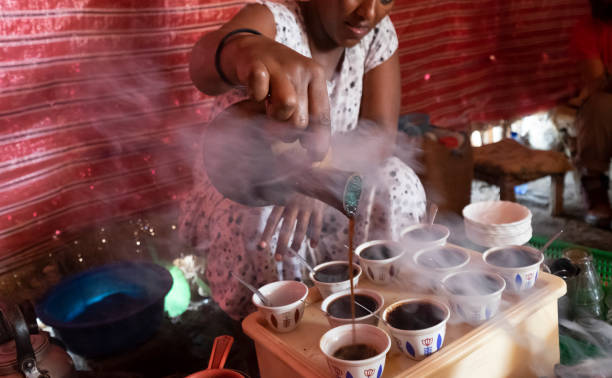
The host pours coffee from the jebena into small cups arranged on a tray.
Traditional Serving Style
The coffee may be poured in a thin, continuous stream.
Cups are often served according to local customs and respect for guests.
Sugar may be offered.
In some Ethiopian communities, coffee is enjoyed with salt or other traditional flavourings.
The Three Rounds of Ethiopian Coffee
A complete traditional ceremony commonly involves three rounds.
The same coffee grounds may be brewed again with additional water.
Meaning of the Three Rounds
| Round | Name | Traditional significance |
|---|---|---|
| First | Abol | Strongest coffee and beginning of hospitality |
| Second | Tona | Continued conversation and friendship |
| Third | Baraka | Blessing and goodwill |
The names and interpretations may vary regionally.
Abol: The First Round
Abol is generally the strongest serving.
Guests enjoy the rich flavour and aroma of freshly prepared coffee.
The first round often marks the beginning of extended conversation.
It is an important expression of hospitality.
Tona: The Second Round
Tona is prepared by adding water to the remaining coffee grounds.
It is usually lighter than the first round.
Why Is It Important?
The second serving allows conversation to continue.
Guests may discuss family matters, community news and daily experiences.
The ceremony remains as much about social relationships as the coffee itself.
Baraka: The Final Round
Baraka is the third traditional serving.
The name is associated with blessing and goodwill.
Why Stay for Baraka?
Completing all three rounds is traditionally considered respectful.
However, hosts may adapt the ceremony to suit visitors’ schedules.
If you cannot remain for the complete experience, explain politely rather than leaving unexpectedly.
Foods Served During the Ceremony
Coffee is commonly accompanied by small snacks.
Traditional Accompaniments
| Food | Description |
|---|---|
| Popcorn | Light roasted snack |
| Kolo | Roasted grains or legumes |
| Bread | Fresh local bread |
| Peanuts | Roasted nuts |
| Traditional pastries | Served at selected gatherings |
Snacks are usually shared while guests enjoy their coffee.
Where Can Travellers Join a Coffee Ceremony?
Ethiopian coffee ceremonies can be experienced in several settings.
Popular Locations
Addis Ababa offers coffee houses, restaurants and organised cultural programmes.
Jimma and Kaffa are associated with Ethiopia’s coffee-growing heritage.
Harar also has distinctive coffee traditions.
Smaller towns and rural communities may offer ceremonies through responsible local tourism initiatives.
Joining a Ceremony in Addis Ababa
Addis Ababa is a convenient destination for first-time visitors.
Traditional restaurants and selected coffee establishments arrange ceremonies for guests.
What to Expect
Visitors may watch coffee roasting and grinding.
The host explains traditional equipment.
Coffee is served in small cups.
Some establishments provide short demonstrations, while others offer longer experiences.
Ask whether the complete ceremony is included before booking.
Joining a Ceremony in a Family Home
A family-hosted ceremony can provide a more personal cultural experience.
However, visitors should never assume that private homes are open to tourists.
Responsible Visiting
Arrange the experience through a trusted community guide.
Respect the household’s privacy.
Ask permission before taking photographs.
Avoid interrupting family activities.
A small gift or agreed payment may be appropriate, depending on the arrangement.
Ethiopian Coffee Ceremony Etiquette
Understanding basic etiquette helps visitors participate respectfully.
Important Cultural Tips
Greet the host politely.
Accept a seat when invited.
Listen to the host’s explanations.
Appreciate the coffee aroma.
Avoid rushing the preparation.
Ask before taking photographs.
Respect religious and family customs.
Thank the host before leaving.
Visitors who do not drink caffeine can politely explain their preference.
How Much Does a Coffee Ceremony Cost?
Costs vary according to the setting.
In a private home, the ceremony may be part of hospitality rather than a commercial service.
Restaurants and organised cultural programmes may charge for the experience.
Booking Considerations
| Experience | Payment arrangement |
|---|---|
| Traditional coffee house | Usually charged |
| Restaurant ceremony | May be included with a meal |
| Cultural centre | Package-dependent |
| Community tourism programme | Agreed fee |
| Private family invitation | Depends on local custom |
Confirm prices before attending a commercial demonstration.
Best Time to Experience a Ceremony
Coffee ceremonies take place at different times throughout the day.
Morning and afternoon gatherings are common.
Some families organise ceremonies during holidays, celebrations and special occasions.
A complete experience may last one to two hours or longer.
Allow sufficient time to enjoy the social atmosphere without rushing.
Responsible Cultural Tourism
Ethiopian coffee ceremonies represent living traditions rather than performances created solely for visitors.
Support local hosts and responsible cultural programmes.
Avoid treating participants as photographic attractions.
Respect personal boundaries and religious practices.
Purchasing Ethiopian coffee from reputable local producers can also support agricultural livelihoods.
Why the Ethiopian Coffee Ceremony Is Worth Experiencing
The Ethiopian coffee ceremony offers a meaningful introduction to the country’s hospitality, traditions and everyday social life.
From the fragrance of freshly roasted beans to the careful preparation of coffee in a clay jebena, every stage reflects patience and craftsmanship.
The three rounds of coffee encourage conversation, friendship and goodwill.
For travellers interested in food, culture and authentic community experiences, joining an Ethiopian coffee ceremony provides a memorable opportunity to understand why coffee holds such an important place in Ethiopian society.





No comment