
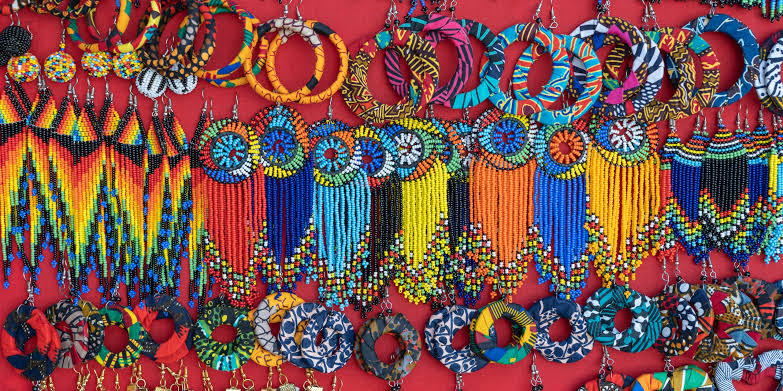
Maasai Beadwork: What the Colours and Patterns Mean
Maasai beadwork is one of the most recognisable traditional crafts in East Africa. Known for its bright colours, carefully arranged patterns and distinctive designs, Maasai jewellery reflects important aspects of cultural identity, family relationships and community traditions.
The Maasai people live mainly in southern Kenya and northern Tanzania. Their traditional clothing and beadwork are familiar to many travellers visiting destinations such as the Maasai Mara, Amboseli, Serengeti and Ngorongoro.
However, Maasai beadwork carries meanings that go beyond its appearance. Different colours are commonly associated with values such as courage, unity, hospitality and the importance of cattle.
Understanding Maasai beadwork colours and patterns can make a cultural visit more informative. It also helps travellers appreciate the skill involved in creating traditional necklaces, bracelets, earrings and ceremonial ornaments.
Understanding Maasai Beadwork Traditions
Beadwork has been part of Maasai cultural expression for generations.
Traditionally, Maasai women have played an important role in making beaded ornaments for family members and community celebrations.
The craft requires patience, creativity and careful attention to detail.
Beads are arranged into decorative patterns using thread, wire, leather or other materials.
Some ornaments are designed for everyday wear, while others are associated with ceremonies and important social occasions.
Beadwork can also communicate aspects of identity, although the meaning of a particular item depends on its wearer and cultural context.
Today, many Maasai artisans produce jewellery for personal use and sale to visitors.
1. The Meaning of Maasai Beadwork Colours
Colour is one of the most distinctive features of Maasai jewellery.
Several colours have commonly recognised symbolic associations.
However, interpretations are not always identical across Maasai communities. Individual makers may also select colours for personal or artistic reasons.
Red: Courage, Strength and Unity
Red is strongly associated with Maasai cultural identity.
It is commonly linked with courage, strength and unity.
Red also has connections to cattle, which have traditionally played a central role in Maasai livelihoods.
The colour is widely used in Maasai clothing and ornaments.
You may notice red beads combined with white, blue or black to create contrasting patterns.
Blue: The Sky and Water
Blue is commonly associated with the sky and water.
Rainfall is important in pastoral communities because it supports grass growth and provides water for livestock.
Blue can therefore reflect the connection between people, animals and the natural environment.
It is frequently used in necklaces, bracelets and decorative beadwork.
White: Peace, Purity and Milk
White is traditionally associated with milk, an important product in Maasai pastoral life.
It can also represent peace and purity.
Milk has long held cultural and nutritional importance in Maasai communities.
White beads are often used alongside stronger colours to create balanced designs.
Green: Land, Grass and Health
Green is associated with vegetation, land and health.
Grasslands are important for cattle grazing, particularly in communities that depend on livestock.
The colour can reflect the value of healthy land and productive grazing areas.
Green beads may appear in jewellery alongside yellow, orange and blue.
Black: The People and Life’s Difficulties
Black has several cultural associations.
It can represent the Maasai people, unity and the challenges experienced in life.
Some interpretations also connect black with endurance during difficult periods.
The meaning depends on the context in which the colour is used.
Orange: Hospitality and Friendship
Orange is often associated with hospitality, warmth and generosity.
These qualities are important in many Maasai social traditions.
Orange beads are frequently combined with yellow and red.
Yellow: Growth and Energy
Yellow is commonly linked with growth, fertility and energy.
Some interpretations connect it with sunlight and the conditions needed for healthy pastures.
Yellow is often used to add contrast to decorative patterns.
Maasai Beadwork Colour Meanings at a Glance
| Colour | Common Symbolic Meaning | Cultural Association |
|---|---|---|
| Red | Courage, strength and unity | Community identity and cattle |
| Blue | Sky and water | Rainfall and natural resources |
| White | Peace and purity | Milk and pastoral traditions |
| Green | Land and health | Grasslands and livestock grazing |
| Black | Unity and endurance | People and life’s challenges |
| Orange | Hospitality and generosity | Friendship and welcoming others |
| Yellow | Growth and energy | Sunlight and fertility |
These associations provide a useful introduction. They should not be treated as a universal code for interpreting every piece of jewellery.
2. What Maasai Beadwork Patterns Mean
Colours are important, but the arrangement of beads also contributes to the appearance and cultural significance of jewellery.
Maasai artisans use repeated shapes, lines and colour combinations to produce carefully structured designs.
Some patterns are associated with particular styles of ornament, while others reflect the preferences of the maker.
Circular Patterns
Circular designs are especially common in traditional Maasai necklaces.
Large beaded collars may contain several bands of colour arranged around a central opening.
These ornaments are often worn during celebrations, dances and other cultural occasions.
Their movement can be an important visual feature during traditional dancing.
Geometric Patterns
Triangles, diamonds, stripes and other geometric arrangements appear in many beaded items.
The patterns require careful planning so that the colours remain consistent.
Some designs are associated with local traditions, while others are created for decoration or personal expression.
Travellers should avoid assuming that every geometric shape has one fixed meaning.
Repeated Colour Arrangements
Artisans may repeat particular combinations to create visual balance.
For example, a bracelet might alternate red, white and blue beads.
Another piece may use yellow and green sections separated by black lines.
The final design depends on the intended use, materials and maker’s preferences.
3. Traditional Maasai Jewellery and Its Uses
Maasai beadwork appears in several forms.
Different ornaments may be worn during daily activities, family celebrations or ceremonial events.
Beaded Necklaces
Necklaces are among the most recognisable Maasai ornaments.
Some are made from several rows of beads, while others feature broad circular collars.
Large collars are especially noticeable during traditional performances and celebrations.
The designs may vary according to the wearer, occasion and community.
Bracelets and Bangles
Beaded bracelets are worn by different members of Maasai communities.
They may feature simple colour arrangements or detailed geometric patterns.
Bracelets are also popular items produced for visitors.
Earrings
Maasai earrings come in different sizes and styles.
Some feature hanging bead arrangements, while others use circular designs.
They can be worn as everyday jewellery or as part of ceremonial dress.
Beaded Belts and Other Decorations
Beadwork is also used on belts, clothing accessories and personal ornaments.
Some items combine leather, metal and beads.
These combinations demonstrate the variety of techniques used by Maasai artisans.
4. Maasai Beadwork During Cultural Ceremonies
Traditional ornaments often play a visible role during important Maasai celebrations.
These may include marriage-related events, age-set ceremonies and community gatherings.
The jewellery worn can depend on local customs, family traditions and individual circumstances.
Beadwork and Marriage Traditions
Beaded ornaments may be prepared or presented during marriage celebrations.
Some pieces are made specifically for an occasion, while others belong to the wearer.
The type of jewellery and its significance vary between communities.
Visitors should avoid assuming that a particular necklace automatically identifies someone as married or unmarried.
Beadwork and Age-Set Traditions
Age-set organisation has traditionally been important in Maasai society.
Certain forms of clothing and ornamentation may be associated with different stages of life.
However, these practices have changed over time and differ between communities.
A local cultural guide can explain which traditions remain relevant in the community you are visiting.
5. How Maasai Women Make Traditional Beadwork
Creating Maasai beadwork requires skill and careful preparation.
Artisans begin by selecting colours and deciding how the finished item should look.
The materials may include small glass beads, thread, wire or leather.
Selecting the Beads
The maker chooses beads according to the intended design.
Some pieces use only a few colours, while others contain complex arrangements.
Consistency in bead size can help produce neat patterns.
Arranging the Design
The artisan plans the sequence of colours and shapes.
For detailed ornaments, even a small mistake may affect the appearance of the finished piece.
Threading and Securing
Beads are threaded or attached according to the chosen technique.
The work may involve repeated rows and careful adjustments.
Large decorative collars can take considerable time to complete.
The time required depends on the design’s complexity, size and materials.
6. Beadwork as a Source of Income
Beadwork provides income opportunities for many Maasai artisans, particularly women.
Some craftspeople work independently, while others participate in organised groups or cooperatives.
The income earned from jewellery sales may contribute towards household expenses, education and other family needs.
Tourism can create additional demand for handmade products.
However, the benefits depend on how the items are produced, marketed and sold.
Travellers who want to support artisans should ask who made the jewellery and how purchases benefit the producer.
Buying directly from a recognised artisan or community group can provide a clearer connection with the person responsible for the work.
7. Where Travellers Can Learn About Maasai Beadwork
Maasai communities live in several parts of Kenya and Tanzania.
Cultural visits may be available near major safari destinations.
Maasai Mara, Kenya
The Maasai Mara region is well known for wildlife tourism and Maasai cultural heritage.
Some communities offer organised visits where guests can learn about traditional activities, clothing and beadwork.
The content of these experiences varies, so ask what is included before booking.
Amboseli, Kenya
Amboseli National Park lies within an area associated with Maasai communities.
Some organised cultural activities provide opportunities to meet artisans and learn about local traditions.
Northern Tanzania
Maasai communities also live in northern Tanzania, including areas around the Ngorongoro Conservation Area and parts of the greater Arusha region.
Cultural visits may include explanations of beadwork, pastoral traditions and everyday community life.
8. How to Buy Authentic Maasai Beadwork
Maasai-style jewellery is sold in many East African markets and tourism centres.
However, an item being described as Maasai does not automatically mean it was handmade by a Maasai artisan.
If authenticity matters to you, ask questions before purchasing.
What to Check Before Buying
Ask who made the item.
Find out whether it was produced locally.
Examine the beadwork and finishing.
Ask whether the seller works directly with artisans.
Compare quality rather than choosing by price alone.
Purchase from recognised craft groups when possible.
Machine-made or mass-produced jewellery may be sold alongside handmade pieces.
There is nothing wrong with purchasing decorative souvenirs, but sellers should describe products honestly.
9. Respectful Photography and Cultural Etiquette
Maasai clothing and jewellery attract considerable attention from photographers.
However, people wearing traditional ornaments should be treated respectfully.
Ask permission before taking photographs.
Do not assume that buying jewellery gives you permission to photograph the seller.
If a community has established photography rules, follow them.
Some cultural experiences may involve agreed photography fees.
Ask about these arrangements in advance to avoid misunderstandings.
Most importantly, allow people to explain their own traditions.
Local interpretations may provide a more accurate understanding than general descriptions found in travel guides.
Frequently Asked Questions About Maasai Beadwork
What does red mean in Maasai beadwork?
Red is commonly associated with courage, strength and unity. It also has connections to cattle and Maasai cultural identity.
What does white represent in Maasai jewellery?
White is often associated with milk, peace and purity.
Do all Maasai beadwork patterns have meanings?
No. Some patterns are culturally significant, while others reflect artistic choices or local styles. Meanings can vary between communities.
Who traditionally makes Maasai beadwork?
Women have traditionally played a central role in producing Maasai beadwork, although contemporary craft production and selling arrangements vary.
Can tourists buy Maasai jewellery?
Yes. Beaded jewellery is available through artisans, craft markets and community groups in Kenya and Tanzania.
Is Maasai beadwork handmade?
Traditional Maasai beadwork is handmade, but some Maasai-style products sold in tourist markets are mass-produced. Ask about the origin of individual items.
Maasai beadwork is an important part of cultural expression in Kenya and Tanzania.
Its colours are commonly associated with values such as strength, peace, hospitality, unity and the importance of the natural environment.
The patterns and ornaments also reflect artistic skill, personal preferences and community traditions.
For travellers, learning about beadwork provides a better understanding of Maasai culture and the work involved in producing traditional jewellery.
If you visit a Maasai community, take time to speak with local artisans, ask respectful questions and learn directly from the people who make and wear these ornaments.
Purchasing carefully chosen handmade beadwork can also provide practical support to local craftspeople.




No comment