

Why Guides Share Sightings on the Radio: How Teamwork Finds Leopards
Finding a leopard during an African safari can take considerable patience. These elusive big cats spend much of their time resting in trees, moving through thick vegetation or hunting quietly. Even experienced safari guides cannot predict exactly where a leopard will appear.
However, guides have an important advantage: communication with other professionals working in the same wildlife area.
Safari guides share wildlife sightings on the radio to exchange useful information about animal locations, movements and road conditions. This teamwork can help visitors find leopards, lions, elephants and other wildlife.
Radio communication is particularly useful in large destinations such as Kenya’s Maasai Mara, Tanzania’s Serengeti and Uganda’s Queen Elizabeth National Park.
Understanding how safari guides communicate helps travellers appreciate the knowledge, cooperation and patience involved in successful wildlife viewing.
Why Leopards Are Difficult to Find on Safari
Leopards are among Africa’s most adaptable predators, but observing them in the wild can be challenging.
Their spotted coats provide effective camouflage among branches, grass and vegetation.
They are also solitary animals, except during mating or when females are raising cubs.
Leopards Spend Time in Hidden Places
Leopards may rest:
On large tree branches.
Beneath thick bushes.
Among rocks.
Inside dense vegetation.
In shaded areas away from busy tracks.
They can remain almost invisible even when positioned relatively close to a safari vehicle.
Leopards Move Quietly
Unlike animals that travel in large herds, leopards often move alone.
Their movements can be difficult to detect.
A leopard may cross a road and disappear into vegetation within seconds.
This makes patience and careful observation especially important.
How Safari Guides Use Radios During Game Drives
Two-way radios allow guides to communicate across suitable distances without depending entirely on mobile phone networks.
A guide may report a wildlife sighting or ask colleagues whether they have observed particular animals.
Other guides can then decide whether the information is useful for their routes.
What Information Do Guides Share?
Radio messages may include:
The animal species observed.
Its approximate location.
The direction it is moving.
Nearby landmarks.
Road conditions.
Whether the animal remains visible.
For example, a guide who spots a leopard resting in a tree may inform another guide working nearby.
The second guide can decide whether reaching the location is practical.
Why Radio Messages Are Usually Short
Guides often communicate using brief messages.
Short communication reduces unnecessary radio traffic and helps other users receive important information.
Professional guides also avoid sharing sensitive information when doing so could disturb wildlife or create security risks.
How Teamwork Helps Guides Find Leopards
Leopard sightings often depend on several small observations.
One guide may notice fresh tracks, while another sees antelopes behaving unusually.
A third guide might identify a leopard resting in a tree.
Combining appropriate information can improve the chances of locating wildlife.
Sharing Recent Sightings
Suppose one guide observes a leopard crossing a track at 7:00 am.
Another guide arriving later may learn which direction the animal travelled.
This information can help determine which permitted routes are worth checking.
However, the leopard may already have moved elsewhere.
Following Animal Behaviour
Guides may notice alarm calls from monkeys, birds or antelopes.
These signals sometimes indicate the presence of predators.
If several guides report similar activity, they may pay closer attention to nearby habitats.
However, alarm calls do not guarantee that a leopard is present.
Understanding Leopard Territories
Leopards occupy home ranges that vary according to habitat, prey availability and other conditions.
Guides working regularly in the same area may become familiar with individual animals.
Some leopards can be recognised through their coat patterns and distinctive markings.
This local knowledge can improve wildlife identification and observation.
Where Radio Communication Is Useful
Radio communication can support wildlife viewing in several East African destinations.
| Destination | Wildlife commonly sought | How communication helps |
|---|---|---|
| Maasai Mara, Kenya | Leopards, lions and cheetahs | Shares recent sightings across permitted routes |
| Serengeti, Tanzania | Big cats and migrating herbivores | Helps guides exchange observations |
| Queen Elizabeth, Uganda | Lions, leopards and elephants | Supports local wildlife information |
| Murchison Falls, Uganda | Lions, elephants and giraffes | Helps coordinate observations |
| Tarangire, Tanzania | Elephants and predators | Provides information about animal movements |
Radio use depends on operator equipment, park policies and local communication arrangements.
Not every safari vehicle uses the same system.
Does Radio Communication Guarantee Leopard Sightings?
No. Radio communication can improve access to recent information, but wildlife sightings remain unpredictable.
A leopard may leave an area before another vehicle arrives.
Dense vegetation can prevent clear observation.
Poor road conditions may also make a reported location difficult to reach.
Experienced guides understand these limitations.
They use radio information alongside their own tracking knowledge rather than relying entirely on other vehicles.
What Happens After a Leopard Sighting Is Reported?
When a guide receives information about a leopard, several decisions follow.
Checking the Distance
The guide considers how far away the animal is located.
Travelling a long distance may be impractical, especially if the sighting is brief.
Assessing Road Conditions
Some tracks become difficult after rainfall.
Guides must remain on permitted roads and avoid unsafe shortcuts.
Considering the Itinerary
A wildlife sighting should not automatically disrupt the entire safari programme.
The guide must consider activity schedules, park operating hours and guest preferences.
Approaching Responsibly
If the group reaches the location, the driver should position the vehicle without disturbing the animal.
Visitors may then observe the leopard from an appropriate distance.
Why Too Many Safari Vehicles Can Become a Problem
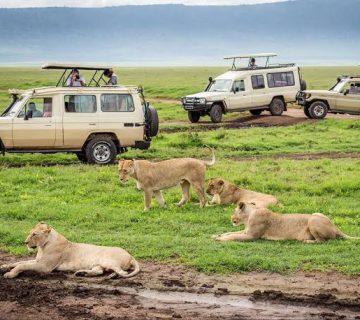
Radio communication sometimes causes several vehicles to gather around the same animal.
This can create pressure on wildlife, particularly when visitors are eager to photograph a leopard.
Problems Associated With Crowding
Large groups of vehicles may:
Block an animal’s movement.
Disturb resting wildlife.
Interfere with hunting behaviour.
Create excessive noise.
Reduce viewing opportunities for other visitors.
Responsible guides should avoid contributing to unnecessary crowding.
How Good Guides Manage Popular Sightings
Professional guides assess the number and position of nearby vehicles.
If the area is crowded, they may wait at a suitable distance or continue searching elsewhere.
They should never block an animal’s escape route.
Following park regulations remains more important than obtaining a particular photograph.
Radio Communication and Wildlife Conservation
Safari radios can serve purposes beyond locating animals.
Guides may report unusual observations or safety concerns to authorised personnel.
Reporting Injured Wildlife
If a guide sees an injured animal, they may inform park authorities.
Wildlife professionals can then assess whether intervention is necessary.
Guides should not attempt veterinary treatment themselves.
Reporting Suspicious Activities
Where appropriate, guides may report suspected illegal activities through established channels.
Sensitive information should be communicated responsibly.
Supporting Wildlife Monitoring
Guides sometimes contribute observations to wildlife monitoring programmes.
Useful details may include animal species, locations, behaviour and visible injuries.
However, casual radio conversations are not a substitute for structured scientific records.
Radio Communication vs Independent Tracking
Both approaches have advantages.
| Method | Main advantage | Limitation |
|---|---|---|
| Radio communication | Provides recent information from other guides | Animals may move before arrival |
| Independent tracking | Develops observations through local knowledge | Requires time and patience |
| Combining both | Supports informed route decisions | Still cannot guarantee sightings |
An experienced guide uses available information without becoming dependent on reported sightings.
What Travellers Should Expect During a Leopard Search
Visitors sometimes become impatient when guides stop frequently or change direction.
However, these decisions may reflect careful observation.
A guide might pause to examine footprints, listen for alarm calls or scan trees with binoculars.
Be Patient
Leopard sightings can take time.
Rushing between reported locations may reduce opportunities to observe other wildlife.
Keep Noise Low
Avoid shouting or playing loud music.
Quiet behaviour makes wildlife observation more comfortable and reduces disturbance.
Bring Binoculars
Binoculars help identify animals resting in distant trees.
They also allow visitors to observe wildlife without approaching too closely.
Respect Your Guide’s Decisions
If your guide decides against joining a crowded sighting, there may be good reasons.
Ask questions if you want to understand the decision.
Can Guides Share Sightings Through Mobile Phones?
Yes. Some guides also use mobile phones or messaging groups.
However, network coverage can be unreliable in remote wildlife areas.
Mobile communication may be useful where reception is available.
Radio systems remain valuable because they can support direct communication without relying on public mobile networks, although their range and reliability also have limitations.
Frequently Asked Questions
Do All Safari Guides Use Radios?
No. Equipment and communication practices vary between operators and destinations.
Can Radio Communication Help Find Leopards?
Yes. Recent observations from other guides can improve the chances of locating an animal, but sightings are never guaranteed.
Why Do Guides Sometimes Ignore Radio Reports?
The location may be too far away, crowded, inaccessible or unsuitable for the planned itinerary.
Can Tourists Use Safari Radios?
Safari communication equipment is generally operated by authorised staff. Visitors should avoid interfering with professional communications.
Safari guides share wildlife sightings on the radio because cooperation can improve wildlife viewing and help them make informed decisions.
Finding leopards requires patience, local knowledge and careful observation.
Radio reports provide useful information, but experienced guides must still interpret animal behaviour, assess road conditions and follow park regulations.
Responsible teamwork helps visitors enjoy wildlife encounters while reducing unnecessary disturbance to animals.




No comment