
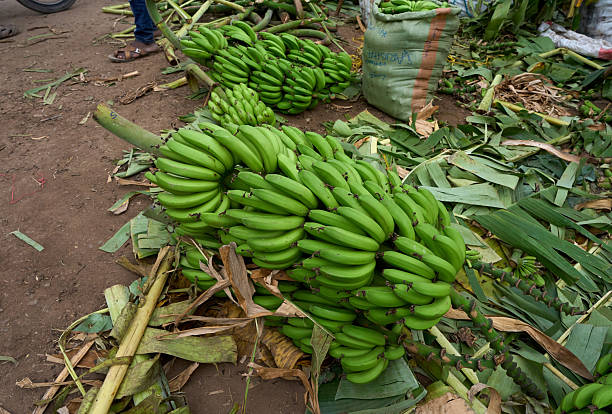
Matoke Varieties: Why East Africa Has So Many Banana Types
Matoke varieties are an important part of East African food culture, particularly in Uganda, Rwanda, Tanzania and parts of Kenya. Across the region, you will encounter different bananas used for cooking, roasting, eating fresh and preparing traditional drinks. Although many look similar, their flavours, textures and uses can be surprisingly different.
Uganda is especially known for its cooking bananas, commonly called matooke. In some communities, matooke is eaten almost every day, often served with groundnut sauce, beans, beef or vegetable stew.
For travellers exploring East Africa, understanding the different banana types provides an interesting introduction to local farming, food traditions and rural life. The variety you see in a market may reveal how people prepare their meals and which bananas they prefer.
What Is Matoke?
Matoke, also commonly written matooke, generally refers to cooking bananas in Uganda and neighbouring areas.
These bananas are usually harvested while green and mature.
Unlike sweet dessert bananas, cooking varieties contain more starch when unripe and are generally prepared using heat.
They can be steamed, boiled or mashed.
In Uganda, traditional matooke is often peeled, wrapped in banana leaves and steamed until soft.
The cooked bananas are then mashed and served with sauce.
Matoke Compared With Sweet Bananas
| Feature | Cooking matoke | Sweet dessert bananas |
|---|---|---|
| Main purpose | Cooking | Eating fresh |
| Usual harvest stage | Mature green | Often ripened before eating |
| Texture | Starchy before cooking | Soft when ripe |
| Taste | Mild and savoury when cooked green | Sweet when ripe |
| Preparation | Steamed, boiled or mashed | Usually eaten raw |
| Common serving | With stew or sauce | Snack or fruit |
Some cooking bananas also become sweet when fully ripe, but their usual culinary purpose differs.
Why East Africa Has So Many Banana Varieties
East Africa’s banana diversity developed through centuries of cultivation, selection and local adaptation.
Bananas were introduced to the region long ago and became important crops in areas with suitable growing conditions.
Farmers continued cultivating plants with characteristics they valued.
Over generations, different varieties became associated with particular communities and uses.
Different Growing Conditions
East Africa has varied rainfall, temperatures, soils and elevations.
Some banana varieties grow well in humid highland environments.
Others are suited to lower elevations or different agricultural conditions.
Farmers choose varieties according to their local environment and available resources.
Different Cooking Preferences
People also select bananas for their flavour and texture.
Some varieties become particularly soft after steaming.
Others retain a firmer consistency.
A household preparing mashed matooke may prefer different characteristics from one preparing roasted bananas.
Agricultural Traditions
Farmers often obtain planting material from relatives, neighbours or local nurseries.
These exchanges help maintain familiar varieties within communities.
Local names and cultivation knowledge are passed between generations.
East African Highland Banana Varieties
East African Highland bananas are a distinctive group cultivated widely in the African Great Lakes region.
They include cooking and brewing types.
Researchers recognise considerable diversity within this group.
Common Matoke Varieties in Uganda
| Variety | General characteristics | Common use |
|---|---|---|
| Nakitembe | Traditionally valued cooking banana | Steamed matooke |
| Mbwazirume | Popular cooking cultivar | Mashed matooke |
| Kibuzi | Established local cultivar | Cooking |
| Musakala | Highland banana cultivar group | Cooking |
| Kisansa | Cultivated for food | Cooking |
| Mpologoma | Known for large bunches | Cooking and markets |
| Mbidde types | Bananas cultivated for juice and brewing | Traditional beverages |
These varieties are not necessarily available in every district.
Names can also vary between communities.
Nakitembe: A Traditional Cooking Favourite
Nakitembe is among Uganda’s recognised cooking banana varieties.
It is valued by some farmers and consumers for its cooking characteristics.
In certain communities, it also holds cultural importance.
Why Farmers Grow Nakitembe
Farmers consider several qualities when choosing banana plants.
These include taste, cooking texture, maturity and suitability for local growing conditions.
Nakitembe is often associated with traditional matooke preparation.
However, growers may also select other varieties that produce larger bunches or offer better commercial returns.
Mbwazirume and Other Popular Matoke Types
Mbwazirume is another established cooking banana cultivar in Uganda.
It is commonly discussed alongside varieties such as Nakitembe and Kibuzi.
Consumers may prefer particular cultivars because of how they soften during cooking.
Farmers also evaluate bunch weight, fruit size and plant productivity.
A variety that performs well in one farming area may be less suitable elsewhere.
This explains why markets can contain different banana types even within the same country.
Cooking Bananas, Dessert Bananas and Brewing Bananas
The word banana covers several groups with different uses.
Understanding these categories helps travellers recognise what they see in markets.
| Banana category | Examples | Main use |
|---|---|---|
| Highland cooking bananas | Nakitembe, Mbwazirume | Steaming and mashing |
| Dessert bananas | Bogoya, Sukali Ndiizi | Eating ripe |
| Brewing bananas | Mbidde varieties | Juice and traditional beverages |
| Plantains | Different plantain cultivars | Boiling, frying or roasting |
| Other cooking bananas | Regional cultivars | Local cooked dishes |
Not every green banana is matooke.
Similarly, a ripe yellow banana may belong to a variety normally used for cooking.
Sweet Bananas in East Africa
Dessert bananas are commonly sold in markets, roadside stalls and supermarkets.
They provide a convenient snack for travellers.
Bogoya
Bogoya is a familiar sweet banana in Uganda.
It generally produces relatively large fruits that become sweet when ripe.
People commonly eat Bogoya fresh.
Sukali Ndiizi
Sukali Ndiizi is another recognised dessert banana.
Its fruits are generally smaller than Bogoya.
The ripe bananas have a sweet flavour and are commonly enjoyed as snacks.
Comparing Dessert Bananas
| Variety | Typical characteristic | Common use |
|---|---|---|
| Bogoya | Relatively large sweet fruit | Fresh eating |
| Sukali Ndiizi | Smaller, sweet fruit | Snack |
| Other local dessert bananas | Varying sizes and flavours | Fresh eating |
Availability depends on location and season.
Brewing Bananas and Traditional Drinks
Some East African Highland banana varieties are traditionally cultivated for preparing juice and fermented drinks.
In Uganda, Mbidde types are particularly associated with these uses.
The ripe bananas can be processed to extract juice.
The juice may be consumed fresh or used in traditional fermentation.
Preparation methods vary between communities.
Travellers interested in these traditions can ask local guides about community experiences that explain banana processing.
Commercially produced and household beverages differ in preparation and quality control.
Matoke in Uganda: A Daily Staple
Uganda has one of East Africa’s strongest cooking banana traditions.
Matooke is particularly important in central and western Uganda.
It is commonly served during family meals, celebrations and social gatherings.
Traditional Ugandan Matooke Preparation
The bananas are peeled while green.
They are then wrapped in banana leaves and steamed.
Once soft, they are mashed while still wrapped.
The result is a smooth, warm dish that is commonly served with sauce.
Popular accompaniments include groundnuts, beans, beef and chicken stew.
Why Banana Leaves Are Used
Banana leaves help contain the food during steaming.
They also form part of traditional cooking and serving practices.
Some cooks believe the leaves contribute to the dish’s familiar aroma.
Modern kitchens may use different cooking equipment, but leaf-wrapped matooke remains an important tradition.
Cooking Bananas in Rwanda
Bananas also play an important role in Rwanda’s agricultural and food traditions.
Different varieties are cultivated for food, fresh consumption and beverages.
Cooking bananas may be boiled or prepared with other ingredients.
Traditional banana-based drinks are also part of Rwanda’s food heritage.
However, recipes and preferences differ between communities.
Travellers visiting rural areas can learn about banana cultivation through organised agricultural or cultural experiences.
Bananas in Tanzania and Kenya
Tanzania and Kenya have their own banana-growing regions and culinary traditions.
Tanzania
In northern Tanzania, particularly around Kilimanjaro and neighbouring highland areas, bananas are important crops.
Some communities prepare cooking bananas with meat, beans or other ingredients.
Different varieties may be used for cooking and fresh eating.
Kenya
Bananas are grown in several Kenyan regions, including parts of the western and central highlands.
Cooking bananas are prepared in stews or boiled dishes.
Dessert bananas are widely sold as fresh fruit.
The names and preparation methods vary between communities.
How Farmers Choose Banana Varieties
Farmers consider several factors when selecting bananas.
| Factor | What farmers consider |
|---|---|
| Yield | Number and size of bunches |
| Taste | Consumer preferences |
| Cooking quality | Texture after preparation |
| Disease tolerance | Ability to withstand important diseases |
| Growing conditions | Rainfall, soil and elevation |
| Market demand | Which varieties buyers prefer |
| Maturity period | Time required before harvesting |
No single variety is ideal for every farm.
Maintaining several types can help farmers meet different household and market needs.
Challenges Facing Banana Farming
Banana production faces challenges, including pests, diseases and changing growing conditions.
Banana Xanthomonas wilt is one important disease affecting banana cultivation in parts of East Africa.
Farmers also manage problems associated with soil fertility, drought and planting material.
Agricultural researchers work with farmers to develop or identify varieties that combine useful cooking qualities with improved resistance to production challenges.
Preserving traditional varieties remains important because different cultivars contain valuable agricultural characteristics.
Where Travellers Can Experience Banana Culture
Travellers can learn about banana cultivation in markets, farming communities and cultural centres.
Uganda
Central and western Uganda offer opportunities to see banana plantations and traditional matooke preparation.
Rwanda
Rural community experiences may introduce visitors to banana cultivation and traditional food preparation.
Tanzania
Areas around Mount Kilimanjaro provide opportunities to learn about banana farming and local cooking traditions.
Kenya
Agricultural communities in banana-growing regions can offer information about local varieties.
Always arrange farm visits through a suitable guide or with the owner’s permission.
Nutritional Value of Matoke
Cooking bananas provide carbohydrates and contribute energy to everyday meals.
They also contain potassium and other nutrients.
However, nutritional values vary between varieties, maturity stages and cooking methods.
Matooke is commonly eaten with sauces containing protein, vegetables or fats.
For a balanced meal, consider combining it with beans, groundnuts, fish or another suitable protein source.
East Africa has many banana varieties because farmers have selected plants for different climates, flavours, cooking methods and cultural traditions over generations.
Cooking matoke, sweet dessert bananas and brewing varieties all have distinct roles in everyday life.
For travellers, recognising these differences makes a visit to a local market or banana farm more interesting.
Whether you enjoy steamed matooke in Uganda, fresh bananas in Kenya or traditional banana dishes in Tanzania, these foods provide an accessible introduction to East African agriculture and culture.



No comment