
Samosas and Street Snacks in Dar es Salaam
Samosas and street snacks in Dar es Salaam are part of everyday food culture in Tanzania’s largest city. Whether you are walking through Kariakoo, exploring the city centre or spending an evening near the coast, you will find small food stalls preparing affordable snacks. These include crispy samosas, grilled meat skewers, fried cassava, chapati and freshly cooked chipsi mayai.
Dar es Salaam has a strong street food tradition shaped by Swahili cooking, Indian influences and local Tanzanian ingredients. Many snacks are prepared in small family businesses, roadside kitchens and neighbourhood markets.
For travellers, sampling these foods provides an opportunity to experience everyday life beyond hotel restaurants. You can enjoy a quick breakfast, purchase snacks during a city tour or try different dishes in the evening.
What Makes Dar es Salaam Street Food Special?
Dar es Salaam is a busy coastal city where people regularly purchase food outside their homes. Workers, students, drivers and market traders often rely on small restaurants and street vendors for convenient meals.
The city’s location along the Indian Ocean has influenced its cooking traditions. Ingredients such as coconut, cardamom, ginger and chilli appear in several popular dishes.
Some snacks reflect connections with Indian cuisine, while others have developed through local Tanzanian cooking practices.
Street food is particularly convenient because many dishes are prepared quickly and served in small portions.
Popular Street Snacks in Dar es Salaam
| Street snack | Main ingredients | Typical taste |
|---|---|---|
| Samosas (sambusa) | Pastry, meat or vegetables | Crispy and savoury |
| Mishkaki | Marinated beef or other meat | Smoky and seasoned |
| Chipsi mayai | Potatoes and eggs | Filling and savoury |
| Mandazi | Flour, sugar and oil | Lightly sweet |
| Vitumbua | Rice flour and coconut | Soft and mildly sweet |
| Fried cassava | Cassava, oil and seasoning | Crisp and starchy |
| Roasted maize | Fresh maize | Slightly sweet and smoky |
| Chapati | Wheat flour, water and oil | Soft and filling |
Many vendors prepare several of these foods at the same stall.
Samosas in Dar es Salaam: A Favourite Street Snack
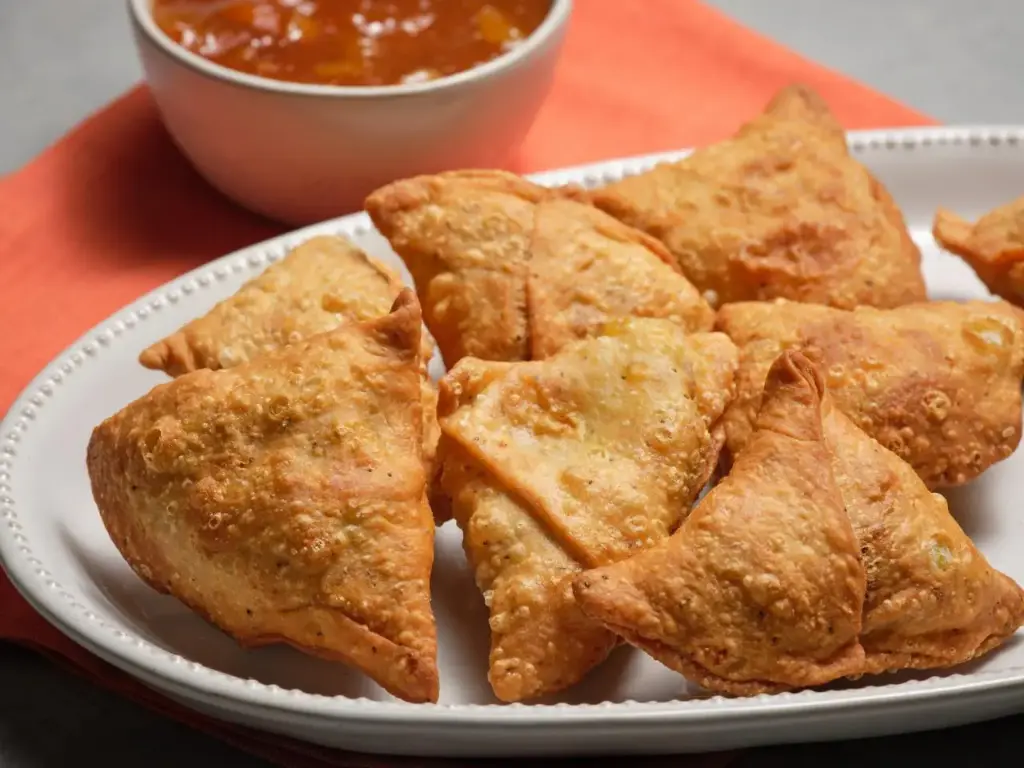
Samosas, commonly called sambusa in Tanzania, are among the most recognisable snacks sold in Dar es Salaam.
They consist of thin pastry folded around a filling and fried until golden brown.
Most samosas have a triangular shape, although sizes and preparation methods vary.
Their popularity reflects historical contact between East Africa and communities around the Indian Ocean, including India.
Common Samosa Fillings
Different vendors use different ingredients.
Beef samosas: These commonly contain minced beef mixed with onions and seasonings.
Vegetable samosas: These may contain potatoes, peas, carrots or other vegetables.
Chicken samosas: Some restaurants prepare chicken fillings with mild spices.
Lentil samosas: These contain cooked lentils and seasonings, making them another option for travellers avoiding meat.
Ask about the filling before purchasing, particularly if you have dietary restrictions.
How Samosas Are Prepared
The cook first prepares a filling using meat, vegetables or pulses.
Thin pastry is then folded around the mixture and sealed.
The samosas are fried in hot oil until the pastry becomes crisp.
Freshly cooked samosas are usually served warm.
Some vendors provide chilli sauce or a tomato-based accompaniment.
For the best experience, choose a stall where samosas are prepared regularly rather than sitting uncovered for long periods.
Other Street Snacks Worth Trying
Although samosas are popular, Dar es Salaam offers several other foods worth tasting.
Mishkaki: Grilled Meat Skewers
Mishkaki are small pieces of seasoned meat threaded onto skewers and grilled.
Beef is common, although other meats may also be available.
Vendors often prepare mishkaki over charcoal, giving the meat a smoky flavour.
You may find them served with chips, salad or chilli sauce.
Mishkaki are particularly popular during evening meals.
Chipsi Mayai: Tanzania’s Popular Street Meal
Chipsi mayai combines fried potato chips with beaten eggs.
The ingredients are cooked together in a frying pan to form a thick omelette.
It is commonly served with tomato and onion salad, sometimes called kachumbari.
Although chipsi mayai can be eaten as a snack, a full portion is often substantial enough for lunch or dinner.
Vitumbua: Coconut Rice Cakes
Vitumbua are small cakes usually prepared using rice-based batter, often with coconut milk.
They are cooked in a special pan with rounded sections.
Their texture is generally soft, with a lightly browned outside.
Vitumbua are commonly eaten during breakfast or tea breaks.
They are particularly enjoyable with hot tea.
Fried Cassava
Cassava is another familiar ingredient in Tanzanian food.
Vendors cut it into pieces and fry it until golden.
Some serve fried cassava with salt, chilli or lime.
It is a convenient snack for travellers who want something simple and filling.
Roasted Maize
Roasted maize is a common roadside snack.
Vendors grill fresh maize over charcoal until the kernels develop a lightly browned surface.
It is usually eaten directly from the cob.
Roasted maize is inexpensive, easy to carry and widely enjoyed.
Where to Find Street Food in Dar es Salaam
Street snacks are available throughout the city, although the selection varies between neighbourhoods.
Kariakoo Market Area
Kariakoo is one of Dar es Salaam’s busiest commercial areas.
Its surrounding streets contain small restaurants, shops and food vendors serving people working or shopping nearby.
You may find samosas, chapati, chipsi mayai and other convenient meals.
The area can become crowded, so keep your belongings secure and avoid carrying unnecessary valuables.
City Centre
The city centre has numerous cafés and small eateries serving breakfast and lunchtime snacks.
This is a practical area for visitors staying in central hotels.
You can purchase something quick before visiting nearby attractions.
Msasani and the Coastal Neighbourhoods
The Msasani area offers a mixture of local restaurants and more modern dining establishments.
Some serve familiar Tanzanian snacks alongside seafood and international dishes.
Prices may be higher in establishments primarily serving tourists.
Neighbourhood Food Stalls
Residential areas often have small vendors catering to local customers.
These businesses may serve freshly prepared chapati, mandazi and samosas.
Ask your local guide or accommodation staff for suitable recommendations.
Best Time to Try Dar es Salaam Street Snacks
Different snacks are more readily available at particular times.
| Time | Commonly available foods | Suggested experience |
|---|---|---|
| 6:30 am to 9:00 am | Mandazi, chapati, vitumbua | Breakfast with tea |
| 9:00 am to noon | Samosas, cassava, pastries | Morning snack |
| Noon to 3:00 pm | Chipsi mayai, rice meals, samosas | Casual lunch |
| 4:00 pm to 7:00 pm | Samosas, mishkaki, fried snacks | Afternoon food stop |
| 7:00 pm onwards | Mishkaki, chipsi mayai, grilled food | Evening street food |
These times are general guidance. Individual vendors follow different schedules.
How Much Do Street Snacks Cost?
Street food is generally more affordable than dining in tourist restaurants.
However, prices depend on location, ingredients and portion size.
A small neighbourhood stall may charge considerably less than a restaurant in a coastal tourist area.
| Food | General price level | Portion size |
|---|---|---|
| Samosa | Low | Usually sold individually |
| Mandazi | Low | Individual pieces |
| Vitumbua | Low | Individual cakes |
| Roasted maize | Low | Usually one cob |
| Fried cassava | Low to moderate | Small or shared portion |
| Mishkaki | Low to moderate | Individual skewers |
| Chipsi mayai | Moderate | Usually a complete plate |
Ask for the current price in Tanzanian shillings before ordering.
Carrying small-denomination notes makes purchasing snacks easier.
Food Safety Tips for Travellers
Street food can be enjoyable, but hygiene deserves attention.
Choose stalls where food is cooked thoroughly and served hot.
Look for Freshly Prepared Food
Fresh food is generally preferable to snacks left exposed for several hours.
Watch how the vendor handles ingredients and serving utensils.
A busy stall may indicate regular preparation, although popularity alone does not guarantee hygiene.
Be Careful With Sauces and Salads
Some sauces and salads contain raw ingredients.
If you are uncertain about washing water or storage conditions, choose cooked accompaniments.
Check Cooking Conditions
Meat should be thoroughly cooked.
Avoid food that appears undercooked or has been stored at unsuitable temperatures.
Wash or sanitise your hands before eating.
Drink safe bottled or properly treated water.
Street Food and Dar es Salaam’s Cultural History
The variety of snacks available in Dar es Salaam reflects the city’s long trading history.
For centuries, coastal East African communities maintained commercial relationships with merchants from different parts of the Indian Ocean region.
These connections influenced ingredients, cooking techniques and food preferences.
Samosas illustrate the connection particularly well.
Their preparation resembles foods found in South Asian cooking, but Tanzanian versions have developed local characteristics.
Other foods, including coconut rice cakes and grilled meat, reflect different regional traditions.
Today, these dishes form part of ordinary urban life rather than being reserved for celebrations.
Ordering Street Snacks in Swahili
Learning a few Swahili expressions can make purchasing food easier.
| Swahili phrase | English meaning |
|---|---|
| Habari | Hello |
| Sambusa | Samosa |
| Naomba sambusa mbili | May I have two samosas? |
| Bei gani? | What is the price? |
| Bila pilipili | Without chilli |
| Chai | Tea |
| Asante sana | Thank you very much |
English is spoken in some tourist establishments, but Swahili remains important in everyday communication.
A simple greeting is usually appreciated.
Adding a Street Food Experience to Your Tanzania Safari
Many travellers arrive in Dar es Salaam before visiting other parts of Tanzania.
If your itinerary includes a night in the city, consider setting aside time to try local snacks.
A short visit to a reputable café or food stall can fit into a city tour.
You could start with samosas and tea before trying chipsi mayai or mishkaki later in the day.
Travellers continuing to Zanzibar may notice similarities between the two destinations’ food traditions.
However, Zanzibar also has distinctive dishes and preparation methods.
Ask your guide to recommend a suitable place based on your preferences and dietary needs.
Samosas and street snacks in Dar es Salaam provide an affordable introduction to Tanzania’s coastal food culture.
Crispy sambusa, grilled mishkaki, soft vitumbua and filling chipsi mayai are familiar foods enjoyed by residents throughout the city.
For travellers, the experience is simple. Find a clean food stall, choose freshly prepared snacks and enjoy the different flavours.
Whether you are visiting Dar es Salaam before a safari or spending several days exploring the coast, trying these everyday foods can make your journey more enjoyable.



No comment