
Boulders Beach Penguins in Cape Town: When to Visit
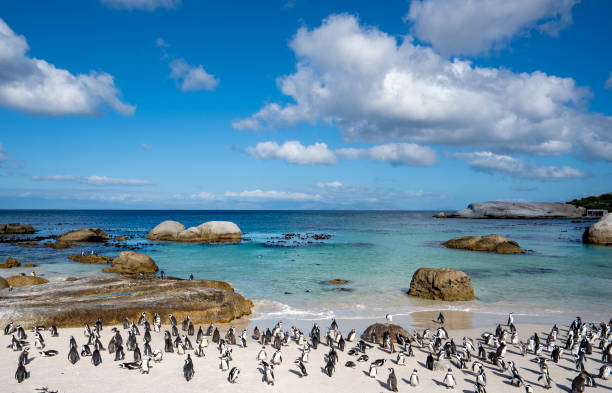
Boulders Beach penguins in Cape Town offer one of South Africa’s most memorable wildlife experiences, allowing visitors to observe endangered African penguins walking across sandy beaches, nesting among coastal vegetation and swimming in the clear waters of False Bay.
Located near Simon’s Town on the Cape Peninsula, Boulders Beach is famous for its enormous granite boulders, sheltered swimming coves and accessible penguin-viewing boardwalks.
Unlike penguins found in Antarctica, African penguins live along the warmer coastlines of southern Africa. Their distinctive black-and-white markings, unusual calls and social behaviour make them fascinating animals to observe.
For families, wildlife photographers and travellers exploring Cape Town, knowing when to visit Boulders Beach can make the difference between a crowded excursion and a rewarding wildlife encounter.
Where Is Boulders Beach Located?
Boulders Beach lies near Simon’s Town, approximately 40 kilometres south of central Cape Town.
The beach forms part of Table Mountain National Park and overlooks False Bay.
Its sheltered coves and large granite rocks create a distinctive coastal landscape.
Quick Facts About Boulders Beach
| Feature | Description |
|---|---|
| Country | South Africa |
| Province | Western Cape |
| Location | Simon’s Town |
| Protected area | Table Mountain National Park |
| Main attraction | African penguins |
| Scientific name | Spheniscus demersus |
| Conservation status | Critically Endangered |
| Main activity | Penguin watching |
| Recommended visit | 1–2 hours |
| Best time of day | Early morning |
| Popular breeding months | February–August |
Why Is Boulders Beach Famous?
Boulders Beach is home to one of the most accessible mainland African penguin colonies.
The colony became established in the early 1980s when penguins began breeding in the area.
Today, visitors can observe wild penguins from protected boardwalks without travelling to remote offshore islands.
What Makes the Experience Special?
Penguins may be seen walking across the sand, resting beneath bushes or entering the sea.
Some gather in small groups, while others remain near their nesting areas.
The surrounding granite boulders and turquoise water create beautiful photographic scenery.
However, these are wild animals, and their movements are never guaranteed.
Best Time of Year to Visit Boulders Beach
Boulders Beach can be visited throughout the year.
However, penguin behaviour, breeding activity, weather and tourist numbers change with the seasons.
Seasonal Penguin Viewing Guide
| Period | Main experience |
|---|---|
| January | Juvenile penguins and summer weather |
| February–March | Increasing breeding activity |
| April–May | Excellent nesting observations |
| June–August | Breeding activity and cooler weather |
| September–October | Often fewer penguins visible |
| November–December | Warmer beach conditions |
March to May is particularly rewarding for visitors interested in penguin breeding behaviour, while summer is attractive for combining wildlife watching with a beach holiday.
When Is the Best Time of Day?
Early morning is generally the best time to visit Boulders Beach.
Temperatures are comfortable, visitor numbers may be lower and penguins are often active around the colony.
Late afternoon can also offer attractive lighting.
Morning Versus Afternoon
| Morning | Afternoon |
|---|---|
| Usually quieter | Often busier |
| Comfortable temperatures | Warmer in summer |
| Soft photographic light | Attractive evening light |
| Good wildlife activity | Penguins may return from feeding |
| Easier parking | Parking may be limited |
Arriving near opening time is particularly useful during school holidays.
Understanding African Penguins
African penguins are found naturally along the coastlines of South Africa and Namibia.
They are also commonly called jackass penguins because their calls resemble a donkey’s bray.
African Penguin Facts
| Feature | Description |
|---|---|
| Scientific name | Spheniscus demersus |
| Average height | Approximately 60–70 cm |
| Diet | Small fish and marine animals |
| Main prey | Sardines and anchovies |
| Habitat | Coastal colonies |
| Swimming ability | Excellent underwater swimmers |
| Nesting | Burrows, shelters and vegetation |
| Conservation status | Critically Endangered |
Each penguin has a distinctive pattern of black spots across its chest.
Why Are African Penguins Endangered?
African penguin populations have declined dramatically over the past century.
Their survival is threatened by several environmental pressures.
Main Conservation Challenges
Reduced access to important fish stocks affects their food supply.
Marine pollution can damage their habitats.
Oil spills can injure or kill seabirds.
Coastal development and disturbance may affect nesting areas.
Changing ocean conditions also influence prey distribution.
Conservation organisations are working to protect breeding colonies and improve the species’ long-term survival.
Foxy Beach: The Best Penguin Viewing Area
Foxy Beach is the main managed penguin-viewing area near Boulders Beach.
Raised wooden boardwalks allow visitors to approach suitable observation points without entering sensitive nesting habitats.
What Can Visitors See?
Penguins may gather along the sand or move between nesting areas.
During breeding periods, visitors might observe adults caring for chicks.
Some birds rest beneath coastal vegetation.
The boardwalks provide excellent viewing opportunities while protecting the colony from unnecessary disturbance.
Boulders Beach Swimming Area
Boulders Beach itself contains sheltered sandy coves surrounded by large granite rocks.
These formations provide some protection from strong waves and wind.
Can Visitors Swim?
Swimming is permitted in designated areas when conditions allow.
However, the water can be cold, and underwater hazards remain possible.
Penguins occasionally enter the swimming area, but visitors must never chase or touch them.
Swimming access may also be restricted by tides or visitor capacity.
Can You Swim With Penguins?
Visitors sometimes encounter penguins swimming naturally nearby.
However, the experience should never involve deliberately approaching, following or surrounding them.
Responsible Swimming Rules
Remain in designated swimming areas.
Keep a respectful distance from penguins.
Never attempt to touch or hold a bird.
Avoid blocking their movement towards shore.
Do not feed wildlife.
Follow instructions from park rangers.
Observing natural behaviour is more important than obtaining a close photograph.
Penguin Breeding and Nesting Behaviour
African penguins form breeding pairs and may return to established nesting locations.
They typically lay two eggs, although breeding success varies.
Watching Penguin Families
Adults take turns incubating eggs and caring for chicks.
Parents travel to sea to catch fish before returning to feed their young.
Some chicks remain sheltered around nesting areas.
Visitors should avoid disturbing breeding birds, particularly when adults are returning with food.
Why Do Penguins Stand in Groups?
African penguins are social birds.
They gather around nesting colonies, resting areas and the shoreline.
Common Penguin Behaviours
| Behaviour | What it means |
|---|---|
| Preening | Maintaining feathers |
| Calling | Communication |
| Resting | Conserving energy |
| Swimming | Travelling or feeding |
| Nesting | Reproduction |
| Walking in groups | Social movement |
| Moulting | Replacing feathers |
Observing these behaviours provides an enjoyable introduction to penguin biology.
Boulders Beach Entrance Fees
Boulders Beach is managed by South African National Parks.
Visitors pay a conservation fee to access the managed penguin-viewing facilities.
2026 Entrance Fees
| Visitor category | Adult | Child aged 2–11 |
|---|---|---|
| South African citizens and residents | R55 | R26 |
| SADC nationals | R110 | R55 |
| International visitors | R245 | R120 |
These published rates apply until 31 October 2026. New tariffs may apply afterwards.
Carry suitable identification to qualify for applicable regional rates.
Boulders Beach Opening Hours
Opening hours change according to the season.
General Visiting Hours
| Months | Opening hours |
|---|---|
| December–January | 7:00 am–7:30 pm |
| February–March | 8:00 am–6:30 pm |
| April–September | 8:00 am–5:00 pm |
| October–November | 8:00 am–6:30 pm |
Opening arrangements can change, so confirm current times before travelling.
How to Reach Boulders Beach
Most visitors travel from central Cape Town towards Simon’s Town.
The journey passes through attractive coastal suburbs and mountain scenery.
Transport Options
| Transport | Experience |
|---|---|
| Rental car | Flexible sightseeing |
| Private taxi | Convenient transfers |
| Guided tour | Organised sightseeing |
| Group excursion | Suitable for first-time visitors |
Driving generally takes approximately one hour or longer, depending on traffic and the chosen route.
Parking at Boulders Beach
Parking spaces are limited, especially during summer holidays.
Visitors should arrive early.
Parking Advice
Use designated parking areas.
Avoid blocking residential entrances.
Secure valuables inside your vehicle.
Follow local parking restrictions.
Allow extra time to walk towards the penguin-viewing entrance.
Photography Tips for African Penguins
Boulders Beach provides excellent wildlife photography opportunities.
The contrast between black-and-white penguins, sandy beaches and blue water creates attractive compositions.
Taking Better Photographs
Use a zoom lens rather than approaching birds.
Photograph penguins moving naturally.
Avoid flash photography.
Remain on designated boardwalks.
Never disturb nesting birds.
Morning light can provide particularly attractive colours.
Is Boulders Beach Suitable for Children?
Boulders Beach is a popular family attraction.
Children can observe penguins from managed viewing areas and learn about endangered wildlife.
Family Visiting Tips
Supervise children carefully.
Explain why penguins should not be touched.
Keep food away from wildlife.
Wear comfortable shoes.
Carry sunscreen and drinking water.
Choose shorter viewing sessions for younger children.
Combining Boulders Beach With Cape Point
Boulders Beach can easily form part of a wider Cape Peninsula sightseeing excursion.
Cape Point and the Cape of Good Hope are popular destinations farther south.
Suggested Half-Day Itinerary
Begin with an early visit to Boulders Beach.
Explore the penguin-viewing boardwalks.
Enjoy refreshments in Simon’s Town.
Continue towards Cape Point for dramatic coastal scenery.
Allow additional time for stops and wildlife viewing.
Responsible Penguin Tourism
African penguins are critically endangered and require effective conservation.
Visitors contribute by paying official entrance fees and respecting park regulations.
Never feed, touch or chase penguins.
Avoid leaving rubbish.
Remain on authorised paths.
Respect nesting areas and surrounding vegetation.
Responsible tourism helps protect the colony for future generations.
Why Boulders Beach Is Worth Visiting
Boulders Beach offers one of South Africa’s most memorable coastal wildlife encounters.
Its accessible penguin colony, beautiful granite boulders and sheltered beaches create an experience that combines nature, education and scenic beauty.
Early morning visits generally provide comfortable conditions, while March to May is especially interesting for breeding activity.
For travellers exploring Cape Town, watching endangered African penguins in their natural environment is an unforgettable opportunity to appreciate South Africa’s remarkable marine biodiversity.


No comment