
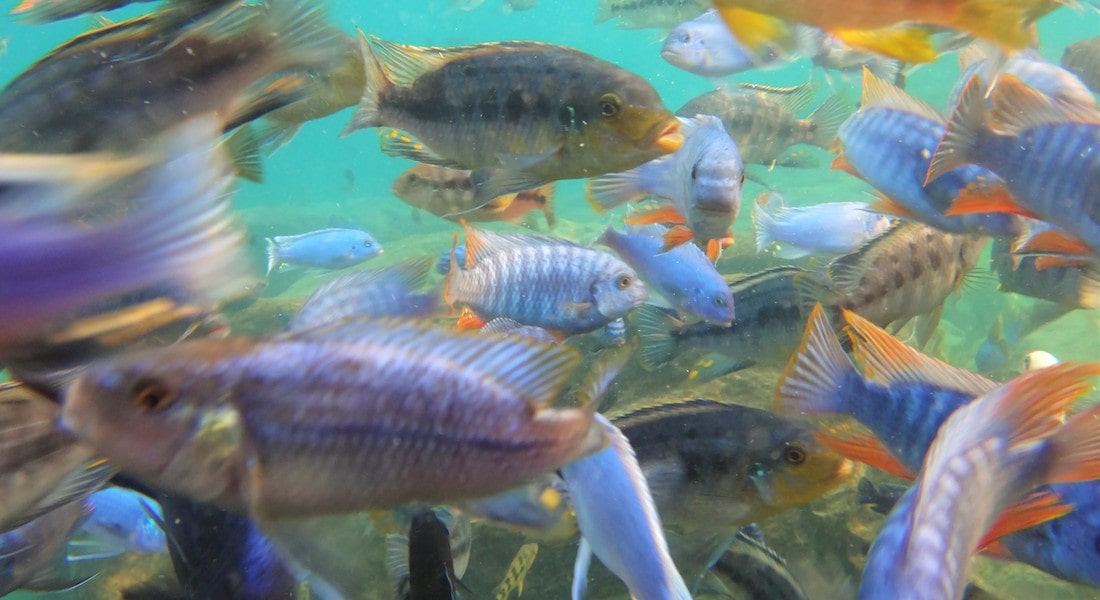
Lake Malawi: Snorkelling With Cichlids at Cape Maclear
Snorkelling with cichlids at Cape Maclear is one of Malawi’s most remarkable freshwater wildlife experiences. Located on the southern shores of Lake Malawi, Cape Maclear attracts travellers with its clear waters, colourful tropical fish, sandy beaches and peaceful fishing villages.
Unlike ocean snorkelling destinations, where visitors explore coral reefs, Lake Malawi offers the opportunity to observe hundreds of species of freshwater fish, many of which are found nowhere else on Earth.
The lake’s famous cichlids display brilliant blue, yellow, orange and striped patterns. These fascinating fish live among submerged rocks, sandy shallows and underwater habitats within Lake Malawi National Park.
For wildlife enthusiasts, photographers and travellers seeking a relaxing lakeside holiday, Cape Maclear combines natural beauty, remarkable biodiversity and authentic Malawian culture.
Where Is Cape Maclear Located?
Cape Maclear lies on the Nankumba Peninsula along the southern shore of Lake Malawi, within Mangochi District.
The lakeside village of Chembe is the main tourism centre, offering guesthouses, restaurants, boat trips and guided snorkelling experiences.
Cape Maclear forms part of the wider Lake Malawi National Park landscape.
Quick Facts About Cape Maclear
| Feature | Description |
|---|---|
| Country | Malawi |
| Destination | Cape Maclear |
| District | Mangochi |
| Lake | Lake Malawi |
| Protected area | Lake Malawi National Park |
| UNESCO designation | 1984 |
| Main attraction | Freshwater cichlid fish |
| Popular activities | Snorkelling, kayaking and boat trips |
| Recommended stay | 2–3 nights |
| Best for | Nature lovers and lake holidays |
Why Is Lake Malawi Famous?
Lake Malawi is one of Africa’s Great Lakes and among the world’s most important freshwater ecosystems.
It stretches along Malawi’s eastern side, with portions bordering Mozambique and Tanzania.
The lake is especially celebrated for its exceptional diversity of cichlid fish.
A World Centre of Fish Diversity
Scientists have identified hundreds of cichlid species in Lake Malawi, with many occurring nowhere else.
Their remarkable diversity provides important evidence of evolution and adaptation.
Different species occupy rocky shores, sandy bottoms and deeper waters.
Some feed on algae, while others consume insects, plankton or smaller fish.
What Are Cichlid Fish?
Cichlids belong to a large family of freshwater fish found in Africa and other tropical regions.
Lake Malawi contains one of the greatest concentrations of cichlid diversity anywhere in the world.
Why Are Cichlids Special?
These fish display different colours, body shapes and feeding behaviours.
Many species have adapted to specific underwater environments.
Some possess specialised jaws for scraping algae from rocks.
Others feed on small organisms or search sandy surfaces for food.
Their diversity makes Lake Malawi particularly interesting to biologists and underwater photographers.
Colourful Cichlids Around Cape Maclear
The rocky shorelines around Cape Maclear provide excellent habitats for brightly coloured cichlids.
Visitors may observe groups swimming between stones and feeding around submerged rock formations.
Common Cichlid Groups
| Cichlid group | Main characteristics |
|---|---|
| Mbuna | Small, colourful rock-dwelling fish |
| Peacock cichlids | Brightly coloured, often associated with sandy or transitional habitats |
| Utaka | Commonly inhabit more open water |
| Larger predatory cichlids | Feed on smaller aquatic animals |
| Sand-dwelling cichlids | Search the lakebed for food |
Not every group is equally likely to appear during a shallow snorkelling excursion.
Why Snorkelling at Cape Maclear Is Different
Cape Maclear provides a freshwater snorkelling experience rather than a marine reef adventure.
There are no coral reefs, tides or saltwater fish.
Instead, visitors explore rocky freshwater habitats populated by numerous colourful species.
What Makes the Experience Memorable?
The water may be clear enough to observe fish from the surface.
Some cichlids display fascinating territorial behaviour.
Others gather around underwater rocks or move through the shallows.
The surrounding scenery includes wooded hills, offshore islands and attractive lake beaches.
Best Snorkelling Locations Around Cape Maclear
Several established snorkelling areas lie along the Cape Maclear shoreline and nearby islands.
Boat excursions can provide access to suitable rocky habitats.
Popular Snorkelling Areas
| Location | Main attraction |
|---|---|
| Cape Maclear shoreline | Accessible shallow habitats |
| Otter Point | Rocky shoreline and cichlids |
| Thumbi West Island | Fish diversity and underwater rocks |
| Mumbo Island area | Clear-water habitats and scenery |
| Selected offshore rocks | Concentrations of cichlids |
Not every location is appropriate for independent swimmers. Conditions and access should be assessed by an experienced local guide.
Otter Point: A Popular Snorkelling Area
Otter Point is among Cape Maclear’s recognised nature attractions.
Its rocky shoreline supports freshwater fish and provides appealing lake views.
What Can Visitors Expect?
Snorkellers may observe cichlids moving around submerged rocks.
The site is also attractive for photography and lakeside walks.
Conditions depend on waves, visibility and water movement.
Visitors should avoid climbing slippery rocks or entering unfamiliar water without guidance.
Thumbi West Island
Thumbi West Island lies offshore within Lake Malawi National Park.
Its rocky underwater environment supports numerous cichlid species.
Why Visit Thumbi West?
The island offers an opportunity to explore fish habitats away from the main village.
Guided boat excursions may include snorkelling stops around suitable sections of shoreline.
Visitors should remain within permitted areas and follow national park regulations.
Understanding Cichlid Behaviour
Cichlids are fascinating because of their feeding, breeding and territorial activities.
Some species defend small sections of rocky habitat.
Others move in groups while searching for food.
Mouthbrooding Cichlids
Many Lake Malawi cichlids practise mouthbrooding.
Females of numerous species carry fertilised eggs and developing young inside their mouths.
This behaviour protects their offspring during vulnerable early stages.
Visitors may occasionally notice unusual parental behaviour, although detailed observation requires patience.
Is Lake Malawi Safe for Snorkelling?
Lake Malawi offers beautiful freshwater swimming and snorkelling environments, but visitors should understand the risks.
Strong winds can produce sizeable waves, and some locations have slippery rocks or sudden changes in depth.
Freshwater parasites, including those causing schistosomiasis (bilharzia), are another important consideration.
Understanding Bilharzia Risk
Schistosomiasis can be transmitted through contact with contaminated freshwater.
Risk varies by location and environmental conditions, and clear-looking water is not necessarily free of infection.
Travellers should obtain current local public-health advice before swimming.
A medical consultation is advisable after potentially risky freshwater exposure, even when symptoms are absent.
Snorkelling Safety Tips
A responsible operator should explain local conditions before entering the water.
Important Precautions
Use properly maintained equipment.
Wear suitable flotation equipment when needed.
Avoid swimming alone.
Stay away from boat channels.
Do not touch or chase fish.
Avoid unfamiliar deep areas.
Follow local health guidance.
Stop swimming if conditions deteriorate.
Children require continuous adult supervision.
Best Time to Visit Cape Maclear
Cape Maclear can be visited throughout the year.
However, weather conditions influence underwater visibility and boating activities.
The relatively dry months, generally May to October, are popular for lake holidays.
Seasonal Snorkelling Guide
| Period | General conditions |
|---|---|
| January–March | Warm with increased rainfall |
| April–May | Transition towards drier weather |
| June–August | Cooler, generally dry |
| September–October | Warmer and often dry |
| November–December | Increasing rainfall |
Wind and waves can affect snorkelling conditions even during the dry season.
How Much Do Snorkelling Tours Cost?
Prices vary according to the operator, boat arrangements and included services.
Some accommodation providers organise short guided excursions.
Others offer combined snorkelling, kayaking and island visits.
Cost Considerations
| Expense | What to check |
|---|---|
| Snorkelling guide | Included or extra |
| Boat transport | Shared or private |
| Mask and snorkel | Equipment hire |
| Life jacket | Availability |
| National park fees | Included or separate |
| Food and drinks | Package inclusions |
Request a complete quotation before booking rather than relying on an advertised starting price.
Other Activities at Cape Maclear
Cape Maclear offers more than underwater wildlife.
Travellers can enjoy kayaking, guided village walks, birdwatching and lakeside relaxation.
Traditional fishing boats provide attractive scenes along the shoreline.
The surrounding hills also offer opportunities for nature walks where authorised access is available.
Exploring Chembe Village
Chembe is an active fishing community.
Visitors can observe everyday village life, local markets and traditional fishing activities.
Cultural Experiences
Guided village walks can introduce travellers to Malawian customs and livelihoods.
Local restaurants serve fish, rice, nsima and other regional dishes.
Ask permission before photographing residents and avoid obstructing working fishermen.
How to Reach Cape Maclear
Cape Maclear is accessible by road from Lilongwe, Blantyre and Mangochi.
The journey passes through attractive countryside and lakeside settlements.
Approximate Travel Times
| Starting point | Road journey |
|---|---|
| Lilongwe | 3½–5 hours |
| Blantyre | 4–5 hours |
| Mangochi | 1½–2 hours |
Travel times depend on road conditions and traffic.
Private transfers provide flexibility, while public transport may require additional connections.
Accommodation Around Cape Maclear
Accommodation ranges from simple lakeside guesthouses to comfortable lodges.
Some properties offer boat excursions and snorkelling equipment.
Choosing Where to Stay
Look for accommodation with reliable transport arrangements and knowledgeable local staff.
Ask about drinking water, electricity and meals.
Visitors prioritising fish observation can choose properties near established guided excursion operators.
Suggested Two-Day Cape Maclear Itinerary
Day One: Lakeside Arrival
Arrive at Cape Maclear and settle into your accommodation.
Explore Chembe village with a local guide.
Enjoy lakeside views and observe traditional fishing boats.
Finish with a sunset meal overlooking Lake Malawi.
Day Two: Wildlife and Nature
If comfortable with the freshwater health risks after seeking appropriate medical advice, join an authorised snorkelling excursion.
Alternatively, enjoy a guided boat safari, birdwatching or lakeside nature walk without entering the water.
Spend the afternoon exploring the village or relaxing at your lodge.
Responsible Cichlid Watching
Lake Malawi’s cichlids are an important part of the world’s freshwater biodiversity.
Visitors should never catch or collect fish without appropriate authorisation.
Avoid feeding them, disturbing breeding sites or damaging underwater habitats.
Choose operators who respect national park regulations.
Conservation-minded tourism helps protect the lake’s remarkable wildlife.
Why Cape Maclear Is Worth Visiting
Cape Maclear offers an unusual combination of freshwater biodiversity, peaceful beaches and Malawian village culture.
Its extraordinary cichlid diversity makes Lake Malawi National Park internationally important for conservation and scientific research.
Although freshwater health risks require careful consideration before snorkelling, travellers can still appreciate the colourful fish, impressive landscapes and traditional lakeside communities through responsibly organised experiences.
For nature enthusiasts and photographers, Cape Maclear provides a fascinating introduction to one of Africa’s most remarkable lakes.



No comment