
Face Masks and Coughs: Health Rules Around Wild Gorillas
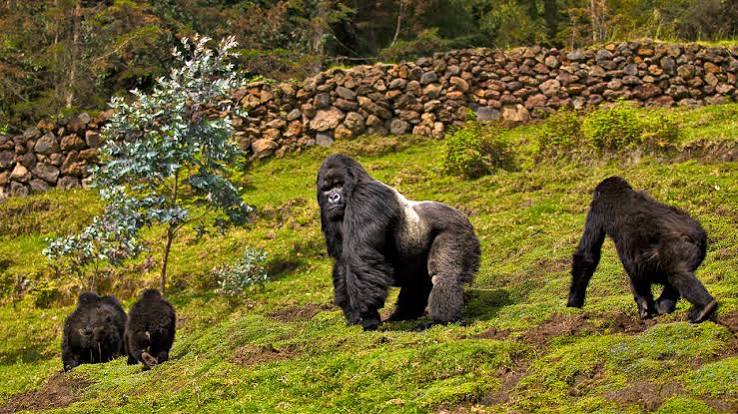
A group of visitors has spent the morning hiking through Uganda’s Bwindi Impenetrable National Park. When their ranger announces that mountain gorillas are nearby, everyone pauses, prepares their cameras and puts on the required protective equipment.
A few minutes later, they watch a silverback feeding beside his family. The encounter feels peaceful, but an invisible danger remains: infectious diseases that humans can pass to gorillas.
Understanding gorilla trekking health and mask rules is essential before visiting mountain gorillas in Uganda or Rwanda. Even a seemingly mild respiratory infection can create risks for these endangered primates.
Face masks, illness screening, distance restrictions and limited viewing times all help reduce exposure. This guide explains why these precautions matter and what visitors should do if they develop a cough before or during their trek.
1. Why Are Health Rules So Strict Around Gorillas?
Mountain gorillas are closely related to humans and can become infected with some human pathogens.
Respiratory illnesses are a particular concern because people may transmit infectious particles through breathing, speaking, coughing or sneezing.
Gorillas live in close family groups, where infection can potentially spread between individuals.
Tourism also brings many different people into the same protected habitat.
Strict health precautions help reduce the chance that one visitor introduces a disease into a gorilla family.
2. Why Do Gorilla Trekkers Wear Face Masks?
Masks reduce the release of some respiratory particles from the wearer’s nose and mouth.
This is especially important when humans are observing gorillas at relatively close distances.
The main objective is to protect the animals, although masks may also provide some protection to people.
The IUCN’s great ape health guidelines recommend mask use whenever visitors or staff are likely to come within ten metres of great apes.
However, mask requirements and approved types may differ between parks.
What Makes a Suitable Mask?
A suitable mask should cover the nose and mouth properly.
It should remain securely positioned during the encounter and be replaced if damaged or excessively wet.
Visitors should follow the ranger’s instructions about when to put it on and remove it.
Bringing a clean spare mask is sensible.
A face covering does not make it safe for a sick visitor to approach gorillas.
3. Can You Trek if You Have a Cough or Cold?
Visitors with a contagious illness should not visit mountain gorillas.
This includes people experiencing symptoms consistent with colds, influenza or other respiratory infections.
Uganda Wildlife Authority and Rwanda Development Board both publish rules restricting visits by people with infectious illnesses.
A cough may result from allergies, asthma or another non-infectious cause, but travellers should not diagnose themselves simply to avoid missing a trek.
If you have a new or unexplained cough, inform your operator and ranger before departure.
Park staff determine whether participation is permitted.
4. What Symptoms Should You Report?
Health screening may involve questions about recent illness.
Be prepared to report symptoms honestly.
| Symptom | Recommended Action |
|---|---|
| Fever | Inform staff and do not trek until assessed |
| New cough | Report before the briefing |
| Sore throat | Explain symptoms to park personnel |
| Runny nose | Report if illness is possible |
| Breathing difficulty | Seek medical assessment |
| Recent contagious infection | Ask about clearance before trekking |
| Vomiting or diarrhoea | Report illness and seek advice |
Not all symptoms indicate an infectious disease.
However, protecting gorillas requires a cautious approach.
5. What Happens if You Cough During Gorilla Viewing?
Sometimes a person unexpectedly coughs or sneezes during an encounter.
If this happens, turn your face away from the gorillas and cover the cough or sneeze appropriately.
Keep your mask positioned as required.
Tell the ranger if coughing continues or you begin feeling unwell.
The ranger may direct you away from the gorillas or end your participation.
Never remove a mask to cough openly into the surrounding air.
If you have a persistent cough before trekking, reporting it beforehand is safer than hoping it will disappear.
6. Why the Viewing Distance Still Matters
Masks are only one layer of protection.
Maintaining the required viewing distance helps reduce exposure and limits unnecessary disturbance.
Published rules are not identical across all destinations.
Uganda and Rwanda Distance Guidance
| Destination | Published Minimum Distance |
|---|---|
| Uganda: Bwindi and Mgahinga | 10 metres in UWA’s 2024–2026 tariff document |
| Rwanda: Volcanoes National Park | 7 metres in RDB’s published guidance |
| IUCN great ape health recommendation | At least 7 metres, with masks when within 10 metres |
Check the latest instructions before your visit.
If a ranger requires greater separation, follow that direction.
No particular distance guarantees complete protection against airborne infection.
7. What if a Gorilla Walks Towards You?
Gorillas do not understand human distance regulations.
A curious juvenile may approach visitors, or a silverback may walk through the group’s position.
Remain calm and follow the ranger.
If a safe route exists, the ranger may instruct you to move backwards slowly.
Otherwise, you may be told to remain still until the gorilla moves away.
Never touch the animal, offer food or encourage it to approach.
Do not remove your mask for a close photograph.
8. Why Is Gorilla Viewing Limited to One Hour?
Standard mountain gorilla trekking allows a maximum of one hour with the assigned family.
Shortening the duration of human contact helps reduce disturbance and opportunities for disease transmission.
The walking time needed to reach the gorillas is separate.
A long hike does not provide additional viewing time.
If rangers identify a health or safety concern, they may end the encounter earlier.
The animals’ welfare takes priority over completing the full hour.
9. Why Are Trekking Groups Limited to Eight People?
Standard tourism visits are limited to eight tourists per habituated family.
Smaller groups are easier to supervise and position at suitable distances.
They also reduce the number of potential sources of infection during each encounter.
However, rangers, advance trackers and other authorised personnel also need to follow health precautions.
Limiting tourists alone cannot eliminate disease risks.
10. Should You Wash Your Hands Before Trekking?
Yes. Good hand hygiene is an important disease-prevention measure.
The IUCN recommends handwashing or sanitising before and after visits to great ape habitats.
Use clean equipment and avoid unnecessarily touching your mask.
Carry hand sanitiser if advised.
Avoid leaving tissues, masks or other waste in the forest.
Disposable protective equipment must be taken out and disposed of appropriately.
Gorilla habitats should never become disposal sites for medical or personal waste.
11. Are Human Respiratory Infections Really Dangerous to Gorillas?
Yes. Scientists have documented human-associated respiratory viruses in wild great apes.
In 2009, research reported a respiratory disease outbreak in Rwanda’s mountain gorillas involving human metapneumovirus.
The findings demonstrated that respiratory viruses associated with humans can cause serious disease in mountain gorillas.
Not every human infection will spread to gorillas.
However, the potential consequences justify strong preventive measures.
This is particularly important for small endangered populations.
12. What About COVID-19 and Other Emerging Diseases?
The COVID-19 pandemic increased attention to how human respiratory pathogens might threaten great apes.
Researchers and conservation organisations recommended additional precautions, including distancing, masks and illness screening.
Scientific understanding and local rules continue to develop.
Visitors should not assume that the end of a public health emergency means all gorilla health precautions have ended.
Disease prevention remains important for influenza, other respiratory viruses and future emerging infections.
13. Can You Trek With Asthma or Allergies?
Asthma and allergies are not necessarily contagious.
However, they can cause coughing, sneezing or breathing difficulties that require attention during a forest trek.
If you have a known medical condition, discuss the activity with a qualified healthcare professional.
Carry prescribed medication and explain relevant needs to your ranger.
A persistent cough may still require assessment because symptoms alone do not reliably establish the cause.
Medical clearance does not override the park authority’s decision about participation.
14. What Happens if You Are Refused Permission to Trek?
If park personnel believe you may have a contagious illness, they may deny access to the gorillas.
This can be disappointing, especially after travelling internationally.
However, the restriction protects the animals and other people.
Refund, postponement or rescheduling arrangements depend on the permit terms and the authority’s decision.
Do not assume that every illness-related cancellation automatically qualifies for a refund.
Contact your licensed safari operator and the issuing park authority promptly.
Buying travel insurance with suitable cancellation coverage may help manage unexpected expenses, subject to the policy.
15. How Do Rangers Protect Gorilla Families?
Rangers play an important role in enforcing health rules.
They explain distancing requirements, supervise visitor behaviour and monitor the encounter.
Trackers may also observe signs of illness among the gorillas during regular monitoring.
If a gorilla shows unusual coughing, weakness or other concerning symptoms, conservation personnel can report the observation for veterinary assessment.
Specialist teams determine whether further investigation or treatment is appropriate.
Tourists should never attempt to touch or treat a sick gorilla.
16. Health Rules Before, During and After Your Trek
| Stage | Visitor Responsibility |
|---|---|
| Before travelling | Review health and travel requirements |
| Before the trek | Report contagious symptoms honestly |
| During briefing | Listen to mask and distance instructions |
| Approaching gorillas | Put on required protective equipment |
| During viewing | Stay quiet and maintain instructed distance |
| If coughing | Turn away, cover the cough and alert the ranger |
| After viewing | Remove equipment as instructed |
| Leaving the forest | Dispose of waste properly and clean hands |
These precautions work together rather than independently.
17. Common Misunderstandings About Gorilla Health Rules
Some travellers assume that wearing a mask means they can trek while sick.
That is incorrect.
Others believe habituated gorillas are no longer vulnerable to human diseases.
Habituation simply means the animals have gradually become more tolerant of carefully managed human presence.
It does not change their susceptibility to infections.
Another misconception is that a gorilla approaching visitors makes touching acceptable.
Physical contact should never be encouraged.
Respecting health rules is part of protecting wildlife, not a barrier to enjoying it.
Keeping Mountain Gorillas Healthy
Face masks and cough-related health rules are essential parts of responsible mountain gorilla tourism.
They help reduce the risk of transmitting human infections to vulnerable wild animals.
However, masks alone are not enough.
Visitors must report illness honestly, maintain appropriate distances, practise good hygiene and follow ranger instructions.
Uganda and Rwanda both depend on careful conservation management to keep gorilla tourism sustainable.




No comment