
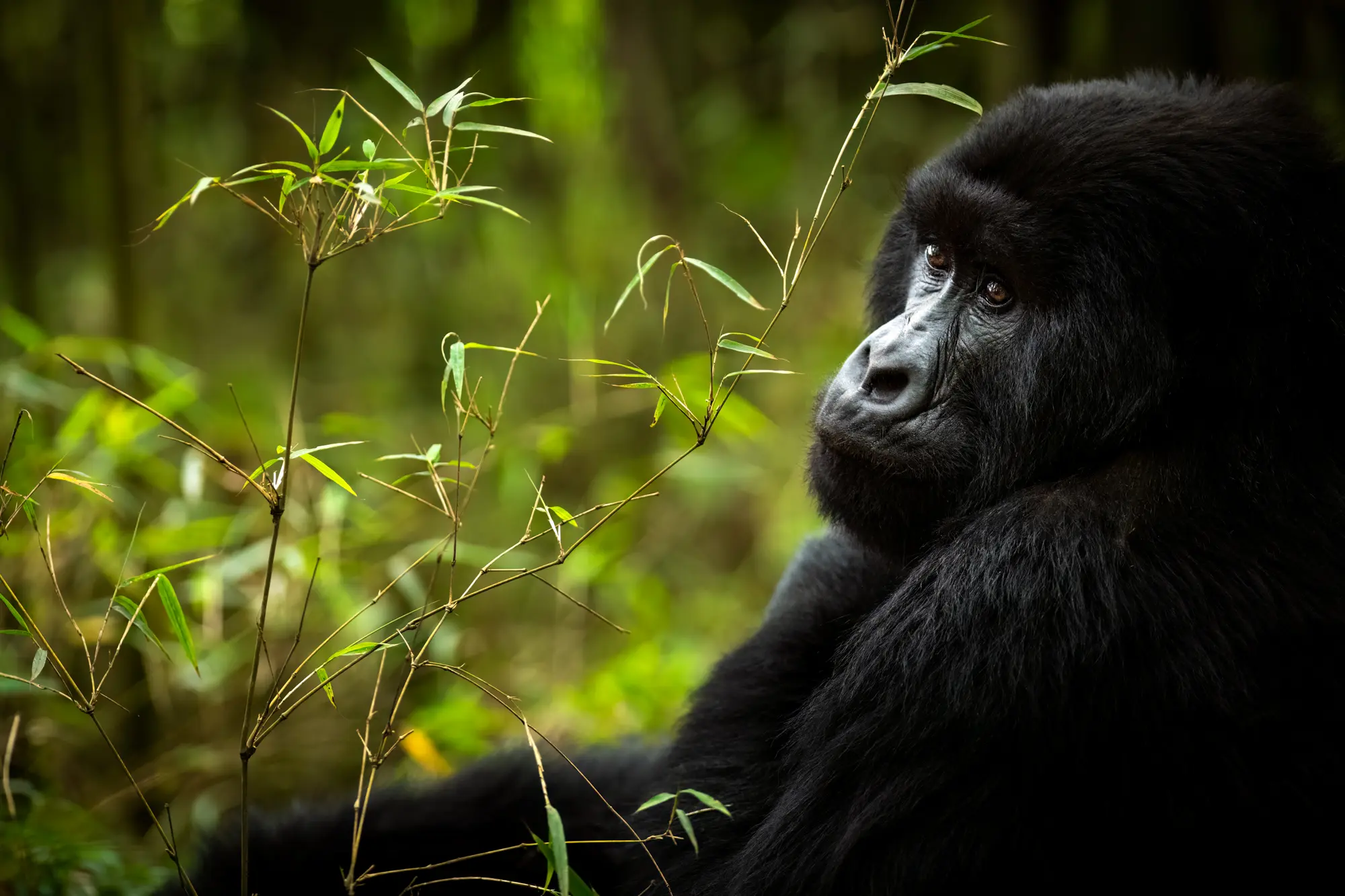
How Trackers Find Gorillas Before Your Trek Starts
The forest is still covered in morning mist when a team of gorilla trackers enters Uganda’s Bwindi Impenetrable National Park. While visitors are having breakfast at their lodges, these experienced conservation workers are already searching for one of the world’s most remarkable primates.
They follow yesterday’s movements, examine fresh signs and listen carefully for activity in the surrounding vegetation. Their task is to locate a particular mountain gorilla family before the tourists assigned to that group arrive.
Understanding how gorilla trackers find gorillas reveals the remarkable amount of work behind every gorilla trekking experience in Uganda and Rwanda. Although travellers often imagine that their guide discovers the animals by chance, tracking teams normally begin searching much earlier.
This preparation helps guides locate gorilla families efficiently while allowing park authorities to monitor the animals and manage tourism responsibly.
1. Who Are Mountain Gorilla Trackers?
Gorilla trackers are trained field personnel who monitor mountain gorilla families in their natural habitats.
They work alongside rangers, researchers and conservation teams in protected forests.
Many have years of experience identifying individual gorillas, interpreting tracks and navigating difficult mountain terrain.
Their knowledge extends beyond locating animals.
They also observe family movements, record changes in membership and report potential conservation concerns.
Trackers vs Trekking Guides
| Role | Main Responsibility |
|---|---|
| Advance tracker | Locates and monitors an assigned gorilla family |
| Trekking ranger-guide | Leads visitors safely through the forest |
| Conservation researcher | Studies gorilla behaviour and population changes |
| Porter | Helps visitors carry bags and negotiate difficult terrain |
| Veterinary specialist | Responds to authorised wildlife health concerns |
Some responsibilities overlap, but advance tracking and visitor guiding are different tasks.
2. Why Trackers Enter the Forest Before Tourists
Mountain gorillas are wild animals that move naturally through extensive forest habitats.
They do not remain in the same location simply because visitors have booked permits.
A family may feed on one hillside today and move to another valley tomorrow.
Without advance information, guides might spend much longer searching.
Trackers reduce this uncertainty by investigating the family’s most recently known location.
In Bwindi and Rwanda’s Volcanoes National Park, advance teams commonly begin their work around dawn, before the visitor group starts trekking.
However, departure times and procedures depend on the park and daily conditions.
3. How Yesterday’s Location Helps Find Today’s Gorillas
Trackers do not usually begin each morning without any information.
Gorilla families authorised for tourism are monitored regularly.
Field teams know where a family was last observed and can use that information to plan the next search.
A previous location may lead them towards a feeding area, resting site or overnight nesting location.
How the Search Develops
- Review the family’s last known location.
- Travel towards the previous observation area.
- Look for signs of recent gorilla activity.
- Follow the direction of fresh movement.
- Confirm the family through observation.
- Communicate its location to the visitor guide.
This process greatly improves the likelihood of finding the animals.
4. Gorilla Nests: One of the Most Important Clues
Mountain gorillas usually build nests for resting and sleeping.
These structures are made from leaves, branches and surrounding vegetation.
Nests may be constructed on the ground or occasionally above it.
A gorilla family often creates several nests within the same general area.
Researchers use nesting sites to investigate group size, habitat use and movement.
What Can a Nest Tell Trackers?
Freshly flattened vegetation may suggest recent activity.
The condition of leaves and surrounding signs can help experienced trackers assess whether the gorillas have already departed.
However, a nest does not reveal the family’s exact current location.
Trackers must still determine where the animals moved after leaving it.
5. How Trackers Follow Fresh Gorilla Signs
Mountain gorillas leave clues as they travel and feed.
They may bend vegetation, break stems or disturb the forest floor.
Trackers examine these signs to understand the direction of movement.
Common Tracking Signs
| Forest Clue | What It May Indicate |
|---|---|
| Fresh nests | Recent resting location |
| Broken stems | Possible feeding or movement |
| Flattened vegetation | Passage of a large animal |
| Fresh droppings | Recent gorilla presence |
| Disturbed leaves | Possible movement through vegetation |
| Feeding remains | Recently used food plants |
These signs require careful interpretation.
Other animals and natural events can produce similar disturbances.
An experienced tracker combines several clues rather than relying on a single broken branch.
6. How Trackers Identify the Correct Gorilla Family
Finding gorillas is not enough.
The team must identify the particular family assigned for monitoring.
Some forest areas contain several gorilla groups with overlapping or neighbouring ranges.
Trackers learn to recognise individual animals through physical appearance and distinctive features.
A large silverback may have recognisable facial characteristics, scars or body proportions.
Other family members may also have features that help distinguish them.
Why Identification Matters
Correct identification helps conservation teams maintain accurate records of family membership and movements.
It also prevents confusion between neighbouring groups.
For tourism, the information ensures visitors are directed towards the appropriate habituated family.
7. Do Trackers Use GPS and Radio Communication?
Yes. GPS equipment and radios can help teams share locations and coordinate movements.
Once the trackers locate a family, they may record its approximate position.
They can then communicate with ranger-guides leading visitors through the forest.
As gorillas move, the information may need updating.
How Communication Helps
| Technology | Practical Use |
|---|---|
| Handheld GPS | Records or checks locations |
| Two-way radio | Shares updates between field teams |
| Maps | Supports route planning |
| Field notebooks | Records observations and family details |
| Mobile devices | May support reporting where suitable |
Technology supports tracking, but it does not replace field experience.
Gorillas generally do not wear tourist-tracking GPS collars, and visitors cannot locate families through an ordinary phone app.
8. What Happens While Visitors Attend Their Briefing?
While advance teams are working in the forest, tourists gather at the designated park briefing point.
In Uganda, trekking takes place through the authorised sectors of Bwindi and Mgahinga Gorilla National Park.
In Rwanda, visitors normally attend the briefing at the Volcanoes National Park headquarters in Kinigi.
Rangers explain safety, wildlife protection and trekking procedures.
Visitors are then organised into groups of no more than eight tourists for each standard gorilla family visit.
Information from advance trackers can help staff understand the likely walking conditions before groups depart.
9. Can Trackers Find Gorillas Before the Trek Begins?
Often, yes.
Advance trackers may locate the family before the tourist group enters the forest or while visitors are still walking towards it.
However, this is not guaranteed.
Dense vegetation, difficult terrain, weather and the gorillas’ movements can delay the search.
Sometimes trackers continue following signs while the visitors are already on their way.
The lead guide can adjust the route as fresh information becomes available.
This coordination is one reason trekking encounters are generally successful, but a sighting can never be guaranteed.
10. Why Gorilla Treks Still Take Several Hours
Visitors sometimes wonder why a trek can be difficult when trackers already know where the gorillas are.
The answer is simple: knowing an approximate location is different from reaching it.
Mountain gorillas may occupy steep slopes, deep valleys or areas with thick vegetation.
Trackers can communicate a family’s position, but the visitors must still travel through the forest.
A gorilla family may also move while the group is approaching.
Factors Affecting Trek Length
| Factor | Possible Effect |
|---|---|
| Distance from trailhead | Longer walking time |
| Steep slopes | Slower progress |
| Muddy conditions | More careful movement |
| Dense vegetation | Difficult passage |
| Gorilla movements | Route changes |
| Visitor fitness | Different walking speeds |
Trekking duration therefore remains unpredictable despite advance tracking.
11. What Happens When Trackers Locate the Gorillas?
When the advance team confirms the family’s position, the visitor guide receives an update.
The guide then leads the group towards the area.
As visitors approach, they may hear gorilla movements or notice fresh feeding signs.
The guide provides final instructions before the viewing encounter.
Visitors should prepare their cameras, remain calm and follow the ranger’s directions.
At this stage, the trackers’ knowledge becomes especially valuable because they understand the family’s recent movements and behaviour.
12. How Trackers Help Protect Gorillas From Disturbance
Finding gorillas is only one part of the job.
Trackers also help ensure that visitors do not disturb the animals unnecessarily.
They may advise guides about the family’s current activity and the safest approach.
For example, gorillas may be feeding on a steep slope or resting in thick vegetation.
The guide must then decide where visitors can stand without crowding the family.
The standard viewing period is limited to one hour.
Visitors must follow current rules concerning distance, masks, illness and behaviour.
These precautions help reduce disease transmission and disturbance.
13. Do Trackers Monitor Gorilla Health?
Yes. Regular field monitoring can reveal visible health concerns.
Trackers may notice an injured gorilla, unusual movement, coughing or changes in behaviour.
They can report these observations to the appropriate conservation authorities.
Specialist veterinary teams assess whether intervention is necessary.
However, trackers do not automatically treat wild gorillas whenever they appear unwell.
Veterinary intervention follows established conservation protocols.
Daily monitoring helps teams identify concerns that might otherwise go unnoticed.
14. Uganda vs Rwanda: How Tracking Works
Both countries use advance tracking and authorised ranger-guides, but their landscapes differ.
| Feature | Uganda | Rwanda |
|---|---|---|
| Gorilla parks | Bwindi and Mgahinga | Volcanoes National Park |
| Advance tracking | Used | Used |
| Main terrain | Dense forest and mountain slopes | Bamboo forest and volcanic slopes |
| Tourist group limit | 8 | 8 |
| Standard viewing period | 1 hour | 1 hour |
| Rangers and trackers | Required | Required |
The difficulty of a trek depends more on the day’s gorilla location and conditions than on the country alone.
Neither Uganda nor Rwanda can promise that every trek will be easy.
15. How Trackers Help Visitors With Limited Fitness
Trackers’ location updates may help rangers estimate which gorilla families are closer to accessible starting points.
Visitors with mobility concerns can explain their needs during the briefing.
Park staff may consider this when assigning groups.
However, gorillas move freely, so a short or easy trek cannot be promised.
A porter can assist with carrying equipment and provide practical support on difficult sections.
Travellers with health concerns should obtain medical advice before undertaking a demanding forest hike.
16. Why Trackers Matter to Gorilla Conservation
Gorilla tracking supports both tourism and wildlife protection.
Regular monitoring helps conservation teams understand family sizes, births, deaths and movements.
It can also reveal unusual activity or potential threats within protected habitats.
Tourism provides employment opportunities for guides, trackers, porters and nearby communities.
However, the animals’ welfare must remain the priority.
Responsible monitoring allows people to encounter mountain gorillas while maintaining safeguards around vulnerable populations.
Final Thoughts: The Work Behind Every Gorilla Encounter
How gorilla trackers find gorillas is a remarkable combination of experience, patience, scientific observation and teamwork.
Long before visitors begin their trek, field teams are already searching for the assigned family.
They use previous locations, nests, feeding signs, tracks and direct observation to follow the gorillas through difficult forest terrain.
Radios and GPS devices then help guides direct their groups towards the animals.
Although finding gorillas can never be guaranteed, this carefully organised system makes encounters far more reliable.





No comment