
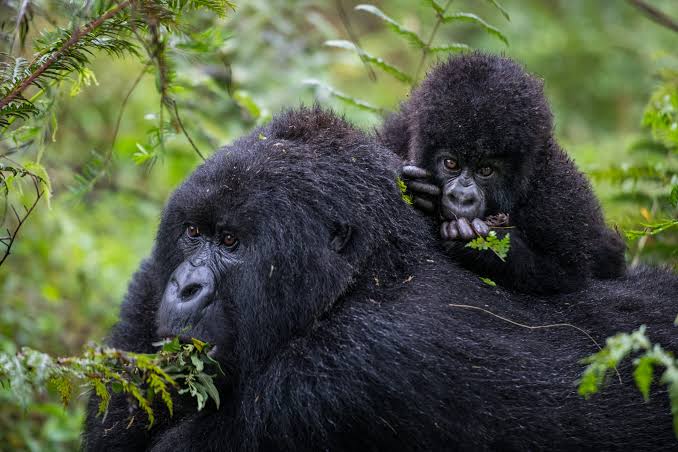
How Gorilla Families Get Their Names in Uganda and Rwanda
Deep inside Uganda’s Bwindi Impenetrable National Park, a ranger leads visitors towards a mountain gorilla family known as Habinyanja. The name has a local meaning connected to water and the place where the gorillas were first encountered. Across the border in Rwanda’s Volcanoes National Park, another family is called Amahoro, a Kinyarwanda word meaning peace.
For travellers, these names make gorilla trekking more personal. However, how gorilla families get their names in Uganda and Rwanda is also an interesting part of wildlife research, conservation and local culture.
Some families are named after silverbacks, while others receive names connected to places, behaviour or important events in their histories.
Understanding these names helps visitors recognise that every gorilla family has its own identity, relationships and story.
1. Why Do Mountain Gorilla Families Have Names?
Mountain gorillas live in social groups containing adult males, females and their offspring.
These groups can remain together for many years, although membership changes as individuals are born, die or move between families.
Wildlife researchers and rangers need reliable ways to distinguish one family from another.
Names help conservation teams record important information, including births, deaths, movements, health concerns and changes in leadership.
They also make communication easier between park authorities, researchers and tourism operators.
For example, recording that a particular family has welcomed a new infant is more useful when the group can be identified consistently.
2. Who Chooses Gorilla Family Names?
Gorilla group names are normally established through the work of park authorities, researchers and conservation personnel who monitor the animals.
During habituation and long-term observation, trackers learn to recognise individuals and their social relationships.
A family’s name may reflect a familiar location, an important silverback or an event associated with the group’s formation.
Local languages often influence the choice.
In Uganda, names may come from languages spoken around Bwindi, including Rukiga and Rufumbira.
In Rwanda, many names have meanings in Kinyarwanda.
There is no single universal naming formula used for every family.
3. How Gorilla Families Get Their Names in Uganda
Uganda’s mountain gorillas live in Bwindi Impenetrable National Park and Mgahinga Gorilla National Park.
Bwindi has several trekking sectors, including Buhoma, Ruhija, Rushaga and Nkuringo.
Each sector contains gorilla families with different histories.
Some of the best-known family names are connected to places and vegetation.
Habinyanja: A Name Connected to Water
Habinyanja is one of Bwindi’s long-established gorilla families.
Its name comes from a local word associated with water.
The family was originally encountered near a swamp with two ponds during early habituation work.
The name therefore preserves an important detail about the group’s discovery.
For travellers trekking in the Buhoma area, Habinyanja is an example of how local geography influences gorilla family names.
Rushegura: Named After Vegetation
The Rushegura family developed after a split from the original Habinyanja group.
Its name is commonly associated with the ebishegura tree found in the area.
This illustrates another naming approach: using features of the natural environment.
The group’s social history includes changes in leadership and membership, but its established name remains useful for identifying its lineage.
Mubare: One of Bwindi’s Historic Families
Mubare is especially important in Ugandan gorilla tourism history.
It was the first Bwindi gorilla family habituated for regular tourist visits, beginning in 1993.
Its name is associated with the Mubare area of the Buhoma forest.
The family is remembered for its early silverback, Ruhondeza, and for helping establish Uganda’s mountain gorilla tourism industry.
4. Other Gorilla Family Names in Uganda
Not every name refers to a geographical feature.
Some families take their names from important individuals or events.
| Gorilla Family | National Park | Naming Connection |
|---|---|---|
| Habinyanja | Bwindi | Water and the swamp where the group was discovered |
| Rushegura | Bwindi | Local vegetation |
| Mubare | Bwindi | Local area associated with the group’s early history |
| Nkuringo | Bwindi | Named after an important silverback |
| Nshongi | Bwindi | Associated with the Nshongi stream |
| Nyakagezi | Mgahinga | Local place name associated with the group |
These names help distinguish families, but membership and leadership can change.
A family named after a silverback may retain that name after the animal dies.
5. Why Silverbacks Sometimes Give Families Their Names
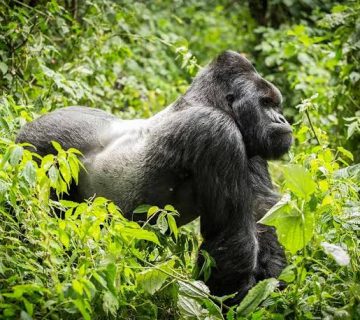
A silverback is a mature male gorilla recognised by the silver-grey hair that develops across his back.
He often plays an important role in protecting and coordinating the family.
Some gorilla groups become known by the names of particularly important silverbacks.
This can happen when a dominant male establishes a group or becomes closely associated with its history.
However, a family does not automatically receive a new name whenever its leader changes.
Keeping an established name helps researchers connect records collected over many years.
This is particularly important when tracking births, genetic relationships and family splits.
6. How Gorilla Families Get Their Names in Rwanda
Rwanda’s mountain gorillas are found in Volcanoes National Park, part of the Virunga mountain ecosystem.
Many family names reflect Kinyarwanda words, places or the animals’ histories.
Some express ideas such as peace, cooperation, wisdom or good fortune.
Amahoro: The Peaceful Family
Amahoro means peace in Kinyarwanda.
The name is associated with a well-known gorilla family in Volcanoes National Park.
Its history includes the dominant silverback Amahoro and later changes in leadership.
The name reflects an important aspect of the family’s identity and history.
Kwitonda: The Humble One
Kwitonda means the humble one.
The family was named after a silverback called Kwitonda.
The group originally lived in the Democratic Republic of Congo before establishing itself in Rwanda.
Its name remains associated with the original silverback, even though leadership has changed.
Sabyinyo: Named After a Volcano
The Sabyinyo family takes its name from Mount Sabyinyo.
The mountain’s distinctive peaks are an important feature of the Virunga landscape.
This shows how Rwanda, like Uganda, uses geographical landmarks when naming gorilla groups.
7. Famous Gorilla Family Names in Rwanda
| Family Name | Meaning or Origin |
|---|---|
| Amahoro | Peace |
| Kwitonda | The humble one; named after a silverback |
| Sabyinyo | Named after Mount Sabyinyo |
| Hirwa | Lucky or fortunate |
| Umubano | Togetherness or living together |
| Agashya | Associated with the silverback Agashya |
| Ugenda | Associated with moving or travelling |
| Bwenge | Wisdom |
| Karisimbi | Named after Mount Karisimbi |
These examples demonstrate that names can describe places, individual gorillas or characteristics associated with a group.
Visitors should remember that gorilla family lists and leadership details can change over time.
8. What Happens When a Gorilla Family Splits?
Mountain gorilla families do not always remain together permanently.
A younger silverback may challenge an established leader or leave with several females.
Sometimes a group divides without prolonged fighting.
When a stable new family develops, researchers and park authorities need to distinguish it from the original group.
A new name may therefore be introduced.
The Amahoro and Umubano Example
In Rwanda, the Umubano family developed following a split from Amahoro.
A silverback named Charles led the breakaway group.
The name Umubano is connected to togetherness and social relationships.
This example demonstrates how an important event in a family’s history can influence its identity.
9. Do Gorilla Families Keep Their Names Forever?
A gorilla family may retain its name for many years, even after the original dominant male dies.
This continuity helps researchers follow the history of the group.
However, names can change when new groups form, when researchers recognise a distinct family or when park authorities revise records.
Families may also disappear through natural changes in membership.
For this reason, older tourism websites sometimes contain family lists that no longer match current park records.
Travellers should confirm available trekking groups through authorised park operators.
10. How Are Individual Gorillas Named?
Individual gorillas also receive names.
These names allow researchers and rangers to identify animals within a family.
An individual’s name might reflect physical features, temperament, birth circumstances or another meaningful association.
For example, researchers may recognise a particular female and record her offspring over several years.
This helps conservation teams build detailed family histories.
Individual names should not be confused with group names.
A family can contain many individually named gorillas while retaining one recognised group name.
11. What Is Rwanda’s Kwita Izina Ceremony?
Rwanda has developed a famous annual celebration known as Kwita Izina.
The name means to give a name.
It is inspired by a Rwandan cultural tradition of naming newborn children.
The official gorilla naming ceremony began in 2005.
During the event, newly born mountain gorillas receive names selected to communicate messages about nature, conservation and community responsibility.
Conservationists, local representatives and invited guests participate in the celebration.
Kwita Izina highlights the importance of protecting mountain gorillas and the communities living near their habitat.
12. Does Kwita Izina Name Families or Baby Gorillas?
Kwita Izina mainly celebrates the naming of individual gorillas, particularly newborns.
This is different from the everyday practice of assigning names to established trekking families.
However, the ceremony has also recognised newly formed families.
For example, Rwanda announced the naming of the Kwisanga family during the 2022 celebration.
The group formed following a split from Kwitonda.
This makes Kwita Izina an important conservation celebration, but it should not be described as the sole method by which all gorilla families receive names.
13. How Naming Helps Gorilla Conservation
Naming is more than a tourism tradition.
Identifying gorillas individually and by family allows scientists to maintain accurate monitoring records.
Conservation Benefits
| Benefit | Importance |
|---|---|
| Individual identification | Helps monitor particular gorillas |
| Family histories | Records births, deaths and social changes |
| Veterinary monitoring | Supports follow-up when gorillas become ill |
| Population research | Helps understand reproduction and survival |
| Tourism management | Distinguishes groups authorised for visits |
| Public awareness | Encourages interest in conservation |
Names are most useful when combined with careful identification and consistent field records.
14. Can Travellers Choose Which Gorilla Family to Visit?
Travellers may express preferences for particular trekking sectors or families.
However, park authorities normally allocate groups according to daily operational arrangements.
Fitness, group size, gorilla locations and conservation considerations may influence allocation.
A family with an interesting name is not necessarily easier to reach.
Gorillas move freely, and walking conditions can change considerably.
Visitors should therefore avoid choosing a trek based only on a family’s reputation or historical name.
15. What to Ask Your Ranger About a Gorilla Family
Before entering the forest, ask your ranger about the history of the family you have been assigned.
Useful questions include:
- What does the family’s name mean?
- How was the group first identified?
- Is it named after a silverback or a place?
- Has the family split in the past?
- How many gorillas are currently in the group?
- Who is the present dominant silverback?
- Have any infants been born recently?
These questions can make the trekking experience more informative.
Rangers may know details that are absent from older travel guides.
16. Why These Names Matter to Travellers
Gorilla family names connect conservation, local languages and wildlife history.
They remind visitors that each group has its own relationships and experiences.
A name such as Habinyanja preserves a connection to the forest environment.
Kwitonda recalls an important silverback.
Amahoro communicates the idea of peace.
Understanding these meanings helps visitors see mountain gorillas as individuals living within complex family groups rather than simply animals encountered during a tour.
Every Gorilla Family Has a Story
Gorilla families in Uganda and Rwanda receive names for different reasons.
Some names come from local landmarks, plants and water sources. Others recognise silverbacks, social behaviour or important events.
Researchers and rangers use these identities to follow gorilla families, document changes and support conservation.
Rwanda’s Kwita Izina ceremony adds another dimension by celebrating the naming of individual gorillas and recognising the importance of protecting them.


No comment