
What Decades of the Serengeti Lion Project Have Revealed
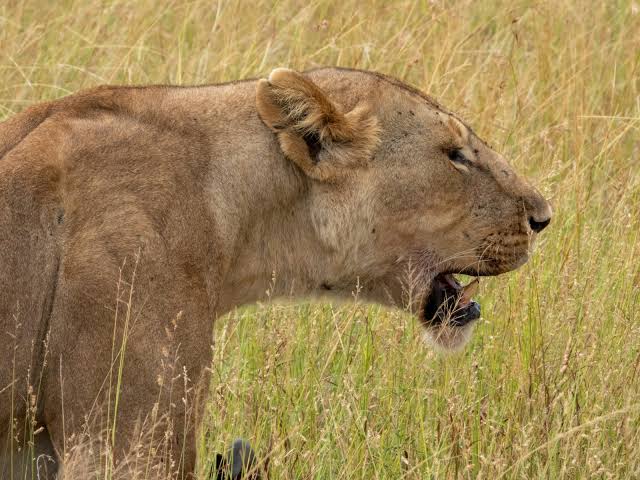
On the grasslands of Tanzania’s Serengeti National Park, a lioness rests beneath an acacia tree while her cubs play nearby. To most safari visitors, it is a beautiful wildlife scene. To researchers, the same lioness may represent decades of recorded family history, territorial changes, births, deaths and social relationships.
The Serengeti Lion Project research findings have transformed scientific understanding of Africa’s most famous big cat. Since 1966, generations of scientists have followed wild lions, recording their movements, behaviour, reproduction and survival.
Their discoveries have challenged familiar assumptions about lion prides, male coalitions, hunting, disease and conservation.
For safari travellers, understanding this remarkable research history makes lion sightings more meaningful. Every pride has a story shaped by relationships, competition and changing environmental conditions.
1. How the Serengeti Lion Project Began
The project began in 1966 when wildlife biologist George Schaller started studying lions in Serengeti National Park.
At the time, researchers knew relatively little about the detailed social lives of wild lions.
Schaller spent years observing the animals using binoculars, field notebooks and a vehicle.
His work formed the foundation of The Serengeti Lion, published in 1972.
Other researchers continued following the same lion populations, creating an unusually valuable long-term scientific record.
Craig Packer and Anne Pusey took over the project in 1978 and expanded investigations into cooperation, genetics, reproduction and social behaviour.
Today, the project’s historical data remain an important resource for lion ecology and conservation.
2. Why Long-Term Research Matters
Studying lions for a few months can reveal feeding habits or hunting behaviour.
Studying them for decades reveals much more.
Researchers can follow cubs into adulthood, observe changes in pride membership and understand how environmental events influence generations.
A long-running project also allows scientists to distinguish temporary changes from lasting population trends.
Important Research Milestones
| Period | Main Research Development |
|---|---|
| 1966 | George Schaller begins systematic lion observations |
| 1970s | Researchers expand knowledge of prides and male coalitions |
| 1978 onwards | Craig Packer and Anne Pusey investigate lion social behaviour |
| 1980s–1990s | Genetics, reproduction and disease research expand |
| 2000s | Territoriality, ecological change and mane studies develop |
| 2010s onwards | Research informs broader conservation and population monitoring |
The project has contributed to many discoveries that would have been difficult to make through short-term observations.
3. Lion Prides Exist for More Than Hunting
One of the project’s important findings concerns why lions live in groups.
It is tempting to assume that lions form prides mainly to hunt large animals together.
Although cooperation can help with hunting, research demonstrated that territorial defence provides another major advantage.
A larger pride can be more successful at defending valuable habitat against neighbouring groups.
What Did Researchers Discover?
A study published in 2009 examined 38 years of observations involving 46 Serengeti prides.
Researchers found that larger prides were more likely to retain valuable territories and successfully compete over disputed areas.
This helped explain why group living benefits lions even when cooperation does not always improve individual hunting success.
4. Why Territory Is So Important
Lion territories contain resources essential for survival.
These include prey, water, shade and suitable places for raising cubs.
However, not every territory is equally valuable.
Areas with dependable prey and favourable habitat can support more successful reproduction.
Neighbouring prides may compete over these locations.
Researchers discovered that territorial competition can influence female survival and reproductive success.
This means the social organisation of lions is closely connected to the landscapes they occupy.
5. What Research Revealed About Lionesses
Female lions are the foundation of most prides.
Related lionesses often remain together for many years, raising offspring and defending territory.
The Serengeti research demonstrated that cooperation among females provides important advantages.
Lionesses sometimes form groups to confront neighbouring prides or defend vulnerable cubs.
They may also share nursing responsibilities.
However, cooperation does not mean every female always behaves generously.
Competition can still occur around food and other resources.
Their relationships involve a balance between cooperation and individual interests.
6. Why Lionesses Sometimes Raise Cubs Together
Scientists documented an important behaviour called communal nursing.
Female lions that give birth around the same time may raise their cubs together in a group known as a crèche.
Some lionesses nurse cubs belonging to other females.
However, nursing is not necessarily shared equally among every cub.
Researchers found that relatedness and litter size can influence these arrangements.
Communal care provides an opportunity for young lions to develop social relationships while remaining near several adult females.
7. Male Lion Coalitions Are More Complicated Than They Look
Male lions sometimes travel and defend prides together.
These partnerships are called coalitions.
Many coalitions consist of brothers, but not every pair of cooperating males is closely related.
Serengeti research showed that pairs and trios can include unrelated males.
Larger coalitions, particularly those containing four or more males, are generally formed from close relatives.
Why Do Males Form Coalitions?
Working together can improve a male’s chances of gaining and retaining access to a pride.
However, coalition members may not enjoy equal mating opportunities.
This creates a balance between the benefits of cooperation and competition among partners.
For safari visitors, two male lions resting together may therefore be more than temporary companions.
They could be long-term coalition partners.
8. Why Male Takeovers Threaten Lion Cubs
One of the most challenging discoveries concerns infanticide.
When new male lions take control of a pride, they sometimes kill cubs fathered by previous males.
This behaviour can cause females to become reproductively receptive sooner.
Early Serengeti researchers documented such events, establishing their importance in lion reproductive biology.
However, infanticide does not occur after every takeover.
The outcome depends on cub age, pride circumstances and the behaviour of the individuals involved.
These findings helped explain why male territorial competition strongly influences cub survival.
9. Dark Lion Manes Can Reveal Important Information
Another fascinating research area concerns male lion manes.
Scientists examined differences in mane colour and length.
Research found that darker manes were associated with higher testosterone levels and better nutritional condition in the studied population.
Lionesses also showed preferences for darker-maned models during experiments.
However, a dark mane does not automatically indicate that a male is the oldest or strongest lion.
Environmental conditions, individual development and genetics also influence appearance.
This discovery demonstrated how a visible physical characteristic can communicate information about an animal’s condition.
10. How Disease Changed Scientists’ Understanding of Lions
Long-term monitoring has allowed researchers to investigate disease outbreaks.
In 1994, a major canine distemper outbreak affected lions in the Serengeti ecosystem.
Researchers later investigated how infection interacted with ecological conditions and other health problems.
These studies demonstrated that disease impacts can depend on more than the presence of a pathogen.
Nutrition, parasites, environmental conditions and contact between animals can also influence survival.
Understanding these relationships is important for protecting wild carnivore populations.
11. Lions Do Not Always Respond Gradually to Environmental Change
A study published in 2005 examined how lion populations responded to changes in prey availability and vegetation.
Researchers discovered that local populations could remain relatively stable for extended periods.
When conditions eventually supported successful reproduction and territorial expansion, numbers could increase more suddenly.
These changes were linked partly to the social and territorial organisation of prides.
The findings showed that wildlife populations do not always respond immediately to improving habitat conditions.
Long-term research is essential for detecting these patterns.
12. What Have Scientists Learned About Lion Survival?
Lions face different risks at different life stages.
Young cubs are vulnerable to food shortages, disease and changes in pride leadership.
Adult males often face serious dangers during territorial conflicts.
Female survival can be influenced by habitat quality, competition and reproductive demands.
Important Survival Factors
| Factor | How It Influences Lions |
|---|---|
| Prey availability | Determines access to food |
| Territory quality | Influences hunting and reproduction |
| Pride size | Affects territorial defence |
| Male takeovers | May threaten young cubs |
| Disease | Can cause serious population losses |
| Human activities | May affect habitat and survival |
No single factor explains every change in a lion population.
13. How Technology Improved Lion Research
Early researchers depended on direct observation and handwritten records.
Modern wildlife research can also use GPS tracking, camera traps, genetic analysis and computer-based population modelling.
Tracking technology helps researchers examine movements and habitat use.
Genetics reveals family relationships that cannot always be determined through observation.
Camera traps provide records of animals when fieldworkers are absent.
However, these technologies complement rather than replace patient field observation.
Recognising individual lions and understanding their social histories remains extremely valuable.
14. What the Project Means for Lion Conservation
Long-term research has practical conservation benefits.
Scientists can identify important habitats, investigate causes of mortality and understand how pride structure affects population stability.
They can also examine problems involving livestock, protected-area boundaries and conflict with people.
Healthy lion populations depend on more than protecting individual animals.
Conservation requires maintaining prey populations, suitable habitats and safe connections between wildlife areas.
The Serengeti Lion Project has helped provide the scientific foundation for these decisions.
15. What Safari Visitors Can Learn From These Discoveries
Research transforms an ordinary lion sighting into an opportunity to understand social behaviour.
The next time you encounter a pride, observe its members carefully.
Notice how females interact with cubs, how males respond to neighbouring animals and where the pride chooses to rest.
Questions Worth Asking Your Guide
- Are these lionesses related?
- How long has this pride occupied the area?
- Are the resident males brothers or coalition partners?
- How old are the cubs?
- Has the pride experienced a recent takeover?
- Does this territory contain reliable prey?
Guides may not know every answer, but these questions encourage more meaningful wildlife observation.
What Decades of Research Have Taught Us
The Serengeti Lion Project has revealed that lions are far more socially complex than their reputation as powerful hunters suggests.
Their lives are shaped by cooperation, competition, family relationships, territorial defence and environmental change.
Research has shown why prides defend valuable habitats, how males cooperate, why females sometimes share childcare and how disease and changing ecological conditions affect survival.
Perhaps the greatest lesson is that understanding wildlife requires patience.


No comment