
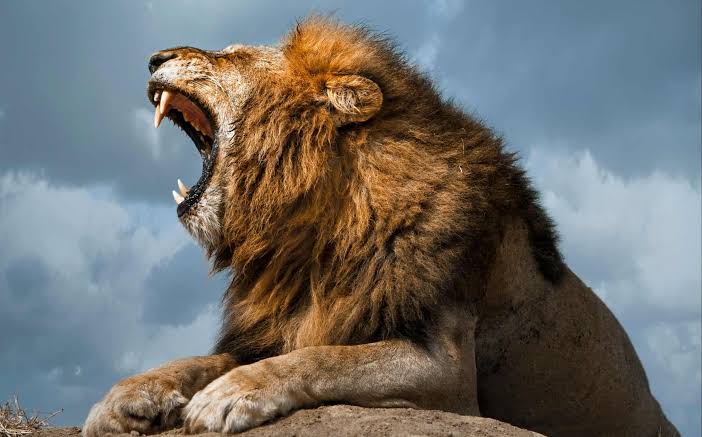
Hearing a Lion Roar at Night: Meaning and Distance
Imagine spending a peaceful evening at a safari lodge in Uganda’s Queen Elizabeth National Park. The stars are shining, insects are calling, and the surrounding savannah seems quiet. Suddenly, a deep roar breaks the silence. Another follows, then several shorter calls echo across the grassland. Somewhere in the darkness, a lion is communicating.
Hearing a lion roar at night is one of the most memorable experiences on an African safari. The sound can be powerful enough to make distant lions seem surprisingly close. Yet roaring is not simply an expression of aggression. Lions use these calls to announce territory, locate pride members and communicate with other lions.
Understanding why lions roar, how far their calls travel and what the sounds mean can make your night-time safari experience even more rewarding.
1. Why Do Lions Roar at Night?
Lions are social big cats that communicate using sounds, body movements and scent markings.
Roaring is particularly important because it allows individuals to exchange information across long distances.
A lion may roar to announce its presence, communicate territorial ownership or locate separated companions.
Although lions can roar during daylight, roaring is especially common at night and around dawn.
Cooler conditions and reduced background disturbance can help their calls travel farther.
Main Reasons Lions Roar
| Reason | Purpose |
|---|---|
| Territorial advertisement | Communicates that an area is occupied |
| Pride communication | Helps separated lions maintain contact |
| Rival assessment | Provides information to competing lions |
| Social coordination | Helps individuals locate companions |
| Reproductive communication | May help lions locate potential mates |
One roar can serve more than one purpose, depending on the circumstances.
2. How Far Can a Lion’s Roar Travel?
A lion’s roar is among the most powerful vocalisations produced by African land mammals.
Under favourable conditions, it may be heard from approximately 5 to 8 kilometres away.
The frequently quoted maximum of 8 kilometres, or about 5 miles, is an approximate upper range rather than a guaranteed distance.
Sound transmission depends on vegetation, wind, temperature, humidity and surrounding noise.
Why Does Distance Vary?
In open savannah, deep roaring sounds may travel farther than in areas with dense vegetation or strong winds.
A lion roaring from an elevated position may also be heard across a broad landscape.
However, judging distance by sound alone is difficult.
A roar heard from your lodge might come from a lion relatively nearby or from one several kilometres away.
Never attempt to locate a lion simply by following its roar in the darkness.
3. Why Does a Lion’s Roar Sound So Deep?
Lions produce their characteristic roars using specialised structures within the larynx, commonly called the voice box.
Their vocal folds are adapted to produce powerful, relatively low-frequency sounds.
These deep sounds contribute to the roar’s distinctive character and ability to travel over considerable distances.
Unlike an ordinary human shout, a lion’s roar often includes several different vocal elements.
The sound can begin quietly, build into powerful calls and end with shorter grunts.
This sequence helps distinguish roaring from growling or other lion vocalisations.
4. What Does a Lion’s Roaring Sequence Sound Like?
A typical lion roaring sequence contains several phases.
It may begin with low moaning sounds before progressing into louder roars.
The lion then produces shorter, rougher calls that gradually fade.
| Roaring Phase | Common Sound |
|---|---|
| Introduction | Soft, low-pitched moans |
| Build-up | Increasingly powerful calls |
| Full roar | Deep, loud vocalisations |
| Ending | Shorter, rhythmic grunts |
The exact sequence varies between individuals.
Some roaring bouts are brief, while others last considerably longer.
Experienced safari guides may recognise a lion’s roaring pattern, although identifying an individual confidently usually requires repeated observations.
5. Do Male and Female Lions Both Roar?
Yes. Both male and female lions produce roaring calls.
Adult males are especially associated with loud territorial advertisement because they defend areas occupied by prides.
However, lionesses also roar.
Females may communicate with pride members or respond to other lions within their surroundings.
Scientific research in Tanzania’s Serengeti National Park found acoustic differences between male and female roars.
These differences were associated largely with body size.
A deep roar should not automatically be interpreted as coming from the largest or strongest male.
6. How Roaring Helps Lions Defend Territory
Territory is important to lion survival.
A suitable area provides access to prey, water, resting places and spaces where cubs can be raised.
Resident lions may roar to advertise their presence to neighbouring individuals.
This can help reduce unnecessary encounters between competing groups.
Roaring also allows rivals to assess whether entering an occupied area may be risky.
Do Lions Always Fight After Roaring?
No. Many territorial interactions do not result in physical conflict.
Lions may respond vocally, move away or avoid unfamiliar individuals.
However, some encounters between rival males can escalate into serious fights.
Roaring provides information that may help animals decide whether to approach or avoid one another.
It is therefore an important communication tool rather than simply a warning before an attack.
7. Why Do Lions Sometimes Answer Each Other?
One lion may begin roaring, followed by another individual responding from a different direction.
These exchanges can help separated pride members communicate.
For example, resident males may maintain contact while travelling through different parts of their territory.
Lionesses may also respond to familiar lions.
However, not every answering roar is friendly.
A response may involve territorial competition or communication between unfamiliar individuals.
Researchers have demonstrated that lions can distinguish certain characteristics of callers and adjust their responses accordingly.
8. Do Lions Recognise Individual Roars?
Lions can use vocal information to distinguish familiar from unfamiliar individuals.
Research using recorded lion calls has demonstrated that their responses depend partly on who appears to be calling.
For example, lionesses with young cubs may react differently to the roars of unfamiliar males than to those of males associated with their pride.
This is important because unfamiliar males can represent a threat to dependent cubs.
Roaring therefore conveys information beyond simple sound intensity.
It contributes to the complex social relationships within and between lion prides.
9. Why Is Roaring More Common Around Dawn?
A study published in 2021 examined lion vocal behaviour over more than 500 nights in Zimbabwe.
Researchers found that lions roared mainly at night, with activity peaking shortly before dawn.
Roaring was more likely under conditions involving lower wind speeds, lower temperatures and higher humidity.
These conditions may help vocalisations travel effectively.
The findings demonstrate that lions adjust their communication behaviour according to environmental circumstances.
However, lions do not follow an exact roaring timetable.
Visitors may hear calls at different hours of the night.
10. Does Roaring Mean a Lion Is Hunting?
Not necessarily.
Lions often hunt during cooler periods, including night-time, but roaring is not a reliable indication that a hunt is underway.
In fact, loud calls may reveal a lion’s position to nearby animals.
A lion preparing to stalk prey may remain quiet.
Roaring is more strongly associated with communication, territorial advertisement and social contact.
If you hear a lion roaring near your safari lodge, do not assume it has just killed an animal or is chasing prey.
The sound alone cannot establish what the lion is doing.
11. Can You Tell How Close a Lion Is From Its Roar?
It is difficult to estimate distance accurately from roaring.
Sound can travel across open ground, reflect from landscape features and change with wind direction.
A deep roar may sound unusually close because of its low-frequency components.
What Should You Listen For?
Several factors affect what you hear:
- Loudness of the call.
- Wind direction.
- Nearby vegetation.
- Background animal sounds.
- Terrain and landscape features.
- Whether several lions are calling.
Even experienced guides cannot always determine an exact distance from sound alone.
If you are staying in a wildlife area, treat every lion call seriously and follow lodge safety procedures.
12. What Should You Do When You Hear a Lion Roaring Near Camp?
Hearing a lion roar can be exciting, but safety must come first.
Wild lions may move through unfenced areas around safari camps and lodges.
Never leave your tent or accommodation to investigate a roar.
Remain inside a secure building or tent and follow instructions provided by lodge staff.
Important Safety Precautions
- Do not walk outside after dark without an authorised escort.
- Never follow lion sounds on foot.
- Keep doors and tent closures secured.
- Avoid leaving food outside.
- Do not imitate lion calls.
- Never approach wildlife for photographs.
- Contact lodge staff if you are concerned about nearby animal movement.
A distant roar does not necessarily indicate immediate danger, but its distance cannot be judged reliably.
13. Best Places to Hear Lions Roaring in East Africa
Several East African safari destinations support resident lion populations.
| Destination | Country | Lion Experience |
|---|---|---|
| Queen Elizabeth National Park | Uganda | Savannah lions and Ishasha tree-climbing lions |
| Murchison Falls National Park | Uganda | Lions in open grasslands and woodland |
| Kidepo Valley National Park | Uganda | Lions in remote savannah habitats |
| Serengeti National Park | Tanzania | Large prides and territorial males |
| Maasai Mara National Reserve | Kenya | Pride communication and social behaviour |
| Ngorongoro Crater | Tanzania | Lions within a concentrated wildlife ecosystem |
Staying at an appropriately located safari lodge may provide opportunities to hear lions after dark.
However, roaring encounters cannot be guaranteed.
14. Can You Record a Lion’s Roar?
Recording a lion’s roar can create a memorable wildlife experience.
A smartphone or camera may capture the sound if the lion is sufficiently close and background noise is limited.
Avoid using recorded roars to attract lions or provoke responses.
Playback can interfere with natural communication and potentially disturb wildlife.
If you are on a guided activity, ask your ranger whether sound recording is appropriate.
Enjoying the natural sound without interference is the most responsible approach.
Understanding a Lion’s Roar at Night
Hearing a lion roar at night is one of the unforgettable sounds of the African wilderness.
These powerful calls help lions advertise territory, communicate with companions and assess other individuals across considerable distances.
A roar may travel several kilometres, but its apparent loudness cannot reliably tell you how close the lion is.
For safari travellers, understanding these sounds adds a new dimension to wildlife observation.
Whether you are staying near the Serengeti, Queen Elizabeth National Park or the Maasai Mara, listening to lions after dark can reveal the social world of these remarkable predators.
A lion’s roar is more than a powerful sound. It is an important message travelling through the night, connecting individuals across the African savannah.







No comment