
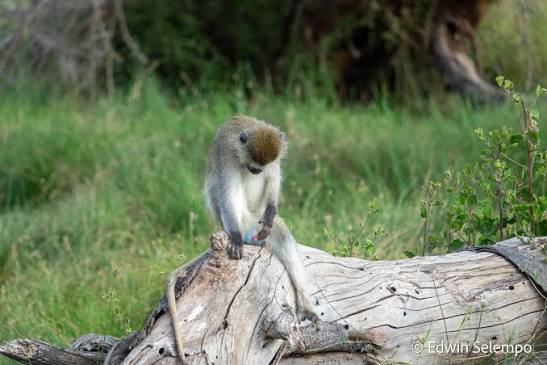
Patas Monkeys of Murchison Falls: Meeting the Fastest Primate on Land
Imagine driving across the golden savannah of Murchison Falls National Park in northern Uganda when a reddish-brown monkey suddenly races across the grassland. Within seconds, it disappears into the vegetation. Unlike the monkeys commonly seen jumping between forest trees, this remarkable animal seems perfectly comfortable running across open ground.
The patas monkeys of Murchison Falls are among Uganda’s most fascinating primates. Known as the fastest monkeys on land, they can reportedly reach speeds of approximately 55 kilometres per hour. Their long limbs, slender bodies and exceptional awareness help them survive in open savannah habitats.
Although lions, elephants and giraffes often receive most of the attention during game drives, patas monkeys offer an equally interesting opportunity to observe wildlife adaptations, social behaviour and survival strategies.
This guide explains where to find patas monkeys, how fast they run, what they eat and how to recognise them during your Uganda safari.
1. What Are Patas Monkeys?
The patas monkey, scientifically known as Erythrocebus patas, is a distinctive African primate adapted to life in open grasslands and woodland savannahs.
It is sometimes called the hussar monkey because of its reddish coat and unusual facial appearance.
Unlike chimpanzees, colobus monkeys and many other forest primates, patas monkeys spend most of their active time on the ground.
Their physical structure reflects this lifestyle. They have relatively long limbs, slender bodies and powerful muscles that allow them to move rapidly across open terrain.
Adult males are considerably larger than females, although both sexes share the species’ characteristic reddish-brown colouring.
2. Why Are Patas Monkeys the Fastest Primates on Land?
Patas monkeys are widely recognised as the fastest-running non-human primates.
They can reportedly reach speeds of approximately 55 kilometres per hour, although this is a commonly cited maximum rather than a speed every individual regularly achieves.
Their remarkable running ability is closely connected to their habitat.
Living in open savannah exposes patas monkeys to predators that may be difficult to escape by climbing trees.
Instead, they often rely on rapid ground movement.
Physical Adaptations for Speed
Several features support their running ability:
- Long limbs that help cover ground quickly.
- Slender bodies suited to efficient movement.
- Strong muscles for rapid acceleration.
- Good awareness of surrounding threats.
- A preference for open habitats where they can run.
Their speed is a survival adaptation rather than simply an unusual physical talent.
3. Where Can You See Patas Monkeys in Murchison Falls?
Murchison Falls National Park is one of Uganda’s most important destinations for observing patas monkeys.
The park contains broad grasslands, scattered trees and woodland habitats that provide suitable feeding and travelling areas.
Patas monkeys are particularly associated with open savannah rather than dense tropical forest.
Best Habitats to Search
During game drives, ask your guide to watch:
- Open grasslands with scattered acacia trees.
- Woodland edges.
- Areas surrounding termite mounds.
- Quiet savannah tracks.
- Ground beneath suitable feeding trees.
The park’s northern savannah areas are particularly worth exploring.
Patas monkeys may be seen alone, in small groups or travelling with a larger troop.
Because they can move quickly, sightings are sometimes brief.
4. How to Identify a Patas Monkey
Patas monkeys have several distinctive physical characteristics.
Their coats are generally reddish-brown or orange across the back, with paler undersides.
Their faces have dark markings around the eyes and lighter hair around the cheeks and mouth.
Adult males are larger and often have more prominent facial markings.
| Feature | Description |
|---|---|
| Scientific name | Erythrocebus patas |
| Common name | Patas or hussar monkey |
| Coat | Reddish-brown upper body |
| Face | Dark markings with pale facial hair |
| Legs | Relatively long and slender |
| Habitat | Grassland and woodland savannah |
| Movement | Primarily ground-dwelling |
| Running speed | Up to approximately 55 km/h |
Their colouring helps distinguish them from olive baboons and vervet monkeys.
5. How Patas Monkey Troops Behave
Patas monkeys live in social groups with relationships that differ from those of many forest monkeys.
Typical breeding groups contain several adult females, their offspring and usually one resident adult male.
Group size varies according to habitat and local conditions.
Females often maintain long-term social relationships, while males may leave their birth groups as they mature.
During a game drive, you might observe females searching for food while youngsters remain nearby.
An adult male may appear slightly separated from the group, watching the surrounding landscape.
These interactions reveal how patas monkeys coordinate life in open habitats.
6. Why Adult Males Act as Lookouts
One fascinating aspect of patas monkey behaviour is the role adult males can play when danger approaches.
Males sometimes position themselves away from females and youngsters, where they can detect possible threats.
In certain situations, a male may create a distraction that draws a predator’s attention away from other group members.
This behaviour has interested researchers studying primate social organisation.
However, not every male behaves identically, and responses depend on the circumstances.
Visitors should observe quietly rather than attempting to provoke reactions.
7. What Do Patas Monkeys Eat?
Patas monkeys are omnivores, eating both plant and animal foods.
Their diet reflects the resources available in savannah environments.
Common foods include insects, seeds, flowers, fruits and tree gums.
They are particularly associated with acacia habitats, where they may search for gum, insects and other food.
Main Foods of Patas Monkeys
| Food | Importance |
|---|---|
| Insects | Important source of animal protein |
| Acacia gum | Useful feeding resource |
| Seeds | Seasonal plant food |
| Flowers | Additional vegetation |
| Fruits | Consumed when available |
| Small animal prey | Occasional food source |
Their varied diet allows them to exploit resources that other monkeys may use less frequently.
8. Do Patas Monkeys Climb Trees?
Yes. Although patas monkeys spend much of their time on the ground, they remain capable climbers.
They may climb trees to rest, sleep, feed or escape certain disturbances.
However, their movement differs from that of black-and-white colobus monkeys, which spend much more time in forest canopies.
A patas monkey may travel considerable distances across the ground between feeding areas.
During a safari, you could encounter one sitting in a tree or moving quickly through grassland.
Its behaviour depends on the surrounding habitat and circumstances.
9. Patas Monkeys Compared With Olive Baboons
Murchison Falls supports several primate species, including olive baboons.
These two animals are sometimes encountered in similar savannah landscapes, but their appearances differ.
| Feature | Patas Monkey | Olive Baboon |
|---|---|---|
| Body shape | Slender, long-legged | Robust and muscular |
| Coat | Reddish-brown | Olive-grey |
| Face | Dark with pale facial markings | Long, dog-like muzzle |
| Ground movement | Exceptionally fast runner | Strong ground traveller |
| Social groups | Often one resident male with females | Frequently multiple adult males |
| Typical habitat | Open grassland and woodland | Savannah, woodland and forest edges |
Patas monkeys are generally more slender, while baboons have heavier bodies and longer muzzles.
10. Best Time to See Patas Monkeys
Patas monkeys are active during daylight.
Early morning game drives can provide good opportunities to observe them feeding and travelling before temperatures rise.
Late afternoon can also be worthwhile.
Murchison Falls experiences relatively drier periods and wetter seasons, which influence vegetation and wildlife visibility.
During the drier months, shorter grass may make ground-dwelling animals easier to spot in some areas.
However, patas monkeys remain present throughout the year.
No particular season guarantees sightings.
11. Tips for Photographing Patas Monkeys
Their speed and alert behaviour can make patas monkeys challenging photography subjects.
Rather than attempting to photograph an animal running at full speed, watch for moments when it pauses.
Termite mounds, low branches and open grassland can provide useful photographic opportunities.
For better results:
- Use optical zoom rather than approaching closely.
- Keep your camera ready during game drives.
- Focus on the eyes when the animal pauses.
- Use a fast shutter speed for movement.
- Avoid sudden noises.
- Never feed or chase monkeys for photographs.
Respecting wildlife allows you to capture natural behaviour without causing disturbance.
12. Are Patas Monkeys Endangered?
The patas monkey is assessed as Near Threatened on the IUCN Red List.
Its populations face pressures from habitat conversion, hunting and conflict with humans in parts of Africa.
Because patas monkeys depend on extensive savannah habitats, changes in land use can affect their feeding areas and movement routes.
Protected areas such as Murchison Falls National Park provide important habitat.
Conservation also requires cooperation with communities living around wildlife areas.
Responsible tourism contributes to awareness of species that receive less attention than Africa’s larger mammals.
13. What Other Wildlife Can You See in Murchison Falls?
Searching for patas monkeys can form part of a wider game drive.
Murchison Falls National Park supports a remarkable variety of wildlife, including elephants, giraffes, buffaloes, lions and antelopes.
Visitors can also enjoy a boat safari on the Victoria Nile, where hippos, crocodiles and numerous birds may be observed.
The park’s famous waterfall provides another highlight.
Combining game drives, Nile boat trips and nature activities creates a varied safari experience.
Meeting Uganda’s Fastest Monkey
The patas monkeys of Murchison Falls demonstrate how African primates have adapted to different environments.
While forest monkeys depend heavily on trees, patas monkeys have developed remarkable speed and ground-based feeding strategies.
Their reddish coats, long limbs and interesting social behaviour make them worthwhile animals to search for during a Uganda safari.
The next time you explore Murchison Falls National Park, ask your guide to watch the open grasslands as carefully as the trees.
A patas monkey racing across the savannah is one of the most unusual primate encounters Uganda has to offer.







No comment