
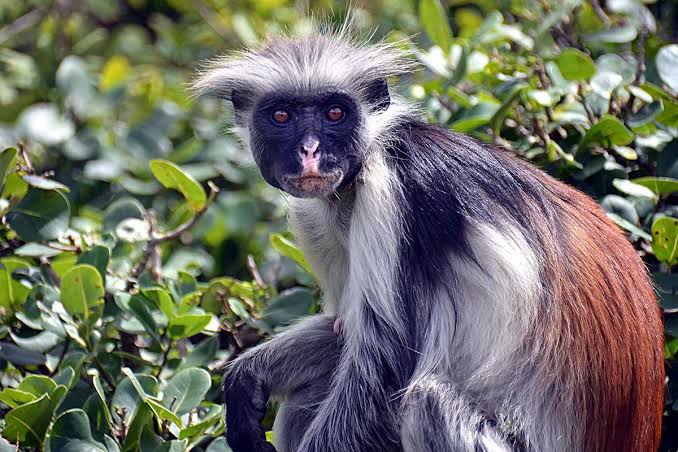
Ugandan Red Colobus Monkeys: Where to See Them
Uganda is famous for mountain gorillas and chimpanzees, but its tropical forests also protect several lesser-known primates. Among them is the Ugandan red colobus monkey, a fascinating forest-dwelling species with reddish-grey fur, a long tail and a lively social life. Watching a troop moving through the treetops can be one of the most enjoyable experiences during a guided nature walk.
Ugandan red colobus monkeys are particularly associated with Kibale National Park in western Uganda. Unlike some monkeys frequently seen beside roads or around safari lodges, red colobus spend much of their time high in forest trees, feeding on leaves and interacting with other group members.
If you are planning a Uganda primate safari, knowing where to look and how to recognise these monkeys will improve your chances of seeing them.
What Are Ugandan Red Colobus Monkeys?
The Ugandan red colobus, also called the ashy red colobus, is scientifically known as Piliocolobus tephrosceles.
It belongs to a group of African monkeys known as red colobus, which inhabit different tropical forest regions.
Despite its name, the Ugandan red colobus is not found exclusively in Uganda. Populations also occur in western Tanzania, including Gombe Stream and Mahale Mountains national parks.
These monkeys have reddish-brown and greyish fur, relatively dark faces and long tails used for balance when moving through trees.
They are primarily leaf-eating monkeys and spend much of their lives in the forest canopy.
1. Kibale National Park: The Best Place to See Red Colobus
Kibale National Park is the most important destination for observing Ugandan red colobus monkeys.
Located near Fort Portal in western Uganda, the park protects extensive tropical forest supporting numerous primate species.
Kibale is particularly famous for chimpanzee tracking, but its red colobus population is also important for wildlife conservation.
Researchers have studied these monkeys for decades, examining their feeding behaviour, social relationships and interactions with chimpanzees.
Where to Look in Kibale
Red colobus frequently occupy mature forest containing tall trees and suitable food plants.
During guided forest walks, visitors may notice groups feeding or travelling high above the trails.
Look for movement among branches and listen for leaves shaking as monkeys move through the canopy.
Your guide may identify red colobus by their reddish colouring, body shape and group behaviour.
Sightings depend on the route, weather and animal movements.
2. Bigodi Wetland Sanctuary: A Community Birding and Primate Destination
Bigodi Wetland Sanctuary is located near Kibale National Park, close to the village of Bigodi.
The sanctuary is managed through a community conservation initiative associated with the Kibale Association for Rural and Environmental Development.
Although widely known for birdwatching, Bigodi also provides opportunities to observe several monkey species.
Why Visit Bigodi?
Guided nature walks pass through wetland edges, woodland and surrounding vegetation.
Red colobus may be seen in suitable trees around the sanctuary, particularly along forested sections connected to the wider Kibale landscape.
Other primates visitors may encounter include red-tailed monkeys, black-and-white colobus monkeys and grey-cheeked mangabeys.
Bigodi is an excellent addition to a chimpanzee tracking safari because it introduces visitors to smaller forest wildlife.
However, sightings are never guaranteed.
3. Are Red Colobus Found in Semuliki National Park?
Semuliki National Park lies in western Uganda near the Democratic Republic of Congo border.
Its lowland tropical forest supports remarkable biodiversity, including several primate species.
Some tourism publications describe red colobus sightings in Semuliki.
However, an important identification distinction exists.
The well-documented Ugandan red colobus, Piliocolobus tephrosceles, is primarily associated with Kibale in Uganda.
A different species, the Semliki red colobus, Piliocolobus semlikiensis, occurs mainly in neighbouring Democratic Republic of Congo, with its presence in Uganda considered uncertain in conservation assessments.
For travellers specifically seeking Ugandan red colobus, Kibale remains the more dependable destination.
Do not assume that all red colobus records from Semuliki refer to the same species.
4. How to Identify a Ugandan Red Colobus Monkey
Ugandan red colobus monkeys have several physical characteristics that help distinguish them from other forest primates.
Their coats combine reddish, brownish and greyish tones, while their faces are relatively dark.
They have long tails and slender bodies adapted for movement through trees.
| Feature | Ugandan Red Colobus |
|---|---|
| Scientific name | Piliocolobus tephrosceles |
| Common name | Ashy or Ugandan red colobus |
| Main Ugandan habitat | Kibale National Park |
| Diet | Mainly leaves and other plant material |
| Lifestyle | Social, tree-dwelling |
| Conservation status | Endangered |
Their colour varies between individuals, so identification should not depend entirely on coat colour.
Experienced guides also consider body shape, movement and habitat.
5. Red Colobus vs Black-and-White Colobus
Uganda also supports black-and-white colobus monkeys, which visitors sometimes confuse with red colobus.
Both spend considerable time in trees and possess long tails.
However, their appearance differs considerably.
| Characteristic | Red Colobus | Black-and-White Colobus |
|---|---|---|
| Main coat colours | Reddish-grey and brown | Black with white markings |
| Tail | Long, without the same prominent white tuft | Long, often with a white terminal tuft |
| Main food | Leaves and other vegetation | Leaves and other plant foods |
| Uganda viewing areas | Especially Kibale | Several forests, including Kibale and Bwindi |
Black-and-white colobus monkeys are more widely encountered across Uganda’s forest destinations.
If you are unsure which species you are watching, ask your guide to explain the differences.
6. How Do Ugandan Red Colobus Monkeys Behave?
Red colobus are highly social primates that live in groups.
Some groups contain dozens of individuals, although group size varies.
Within these groups, monkeys spend time feeding, grooming, resting and interacting.
Young monkeys may play together while adults feed among the branches.
Their social behaviour makes them interesting subjects for wildlife observation.
Unlike chimpanzees, which frequently travel on the forest floor, red colobus spend much of their time in trees.
This can make them difficult to photograph when the forest canopy is dense.
7. What Do Ugandan Red Colobus Monkeys Eat?
Red colobus monkeys are primarily folivorous, meaning leaves form a major part of their diet.
They may also consume flowers, fruits, seeds and other plant material depending on availability.
Their specialised digestive systems help them process fibrous vegetation.
In Kibale, researchers have documented feeding preferences linked to different tree species and forest conditions.
Food availability influences where groups spend time during the day.
You may observe monkeys carefully selecting leaves from branches rather than eating every plant they encounter.
8. Why Are Chimpanzees a Threat to Red Colobus?
Chimpanzees are among the natural predators of red colobus monkeys in Kibale.
Researchers studying the Ngogo chimpanzee community have documented coordinated hunting of red colobus.
These interactions form part of the forest’s natural predator-prey relationships.
However, chimpanzees do not hunt red colobus every time the species encounter one another.
Hunting behaviour varies according to social circumstances, opportunity and other conditions.
Visitors should not approach or interfere with wildlife during these natural events.
Your ranger will determine how to observe responsibly.
9. Are Ugandan Red Colobus Monkeys Endangered?
Yes. The ashy red colobus is classified as Endangered on the IUCN Red List.
Its distribution is fragmented, and several historical populations outside major protected habitats have disappeared.
Habitat loss, forest degradation and hunting have contributed to population pressures.
Kibale National Park provides particularly important protection for the species.
Conservation organisations encourage habitat protection, ecological research and long-term monitoring.
Supporting responsible forest tourism can contribute to local conservation efforts.
10. Best Time to See Red Colobus in Uganda
Ugandan red colobus monkeys can be observed throughout the year.
However, forest conditions change with rainfall.
Uganda’s relatively drier periods, commonly June to August and December to February, may provide more comfortable walking conditions.
During wetter months, forest trails can become muddy and slippery.
Red colobus remain active throughout the year, but their movements depend on food availability and daily behaviour.
Early morning guided walks are often enjoyable because forest wildlife and birds are active.
Ask your guide about current sightings rather than expecting a particular season to guarantee an encounter.
11. How to Photograph Red Colobus Monkeys
Photographing monkeys high in the forest canopy requires patience.
Leaves, branches and uneven lighting can make focusing difficult.
A camera with optical zoom is useful for photographing animals at a distance.
Try to position yourself where natural openings provide a clear view of the monkeys.
Avoid flash photography and never shake branches or make noises to attract their attention.
Sometimes observing a group without taking photographs provides a better understanding of its natural behaviour.
12. Combining Red Colobus Viewing With Other Activities
A visit to Kibale offers several opportunities beyond red colobus observation.
Travellers can combine guided forest walks with chimpanzee tracking, birdwatching and visits to nearby communities.
Bigodi Wetland Sanctuary is particularly convenient for travellers staying around Kibale’s southern tourism area.
You can also continue towards Queen Elizabeth National Park for savannah game drives and boat safaris.
| Activity | Main Experience |
|---|---|
| Kibale chimpanzee tracking | Observe wild chimpanzees |
| Bigodi guided walk | Monkeys, wetland birds and community conservation |
| Kibale forest nature walk | Forest ecology and smaller wildlife |
| Queen Elizabeth game drive | Lions, elephants, buffaloes and antelopes |
Confirm activity schedules and park requirements with your safari operator.
Where Should You Look for Red Colobus?
Ugandan red colobus monkeys are among the most interesting primates found in western Uganda.
Kibale National Park offers the strongest opportunity to observe them, while guided walks around Bigodi provide another worthwhile option.
Their unusual colouring, social behaviour and dependence on forest habitats make them rewarding animals to watch.
Whether you are visiting Kibale for chimpanzee tracking or exploring Bigodi’s community conservation trails, take time to look into the treetops.
Protecting Uganda’s red colobus monkeys means protecting the forests that support their feeding, movement and social lives.

No comment