The Fischer’s Lovebird: Tanzania’s Colorful Bird
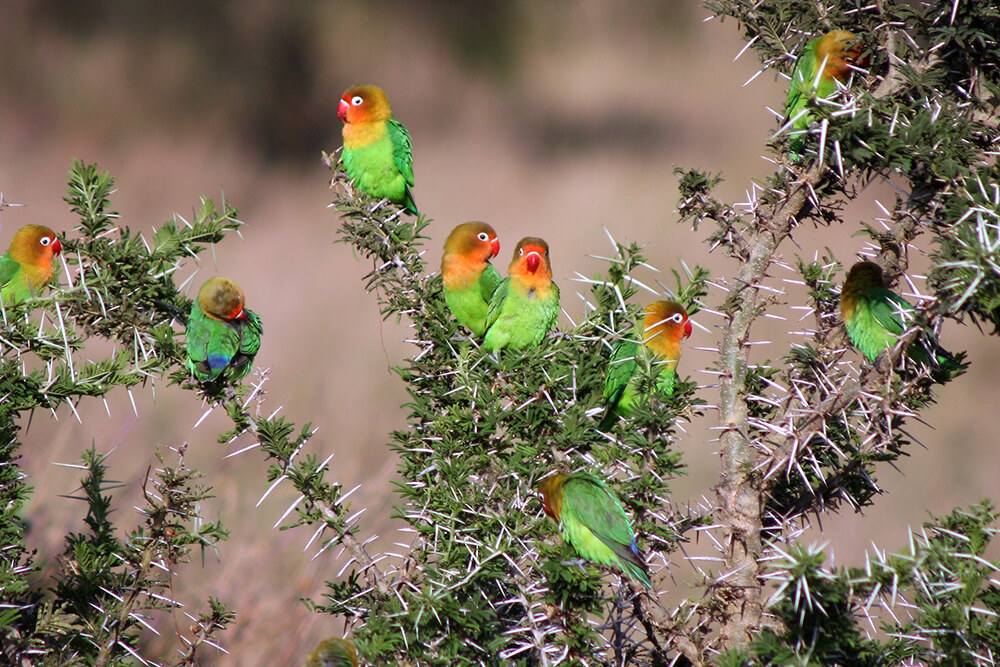
Tanzania is a place with big open spaces, old volcanoes, and amazing animals.. Some of the best things about Tanzania are small. The Fischer’s lovebird is one of these things. It is a bird with bright colors and a fun personality. You can find the Fischer’s lovebird in Tanzania. It adds some color to the area with its orange, yellow, and blue feathers.
The bird is named after a man named Gustav Fischer. He was an explorer from Germany who came to East Africa a long time ago. Today you can find the Fischer’s lovebird in Tanzania around Lake Victoria and the northern part of the country. It is special to see this bird because it only lives in this area. When you see a Fischer’s lovebird, you are not just seeing any bird. You are seeing a bird that is connected to Tanzania.
Meeting the Fischer’s Lovebird
The Fischer’s lovebird is small. It is about 14 to 15 centimeters long.. It is very pretty. The bird has a body with yellow and golden feathers on its chest and neck. Its face is orange. It has a blue back and tail. The bird looks very nice when it is flying.
The Fischers lovebird has a body and short wings. It has a beak that is curved. This shows that the bird is good at moving and eating. When a lot of Fischers lovebirds are together they can make an area very loud. They flap their wings fast. Make loud noises.
The Fischers Lovebird In The Wild
One of the things about looking for the Fischers lovebird is seeing how well it fits into Tanzania. It does not need a cliff or a dense forest to look nice. A dry area with a few trees or a open grass area can be a place to see the bird.
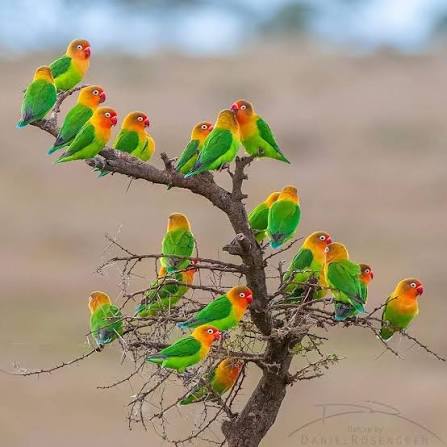
The Fischers lovebird is a bird. It likes to be with birds. You can see them in pairs or in groups. to talk to each other with noises. They move around to find food, rest and water. They are always talking to each other.
When you see the Fischers lovebird it is usually with birds. They move quickly so you need to be patient. Of looking at the bird look at the trees, around it and listen for its noises.
Where to Find Fischers Lovebirds in Tanzania
If you want to see Fischers Lovebirds in Tanzania you should go to the part. This is where you can find these birds. They like to live around Lake Victoria and in the interior. They like spaces where they can find food and a place to nest.. Where they live can change depending on the food they can find the water, the rain and the condition of their home.
Fischers Lovebirds like to live in semi-dry places. They like areas with grass and trees that’re not too close together. This gives them food and a place to hide. They can also be found near farms, especially where people grow crops. This is because crops give them food to eat. The fact that they can live in places that people have changed has helped them survive.
If you go to Tanzania to see birds you might be lucky. See Fischers Lovebirds. You might start the day looking for animals but then you see a group of colorful birds making noise in the trees. These moments are often the part of a safari. They show you a side of Tanzanias natural world.
Lake Victoria and the areas around it are great for people who want to see different kinds of birds. There are different types of homes for birds, like woods, grasslands, wetlands, farms and areas near the lake. This means you can see different species in a small area.
Understanding What Fischers Lovebirds Eat and How They Live
Fischers Lovebirds mainly eat seeds and plants. They eat seeds from grass, grains, fruits and other plants they can find. Their strong beaks help them eat seeds easily. They are good at moving through grass and branches to find food.
The time of day and what they eat affect where they go. Early in the morning is a time to look for them because they are usually active after sleeping at night. Later in the day they might rest in trees especially when it is hot.
Water is also very important for Fischers Lovebirds. They visit places where they can always find water. They might meet other birds there. These places are great for watching them especially if you are quiet and careful.
Their relationship with farms is complicated. While crops give them food, big groups eating crops can sometimes cause problems with farmers. Understanding this is important for helping the birds and for finding a way for people and wildlife to live together.
Fischers Lovebirds Have Strong Relationships
Lovebirds are known for loving their mates and Fischers Lovebirds are no different. They show us how social birds can be. Pairs of birds usually stay close eating and resting near each other. They talk, clean each other and stay close.
When they have babies they make nests in places like holes in trees or other protected spots. They use openings and places that keep their babies safe, from bad weather and animals that might hurt them. Like small birds they need safe places to nest as much as they need food.
Watching a pair of Fischers Lovebirds can change how you feel about a safari. Of just checking them off your list you start to notice how they behave. One bird might clean its feathers while the other watches. Another might call from a branch and then they move together. These normal moments help you understand the birds better.
Conservation and the Future of the Species
Even though the Fischers lovebird is still found in areas of its range conservation is still important. Changes in the place where it lives, farming, catching birds and changes in what it eats can affect the birds that live in the wild. Keeping the kind of forests and open areas safe and making sure people who live nearby get along well with animals is important for the future of this bird.
Good tourism can help when people who visit support guides who care about keeping nature safe places that are protected and the people who live there. Not bothering the places where the birds make their nests is also important. Birds that live in the wild should be watched from a distance and trying to get close feed them or catch them is never part of a good wildlife experience.
Small birds often get help than big animals but every bird plays a part in the way the land looks and works in Tanzania. Taking care of places where animals live helps many kinds of creatures at the same time, including parrots, birds of prey birds that eat seeds birds that eat insects and many other animals that live in the same areas.
Why the Fischers Lovebird Deserves a Place on Your Tanzania Birding List
The Fischers lovebird is something about bird watching in East Africa. It shows that special wildlife moments don’t always need animals or exciting shows. Sometimes the experience comes from sitting under a tree and watching a group of brightly colored parrots fly through the branches.
For people visiting Tanzania adding this bird to a list of birds to see can make a trip more interesting. Bring binoculars learn its sounds and look in open forests and areas with grass and a few trees. Early in the morning is often a time and being patient can help you see the birds instead of just hearing them.
The Fischers lovebird reminds people of the special birds that live only in Tanzania or very close to it. Its colors fit perfectly with a country where dry grass is mixed with trees and the sky is wide and open. Seeing this bird in the wild connects you with an quieter part of Tanzanias natural history.
For visitors the memories of a trip are made by unexpected moments
Seeing a lion resting under a tree is unforgettable. So is a sudden flash of green and orange wings across the sky in the morning. The Fischers lovebird: Tanzanias Colorful Endemic is worth looking for because it gives this kind of wildlife experience.
Its beauty how it behaves with others, where it lives and how it is connected to Tanzania make it a great bird to look for. Whether you are in the Lake Victoria area traveling through parts of the country or making a bigger bird watching plan in East Africa watching these active parrots can add something special to your trip.
Tanzanias wild places are full of stories, at every size. Big animals get a lot of attention. Small birds often make you stop and look more carefully. The Fischers lovebird is one of those birds. Its bright colors, movements and strong family ties make it something you will never forget. It is an example of the many birds that live in Tanzania and a beautiful reason to keep looking up at the trees.