RED-TAILED MONKEYS IN KIBALE FOREST – DIET, HABITS & HOW TO FIND THEM
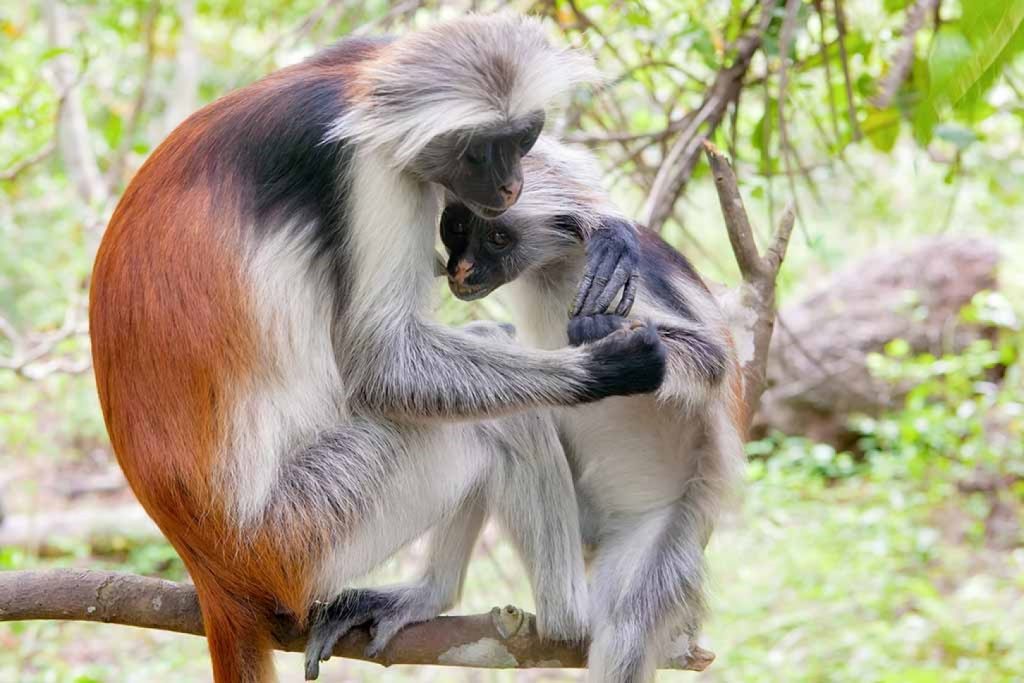
Red-tailed monkeys (Cercopithecus ascanius), also known as red-tailed guenons, are one of Uganda’s most colorful and charismatic primates. Recognized by their striking reddish tails, expressive faces, and lively behaviour, these monkeys are highly social and widely distributed throughout Uganda’s forested regions. Kibale National Park, with its rich canopy cover and abundant food resources, offers one of the best opportunities to observe these active primates in the wild.
Unlike some of Uganda’s other primates, red-tailed monkeys thrive in both primary and secondary forests, showing remarkable adaptability to varying degrees of human disturbance. They are primarily arboreal but occasionally descend to the forest floor to forage, providing visitors with a diverse range of behavioural observations. These monkeys are often encountered alongside other primates, including black-and-white colobus monkeys, olive baboons, and chimpanzees, making Kibale an exceptional location for primate enthusiasts.
A Detailed Study of Red-Tailed Monkeys in Kibale
Social Structure and Troop Dynamics
Red-tailed monkeys are highly social and typically live in troops of 10 to 30 individuals, although some groups can be larger depending on habitat quality and food availability. Troops usually consist of multiple adult females, their offspring, and one or a few adult males who act as protectors and mediators of social interactions.
Grooming plays a central role in maintaining social cohesion and reinforcing bonds within the troop. Juveniles engage in playful behaviours, swinging from branches and mock-chasing, which not only develops physical agility but also establishes social hierarchies. Adult males display dominance through visual signals, threat gestures, and occasional vocalizations, while females maintain a stable core that ensures troop continuity.
Feeding Ecology and Diet
Red-tailed monkeys are omnivorous, but their diet is predominantly frugivorous and folivorous. They feed on fruits, young leaves, flowers, seeds, and occasionally insects or bird eggs. Their preference for fruits allows them to play a vital role in seed dispersal, contributing to forest regeneration and plant diversity.
In Kibale, seasonal variations strongly influence dietary habits. During fruiting seasons, red-tailed monkeys focus on abundant fruits and flowers in the upper canopy, while during the lean dry season, they rely more heavily on leaves, buds, and other fibrous plant matter. Their opportunistic feeding strategies illustrate their adaptability and ecological importance in maintaining the balance of forest ecosystems.
Behavioural Patterns and Communication
Red-tailed monkeys exhibit a wide range of social behaviours and complex communication methods. Vocalizations include alarm calls, territorial screams, and soft grunts that facilitate coordination within the troop. Visual signals such as facial expressions, tail movements, and body postures convey mood, status, and warning messages.
These monkeys are highly vigilant and exhibit coordinated responses to predators, including leopards, eagles, and chimpanzees. Alarm calls trigger rapid troop movement into safer canopy areas, while juveniles are closely monitored and protected by adults. Observing these behaviours provides valuable insights into primate social intelligence and predator-prey interactions within tropical forests.
Best Locations and Viewing Opportunities in Kibale
Kibale National Park is considered one of the best locations in Uganda to observe red-tailed monkeys due to its extensive network of forest trails and diverse canopy habitats. Areas such as Sebitoli, Kanyanchu, and Bigodi Wetland Sanctuary are particularly favorable for sightings.
Guided forest walks are essential for locating troops, as monkeys often move quickly through the dense canopy. Early mornings and late afternoons are ideal for observation, as red-tailed monkeys are most active during cooler hours. These excursions also offer opportunities to witness interactions with other primate species and gain insights into forest ecology.
Seasonal Considerations for Observation
Seasonal changes affect both the visibility and behaviour of red-tailed monkeys. During the wet season, abundant foliage may make sightings more challenging but provides excellent opportunities to observe foraging and social behaviour amidst lush greenery. The dry season concentrates monkeys around fruiting trees and forest edges, improving the chances of spotting entire troops.
Daily activity patterns also play a role; monkeys are most active in the early morning when they forage and socialize, often resting in shaded areas during the heat of midday. Understanding these patterns allows visitors to optimize their observation experience.
Conservation Status and Threats
Red-tailed monkeys are classified as a species of least concern globally, but local populations face threats from habitat fragmentation, deforestation, and human disturbance. Protected areas like Kibale National Park provide essential refuges, maintaining stable populations and safeguarding forest ecosystems.
Ecotourism, research, and community engagement initiatives support conservation by funding anti-poaching patrols, habitat restoration, and educational programs. These efforts emphasize the importance of responsible tourism, ensuring the long-term survival of red-tailed monkeys and the ecological health of Uganda’s forests.
Complementary Wildlife Encounters
Red-tailed monkeys share their forest habitat with other primates, including black-and-white colobus monkeys, olive baboons, chimpanzees, and LHoest’s monkeys. Observing these interactions offers insights into interspecies competition, niche partitioning, and social dynamics.
In addition, the forests of Kibale host a rich array of birds, reptiles, and small mammals, creating a vibrant ecosystem. Red-tailed monkeys act as an accessible and engaging gateway to understanding the forest’s complexity and the interdependence of its species.
Accessibility and Travel Logistics
Kibale National Park is accessible from Kampala via road or domestic flight to Fort Portal. Accommodation ranges from luxury lodges to community-run eco-camps, providing convenient access to forest trails for primate observation.
Guided tours led by trained rangers maximize the likelihood of sightings while ensuring minimal disturbance to wildlife. Visitors are advised to wear muted clothing, carry binoculars, and follow park regulations to maintain ethical observation practices.
Enhancing the Red-Tailed Monkey Viewing Experience
Observing red-tailed monkeys provides a dynamic and engaging experience for primate enthusiasts, researchers, and ecotourists. Combining monkey observation with birdwatching, forest ecology interpretation, and guided nature walks enhances understanding of tropical forest biodiversity and the ecological role of primates.
Patience, quiet movement, and respect for natural behaviours are essential to maximize both educational and photographic opportunities. Guided excursions also provide contextual insights into conservation challenges and ongoing ecological research within Kibale.
A Vibrant and Adaptable Forest Primate
Red-tailed monkeys in Kibale National Park offer a captivating glimpse into the daily life of arboreal primates in Uganda’s tropical forests. Their vivid coloration, lively behaviour, and social complexity make them a favourite among wildlife enthusiasts and researchers.
From Sebitoli to Bigodi Wetland Sanctuary, encountering red-tailed monkeys provides not only memorable wildlife experiences but also a deeper appreciation of Uganda’s forest ecosystems. For visitors, observing these primates is an essential component of any primate-focused safari, highlighting the richness, adaptability, and ecological significance of Uganda’s arboreal wildlife.