The Thunder and the Mist: Uganda’s Most Beautiful and Powerful Waterfalls
In the heart of East Africa, where the lush equatorial jungle meets the vast savannah plains, lies a country so breathtakingly diverse that Winston Churchill famously christened it the “Pearl of Africa.” While Uganda is world-renowned for its mountain gorillas and sprawling game parks, its true, liquid soul is revealed in its waterfalls. These are not mere trickles over rocks; they are living, breathing entities of immense power, spiritual significance, and staggering beauty. From the deafening roar of the Nile to the serene, misty cascades hidden in volcanic highlands, Uganda’s waterfalls offer a sensory overload that leaves an indelible mark on every traveler fortunate enough to witness them.
The Apex of Power: Murchison Falls
If there is a singular monarch ruling over Uganda’s watery kingdom, it is undoubtedly Murchison Falls. To stand at the top of this waterfall is to witness the ultimate argument for nature’s brute force. Here, the mighty Victoria Nile, which has meandered lazily through Lake Kyoga for hundreds of miles, suddenly funnels into a narrow, rocky gorge barely seven meters wide. The effect is cataclysmic. The entire river, swollen with the rains of the vast Lake Victoria catchment, is violently compressed and shot through this stone bottleneck like water from a celestial fire hose.
The water explodes out of the fissure with a deafening, guttural roar that vibrates through the very bedrock beneath your feet. It plummets forty-three meters into a boiling cauldron of froth and foam below. The spray from this impact rises hundreds of feet into the air, catching the equatorial sunlight to create permanent, ethereal rainbows that arc over the gorge. The sheer force of the drop is so immense that the surrounding cliffs are perpetually slick with mist, nurturing ferns and mosses that cling to the ancient rock.
Viewing Murchison is a multi-sensory experience. From the top, you feel the ground tremble and the wind shift as the colossal volume of air is displaced. From the bottom, reached by a thrilling boat cruise up the Nile, the falls take on an even more intimidating aspect. As your vessel approaches, the sound builds from a low hum to a thunderous crescendo, and the towering wall of white water appears to block out the sky. Hippos grunt in the shallows, and crocodiles sunbathe on the sandbanks, utterly indifferent to the explosive chaos just upstream. It is a humbling reminder that while we may walk the earth, the water still rules.
The High-Altitude Serenity: Sipi Falls
In stark contrast to the raw, aggressive power of Murchison, the Sipi Falls offer a tranquil, almost poetic beauty. Nestled on the verdant slopes of Mount Elgon, near the Kenyan border, Sipi is not a single waterfall but a trilogy of cascading masterpieces. To reach them is to journey into the heart of the “Switzerland of Uganda,” where the air is crisp and cool, and the landscape is a patchwork quilt of terraced hillsides and flourishing Arabica coffee plantations.
The most famous of the three is the main falls, which plunges a staggering one hundred meters down a sheer cliff face. Unlike the explosive spray of Murchison, the water here dances. It twists and flutters in the wind, breaking into a thousand silvery threads before reuniting at the bottom in a plunge pool of crystalline emerald water. The mist that rises from this pool is gentle and cooling, a welcome respite for hikers who have trekked through the muddy, verdant trails to find it.
The magic of Sipi lies in its immersive adventure. The local guides, who know every root and rock, lead visitors on breathtaking treks that take you behind the falls themselves. Standing in the cavernous space between the rock face and the curtain of falling water is an almost spiritual experience. The world outside fades away, replaced by the constant, rhythmic percussion of water against stone. For the adrenaline seekers, Sipi offers a unique challenge: abseiling down the face of the waterfall. To descend alongside this roaring column of water, feeling the cold spray on your face and the ancient rock beneath your hands, is to feel truly alive. The local communities here live in harmony with the falls, using the fresh mountain streams to irrigate their crops, and the entire region hums with a peaceful, agrarian rhythm that feels worlds away from the chaotic roar of the Nile.
The Adrenaline Rush: Itanda Falls
For those who find the beauty of nature most compelling when it comes with a side of danger, Itanda Falls delivers in spades. Located on the Nile just north of Jinja, the source of the river, Itanda is renowned as one of the best white-water rafting destinations on the planet.
However, to simply call Itanda a “waterfall” is to misunderstand its geometry. It is a massive, cascading series of granite ledges and explosive Grade V rapids. The water does not simply fall; it explodes, surges, and recirculates over a kilometer of chaotic riverbed. The falls are wide and sprawling, a complex maze of churning hydraulics and towering waves that have been named with terrifying monikers like “The Bad Place” and “The Dead Dutchman.”
To stand on the riverbank is to watch a battle between the ancient rock and the unstoppable water. The roar of Itanda is continuous and aggressive, a deep-throated growl that can be heard long before you see the river. For the kayakers and rafters who challenge its waters, it is the ultimate test of skill and nerve. When the rafts hit the massive standing waves, they are swallowed by the white water, flipping and spinning in a spectacular display of human frailty against nature’s might. Yet, it is this very danger that makes Itanda so magnetic. It is a waterfall that demands respect, a wild, untamed beast that offers a thrilling spectacle for onlookers and a life-changing ride for the brave.
The Cultural Heartbeat: Ssezibwa Falls
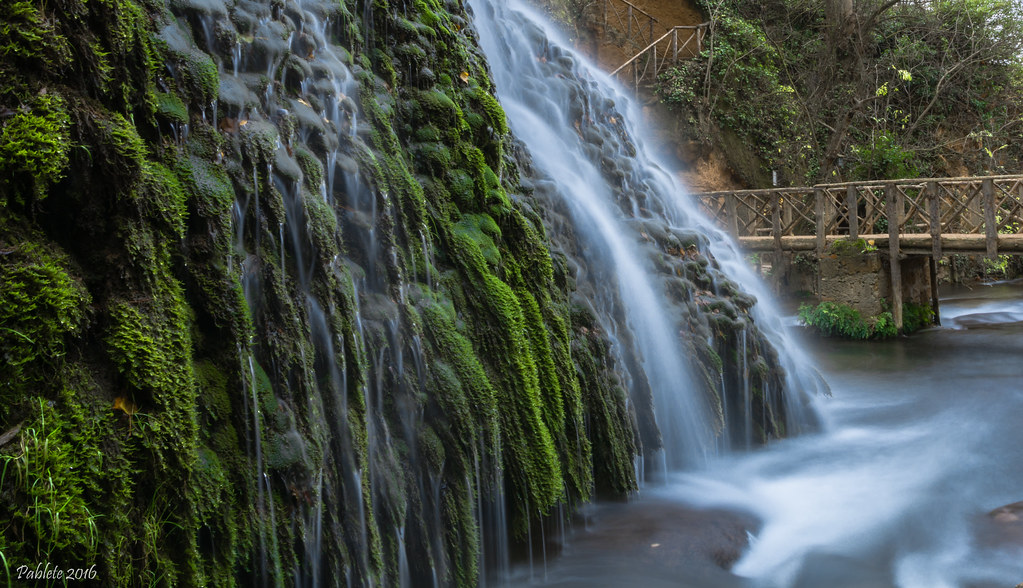
While Uganda’s waterfalls are natural wonders, they are also deeply interwoven with the spiritual fabric of the nation. No waterfall encapsulates this more powerfully than Ssezibwa Falls. Located just a short drive from the bustling capital of Kampala, Ssezibwa feels like a portal to another realm, a sacred grove where the veil between the physical and the spiritual is thin.
To the Baganda people, the falls are not a geological formation but a living entity with a miraculous origin. Legend tells of a woman named Nakangu who gave birth to twins, but instead of human children, she gave birth to two rivers—one of which became Ssezibwa. Because it was “born” rather than “created,” the waterfall is considered a living being, a child of the earth. This has made it a powerful shrine for centuries.
Visiting Ssezibwa is a profound cultural experience. Unlike the thunderous tourists’ havens, it is a place of quiet reverence. The water cascades over a wide, rocky face, creating a soothing, continuous hum rather than a violent roar. The lush, tropical vegetation hangs low over the water, creating dappled shade and a sense of seclusion. Here, you will see the remnants of ancient shrines and traditional healers, known as Nabagereka, performing rituals. Visitors often come to the falls to pray for blessings, guidance, or healing. A common practice is to throw coins into the deep, dark pools at the base of the falls as an offering to the spirits. To stand in this cool, misty air, surrounded by the chirping of birds and the spiritual humming of the water, is to understand that in Uganda, a waterfall is not just water; it is a bridge to the ancestors.
The High-Altitude Oasis: Kisiizi Falls
Journeying to the southwestern corner of Uganda, near the border of Rwanda, you will find the remarkable Kisiizi Falls. Plunging twenty-seven meters into a wide, pristine pool, Kisiizi is a spectacle of raw, natural beauty set against a backdrop of rolling, misty hills.
But Kisiizi holds a story that transcends its visual appeal. It is a place of immense historical significance, often overshadowed by its more famous northern counterparts. In the pre-colonial era, Kisiizi was a “cliff of mercy” for the local Bakiga people. Unwanted newborns were historically left at the bottom of this waterfall, a tragic practice rooted in the region’s harsh social codes. Today, that dark history has been redeemed. A Church of Uganda hospital sits on the edge of the falls, utilizing the immense water pressure of the cascade to generate hydroelectric power for the facility.
Standing at the viewpoint of Kisiizi, you are confronted with a deep duality. The water crashes down into the pool with a powerful, consistent force, sending up clouds of mist that nourish the lush, fern-covered cliffs. The surrounding area is serene and picturesque, a perfect spot for reflection. It is impossible to ignore the weight of history while looking at the water, yet it is equally impossible to ignore the profound hope that now resides there. The falls have become a symbol of life and healing, a testament to how even the darkest places can be transformed into sources of light and power for the community.
The Hidden Gem: Aruu Falls
In the far north of Uganda, in the district of Pader, lies the hidden gem of Aruu Falls. This is a place where the water meets the art of geology. Unlike the vertical drops of Sipi or Murchison, Aruu is a wide, sprawling series of cascades that tumble over enormous, ancient granite boulders.
The visual effect is mesmerizing. The clear, cool water spreads out thinly over the smooth, sun-baked rocks, creating natural water slides and shallow, swirling plunge pools. The sound here is not a thunderous boom but a playful, constant gurgle and splash. Aruu is the waterfall of leisure. It invites you not to watch in awe but to participate. Local families and adventurous travelers alike scramble over the warm granite to slide down the smooth channels carved by centuries of water flow, landing with a splash in the refreshing pools below.
The power of Aruu is subtle but present.t lasting change. The surrounding savannah landscape, dotted with acacia trees and frequented by colorful birds, makes Aruu a perfect place to unwind and connect with a slower, more joyful pace of Ugandan life.
The Eternal Rhythm
Across Uganda, these waterfalls tell a single, unified story of water’s journey from the sky to the sea. From the explosive power of Murchison that shakes the earth, to the serene beauty of Sipi that moves the soul, and the spiritual resonance of Ssezibwa that connects the people to their past, each cascade is unique. They are the magnificent rhythm of the Pearl of Africa—a land where the water sings, roars, and whispers, carving its way through history and landscape with a beauty that is as powerful as it is unforgettable. To visit them is to understand the very heartbeat of this incredible nation.