OLIVE BABOON IN UGANDA – TROOP BEHAVIOUR & BEST PARKS TO OBSERVE THEM
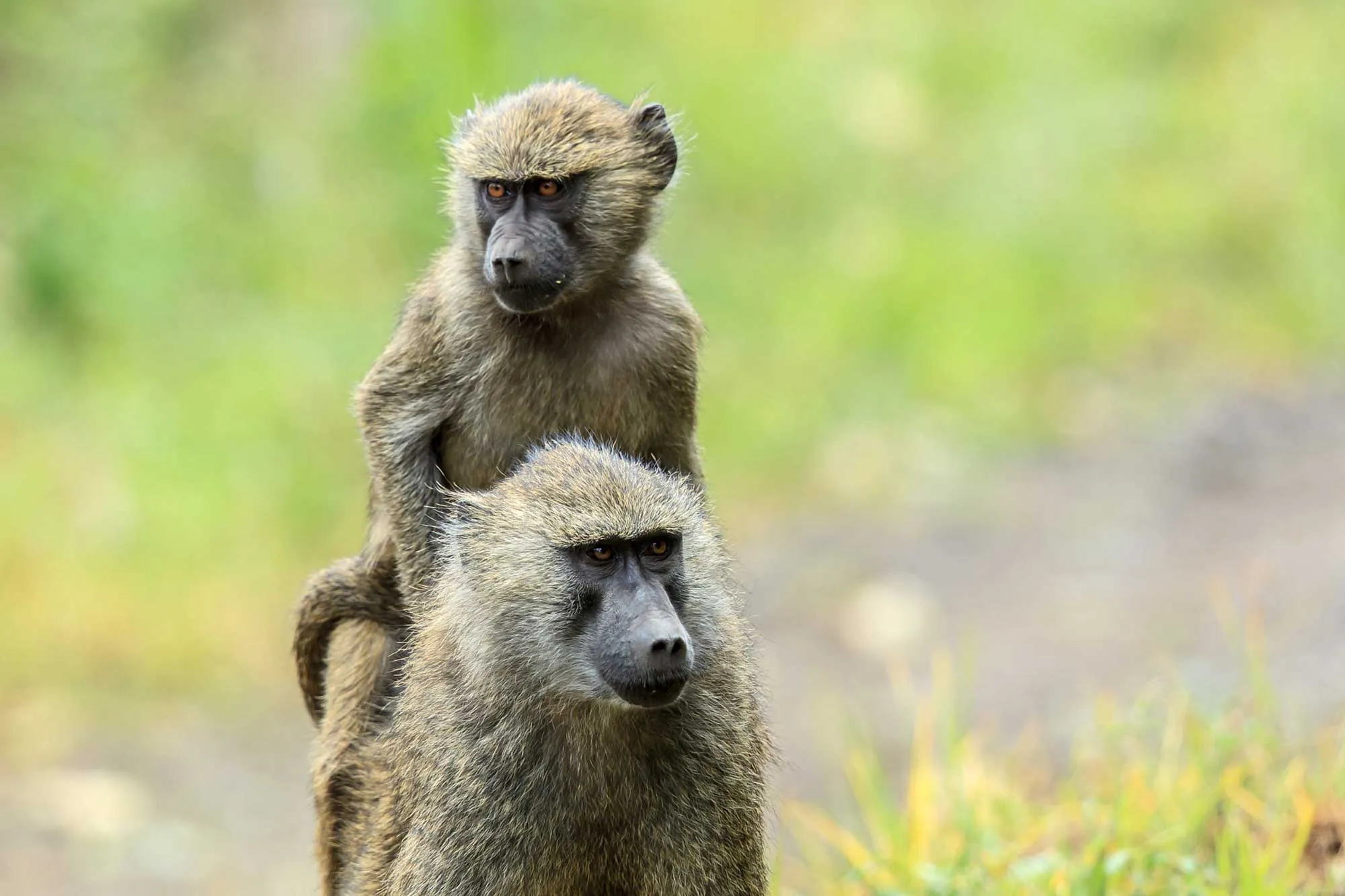
The olive baboon (Papio anubis) is one of Uganda’s most widespread and familiar primates, renowned for its intelligence, adaptability, and complex social structures. These large monkeys inhabit a wide variety of ecosystems, from savannahs and forests to wetlands and riverine areas, making them highly visible across Uganda’s national parks and reserves. Despite their ubiquity, observing olive baboons offers fascinating insights into primate behaviour, social dynamics, and the interactions between wildlife and humans in semi-natural landscapes.
Olive baboons are named for the greenish-grey sheen of their coats, which provides effective camouflage in their environments. They are highly adaptable, often living near human settlements while thriving in remote wilderness areas. Uganda’s rich diversity of protected areas provides excellent opportunities to observe these primates in both wild and semi-managed contexts, where their complex social behaviour can be studied in detail.
A Detailed Study of Olive Baboons in Uganda
Social Structure and Troop Behaviour
Olive baboons are highly social animals, living in large groups called troops that can range from 20 to over 100 individuals depending on habitat quality and food availability. Troops are structured hierarchically, with dominant males controlling access to resources and females forming the core social unit of the group. Grooming is a key social activity, reinforcing bonds between troop members and helping maintain social stability.
Troop dynamics are complex. Dominant males patrol and defend the group, protect females and offspring, and assert dominance through displays of aggression when necessary. Meanwhile, females often form coalitions to influence troop decisions and protect their young. The social intelligence of olive baboons is evident in their coordinated foraging, conflict resolution, and communication through vocalizations, body postures, and facial expressions. Observing these interactions provides unique insights into primate cognition and behaviour.
Feeding Habits and Ecological Role
Olive baboons are omnivorous and highly opportunistic feeders. Their diet includes fruits, leaves, seeds, insects, small mammals, and occasionally bird eggs. In savannah and woodland areas, they forage across open plains and forest edges, while in wetland areas, they may feed on aquatic plants and roots. This dietary flexibility allows them to thrive in a wide range of habitats and adapt to seasonal variations in food availability.
Their ecological role is significant. By feeding on fruits and dispersing seeds, baboons contribute to forest regeneration and plant diversity. They also act as prey for large predators such as lions, leopards, and crocodiles, forming an essential part of Uganda’s food webs. Observing baboons’ foraging behaviour offers insight into both animal ecology and the interdependent nature of ecosystems.
Communication and Behavioural Observation
Communication within baboon troops is intricate and multi-layered. Vocalizations include alarm calls, grunts, and screams, each serving a distinct purpose such as signaling danger, maintaining troop cohesion, or asserting dominance. Visual signals like facial expressions, body postures, and tail positions are equally important, conveying mood and social intent.
Behavioural observation of olive baboons reveals patterns of cooperation and competition. Grooming, playful interactions among juveniles, and the careful care of infants highlight social cohesion, while disputes between males or rank challenges show the competitive aspect of troop life. For researchers and wildlife enthusiasts, these behavioural cues provide a rich field for study, combining both ethology and practical wildlife observation.
Best Parks and Reserves to Observe Olive Baboons
Olive baboons are widely distributed, but several parks offer particularly rewarding viewing opportunities.
Queen Elizabeth National Park is among the best-known locations. Baboons are abundant in the savannah and along riverbanks, where they can be observed feeding, grooming, and interacting in large troops. The Ishasha region provides additional opportunities to see baboons coexisting with predators like lions and leopards, creating dynamic wildlife encounters.
Murchison Falls National Park also hosts significant populations of olive baboons. Troops are often seen along the Nile River, in open woodland, and near the park’s escarpments. Their interaction with other wildlife, including elephants and antelope, adds depth to the safari experience.
Bwindi Impenetrable National Park, although primarily known for gorillas, contains troops of olive baboons along forest edges and clearings. These troops are smaller but highly active, providing excellent observational opportunities for those interested in forest-adapted primates.
Other parks such as Lake Mburo National Park, Kidepo Valley National Park, and Semliki National Park host olive baboons in varying densities, making them accessible for tourists and researchers across Uganda’s diverse ecological zones.
Observational Tips and Ethical Considerations
Observing olive baboons requires a combination of patience, awareness, and ethical practices. Troops are highly sensitive to human presence, and sudden movements or loud noises can cause stress or provoke aggressive responses, particularly from dominant males protecting the group.
Guided safaris and local rangers enhance the observation experience by providing insights into troop structure, behaviour, and habitat use, while also ensuring that visitors maintain a safe distance. Using binoculars or telephoto lenses allows close observation without disturbing natural behaviour. Feeding or attempting to interact directly with baboons is strongly discouraged, as this can disrupt their social systems and habituate them to human presence.
Seasonal Variations in Behaviour and Visibility
Olive baboons’ activity patterns can vary seasonally based on food availability and environmental conditions. During the dry season, they may range further from water sources and congregate in areas with abundant forage, increasing visibility for observers. In the wet season, food becomes more plentiful across the landscape, and troops may spread out, making sightings less concentrated but still offering opportunities to observe foraging strategies and social interactions.
Time of day also affects observations. Early mornings and late afternoons are optimal, as baboons are more active during cooler hours. Midday periods often see them resting in shaded areas, reducing visibility but offering the chance to study their resting behaviour and interactions in calmer contexts.
Complementary Wildlife Encounters
Olive baboons are frequently observed in the company of other wildlife. In savannah and woodland parks, they share habitats with elephants, antelopes, warthogs, and predators such as lions and leopards. Their alarm calls can alert other species to nearby predators, illustrating the interconnectedness of savannah ecosystems.
In forested areas, baboons coexist with smaller primates, including vervet monkeys and black-and-white colobus monkeys. Observing interspecies interactions offers insights into competition, territory use, and foraging strategies among sympatric primates.
Conservation Status and Challenges
Although olive baboons are not considered threatened globally, local populations face challenges from habitat encroachment, agricultural expansion, and hunting in certain areas. Protected areas in Uganda provide critical refuges that maintain population stability, while ecotourism and research initiatives contribute to long-term conservation efforts.
Awareness campaigns emphasize the importance of maintaining natural habitats, regulating human-wildlife interactions, and preventing the habituation of baboons to human food sources. These measures help preserve their natural behaviour and ensure sustainable viewing experiences for tourists and researchers alike.
Experiencing Uganda’s Intelligent and Social Primates
Olive baboons offer a captivating window into primate social systems, ecological adaptation, and the daily rhythms of Uganda’s wildlife. Observing their complex troop behaviour, communication, and foraging strategies provides a rich learning experience that complements traditional wildlife safaris.
From the savannahs of Queen Elizabeth and Murchison Falls to the forest edges of Bwindi, olive baboons are accessible yet fascinating subjects for observation. Responsible tourism, guided excursions, and patience allow visitors to enjoy an intimate understanding of these intelligent and adaptable primates, making them an essential component of any Ugandan wildlife itinerary.