Mountain Gorillas: A Journey into the World of Africa’s Gentle Giants
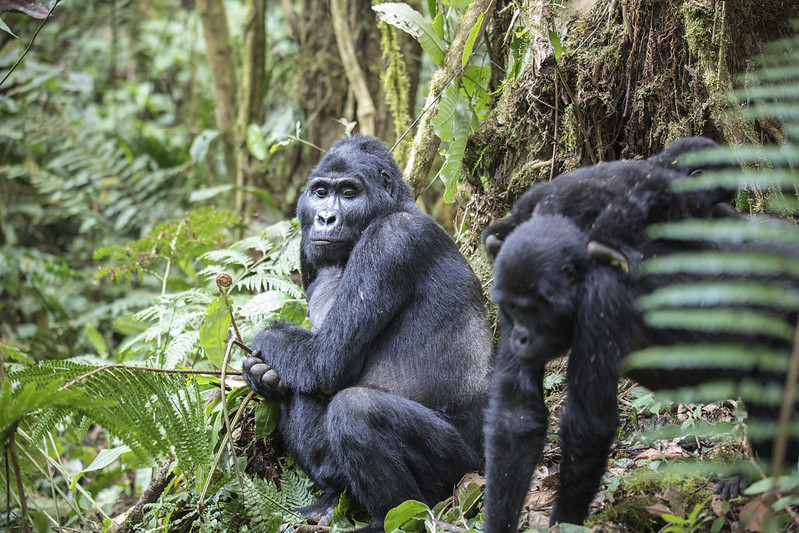
There are few wildlife encounters on Earth that stir the soul as deeply as standing face to face with a mountain gorilla in its natural habitat. In the cool, mist-laced forests of East Africa, where ancient volcanoes rise above thick green canopies and birdsong echoes through tangled vines, lives one of humanity’s closest relatives. The mountain gorilla is not simply an endangered species; it is a symbol of resilience, conservation, and the fragile beauty of the wild.
To see them in the forests of Bwindi Impenetrable National Park or the dramatic slopes of Volcanoes National Park is to witness nature in one of its most intimate forms. Here, in landscapes shaped by time and cloud, mountain gorillas continue their quiet lives — feeding, playing, protecting, and nurturing — largely unaware of the global admiration they inspire.
Life in the High-Altitude Forests
Mountain gorillas inhabit only a small region of Africa, thriving in high-altitude forests between 2,200 and 4,300 meters above sea level. Their world is cool, damp, and often wrapped in mist. Thick vegetation blankets the slopes, creating a habitat that is both challenging and abundant.
Unlike their lowland cousins, mountain gorillas possess longer, denser fur that protects them from cold mountain temperatures. Their powerful arms and broad chests allow them to move with surprising grace through dense undergrowth. Despite their immense size — adult males can weigh over 180 kilograms — they are largely gentle and deliberate in their movements.
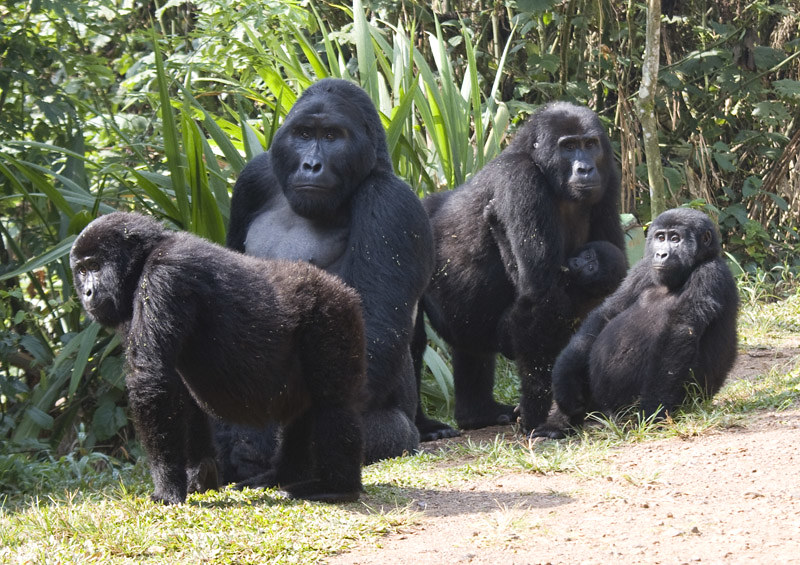
A silverback, the dominant adult male distinguished by a silver patch across his back, leads each family group. His role extends far beyond strength. He is protector, mediator, decision-maker, and guardian of harmony within the troop. Around him gather females, juveniles, and playful infants who depend on his leadership.
A Society Built on Bonds
Mountain gorilla families are deeply social. Watching them interact reveals a complexity that feels strikingly familiar. Mothers cradle their babies with tenderness, juveniles wrestle and tumble in carefree games, and adults groom one another to reinforce bonds.

Communication occurs through soft grunts, expressive eyes, subtle gestures, and occasional dramatic displays. When a silverback beats his chest, the sound resonates through the forest — not necessarily as aggression, but as a declaration of presence and authority.
Daily life revolves around feeding. Gorillas consume large quantities of leaves, stems, shoots, and bamboo. They move slowly through their territory, pausing to rest and interact. At dusk, each individual builds a nest of vegetation on the ground or in low shrubs, settling in for the night beneath the canopy.
There is a rhythm to their existence — steady, patient, and communal.
The Gorilla Trekking Experience
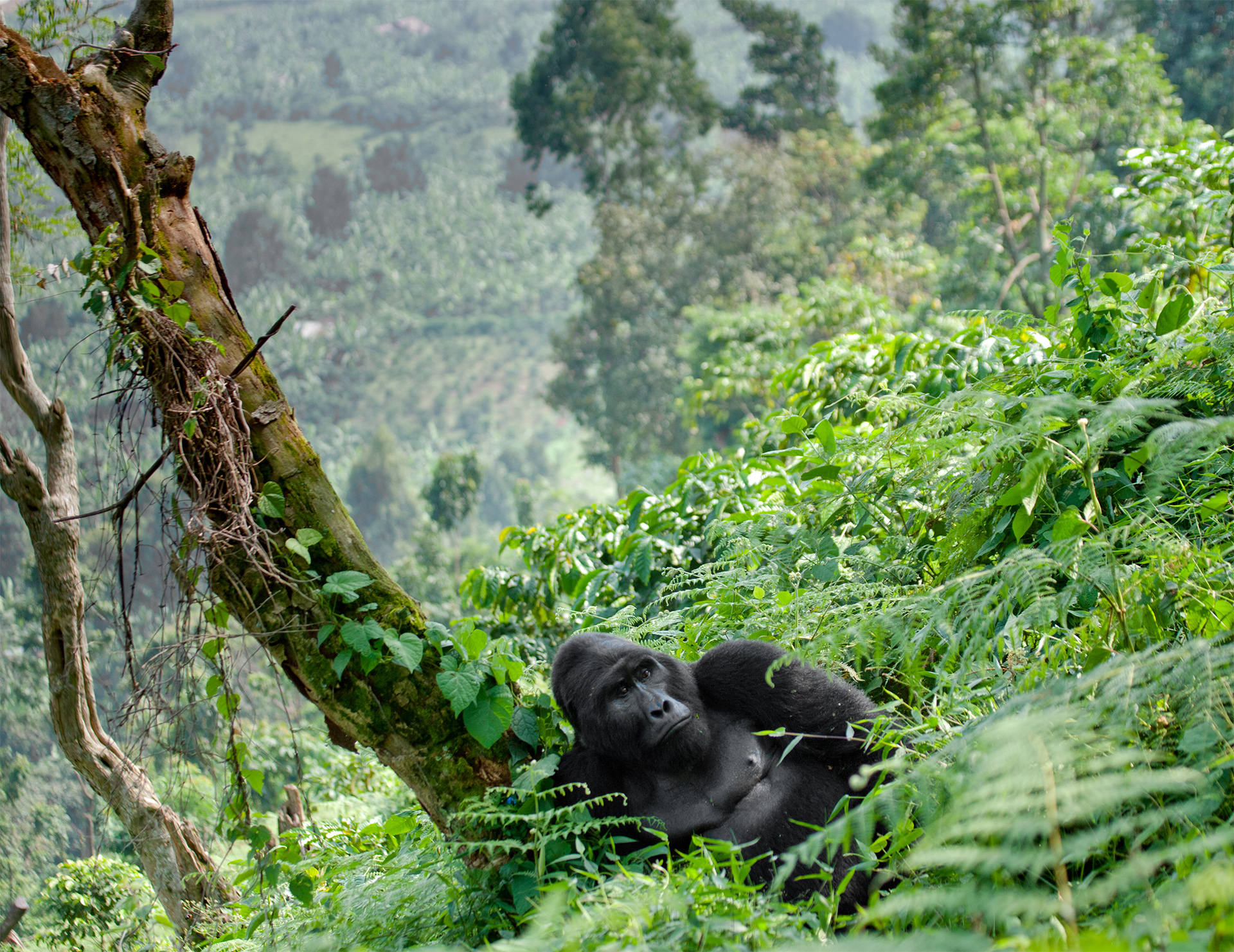
The trek itself can take anywhere from one hour to several, depending on the gorillas’ location. The forest terrain is often steep, muddy, and thick with vines. Each step deeper into the rainforest heightens anticipation. The air feels cooler, quieter.
Then comes the moment.
A tracker signals softly. Leaves shift ahead. And suddenly, there they are — a gorilla family resting, feeding, or interacting only meters away. Perhaps a mother nursing her infant. Perhaps a juvenile curiously watching from behind foliage. Perhaps the silverback himself, seated regally in a clearing.
Visitors are allowed one hour in their presence. It is an hour that feels suspended in time. Cameras click softly, but often they are lowered as travelers simply absorb the magnitude of the encounter. The closeness is profound. Their eyes meet yours. There is recognition — not of identity, but of shared existence.
Conservation and a Remarkable Recovery
Mountain gorillas were once on the brink of extinction. Habitat loss, poaching, civil unrest, and disease pushed their numbers dangerously low in the 20th century. Yet today, they represent one of the rare conservation success stories in Africa.
Through collaborative efforts between governments, conservation organizations, and local communities, populations have gradually increased. Strict anti-poaching patrols, veterinary monitoring, and regulated tourism have all played critical roles.
Revenue generated from trekking permits supports conservation programs and community development initiatives. Local people benefit directly from tourism employment, fostering a powerful incentive to protect the forests and their inhabitants. The mountain gorilla has become not only a conservation priority but also a source of national pride.
Still, they remain endangered. Human diseases pose significant risks, which is why strict health protocols are enforced during trekking. The balance between tourism and protection remains delicate and essential.
The Emotional Power of Encounter
Few wildlife experiences compare emotionally to meeting a mountain gorilla. It is not simply about seeing a rare animal; it is about witnessing a reflection of ourselves in another species.
Their expressions convey curiosity and calm intelligence. Their social interactions mirror familial affection. In their presence, the artificial boundaries between human and wild seem to blur.
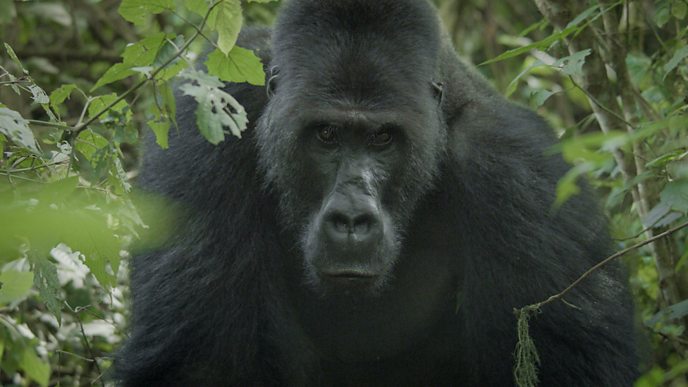
Travelers often describe feeling humbled — aware of their role not just as observers but as participants in a shared ecological future. The forest no longer feels distant or abstract; it feels vital and urgent.
When to Visit
Mountain gorillas can be trekked year-round, but the drier months generally offer more comfortable hiking conditions. In Uganda, June to September and December to February are considered prime trekking seasons. Rwanda experiences similar patterns.
However, the rainforest’s character changes with the seasons. During wetter months, the forest appears even more lush and vibrant. Mist clings to leaves, and waterfalls swell. Each season offers a different mood, yet the gorillas remain the constant heart of the experience.
Beyond the Trek
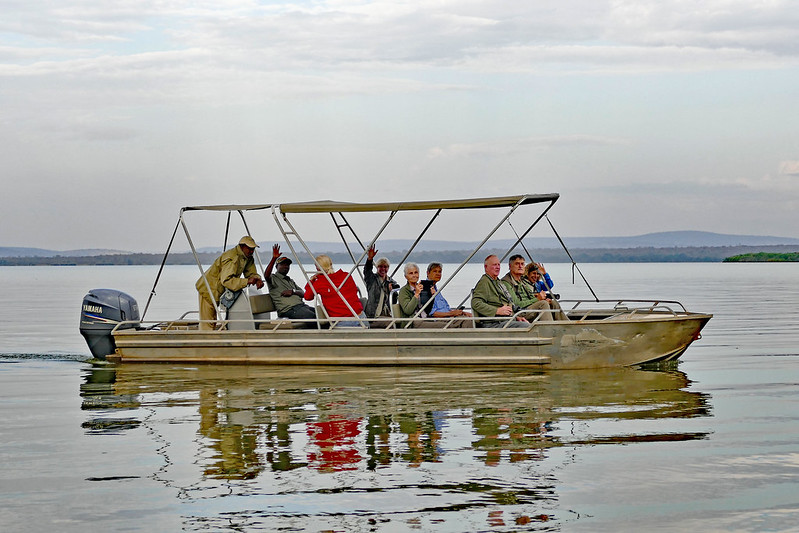
While gorilla trekking is the highlight, the surrounding regions offer rich complementary experiences. In Uganda, visitors can combine gorilla tracking with savannah safaris in Queen Elizabeth National Park or boat cruises along the Kazinga Channel. In Rwanda, cultural encounters and scenic drives around the Virunga volcanoes deepen the journey.
The story of mountain gorillas is intertwined with the landscapes and communities around them. To travel here is to engage with a broader narrative of conservation, resilience, and coexistence.
A Legacy Worth Protecting
The mountain gorilla stands as a testament to what focused conservation efforts can achieve. From near extinction to cautious recovery, their story inspires hope in a world often dominated by environmental loss.
Yet their future depends on continued vigilance. Responsible tourism, community support, and global awareness remain essential. Each visitor who enters the forest becomes part of that ongoing story — contributing to a system that values preservation over exploitation.
To encounter a mountain gorilla is to experience something rare and profound. It is to step briefly into a hidden world of mist and memory, where strength meets gentleness, and where humanity glimpses its own reflection in the wild.
And long after leaving the forest, the memory lingers — a quiet reminder that some of Earth’s greatest treasures still survive, protected by mountains, mist, and the collective will to keep them safe.