
Vegan Travel in Uganda and Rwanda: Restaurants, Markets and Camp Requests
Vegan travel in Uganda and Rwanda is easier than many visitors expect, especially when you understand the local foods and arrange meals before your safari. Both countries produce a wide range of vegetables, beans, bananas, sweet potatoes, groundnuts and fresh fruit. These ingredients form the basis of many traditional dishes that can be prepared without animal products.
However, finding suitable vegan meals requires some planning. A dish may appear plant-based but contain butter, milk, eggs, meat stock or fish. Safari lodges also operate differently from city restaurants, particularly in remote areas where ingredients must be ordered in advance.
Whether you are exploring Kampala, visiting Kigali or travelling to Bwindi and Volcanoes National Park, this guide explains how to enjoy vegan food comfortably throughout your journey.
Is Vegan Travel in Uganda and Rwanda Easy?
Both Uganda and Rwanda offer traditional foods suitable for a plant-based diet when prepared without animal ingredients.
Beans, rice, potatoes, cooking bananas and vegetables are widely eaten.
In major cities, international restaurants may also provide vegan options.
The main challenge is communicating your dietary requirements clearly.
Some restaurants understand vegetarian food but may still include eggs or dairy products.
Comparing Vegan Travel in Uganda and Rwanda
| Feature | Uganda | Rwanda |
|---|---|---|
| Traditional plant-based staples | Matooke, posho, beans | Beans, potatoes, cassava |
| Fresh vegetables | Widely available | Widely available |
| Fresh fruit | Common in markets | Common in markets |
| International restaurants | Particularly in Kampala | Particularly in Kigali |
| Vegan safari meals | Usually possible with advance notice | Usually possible with advance notice |
| Main consideration | Check sauces and cooking ingredients | Check stock, butter and dairy |
Advance communication makes travelling considerably easier.
Traditional Vegan Foods in Uganda
Ugandan cooking includes several dishes based on vegetables, cereals and legumes.
These provide useful choices for travellers avoiding animal products.
Matooke With Groundnut Sauce
Matooke is prepared using green cooking bananas.
The bananas are steamed until soft and often mashed.
They are commonly served with groundnut sauce, beans or vegetables.
Groundnut sauce is prepared using peanuts and may include tomatoes, onions and seasonings.
However, some recipes contain meat or fish.
Ask for a version prepared entirely from plant ingredients.
Posho and Beans
Posho is a firm maize meal preparation widely eaten across Uganda.
It is commonly served with bean stew.
When the beans are cooked without animal stock or fat, this is a straightforward vegan meal.
Sweet Potatoes and Cassava
Boiled sweet potatoes and cassava are familiar foods.
They may be served with beans or vegetable sauces.
These are useful alternatives when other options are limited.
Traditional Vegetables
Ugandan meals may include nakati, dodo and other leafy greens.
Preparation varies between households and restaurants.
Check whether the vegetables contain butter, milk or meat-based seasonings.
Traditional Vegan Foods in Rwanda
Rwandan cuisine includes several ingredients suitable for vegan travellers.
Beans, potatoes, cassava and vegetables are familiar everyday foods.
Ibiharage: Cooked Beans
Ibiharage refers to beans.
They may be prepared with tomatoes, onions and other seasonings.
Beans are a useful source of plant protein.
Ask whether the preparation contains meat stock or animal fat.
Isombe: Cassava Leaves
Isombe is a traditional dish prepared using cassava leaves.
Some recipes include groundnuts, palm oil or other ingredients.
Other versions may contain fish or animal products.
Always confirm how the dish has been prepared.
Agatogo
Agatogo refers to a family of dishes prepared using ingredients such as plantains, potatoes or other vegetables.
Some versions contain meat or fish.
A vegan preparation requires the cook to exclude animal ingredients.
Fresh Vegetables and Potatoes
Cooked vegetables, rice and potatoes are commonly available.
These can form a simple meal when paired with beans or another suitable protein source.
Best Vegan-Friendly Foods to Order
| Food | Country | Vegan suitability |
|---|---|---|
| Matooke | Uganda | Usually vegan when served without animal-based sauce |
| Posho | Uganda | Generally plant-based |
| Beans | Both | Check cooking stock and fat |
| Sweet potatoes | Both | Vegan when simply boiled or roasted |
| Cassava | Both | Vegan when prepared without animal ingredients |
| Isombe | Rwanda | Check for fish and other animal products |
| Agatogo | Rwanda | Request a meat-free preparation |
| Fresh fruit | Both | Naturally vegan |
| Groundnut sauce | Uganda | Confirm ingredients |
The name of a dish does not guarantee that it is vegan.
Vegan Restaurants in Kampala
Kampala offers a variety of dining options.
International restaurants, cafés and establishments serving local food may provide suitable meals.
Vegetarian and Plant-Based Cafés
Some Kampala cafés offer vegetable bowls, salads, smoothies and other plant-focused meals.
Restaurants serving health-conscious menus may label vegan dishes.
However, menu availability changes.
Ask whether the kitchen can prepare a complete meal without eggs, dairy or honey.
Indian Restaurants
Indian restaurants can be useful for vegan travellers.
Vegetable curries, lentil dishes and rice may be available.
However, some recipes contain ghee, butter, cream or yoghurt.
Request food without these ingredients.
Traditional Ugandan Restaurants
Local restaurants often serve several plant-based staples.
You may be able to order matooke, rice, beans and vegetables together.
Confirm how the sauces are prepared.
A simple local meal can be both affordable and satisfying.
Vegan Restaurants in Kigali
Kigali has a growing international dining scene.
Several restaurants offer vegetarian meals, although fully vegan menus are less common.
International Cafés
Some cafés serve salads, grain bowls, smoothies and vegetable-based meals.
Ask whether plant-based milk is available if you order coffee.
Indian and Mediterranean Restaurants
These establishments may offer lentils, chickpeas, vegetables and rice.
Falafel, hummus and vegetable curries can be suitable choices.
However, confirm ingredients and preparation methods.
Traditional Rwandan Restaurants
Local eateries may serve beans, potatoes, vegetables and cassava-based dishes.
A meal combining beans, vegetables and a starchy staple can be a practical option.
Ask whether meat stock or butter has been added.
Shopping for Vegan Food at Local Markets
Markets are useful for purchasing fresh fruit and vegetables.
Uganda and Rwanda both have strong agricultural traditions.
Common Market Products
| Product | How travellers can use it |
|---|---|
| Bananas | Breakfast or snack |
| Pineapple | Fresh fruit |
| Avocado | Sandwiches and salads |
| Mango | Snack or dessert |
| Groundnuts | Snack or cooking ingredient |
| Sweet potatoes | Cooked meal |
| Beans | Protein source |
| Tomatoes | Salads or cooked dishes |
| Leafy vegetables | Cooked accompaniment |
Choose fruit that can be peeled or washed safely.
If you have access to a kitchen, buying local ingredients can reduce food costs.
Vegan Food at Safari Lodges
Safari lodges in Uganda and Rwanda can often accommodate vegan diets.
However, remote kitchens may have limited supplies.
Some ingredients must be transported from towns.
This makes advance notice important.
What to Tell Your Safari Operator
Inform your operator that you follow a vegan diet before confirming your booking.
Explain that you do not eat:
Meat.
Fish.
Eggs.
Milk.
Cheese.
Butter.
Honey.
Animal-based stock.
Ask the operator to share these requirements with every accommodation property.
Questions to Ask Your Lodge
| Question | Reason |
|---|---|
| Can you prepare vegan meals? | Confirms basic availability |
| Do sauces contain animal stock? | Prevents hidden ingredients |
| Can you provide plant-based protein? | Helps create balanced meals |
| Are vegan packed lunches available? | Important for excursions |
| Can breakfast be prepared without eggs or dairy? | Avoids limited morning options |
| Can you accommodate allergies? | Addresses additional dietary concerns |
Request written confirmation where possible.
Vegan Meals During Gorilla Trekking
Gorilla trekking is a major activity in Uganda and Rwanda.
Treks can last several hours, depending on the location of the gorillas and walking conditions.
Visitors often carry packed lunches and snacks.
Suggested Vegan Trekking Lunch
A suitable packed lunch might include:
A vegetable sandwich prepared without butter or mayonnaise containing eggs.
Fresh fruit.
Roasted groundnuts.
A suitable energy snack.
Drinking water.
Check packaged snacks for milk powder, whey and honey.
If you have food allergies, mention them separately from your vegan requirements.
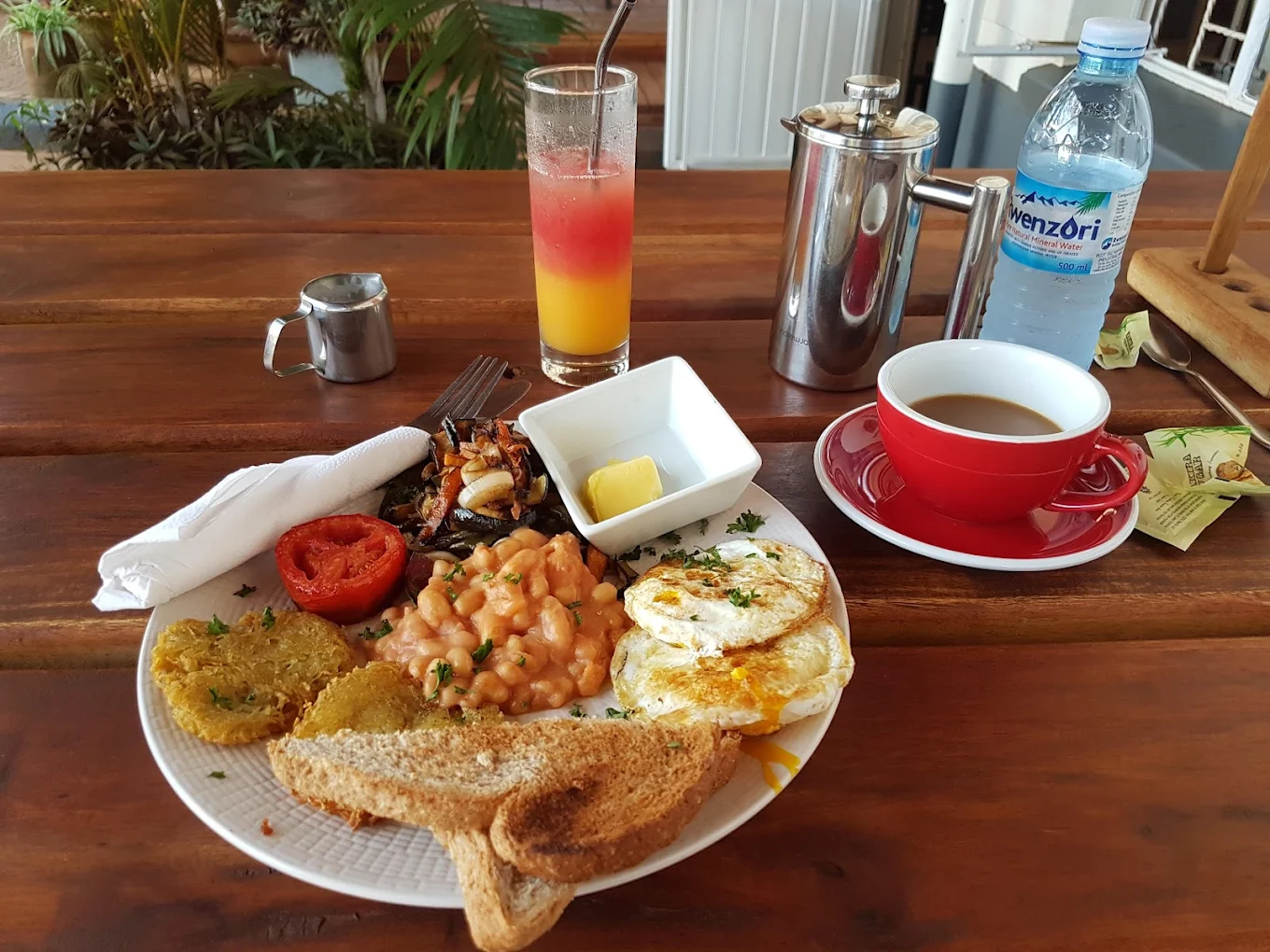
Vegan Breakfast at Safari Camps
Breakfast can require additional planning because many lodges commonly serve eggs, milk and butter.
However, suitable alternatives may be available.
Vegan Breakfast Options
| Breakfast item | Preparation request |
|---|---|
| Porridge | Prepare with water or plant-based milk |
| Fresh fruit | Serve washed and cut |
| Toast | No butter |
| Beans | Cook without animal fat |
| Sweet potatoes | Boiled or roasted |
| Tea | Serve without milk |
| Coffee | Black or with plant-based milk |
Ask whether bread contains milk, eggs or other animal ingredients.
Plant-based milk may not always be available in remote lodges.
Avoiding Hidden Animal Ingredients
Some dishes that appear vegetarian contain animal products.
Ingredients to Check
Butter and ghee: These are sometimes used in cooking vegetables and rice.
Milk and cream: These may appear in sauces, soups and desserts.
Eggs: Common in pastries, chapati variations and breakfast foods.
Meat stock: Sometimes used to flavour beans or vegetables.
Fish: May be included in vegetable sauces, particularly traditional preparations.
Honey: Sometimes used in drinks and desserts.
Clear communication is essential.
Language Tips for Vegan Travellers
English is widely used in Ugandan tourism establishments.
In Rwanda, Kinyarwanda is the main local language, while English and French are also used in some hospitality settings.
Instead of relying only on the word vegan, explain the specific ingredients you avoid.
For example:
“I eat only plant-based food. Please prepare my meal without meat, fish, eggs, milk, butter or honey.”
This is often clearer than requesting vegetarian food.
Planning a Vegan Safari Itinerary
A vegan safari is easier when the same operator coordinates your accommodation and meals.
Example Food Planning Schedule
| Stage | Recommended action |
|---|---|
| Before booking | Confirm vegan meal availability |
| Two weeks before travel | Send detailed dietary requirements |
| Three days before arrival | Reconfirm with accommodation |
| On arrival | Speak with the lodge manager |
| Before excursions | Check packed lunches |
| During the safari | Carry suitable emergency snacks |
This approach helps reduce misunderstandings.
Nutrition During a Vegan Safari
Safari activities can involve early mornings, long drives and physical exercise.
You should eat enough to maintain your energy.
Beans, groundnuts and lentils can contribute protein.
Rice, potatoes, cassava and matooke provide carbohydrates.
Vegetables and fruit add vitamins and minerals.
If you follow a vegan diet long-term, continue any appropriate vitamin B12 supplementation recommended by your healthcare professional.
Carry necessary supplements with you, particularly when visiting remote areas.
Vegan travel in Uganda and Rwanda is possible with sensible planning.
Traditional foods such as matooke, beans, posho, cassava, potatoes and vegetables provide a useful foundation for plant-based meals.
Kampala and Kigali offer additional choices through international restaurants and cafés.
For safari travellers, the most important step is informing lodges about dietary requirements before arrival.
With clear communication and suitable preparation, you can enjoy Ugandan and Rwandan food while maintaining your vegan diet throughout your journey.

No comment